ISO 9001:2015 Certified  |  38+ years of power engineering for critical infrastructure

Blog

How to Choose the Best Telecom DC Power Systems in 2026?

How to Choose the Best Telecom DC Power Systems in 2026?

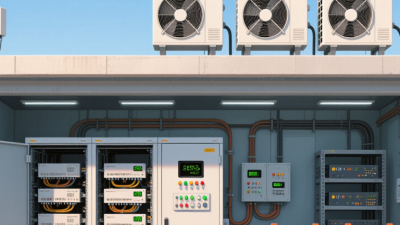
Choosing the right Telecom DC Power Systems in 2026 will require more than comparing price tags and rectifier ratings. Mobile traffic continues to rise as 5G expands, edge computing grows, and operators add power-hungry equipment. Ericsson’s Mobility Report projects mobile data traffic to increase at approximately 16% annually through 2030. GSMA’s Mobile Economy 2025 report also estimates that mobile technologies and services generated 7.6% of global GDP in 2024. These figures expose a practical challenge: telecom power infrastructure must support growth without wasting energy inside every shelter, cabinet, and rooftop site. Reliability remains the real test. A system may look efficient in a laboratory, yet fail under heat, unstable grids, battery aging, or sudden load changes. Buyers should examine rectifier efficiency, operating voltage, lithium-ion or lead-acid battery performance, remote monitoring, thermal management, and N+1 redundancy. Compliance with relevant requirements, including ETSI EN 300 132-2, should support the technical evaluation rather than replace it. Field experience shows that small design choices matter. A clogged air filter, poor cable sizing, or weak battery monitoring can shorten service life quietly. That detail is easy to miss. The best solution will balance uptime, lifecycle cost, maintainability, cybersecurity, and carbon reduction. Operators should also request real operating data, not only laboratory claims. No single architecture fits every network. Rural sites, dense urban locations, and edge facilities face different risks. This guide examines those trade-offs and offers a practical framework for selecting Telecom DC Power Systems in 2026. Some assumptions will need review. Technology changes faster than procurement cycles.
Read more »
Aurora By:Aurora - October 15, 2026
China Top 10 Railway Power Conversion Systems Manufacturers

China Top 10 Railway Power Conversion Systems Manufacturers

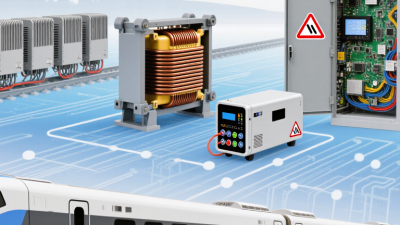
China’s railway equipment sector is becoming a significant force in global electrified transport. Its manufacturers supply traction converters, auxiliary converters, onboard chargers, transformers, and control systems. Together, these technologies form the Railway Power Conversion Systems that keep trains moving safely and efficiently. Henri Poupart-Lafarge, former chairman and CEO of Alstom, described rail as “the backbone of sustainable mobility.” His statement reflects a practical reality. A modern train depends on more than powerful motors. It needs stable voltage conversion, rapid switching, thermal control, fault protection, and dependable software. These functions work inside crowded cabinets, beneath vehicle floors, and beside high-voltage equipment. Small design decisions can affect energy consumption, maintenance time, and passenger safety. This overview examines China’s top ten Railway Power Conversion Systems manufacturers through engineering capability, product range, project experience, certification, and international reach. It considers suppliers serving high-speed rail, metro systems, locomotives, and urban transit. Their strengths are not identical. Some lead in high-power traction converters. Others focus on compact auxiliary systems, semiconductor integration, or customized railway platforms. No ranking is permanently perfect. Public data can be incomplete. Company structures and product names may also change. Therefore, readers should treat this list as a practical industry guide, not an absolute verdict. Field performance matters. So do lifecycle support, spare parts, and proven operation under harsh conditions. The best supplier is not always the largest one. It is often the one that delivers stable performance after years of vibration, heat, dust, and demanding service schedules.
Read more »
Evelyn By:Evelyn - October 10, 2026
10 Best Mining Oil and Gas Power Systems for 2026

10 Best Mining Oil and Gas Power Systems for 2026

Choosing dependable power equipment is becoming harder as mines, oil fields, and gas facilities operate farther from stable grids. The best systems must start reliably in freezing camps, dusty pits, and humid coastal sites. They must also support heavy pumps, compressors, ventilation fans, drilling rigs, and digital monitoring equipment. This guide examines 10 Best Mining Oil and Gas Power Systems for 2026 through practical performance, not marketing claims alone. Each Mining Oil & Gas Power Systems option is assessed against fuel efficiency, load response, emissions control, maintenance access, and lifecycle cost. Generator sets, gas turbines, hybrid microgrids, battery storage, and renewable-assisted platforms all serve different operating conditions. A diesel system may offer familiar servicing and strong peak output. A gas-based system may reduce local emissions where fuel supply remains dependable. Battery storage can smooth sudden demand changes, but it still depends on capacity planning and replacement economics. Field experience matters. The review considers manufacturer documentation, service networks, warranty terms, recognized safety requirements, and reported operating history. It also asks uncomfortable questions. Can technicians reach the filters during a storm? Does the control system recover after a communications failure? Will spare parts arrive before production stops? No power system is perfect. A promising design may still struggle with weak local support or unclear long-term costs. Readers should verify site conditions, grid rules, fuel availability, and independent engineering advice before making a final decision. Reliability is measured during difficult hours, not during a showroom demonstration.
Read more »
Liam By:Liam - October 5, 2026
10 Best Medical DC Power Supplies for Global Buyers

10 Best Medical DC Power Supplies for Global Buyers

Choosing the right Medical DC Power Supplies requires more than comparing voltage, current, and purchase prices. These units support monitors, imaging systems, surgical equipment, laboratory instruments, and mobile diagnostic devices. A small power fault can create heat, noise, downtime, or unreliable readings. The stakes are practical. Power-electronics authority Dr. Robert W. Erickson explains, “The purpose of a power converter is to process electrical energy efficiently.” That principle matters in medical environments. Efficient conversion can reduce heat inside crowded equipment cabinets. Stable output can protect sensitive sensors and control boards. Low ripple is also important where precision signals must remain clean. This guide reviews 10 Best Medical DC Power Supplies for Global Buyers through a buyer-focused lens. We consider output stability, isolation, overload protection, cooling, connector quality, documentation, service support, and compatibility with regional input systems. We also examine evidence from manufacturer datasheets, certification records, technical testing, and long-term user experience. Marketing language is not enough. No ranking is perfect. A supply that performs well in a climate-controlled laboratory may struggle in a humid clinic. A compact model may save space but offer limited thermal headroom. Some products look affordable until cables, accessories, validation, and replacement support are included. These details are easy to miss. Global buyers should verify applicable medical-device requirements with qualified professionals before procurement. Standards, approvals, and installation conditions vary by market. Our comparisons are intended to support careful evaluation, not replace engineering review. The strongest choice is usually the one that remains predictable under real clinical pressure, not merely the one with the most impressive specifications.
Read more »
Aurora By:Aurora - September 30, 2026
Best Land Mobile Radio Power Systems Supplier in China?

Best Land Mobile Radio Power Systems Supplier in China?

Choosing the Best Land Mobile Radio Power Systems Supplier in China is not just a price comparison. It is a decision about whether radios will remain available when a site loses commercial power, temperatures swing, or batteries age. A dependable system may include rectifiers, battery storage, distribution, monitoring, and practical support. Each part matters. So does how well they work together. For a real evaluation, ask suppliers for load calculations, autonomy assumptions, battery test records, and clear warranty terms. Check whether their equipment suits your radio’s voltage range and installation conditions. A cabinet label is not proof of field reliability. Neither is a polished brochure. Ask how alarms are reported, what replacement parts are stocked, and who responds when a charger fails at an inconvenient hour. Small details count. A useful engineering principle is: “Reliable radio coverage begins with dependable power.” I cannot responsibly assign that sentence to a named Land Mobile Radio Power Systems expert without a verifiable source. That limitation matters; invented quotations can make supplier advice look more authoritative than it is. This guide instead focuses on checkable evidence and practical questions. Some requirements may still be missed, especially where site conditions differ. That deserves a second look. The best supplier is not necessarily the one with the lowest quote, but the one that can explain its design, document its claims, and support the system after installation.
Read more »
Aurora By:Aurora - September 25, 2026
How to Choose the Best Defence Power Supply Systems?

How to Choose the Best Defence Power Supply Systems?

Choosing the right Defence Power Supply Systems requires more than comparing wattage, price, or brand reputation. These systems must deliver stable energy under vibration, temperature changes, moisture, electromagnetic interference, and sudden load shifts. A dependable design keeps communications, surveillance, and support equipment available when ordinary commercial units may fail. Reliability matters most. Experienced engineering teams begin with the operating environment. They examine input instability, required voltage tolerance, peak demand, battery autonomy, cooling capacity, and maintenance access. Redundant modules can reduce a single point of failure, while monitored battery systems provide valuable warning before capacity declines. Physical details matter too, including sealed connectors, reinforced cabinets, clear cable routing, and practical inspection space. Compliance evidence should support every major claim. Independent testing, traceable manufacturing records, environmental qualification, and documented service procedures offer stronger assurance than marketing language. Suppliers should explain failure rates, repair times, spare-part availability, and software support throughout the expected lifecycle. A datasheet is not proof. Field experience often reveals weaknesses that laboratory tests miss. Dust may block filters. A small connector fault can interrupt an entire power chain. These risks deserve honest assessment, not optimistic assumptions. No selection method is perfect, and project teams should revisit their requirements after site surveys, prototype testing, and operator feedback. The best Defence Power Supply Systems balance resilience, efficiency, maintainability, and verified performance without adding unnecessary complexity.
Read more »
Liam By:Liam - September 21, 2026
Top Critical Infrastructure Power Systems Suppliers

Top Critical Infrastructure Power Systems Suppliers

Reliable electricity is the quiet foundation of modern society. Hospitals, airports, water plants, data centers, and emergency services cannot tolerate extended outages. This guide examines leading suppliers of Critical Infrastructure Power Systems and the standards that distinguish dependable providers. The strongest suppliers offer more than generators or batteries. They design integrated solutions, including switchgear, uninterruptible power supplies, microgrids, monitoring platforms, and backup fuel systems. Their equipment must perform inside crowded server rooms, harsh utility sites, and heat-exposed industrial compounds. Clear documentation matters. So do factory testing, site commissioning, maintenance training, and responsive technical support. Supplier evaluation should include proven field experience and verifiable performance data. Buyers can review uptime records, service coverage, cybersecurity controls, warranty terms, and replacement-part availability. Independent certifications may support confidence, but they should not replace practical inspection. A polished brochure proves little. Real projects rarely follow perfect plans. Load growth may exceed the original forecast. Battery rooms may need redesigned ventilation. Local technicians may require simpler interfaces. These weaknesses deserve attention, not concealment. The best suppliers acknowledge limitations and propose measurable safeguards. They also explain how systems behave during transfer events, fuel delays, network failures, and extreme weather. This overview does not treat market reputation as proof by itself. Instead, it considers engineering depth, lifecycle support, operational resilience, and transparent evidence. Decision-makers can then compare suppliers against actual site risks, regulatory duties, and continuity targets. Reliability is never a single product feature. It is a maintained relationship between equipment, people, procedures, and time.
Read more »
Aurora By:Aurora - September 21, 2026
China Top 10 Power Utilities DC Systems Manufacturers

China Top 10 Power Utilities DC Systems Manufacturers

China’s power infrastructure depends on stable direct-current protection, control, and communication systems. This article introduces the China Top 10 Power Utilities DC Systems Manufacturers, focusing on companies serving substations, generating plants, industrial facilities, and grid automation projects. Their products commonly include battery chargers, DC distribution panels, monitoring units, and valve-regulated or lithium battery solutions. A practical starting point. The selection considers engineering experience, product reliability, certification records, manufacturing capacity, and documented project performance. We also examine how each manufacturer handles common utility requirements, including 110V or 220V DC output, redundant charger operation, insulation monitoring, battery autonomy, and remote alarms. These details matter during a blackout, when a protection relay may have only seconds to operate correctly. A strong supplier should also provide commissioning guidance, maintenance support, clear manuals, and spare-part access. Public information does not always reveal complete field performance. That limitation deserves attention. Therefore, this overview should support supplier research rather than replace factory audits, technical clarification, or site acceptance testing. Buyers should verify short-circuit capacity, temperature tolerance, communication protocols, enclosure protection, and compliance with applicable IEC, national, and utility standards. They should also compare lifecycle costs, not only the initial quotation. The manufacturers discussed here represent different strengths, such as customization, delivery capability, digital supervision, or experience with large substations. Some may appear less impressive on paper but perform steadily in demanding environments. That possibility should not be ignored. By comparing evidence carefully, readers can identify Power Utilities DC Systems partners that match their voltage class, project scale, operating conditions, and long-term reliability goals.
Read more »

Evelyn By:Evelyn - September 21, 2026