
ISO 9001:2015 Certified  |  38+ years of power engineering for critical infrastructure
0%

Reliable electricity is the quiet foundation of modern society. Hospitals, airports, water plants, data centers, and emergency services cannot tolerate extended outages. This guide examines leading suppliers of Critical Infrastructure Power Systems and the standards that distinguish dependable providers.

The strongest suppliers offer more than generators or batteries. They design integrated solutions, including switchgear, uninterruptible power supplies, microgrids, monitoring platforms, and backup fuel systems. Their equipment must perform inside crowded server rooms, harsh utility sites, and heat-exposed industrial compounds. Clear documentation matters. So do factory testing, site commissioning, maintenance training, and responsive technical support.

Supplier evaluation should include proven field experience and verifiable performance data. Buyers can review uptime records, service coverage, cybersecurity controls, warranty terms, and replacement-part availability. Independent certifications may support confidence, but they should not replace practical inspection. A polished brochure proves little.

Real projects rarely follow perfect plans. Load growth may exceed the original forecast. Battery rooms may need redesigned ventilation. Local technicians may require simpler interfaces. These weaknesses deserve attention, not concealment. The best suppliers acknowledge limitations and propose measurable safeguards. They also explain how systems behave during transfer events, fuel delays, network failures, and extreme weather.

This overview does not treat market reputation as proof by itself. Instead, it considers engineering depth, lifecycle support, operational resilience, and transparent evidence. Decision-makers can then compare suppliers against actual site risks, regulatory duties, and continuity targets. Reliability is never a single product feature. It is a maintained relationship between equipment, people, procedures, and time.
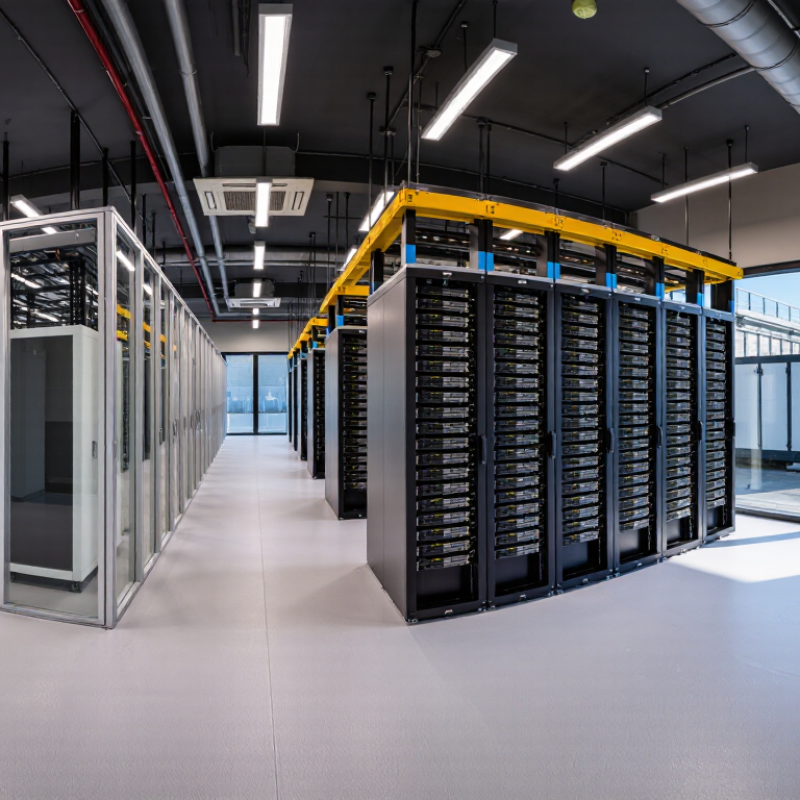
Top Critical Infrastructure Power Systems Suppliers

Critical Infrastructure Power Systems: Scope and IEA Electricity-Demand Data

Critical infrastructure power systems support hospitals, water treatment plants, transport networks, telecommunications, emergency services, and data centers. These sites cannot tolerate long interruptions. Their systems often combine utility connections, switchgear, uninterruptible power supplies, batteries, generators, and on-site renewable generation. Every component matters.

The International Energy Agency reported that data centers, artificial intelligence, and cryptocurrency operations used about 460 terawatt-hours of electricity in 2022. IEA projections suggest this demand could exceed 1,000 terawatt-hours by 2026. That growth changes infrastructure planning. A single high-density computing facility can create sharp local demand, even when national supply appears adequate.

Reliability requires more than installed capacity. Operators need load forecasting, regular testing, fuel planning, automatic transfer controls, and clear maintenance records. Grid flexibility also matters, especially during heatwaves or storms. Battery storage can respond quickly, but its duration remains limited. Generators provide longer support, yet they depend on fuel logistics and emissions controls. This balance is not perfect. Planning models may also underestimate sudden technology growth. Suppliers with practical field experience should therefore validate designs against real operating conditions, not only laboratory figures. Clear performance data, documented service procedures, and independent testing help infrastructure owners make safer decisions.

Core Technologies: UPS, Generators, Microgrids, and Battery Energy Storage

Critical infrastructure power systems now depend on coordinated layers, not single backup devices. The International Energy Agency projects global data center electricity demand may reach 945 TWh by 2030. That pressure makes efficiency and resilience equally important. UPS systems protect servers from milliseconds of voltage disturbance. They also bridge the gap until generators start. A practical design includes real-time monitoring, bypass paths, and battery strings tested under realistic loads.

Generators remain valuable during extended grid failures. However, fuel quality, ventilation, maintenance access, and emissions rules can limit performance. The U.S. Department of Energy’s Lawrence Berkeley National Laboratory estimates data centers could consume 6.7% to 12% of U.S. electricity by 2028. This growth strengthens the case for microgrids. Solar generation, controllable loads, generators, and storage can operate together during an outage. Islanding must be tested, not simply documented.

Battery energy storage systems add fast response and peak management. The International Energy Agency reports that global battery storage additions reached about 42 GW in 2023, nearly doubling from the previous year. Safety depends on thermal monitoring, fire separation, ventilation, and disciplined commissioning. No design is perfect. Battery aging is often underestimated. Generator tests may also use cleaner conditions than real emergencies. Suppliers should provide failure data, service records, cybersecurity controls, and clear replacement assumptions. Resilience is measurable only when the system performs under heat, partial load, communication loss, and repeated switching.

Leading Suppliers: Vertiv, Schneider Electric, Eaton, Cummins, and Caterpillar

Critical infrastructure power systems demand more than backup generators. They require coordinated UPS units, switchgear, batteries, controls, and long-term service. The five leading suppliers identified in this market segment compete across these layers. Their strongest systems support modular expansion, remote monitoring, and rapid load transfer. Field experience shows that integration quality often matters as much as equipment ratings.

The International Energy Agency’s Electricity 2024 report estimated that data centers used about 460 terawatt-hours globally in 2022. It also projected demand could exceed 1,000 terawatt-hours by 2026. That growth raises pressure on efficiency, cooling coordination, and fuel resilience. A 2024 survey from an independent uptime research institute found that power problems remained a major cause of data-center outages. Small design gaps can become expensive failures.

Procurement teams should compare efficiency curves, battery autonomy, generator response time, and service coverage.

They should also test black-start procedures under realistic loads. On paper, every supplier may look dependable. Reality is less tidy. Local technicians, spare-parts access, and software compatibility can decide performance during a midnight fault. Carbon reporting and lifecycle maintenance deserve equal attention, although many evaluations still underweight them. Performance claims need independent testing, not confident brochures.

Reliability Benchmarks: Uptime Institute Tier III at 99.982% Availability

Top Critical Infrastructure Power Systems Suppliers

Reliability Benchmarks: Uptime Institute Tier III at 99.982% Availability

Critical infrastructure power systems must support continuous operation during faults, maintenance, and utility interruptions. A Tier III design is commonly linked with 99.982% annual availability. That equals roughly 95 minutes of possible downtime each year. It is a demanding benchmark, not a promise made by equipment alone.

Experienced buyers examine the complete power path. This includes utility feeds, medium-voltage switchgear, UPS modules, battery strings, generators, transfer systems, and monitoring controls. Each component should support concurrent maintenance without shutting down critical loads. Clear test records matter. So do service response times, spare-parts access, and technician training. A polished specification cannot replace evidence from site acceptance testing.

Small details often decide performance. A loose battery connection, blocked generator intake, or outdated alarm setting can weaken a strong design. Suppliers should provide load-bank test results, maintenance procedures, failure simulations, and documented recovery times. Operators also need realistic drills. An exercise that never exposes an uncomfortable weakness is not a useful exercise. Tier III planning can reduce risk, but human error remains difficult to model. This is where procurement teams should challenge assumptions, review operating history, and verify whether the promised 99.982% availability reflects measured performance or only an engineering target.

Top Critical Infrastructure Power Systems Suppliers - Reliability Benchmarks: Uptime Institute Tier III at 99.982% Availability

Benchmark Area Reference Metric Reliability Benchmark Operational Interpretation Relevant Standard or Framework
Data Center Availability Annual availability 99.982% Approximately 1 hour 35 minutes of maximum annual downtime Uptime Institute Tier III benchmark
Tier III Power Architecture Maintainability during planned work Concurrently maintainable Each capacity component and distribution path can be removed from service without interrupting critical loads Uptime Institute Tier Standard
Uninterruptible Power Supply Topology and redundancy Online double-conversion; N+1 capacity recommended for Tier III designs Supports continuous regulated power and allows one capacity module or unit to be maintained without loss of protected load IEC 62040 series
Backup Generator System Standby generation and fuel autonomy N+1 generator capacity; fuel duration set by site risk assessment and local requirements Provides emergency power after utility failure while allowing one generator to be unavailable for maintenance ISO 8528; NFPA 110 where applicable
Automatic Transfer Equipment Transfer function and source monitoring Automatic source transfer with tested bypass or maintenance provisions Transfers critical loads between normal and emergency sources without relying on manual intervention IEC 60947-6-1; NFPA 110 where applicable
Medium- and Low-Voltage Switchgear Isolation, protection, and maintainability Selective coordination with segregated sections and accessible maintenance procedures Limits fault propagation and permits planned work on defined sections of the distribution system IEC 62271 series; IEC 61439 series
Battery Energy Storage Ride-through and support duration Runtime determined by critical-load profile, recharge strategy, and utility restoration assumptions Bridges short-duration interruptions and supports UPS or microgrid operation when properly integrated NFPA 855; IEC 62933 series where applicable
Power Distribution Units Branch monitoring and load balancing Real-time current, voltage, power, and temperature monitoring on critical branches Improves visibility of overload risk and supports balanced operation of redundant power paths IEC 61439 series; applicable electrical installation codes
Monitoring and Controls Alarm coverage and event recording Continuous monitoring with time-stamped alarms, trend data, and escalation procedures Reduces detection and response time for electrical, thermal, and fuel-system abnormalities ISO 16484 principles; site-specific controls and monitoring requirements
Commissioning and Testing Integrated systems testing Factory testing, site acceptance testing, and documented integrated systems testing Verifies that utility failure, transfer, generator startup, UPS operation, and load restoration work as designed ASHRAE Guideline 0; project commissioning specifications
Preventive Maintenance Maintenance without critical-load interruption Planned maintenance supported by redundant paths, bypass arrangements, and documented procedures Protects availability during battery, UPS, generator, switchgear, and control-system servicing Uptime Institute Tier III maintainability principle

Note: Availability is a property of the complete power system, including design, installation, commissioning, operation, maintenance, and site conditions. Individual equipment ratings do not independently guarantee a facility-level availability percentage.

Supplier Evaluation: N+1/2N Redundancy, Efficiency, MTBF, and Total Cost

Top Critical Infrastructure Power Systems Suppliers

Supplier evaluation should begin with the failure scenario, not the equipment brochure. N+1 architecture keeps one module available during maintenance or failure. 2N architecture provides two independent power paths, but it usually increases capital cost and floor space. Uptime Institute’s 2024 Global Data Center Survey found that 54% of respondents reported outage costs exceeding $100,000. About 20% reported costs above $1 million. These figures make redundancy a business decision, not merely an engineering preference.

Efficiency must be measured at realistic loads. The U.S. Department of Energy and Lawrence Berkeley National Laboratory estimated that U.S. data centers used roughly 176 TWh in 2023. Their 2024 report projects 325–580 TWh by 2028. A supplier should disclose efficiency curves, bypass losses, harmonic performance, and operating results at 30%, 50%, and 80% load. MTBF deserves skepticism. It is often calculated from assumptions, not proven through years of field data. Review IEC-based reliability methods, component derating, service response, spare-part access, and failure records. Total cost includes batteries, cooling impact, testing, software, labor, and disposal.

Tips: Request a witnessed load-bank test before acceptance. Compare five-year and fifteen-year costs. Ask for maintenance logs from similar sites. Check whether N+1 remains available during battery replacement. A perfect model is impossible. Real facilities are messier. Supplier claims should be tested against measured data, documented incidents, and local service capability.

Critical Infrastructure Power Systems Supplier Evaluation

Representative industry benchmarks for enterprise-grade UPS and critical power architectures. Values are configuration-level indicators rather than vendor-specific claims. Higher efficiency and MTBF are favorable, while lower total cost and energy loss are favorable.

FAQS

What are critical infrastructure power systems?

They support hospitals, water plants, transport networks, communications, emergency services, and data centers. These sites cannot tolerate long outages. Typical systems combine grid connections, switchgear, UPS units, batteries, generators, and renewable sources.

Why is electricity demand from data centers increasing?

Data centers, artificial intelligence, and digital computing used about 460 TWh in 2022. Demand could exceed 1,000 TWh by 2026. A single dense facility may create severe local demand. National supply figures can hide local shortages.

What does a UPS system protect against?

A UPS protects equipment from voltage dips and millisecond interruptions. It supplies power while generators start. Useful features include monitoring, bypass paths, and tested battery strings. A battery that looks healthy may still fail under real load.

When are generators still necessary?

Generators provide longer support during extended grid failures. They require clean fuel, ventilation, maintenance access, and emissions controls. Fuel delivery may become difficult during storms or heatwaves. Laboratory tests can look too optimistic. Real emergencies are messier.

How does a microgrid improve resilience?

A microgrid coordinates solar generation, storage, generators, and controllable loads. It can continue operating when the main grid fails. Island operation must be tested under realistic conditions. Documentation alone proves little. Test it.

What safety measures are important for battery storage?

Battery systems need thermal monitoring, fire separation, ventilation, and disciplined commissioning. Operators should track aging and plan replacement dates. Testing should include heat, partial loads, communication loss, and repeated switching. Battery life is often overestimated. That matters.

What is the difference between N+1 and 2N redundancy?

N+1 provides one additional module during maintenance or failure. 2N provides two independent power paths. 2N usually requires more capital, space, and equipment. The better choice depends on outage costs and site risk. More equipment is not automatically safer.

How should a supplier’s performance claims be evaluated?

Request measured efficiency at 30%, 50%, and 80% load. Review bypass losses, harmonics, service response, spare parts, and failure records. Witness a load-bank test before acceptance. Compare five-year and fifteen-year costs. MTBF claims need skepticism. Field evidence is stronger.

Conclusion

Critical Infrastructure Power Systems are the foundation of reliable operations in data centers, healthcare facilities, transportation networks, industrial sites, and public services. This overview explains how rising electricity demand and increasingly digital operations are driving the need for resilient power infrastructure. It introduces key technologies, including uninterruptible power supplies, standby generators, microgrids, and battery energy storage systems, which work together to maintain continuity during outages, grid instability, or peak-demand conditions.

The article also outlines practical methods for comparing suppliers and system designs without focusing on individual brands. Important benchmarks include Tier III availability of approximately 99.982%, along with N+1 or 2N redundancy, energy efficiency, mean time between failures, maintenance requirements, scalability, and total cost of ownership. By assessing these factors together, organizations can select power solutions that balance reliability, performance, operational flexibility, and long-term financial value.

Aurora

Aurora

Aurora is a highly experienced marketing professional dedicated to helping businesses understand how thoughtful strategy, reliable products, and meaningful customer experiences work together to create lasting value. With a deep knowledge of the company’s product portfolio, industry trends, and......