Integrated Medical DC UPS Systems
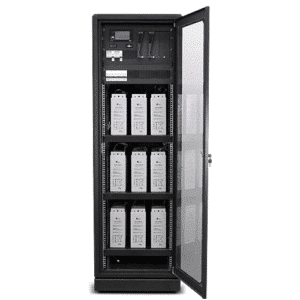
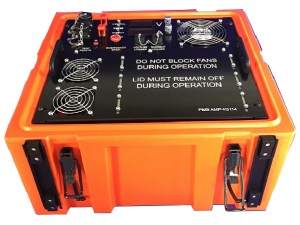
Combines a 2MOPP isolated AC/DC power supply, intelligent battery charger, and instantaneous switchover circuit for zero-break backup during mains disruption.
12V / 24V / 48V VDC · 100W – 3kW
Engineered 2MOPP medical power supplies, ultra-low leakage DC converters, and zero-break healthcare DC UPS architectures — designed, validated, and backed by over 38 years of power expertise.

Modern clinical environments demand uncompromising electrical safety, high electromagnetic immunity, and continuous operational integrity. Helios Power Solutions delivers standard and bespoke Medical DC Power Supplies engineered specifically to satisfy strict IEC 60601-1 3rd/4th Edition standards, 2MOPP (Means of Patient Protection) isolation requirements, and low earth leakage limits (<100μA). From diagnostic imaging and surgical robotics to hospital emergency DC backup networks, our power conversion platforms safeguard both sensitive clinical electronics and vulnerable patients.
Get a QuoteSelecting a DC power supply for healthcare applications requires evaluating applied part classifications, dielectric isolation thresholds, and electromagnetic compatibility under IEC 60601-1-2 4th Edition. Helios Power Solutions provides full technical transparency and custom modification to eliminate common design bottlenecks.
The IEC 60601-1 standard differentiates between Means of Operator Protection (MOOP) and Means of Patient Protection (MOPP). Medical equipment coming into direct contact with patients (such as electrocardiographs, infusion pumps, and surgical instruments) mandates 2MOPP isolation. This demands a 4,000 VAC isolation barrier, 8mm creepage distance, and reinforced insulation capable of withstanding severe voltage surges without degrading electrical safety.
Helios Medical DC Power Supplies utilize advanced planar transformers and ultra-reliable switching topologies to achieve 2MOPP compliance while maintaining high power density, active Power Factor Correction (PFC), and operational efficiencies exceeding 94%.
In medical electrical systems, excessive leakage current poses severe risks of macro-shock or micro-shock—particularly when cardiac-floating (CF) applied parts are used. Commercial off-the-shelf (COTS) industrial power supplies often exhibit leakage currents between 300μA and 1000μA, which violates medical safety mandates.
Our medical power architectures strictly constrain earth leakage currents to under 100μA under normal operation and patient leakage currents to under 10μA for CF-rated applications. This is accomplished through specialized internal EMI filtering configurations that minimize parasitic capacitance to ground while remaining fully compliant with Class B radiated and conducted emission thresholds.
Explore our recommended product platforms optimized for clinical equipment OEMs, mobile healthcare units, operating theatre power distribution, and hospital backup systems.
Combines a 2MOPP isolated AC/DC power supply, intelligent battery charger, and instantaneous switchover circuit for zero-break backup during mains disruption.
12V / 24V / 48V VDC · 100W – 3kWOpen-frame, U-channel, and enclosed switch-mode medical power supplies featuring active PFC, wide universal AC input, and convection-cooled thermal management.
50W – 1500W · 2MOPP · Class I & IIUltra-compact DC/DC converters providing 5,000 VAC isolation, low input-to-output capacitance, and precise multi-voltage regulation for sensitive medical instrumentation.
1W – 300W · 2MOPP · High EfficiencyRuggedized DC conversion platforms engineered to operate from vehicle 12V/24V alternator systems while delivering stabilized, noise-free DC power to field medical devices.
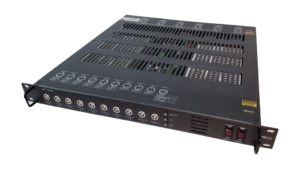
Wide DC Input · E-Mark & IEC 60601-1Hot-swappable 19-inch rack-mount modular DC power plants equipped with digital controllers for central healthcare facilities and critical hospital networks.
24V / 48V / 110V · Up to 20kWZero-noise power supplies designed for sterile operating rooms and intensive care suites where air disturbance and mechanical fan failure are unacceptable risks.
Convection Cooled · 100W – 600WEngineered-to-order multi-output DC systems with custom enclosure footprints, client-specified wire harnesses, and Modbus/SNMP telemetry integration.
Custom Output · Tailored EnclosuresLiFePO4 and Sealed Lead-Acid (VRLA) battery storage solutions paired with temperature-compensated medical chargers for reliable healthcare autonomy.
Extended Runtime · BMS MonitoredA practical reference guide used by healthcare equipment designers and procurement managers when matching medical DC power architectures against operational environments.
| Classification / Level | Dielectric Isolation | Creepage & Clearance | Max Earth Leakage | Typical Medical Application |
|---|---|---|---|---|
| 2MOPP (Patient Protection) | 4,000 VAC (5,656 VDC) | 8.0 mm Creepage / 5.0 mm Clearance | < 100 μA (Normal Condition) | Dialysis machines, patient monitors, ventilators, surgical equipment (BF/CF rated). |
| 1MOPP (Patient Protection) | 1,500 VAC (2,121 VDC) | 4.0 mm Creepage / 2.5 mm Clearance | < 300 μA | Non-contact diagnostic devices, internal sub-circuit isolation barriers. |
| 2MOOP (Operator Protection) | 3,000 VAC (4,242 VDC) | 5.0 mm Creepage / 3.0 mm Clearance | < 500 μA | Laboratory automation, clinical IT systems, hospital administrative hardware. |
| Medical DC UPS System | 4,000 VAC Input-to-Output | 8.0 mm Creepage | < 100 μA (Battery Operation) | Zero-break emergency backup for surgical lighting, ICU respirators, and mobile diagnostic carts. |
| Rugged Mobile Medical DC/DC | 1,500 VAC to 3,000 VAC | 5.0 mm Creepage | < 50 μA DC leakage | Ambulance-borne equipment, field hospital triage power systems, emergency transport devices. |
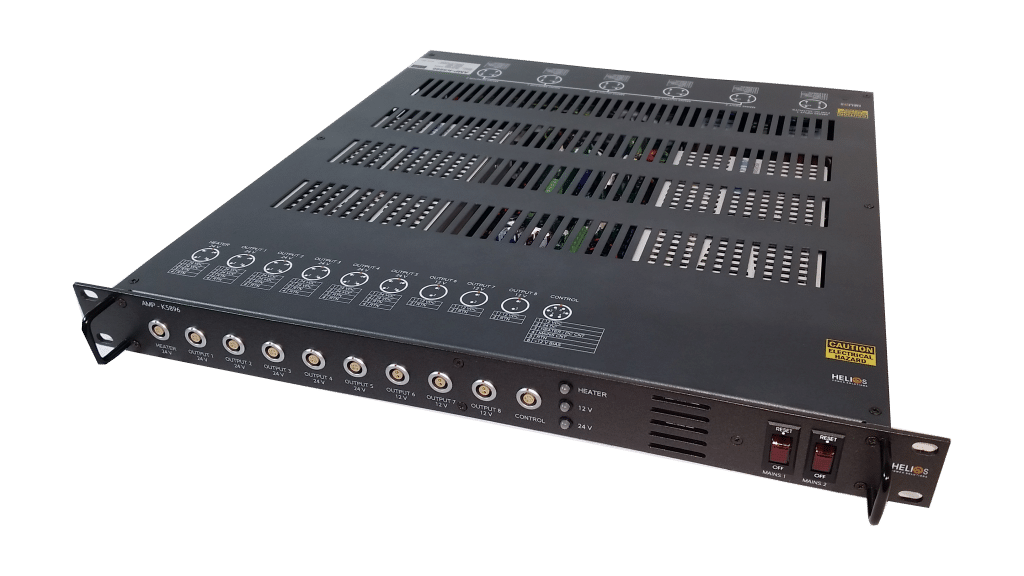 Over 50% of shipped systems are custom engineered to buyer specifications
Off-the-shelf medical power supplies frequently fail to meet specialized OEM criteria: unusual voltage rails, compact mechanical constraints, severe thermal derating, or strict EMC requirements in mixed-signal devices. Helios Power Solutions bridges the engineering gap by modifying catalog designs or building custom-engineered power supplies from the ground up.
As healthcare systems accelerate digital transformation and expand decentralized care, procurement teams must align sourcing strategies with emerging technological and regulatory shifts.
Next-generation Medical DC Power Supplies are transitioning from traditional Silicon MOSFETs to Gallium Nitride (GaN) and Silicon Carbide (SiC) devices. GaN/SiC topologies enable significantly higher switching frequencies, reducing internal magnetic component volumes by up to 40% while achieving efficiency ratings above 96%. Procurement managers should prioritize GaN-based power architectures to deliver smaller, lighter medical devices without compromising 2MOPP thermal safety limits.
Traditional Lead-Acid batteries in hospital backup systems are rapidly being replaced by Lithium Iron Phosphate (LiFePO4) chemistry. LiFePO4 batteries deliver 3x longer cycle life, superior energy density, faster recharge cycles, and zero toxic off-gassing. For mobile diagnostic carts and emergency room equipment, procuring LiFePO4-integrated Medical DC UPS solutions drastically reduces total cost of ownership (TCO) and battery replacement frequency.
Healthcare facilities are densely packed with wireless communications, telemetry equipment, and electro-surgical units. Procuring Medical DC Power Supplies certified to IEC 60601-1-2 4th Edition immunity standards ensures uninterrupted performance under high electro-magnetic stress, preventing field failures caused by RF interference, electrostatic discharge (ESD), or power line surges.
Modern medical devices are evolving from standalone hardware into connected clinical IoT endpoints. Power conversion architectures now incorporate digital PMBus and SMBus interfaces, allowing system microcontrollers to real-time monitor output voltages, load currents, internal temperatures, and capacitor health. Helios is pioneering digital power management systems that transmit telemetry to hospital maintenance networks, allowing proactive component replacement before hardware failure occurs.
Noise pollution in clinical wards and operating theatres increases patient stress and disrupts surgical precision. Technology trends heavily favor fanless, high-efficiency power supplies that rely exclusively on conduction heat sinking or natural convection. By eliminating mechanical fans, power supply MTBF increases substantially while eliminating the risk of fan noise or dust recirculation in sterile zones.
In addition to our engineered power solutions, Helios Power Solutions collaborates with global leaders in power conversion to supply compliant components backed by local engineering support.



We are not merely distributors; we are experienced power engineers who design, test, and support critical infrastructure worldwide.
Our quality management framework strictly governs design verification, component traceability, assembly, and 100% full-load burn-in testing on all customized medical power systems.
Get a QuoteWith fully equipped engineering facilities across Australia, New Zealand, Singapore, and Dubai, we provide localized design consulting, stock holding, and rapid technical support.
Get a QuoteCan’t find an exact off-the-shelf fit? Our power design engineering team customizes form factors, voltage rails, conformal coatings, and monitoring interfaces to match your project requirements.
Get a QuoteCase studies demonstrating our track record in supplying robust DC power conversion and backup infrastructure for sensitive, continuous-duty applications.

Supplied high-reliability redundant DC power supplies and custom distribution panels for mission-critical continuous monitoring equipment.
Read full case study →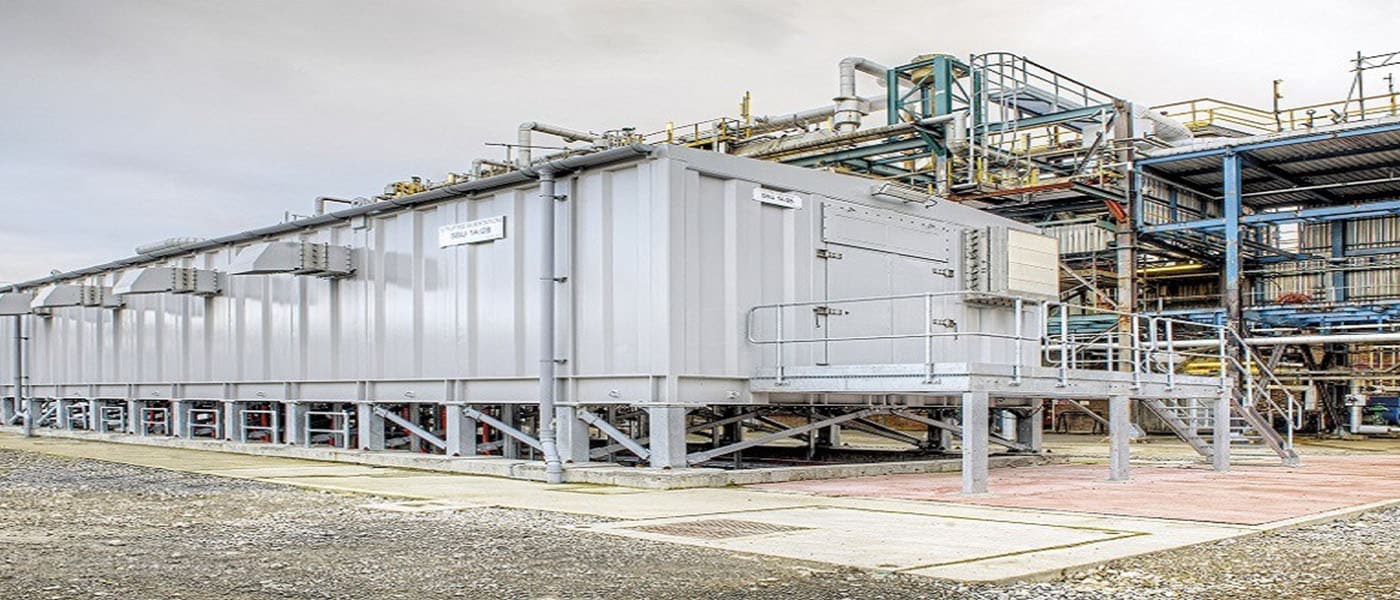
Engineered N+1 redundant DC UPS units supplying unbroken operating power for switchgear protection, control logic, and telemetry equipment.
Read full case study →
Deployed ruggedized convection-cooled float chargers engineered for extreme thermal operational stability and continuous reliability.
Read full case study →Expert insights addressing common engineering, compliance, and procurement queries raised by medical device manufacturers and healthcare facility managers.
Medical DC Power Supplies undergo rigorous design verification to comply with IEC 60601-1 safety standards. Unlike commercial power supplies, medical-grade units feature 2MOPP (Two Means of Patient Protection) dielectric isolation (4,000 VAC rating), double insulation barriers, and significantly reduced earth and patient leakage currents (<100μA vs. >300μA for commercial units). Additionally, medical units must satisfy stringent EMC immunity limits under IEC 60601-1-2 4th Edition to ensure safe operation near surgical equipment and life-support monitors.
2MOPP (Two Means of Patient Protection) is required when electro-medical equipment comes into direct contact with a patient. It guarantees that even in the event of a primary insulation failure, a secondary independent safety barrier prevents dangerous mains voltages from reaching the patient. 2MOPP requires 4,000 VAC isolation, 8mm creepage clearance, and strict physical insulation spacing to safeguard vulnerable patients from electrical shock.
BF (Body Floating) applied parts, such as blood pressure monitors and ultrasound probes, permit normal earth leakage currents up to 500μA. However, CF (Cardiac Floating) applied parts—where equipment makes direct electrical contact with the human heart (e.g., cardiac catheters and artificial heart pumps)—mandate an extremely low patient leakage current limit of under 10μA under normal conditions. Helios engineers custom medical isolation stages to guarantee compliance with CF-grade leakage thresholds.
Yes. Over 50% of the power systems shipped by Helios Power Solutions are engineered to custom client specifications. We routinely design multi-output DC converters, non-standard voltage rails (e.g., 3.3V, 12V, 24V, 48V combinations), specialized physical enclosures, custom cabling harnesses, and integrated battery charging stages tailored to OEM system dimensions.
Fanless convection-cooled power supplies eliminate acoustic noise in operating theatres and intensive care units, reducing cognitive fatigue for surgical teams and providing a quiet recovery environment for patients. Mechanically, removing cooling fans eliminates a primary point of dust accumulation and component failure, dramatically extending system Mean Time Between Failures (MTBF) and preventing air contamination in sterile environments.
A Medical DC UPS combines an IEC 60601-1 certified AC/DC converter, a precision battery charging circuit, and an instantaneous solid-state transfer switch into a single system. When mains AC power fails or fluctuates, the DC UPS transitions load power seamlessly to an internal or external battery bank (such as LiFePO4 or VRLA) without voltage dips or phase disruptions. This ensures continuous operational uptime for critical surgical lighting, patient monitors, and life-support devices.
Medical power supplies must comply with IEC 60601-1-2 4th Edition. This standard establishes high immunity levels against radiated radio frequencies, electrostatic discharges (ESD), fast electrical transients/bursts, and power line voltage dips. Compliance ensures that the power supply neither emits interfering RF noise nor succumbs to external electromagnetic interference generated by adjacent hospital equipment.
Helios designs power systems for long capital asset lifecycles. We maintain component availability, provide drop-in legacy replacement models, and issue advance product change/obsolescence notifications. Our regional engineering centers in Australia, New Zealand, Singapore, and Dubai provide lifetime repair, recalibration, and spare parts support.
Access detailed technical application guides, white papers, and system design documentation curated by our senior power conversion engineering team.
Consult our comprehensive technical knowledgebase for extended guidance on isolation transformers, DC UPS topology selection, and battery sizing methodologies.
Share your voltage, current, isolation, and mechanical requirements with our senior power engineers today.