
Land Mobile Radio Power Systems: Engineering High-Availability DC Backbones for Mission-Critical Radio Networks
Next-Generation DC UPS, Convection-Cooled Rectifiers, Dual LVD Distribution, and SCADA-Monitored Power Systems Sized for P25, TETRA, DMR, and Hybrid LMR/LTE Sites.

The Helios Priority Programme for Communications Fleet Operators
Public safety agencies, utility communications dispatch centers, and emergency services standardizing their radio site power systems on Helios platforms gain access to prioritized engineering support, guaranteed emergency stock allocation for critical line rectifiers and controllers, documented long-term obsolescence planning, and site-verified battery capacity auditing. Secure your mission-critical radio repeater nodes against grid failure across 15–25 year asset life cycles.
Inquire NowThe Technical Imperatives of Land Mobile Radio Power Systems
Land Mobile Radio (LMR) power systems represent a highly specialized segment of critical infrastructure power conversion. Unlike standard commercial telecom rectifiers or off-the-shelf AC UPS units, power supplies powering APCO P25, TETRA, DMR, and public safety dispatch repeaters must withstand severe RF transients, high transmit-to-receive duty cycle swings, wide input AC fluctuations, and hostile ambient conditions at remote mountain-top shelters.
Why Commercial Power Systems Fail in Radio Sites
In standard IT or commercial telecom environments, power loads remain relatively constant. In contrast, Land Mobile Radio base stations exhibit dynamic current demands: switching instantaneously from low idle receive current ($I_{rx}$) to maximum RF power amplifier transmit current ($I_{tx}$). Standard switch-mode rectifiers often exhibit severe voltage sag during this load step, tripping RF power modules or introducing phase modulation jitter on critical voice channels.
Furthermore, cheap power supplies lack adequate electromagnetic suppression. High-frequency switching noise, ground loops, and excessive DC output ripple ($>50\text{mV}_{RMS}$) inject broadband interference directly into radio receiver front-ends. This causes severe **receiver desensitization (desense)**, effectively shrinking the geographical coverage range of emergency dispatch towers during high-priority incidents.
- Zero-Latency Battery Changeover: Direct-connected float battery architecture eliminates relay transfer times, providing continuous DC current during utility blackouts.
- Ultra-Low Ripple & CISPR 22 Class B EMI Filtering: Output ripple engineered below $10\text{mV}_{RMS}$ to prevent receiver noise floor degradation across VHF, UHF, 700/800MHz, and 900MHz bands.
- Dynamic Thermal & Duty-Cycle Management: Oversized magnetics and thermal margins designed to handle prolonged 100% transmit duty cycles in unconditioned cabinets up to +60°C.
- Multi-Voltage System Integration: Native support for mixed 12VDC, 24VDC, and 48VDC radio site equipment on unified, SCADA-monitored battery banks.
 Trusted by Public Safety & Critical Communications Agencies Across AU, NZ, Asia & Middle East
Engineered Land Mobile Radio Power System Platforms
From compact 1U DIN-rail DC UPS units for single-channel repeaters to scalable 19-inch N+1 hot-swappable modular rectifiers for trunked dispatch hubs, Helios engineers high-availability LMR power systems tailored to your exact site requirements.
Modular Rackmount DC Power Plants
N+1 hot-swappable rectifier shelves in 12V, 24V, and 48VDC configurations with smart SCADA controllers, active current sharing, and low-noise output.
19" / 23" Rack · 500W to 20kW · N+1 RedundantConvection-Cooled Fanless DC UPS
Heavy-duty, fanless DC power supplies engineered for harsh, dust-laden mountain-top repeater huts where mechanical cooling fan failure is unacceptable.
Fanless Architecture · IP20/IP54 · Extended TempSmart LMR Distribution Panels (PDU)
Intelligent DC distribution boards featuring automated Dual Low Voltage Disconnect (LVD), per-channel circuit breaker monitoring, and electronic load shedding.
Dual LVD · Individual Channel Monitoring · SNMPv3Multi-Output Isolated DC-DC Converters
Precision step-down and step-up isolated DC converters supplying clean 12V, 24V, or 48V auxiliary rails from a primary site battery bank.
Galvanic Isolation · Wide Input Range · 94% Eff| System Platform | Nominal Output | Cooling & Enclosure | Key Target Applications | SCADA / Monitoring Options |
|---|---|---|---|---|
Sol Series Convection Systems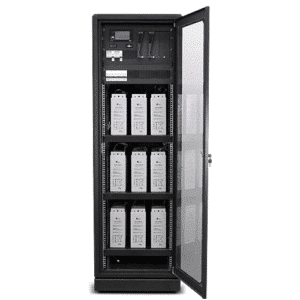 | 12V / 24V / 48V DC (10A – 100A) | Convection Cooled (Fanless), IP20/IP54 Wall or 19" Rack | Remote mountain-top repeaters, unconditioned outdoor shelters, dusty mining sites | Modbus RTU/TCP, SNMPv3, Volt-Free Contacts |
| Modular DC Rectifier Plant | 48V DC (Up to 400A N+1) / 24V DC (Up to 300A) | Variable-speed internal fans with dust-filtered airflow channels | High-density P25 Phase 2 trunked radio sites, dispatch centers, central radio hubs | DNP3 TCP/Serial, SNMPv3, Web GUI, RS485 |
AMP-K Rugged Multi-Output Series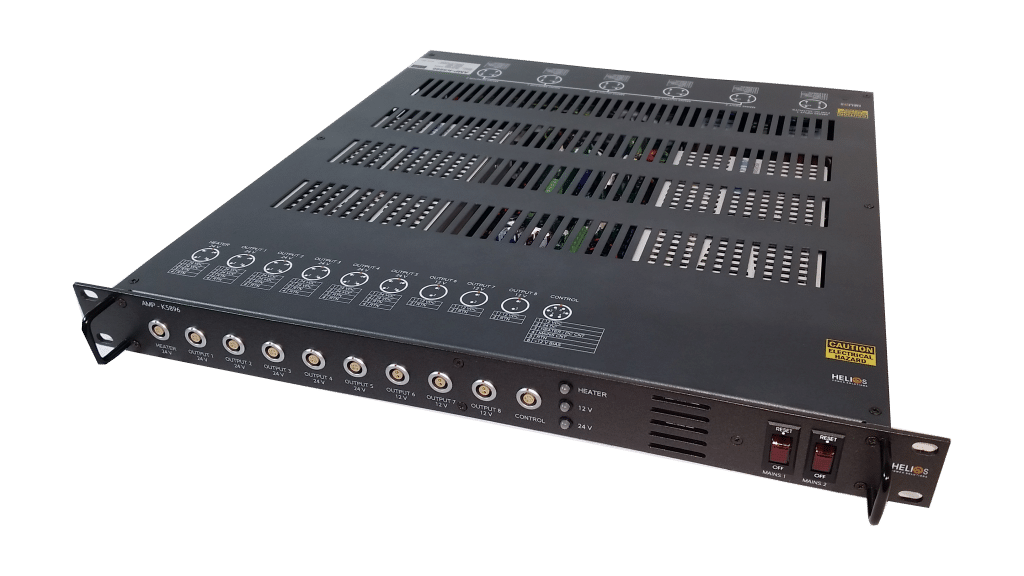 | 12V + 24V + 48V Multi-Rail output from single chassis | Ruggedized convection/conduction chassis, shock-mounted | Military deployable radio stations, mobile command vehicles, naval comms | RS485, CANbus, Customized Alarm Mapping |
| Integrated Battery Charger & PDU | 13.8V, 27.6V, 55.2V Float Charger | Convection / Forced Air with temperature compensation sensor | Standalone VHF/UHF repeater cabinets, emergency service solar hybrid sites | Low Voltage Disconnect (LVD), Dry Relay Alarms |
Future Procurement Trends in Land Mobile Radio Power Systems
As public safety communications, utilities, and emergency services transition toward converged voice and broadband networks, procurement teams face evolving technological and operational demands. Understanding these emerging trends is vital for specifying infrastructure that remains reliable, compliant, and cost-effective over a 20-year operational horizon.
1. Convergence of LMR with Mission-Critical LTE/5G (FirstNet & PSMB)
Global emergency communications are rapidly shifting toward hybrid networks that pair traditional narrowband voice (P25, TETRA, DMR) with high-speed Public Safety Mobile Broadband (PSMB) over LTE and 5G microcells. Procurement specialists must now specify dual-bus power architectures capable of powering sensitive 13.8V/27.6V radio base stations alongside high-density 48VDC active antenna units (AAUs) and edge compute servers. Helios multi-output DC systems streamline site deployment by consolidating these requirements into a single integrated backup power footprint.
2. Transition to Advanced Lithium Iron Phosphate (LiFePO4) Chemistry
Legacy Valve Regulated Lead-Acid (VRLA) AGM and Gel batteries are increasingly being replaced by smart LiFePO4 battery systems. LiFePO4 offers up to three times the cycle life, four times higher energy density, and superior tolerance to high thermal ambients (+45°C to +60°C) without severe thermal runaway risks. Procurement specifications now mandate intelligent Battery Management Systems (BMS) with active cell balancing and precise state-of-health (SoH) reporting directly integrated into site SCADA networks.
3. Remote Site Decarbonization & Hybrid Solar DC Microgrids
Remote off-grid radio repeaters historically relied on continuous diesel generator operation, incurring massive fuel logistics and maintenance costs. Modern LMR power procurement prioritizes zero-emission hybrid power plants combining high-efficiency solar photovoltaic (PV) arrays, maximum power point tracking (MPPT) solar chargers, LiFePO4 storage, and automated generator auto-start fallback. Helios custom DC plants dynamically manage energy harvesting while maintaining strict voltage regulation across all radio channels.
4. Enhanced Cybersecurity & Network Protocol Standards
As power controllers connect directly to wide-area IP networks for remote telemetry, network management security has become a paramount procurement requirement. Modern procurement directives require power system controllers to comply with strict cybersecurity frameworks (e.g., IEC 62443, ISO 27001), featuring encrypted SNMPv3, HTTPS web interfaces, SSH terminal security, and configurable user access control levels to prevent unauthorized remote tampering with DC distribution breakers.
Product Development Trends Shaping Next-Gen LMR Power Systems
The underlying power electronics of Land Mobile Radio power systems are undergoing major technology shifts driven by advanced semiconductors, passive cooling, and intelligent power routing.
Wide-Bandgap (GaN & SiC) Switching Rectifiers
By replacing traditional silicon MOSFETs with Gallium Nitride (GaN) and Silicon Carbide (SiC) power switches, Helios next-generation rectifiers achieve conversion efficiencies exceeding 97.5%. High switching frequencies reduce magnetics footprint by 40%, significantly decreasing heat dissipation inside enclosed repeater cabinets.
Passive Convection Thermal Engineering
Mechanical cooling fans remain one of the primary failure points in harsh field deployments. Development is focused heavily on topological efficiency optimization combined with high-density extruded aluminum heatsink designs, enabling full power delivery under ambient temperatures up to +55°C without fan-driven dust ingress.
Dynamic Smart Load Shedding & Battery Diagnostics
Advanced controller firmware continuously monitors battery discharge curves under real-time load conditions. During prolonged utility outages, smart logic selectively trips non-essential auxiliary loads (shelter HVAC, secondary telemetry) via automated contactors, preserving remaining capacity for critical emergency radio voice channels.
 High-Efficiency, High-Reliability Power Architecture for Critical Communications
38+ Years of Engineering Excellence in Critical Power
Since 1987, Helios Power Solutions has engineered, manufactured, and integrated high-reliability power conversion and backup systems for mission-critical applications across Australia, New Zealand, Asia, and the Middle East.
ISO 9001:2015 Certified Quality Management
Every Land Mobile Radio power system undergoes rigorous design reviews, strict component sourcing, 100% full-load burn-in testing, and comprehensive factory acceptance testing (FAT) before dispatch.
Custom Engineering Capability
Over 50% of the systems shipped by Helios are custom-engineered to customer specifications. Our engineering teams customize voltage outputs, cabinet IP ratings, conformal coatings, and custom SCADA protocol mappings.
4 Regional Logistics & Support Hubs
Located in Sydney (Australia), Auckland (New Zealand), Singapore, and Dubai (UAE). Local engineering expertise ensures rapid technical assistance, spare parts availability, and field commissioning support.
Frequently Asked Questions: Land Mobile Radio Power Systems
Engineering and procurement insights addressing common questions asked by system integrators, communications engineers, and procurement directors.
Sizing an LMR power system requires evaluating both continuous receive current ($I_{rx}$) and peak transmit current ($I_{tx}$) under full power duty cycles (e.g., 20% Tx / 80% Rx or 50% Tx / 50% Rx during high-demand emergency dispatch). The battery bank must be sized using the composite amp-hour (Ah) load profile over the targeted autonomy period (e.g., 8, 12, or 24 hours):
Amp-Hour Target = [(Itx * DutyTx + Irx * DutyRx) * Autonomy Hours] / (Max Depth of Discharge * Temp Correction Factor)
Furthermore, the rectifiers must be rated to supply 100% of maximum peak transmit load while simultaneously recharging the battery bank at a recommended C/10 to C/5 rate within 8 to 12 hours following a prolonged utility outage.
Land Mobile Radio base stations and repeaters operate with highly sensitive RF receivers. Excessive DC output ripple, electrical noise, or high electromagnetic interference (EMI) generated by low-cost switch-mode power supplies causes receiver desensitization (desense). This introduces audible hum, phase noise, bit error rate (BER) degradation in digital radio protocols (P25 Phase 1/2, DMR, TETRA), and a noticeable reduction in operational coverage radius. Helios LMR power systems feature ultra-low ripple voltage (typically <10mV RMS), ultra-quiet output stage filtering, and strict compliance with CISPR 22 Class B / FCC Part 15 Class B standards.
Low Voltage Disconnect (LVD) is an automated contactor mechanism that disconnects battery banks from DC loads when battery voltage falls below a critical threshold (e.g., 1.75V/cell for lead-acid or 2.8V/cell for LiFePO4) during extended mains outages. This prevents irreversible cell damage from over-discharge. A Dual LVD system allows site managers to shed non-essential loads (such as secondary monitoring equipment, auxiliary lighting, or non-critical data backhauls) at an early voltage threshold while preserving remaining battery capacity for mission-critical emergency LMR radio channels.
Helios LMR power systems integrate intelligent system controllers supporting native SNMPv3 (with custom MIBs for network management software like SolarWinds or PRTG), DNP3 outstation (serial or Ethernet TCP/IP for utility SCADA), and Modbus RTU/TCP. Site operators receive real-time monitoring of DC bus voltage, load current, individual battery string charge/discharge current, ambient/battery temperature, mains status, and LVD alarm state, along with dry contact relay outputs for legacy RTU interfacing.
Mountain-top and remote off-grid repeater huts are exposed to severe dust, moisture, insects, and extreme temperature fluctuations. Forced-air fan cooling creates single points of failure; mechanical fans degrade over time, accumulate airborne debris, and draw dust directly into sensitive power electronics. Convection-cooled (fanless) rectifiers rely on heavy-duty extruded aluminum heatsinks, eliminating mechanical moving parts. This dramatically extends Mean Time Between Failures (MTBF > 300,000 hours) and lowers maintenance site visits.
Yes. Modern communications sites often combine legacy 12VDC analog radio gear, 24VDC industrial control/telemetry modules, and modern 48VDC P25/TETRA/LTE broadband equipment. Helios custom-engineers integrated rack-mount or wall-mount enclosures featuring a primary DC bus (e.g., 48V DC UPS) coupled with galvanically isolated DC-DC converters to deliver dedicated, low-noise 12VDC and 24VDC rails with independent circuit breaker protection and remote telemetry mapping.
Related Industry Power Solutions
Explore our dedicated engineering guides tailored for critical infrastructure, public utilities, defense platforms, and industrial telecommunications networks.
Ready to Engineer Your Land Mobile Radio Power Architecture?
Provide us with your site voltage, transmit/receive duty cycle, autonomy hours, and monitoring requirements — our engineers will configure your optimal system.