
ISO 9001:2015 Certified  |  38+ years of power engineering for critical infrastructure
DC UPS Systems Engineering & Procurement Master Guide

Next-Generation DC UPS Systems for Mission-Critical Infrastructure: Architecture & Procurement

Eliminate double-conversion energy losses, optimize battery longevity, and ensure zero-millisecond power transfer for switchgear, SCADA, telecom, and industrial edge computing.

  • 38+ Years of Power Engineering
  • ISO 9001:2015 Certified Manufacturing
  • AU, NZ, SG & UAE Technical Hubs
Executive Power Architecture Analysis

Why Enterprise Systems Are Transitioning from AC to DC UPS Architectures

In high-availability industrial environments, electrical engineers and global procurement directors are rapidly replacing traditional double-conversion AC Uninterruptible Power Supplies (UPS) with direct DC UPS Systems. This fundamental architectural shift reduces thermal dissipation by up to 35%, eliminates inverter-stage single points of failure, and provides direct DC power coupling to critical loads.

Modern electrical infrastructure across utility substations, telecommunications towers, railway signaling, process automation plants, and remote microgrids demands continuous power continuity. Traditional AC UPS installations convert incoming AC power to DC to charge batteries, then invert it back to AC power, only for downstream industrial devices (PLC controllers, RTUs, ethernet switches, and sensors) to convert that AC power back down to low-voltage DC via internal power supplies. Each conversion step introduces energy losses, heat generation, lower Mean Time Between Failures (MTBF), and increased lifecycle operating expenditure.

Engineered DC UPS Systems eliminate this redundant conversion loop. By supplying continuous 12V, 24V, 48V, 110V, 125V, or 220V direct current natively from a unified rectifier-charger module paired with energy storage, industrial loads receive ultra-reliable power directly. In the event of grid interruption, the internal static switch engages instantly with zero transfer time (0 ms), delivering pure uninterrupted direct current.

At Helios Power Solutions, our engineering teams have dedicated over 38 years to perfecting custom and standardized DC UPS topology for harsh environmental duty. Operating out of fully certified ISO 9001:2015 manufacturing hubs across Sydney, Auckland, Singapore, and Dubai, we bridge the technical gap between off-the-shelf power supplies and complex custom site requirements.

Whether your procurement mandate requires compact DIN-rail DC UPS units for outdoor telemetry boxes, modular 19-inch N+1 rack arrays for 5G telecommunication networks, or heavy-duty sub-station battery chargers engineered for 110V switchgear tripping, Helios provides verified technical architectures backed by rigorous factory acceptance testing (FAT).

Helios Priority Programme – technical support and stock allocation

The Helios Priority Programme for Fleet Standardisation

Asset managers and procurement officers standardizing their DC UPS infrastructure across multiple geographic sites gain access to the Helios Priority Programme. Benefit from dedicated stock allocation, custom factory parameter pre-configuration, prioritized spare-parts dispatch, long-term obsolescence management, and direct engineering access across Australia, New Zealand, Asia, and the Middle East.

Contact Us
0Projects Delivered Globally
0Industrial Enterprise Clients
0Years of Engineering Mastery
4Global Service & Supply Hubs
Engineered Product Portfolios

DC UPS System Recommended Solutions & Topologies

Select from four core engineering categories designed to meet the exact voltage, power density, protocol, and environmental constraints of your operational asset.

DIN Rail DC UPS Systems

All-in-one compact units integrating SMPS rectifier, intelligent battery charging, and seamless battery changeover. Ideal for control cabinets, CCTV, and remote RTUs.

12V / 24V / 48V · Up to 40A

Modular Rack DC UPS Systems

Hot-swappable 19-inch N+1 redundant systems with smart controllers, low-voltage disconnect (LVD), and remote communications for telecom hubs and data infrastructure.

48VDC / 125VDC · Up to 400A

Industrial Substation DC Plant

Heavy-duty SCR or switch-mode battery chargers designed for high-voltage switchgear tripping, relay protection, and power plant control rooms.

110V / 125V / 220VDC Duty

Ruggedized & Military DC Systems

Conformal coated, shock-resistant, high-attenuation EMC power systems optimized for extreme ambient temperatures (-40°C to +75°C) and harsh industrial duty.

MIL-STD / IP65 Enclosures
Contact Us
Information Gain & Architectural Comparison

Technical Trade-Offs: DC UPS vs. AC UPS vs. Conventional Chargers

To make an informed procurement decision, engineering leads must evaluate operating efficiency, thermal management, battery lifetime, and failure points across competing power topologies.

Comprehensive Engineering Comparison of Uninterruptible Power Topologies
Design Benchmark Direct DC UPS Systems Traditional Online AC UPS Standard Industrial Battery Charger
System Efficiency 94% – 98% (Single DC conversion stage eliminates DC-AC-DC double conversion loss) 88% – 92% (Energy wasted in constant dual conversion & heat dissipation) 90% – 95% (High efficiency charging, but lacks integrated rapid load switchover)
Transfer Time (Grid Failure) 0 ms (Instantaneous) via static diode / MOSFET bypass path 0 ms (Online double-conversion) / 4-10 ms (Line-interactive) Non-applicable (Requires external transfer panel or floating battery bus)
Footprint & Weight Ultra-Compact: High power density; up to 60% reduction in cabinet volume Bulky due to heavy output isolation transformers and inverter heat sinks Moderate to high cabinet footprint depending on transformer choke topology
Battery Health & Management Integrated 3-stage smart charging with temperature compensation & dynamic SOC/SOH monitoring Basic float/boost charging; elevated cabinet heat accelerates battery degradation Excellent battery management, but often lacks dedicated load disconnect protection
Single Point of Failure Minimal: Direct battery-to-load connection ensures power delivery even if control board faults High: Inverter fault or DC-bus capacitor failure drops the downstream AC load Low power circuit risk, but relies on downstream distribution panels for fault clearing
SCADA / Network Comms Native DNP3, Modbus RTU/TCP, SNMP v3, and dry alarm contacts Standard SNMP / Network Management Cards Legacy dry contacts; optional external gateway modules

Key Takeaway for Procurement Engineers

Specifying a direct DC UPS System significantly elevates total operational uptime while drastically lowering long-term maintenance cycles. By removing the DC-to-AC inverter stage, system thermal output drops exponentially. In remote locations—such as solar hybrid sites, railway wayside boxes, and desert substations—lower operational temperatures directly extend battery service life from 3 years to over 8-10 years, dramatically boosting Return on Investment (ROI).

Contact Us
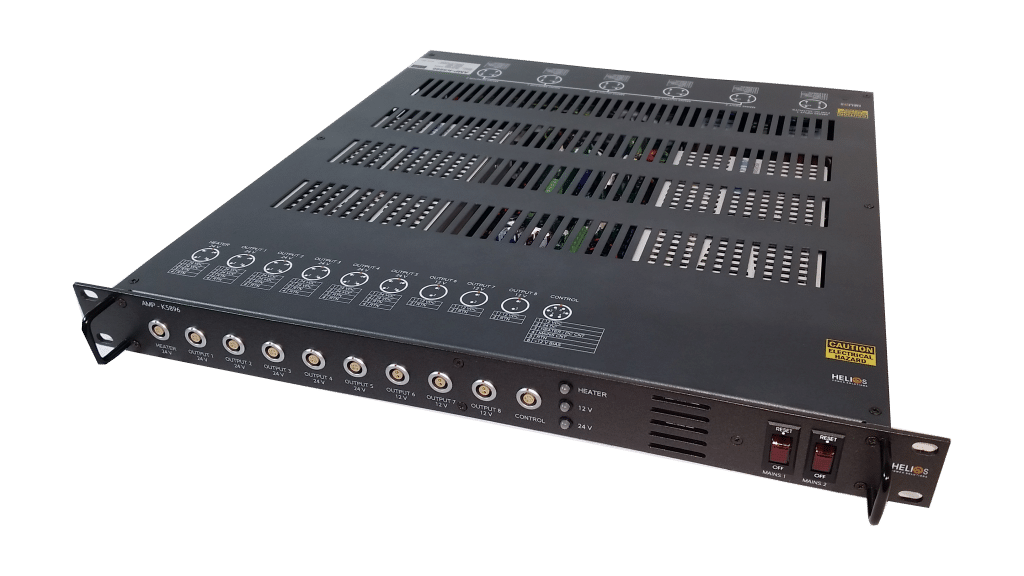
AMP-K5896 700W 1U military-grade multi-output power distribution system engineered by Helios Custom Engineered Power Systems: Built Exactly to Your Site Specification
Custom Engineering Mastery

When Standard Catalogue Items Fall Short of Site Demands

Field failures in mission-critical applications are rarely caused by basic component breakdown; they stem from specification oversights. Ambient temperature spikes exceeding derating limits, unmitigated harmonic distortion, surge currents from inductive loads, or incompatible SCADA alarm maps can lead to catastrophic system downtime. Helios Power Solutions specializes in overcoming these exact challenges.

  • Electrical & Dynamic Voltage Sizing: Custom DC output voltage calibration (e.g., 12V, 24V, 48V, 110V, 125V, 220V) with custom ripple suppression and hold-up time optimization.
  • Advanced Protocol Mapping: Direct SCADA integration utilizing DNP3 outstation (serial or TCP), Modbus RTU/TCP, IEC 61850, SNMP v3, and isolated volt-free contacts.
  • Environmental & Mechanical Hardening: Conformal-coated PCBs, anti-vibration rubber isolators, IP54/IP65 NEMA enclosures, and marine-grade stainless steel construction.
  • Verified Compliance & Documentation: ISO 9001:2015 quality control, Factory Acceptance Testing (FAT) with client witness, full as-built schematics, and lifetime technical support.
Industry Insights & Market Forecasting

Future Procurement & Technological Trends in DC UPS Systems

As global energy networks decentralize and industrial automation accelerates, key technological shifts are transforming how DC UPS Systems are specified, purchased, and integrated.

1. Transition to Lithium (LiFePO4) & Smart BMS Integration

Lead-acid batteries (VRLA/AGM) are rapidly being superseded by Lithium Iron Phosphate (LiFePO4) chemistry in industrial DC UPS installations. LiFePO4 offers up to 4x higher cycle life, 70% footprint reduction, and superior high-temperature tolerance. Modern DC UPS units must integrate intelligent Battery Management Systems (BMS) communicating via CANbus or RS485 to monitor cell voltage balance, state-of-charge (SOC), and state-of-health (SOH) in real time.

2. Software-Defined Power & Cyber-Secure SCADA Integration

Global procurement standards now mandate enhanced cybersecurity and real-time remote telemetry. Modern DC UPS Systems are no longer standalone hardware boxes; they function as intelligent IoT nodes on industrial networks. Advanced controllers support encrypted SNMP v3, HTTPS interface, and secure DNP3 protocol stacks, providing predictive analytics that warn maintenance teams of battery capacity loss before total power failure occurs.

3. Modular Scalability & Hot-Swappable N+1 Redundancy

To minimize Mean Time to Repair (MTTR) and facilitate seamless site expansion, industrial buyers are favoring modular rack-mount DC UPS architectures. Hot-swappable rectifier shelves allow operational teams to expand capacity from 1 kW to 20 kW without taking the critical load offline. N+1 redundant configuration guarantees continuous load availability even during active module replacement.

4. Integration with Distributed Renewable Microgrids

Industrial facilities are increasingly integrating localized solar PV arrays and energy storage systems (BESS). Next-generation DC UPS Systems feature hybrid multi-input stages capable of accepting both AC utility mains and direct DC solar input, prioritizing green energy consumption while ensuring uninterrupted battery backup during localized grid collapse.

5. Strict Compliance with Environmental & Safety Standards

Regulatory bodies across Australia, Europe, North America, and Asia are raising baseline safety requirements. Procurement guidelines now strictly require adherence to IEC/EN 62040-5-3 (DC UPS safety and performance), IEC 61000-6-2/4 (EMC immunity and emissions), and IEEE 485 for stationary battery sizing, ensuring long-term operational legality and insurance compliance.

Contact Us
Field Proven Applications

Deployed in Mission-Critical Infrastructure Worldwide

Explore real-world deployments where Helios engineered DC UPS Systems maintain zero outage tolerances.

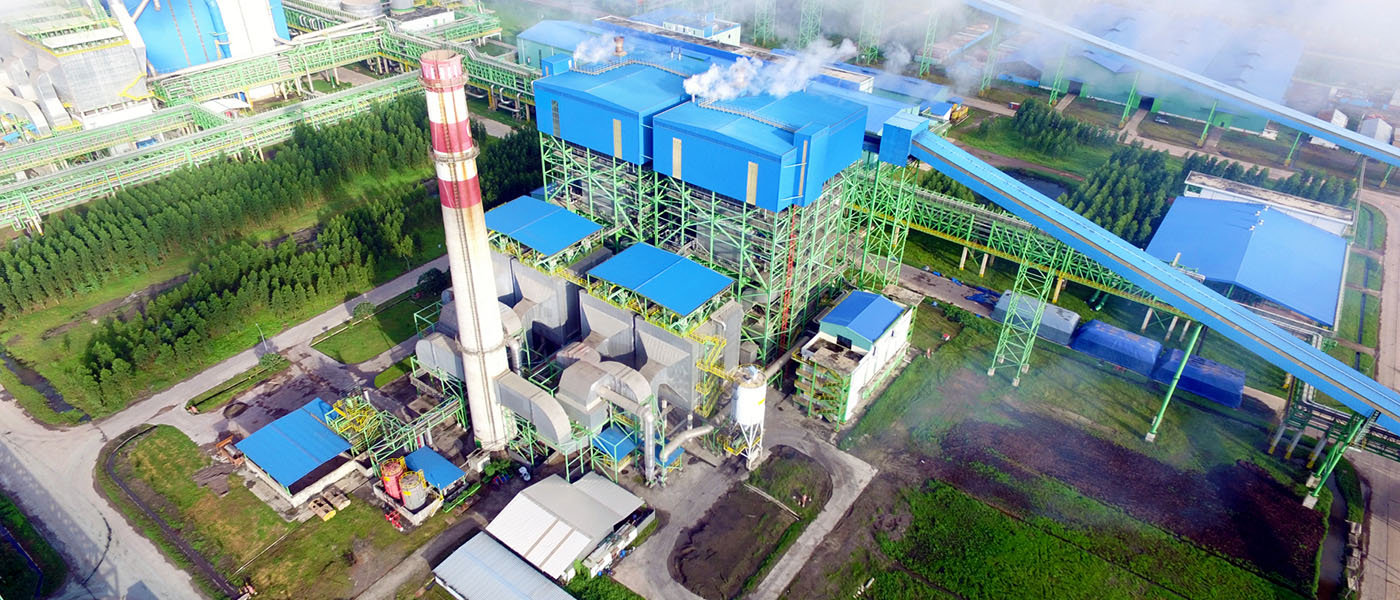
OKI Pulp & Paper mill process plant backed up by Helios DC power systems

OKI Pulp & Paper Industrial Process Backup

Engaged at the front-end engineering design (FEED) stage, Helios supplied and factory-tested heavy industrial DC power backup systems protecting continuous process machinery in one of the world's largest paper mills.

Explore Case Study →
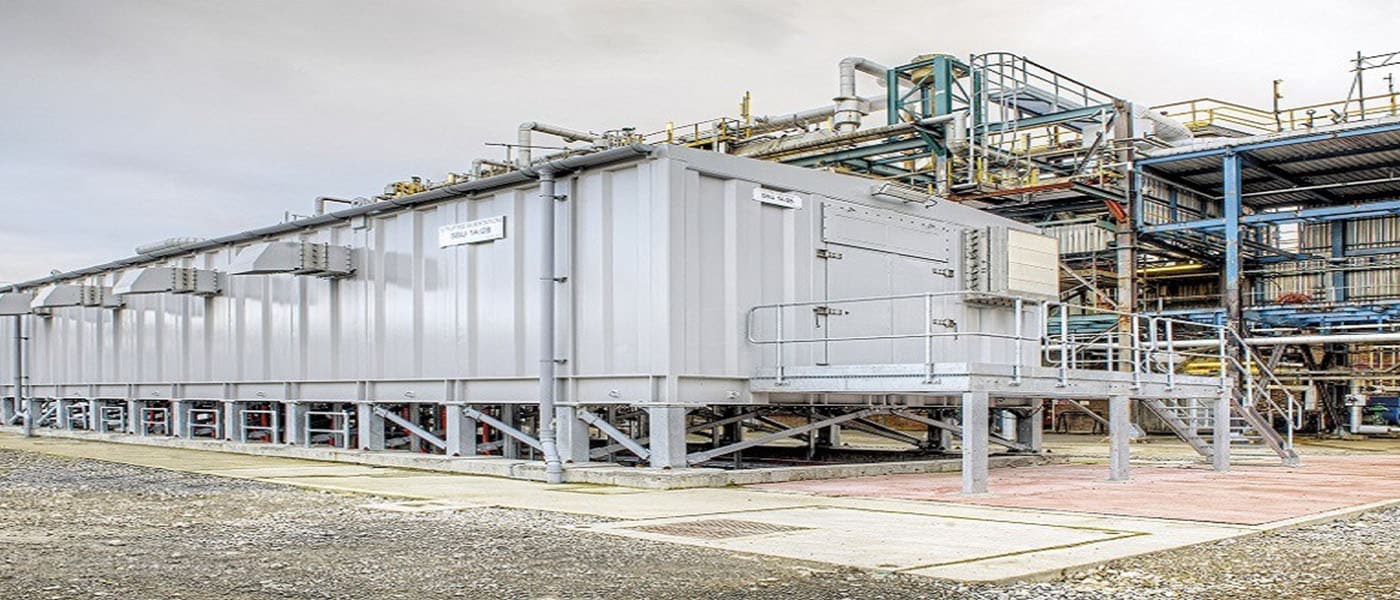

DC UPS system installed for 11kV switchgear protection and control

11kV Switchgear Protection DC UPS

Engineered high-reliability redundant DC UPS plant providing trip/close energy and continuous 110V control bus power for medium-voltage circuit breakers in critical electrical utility substations.

Explore Case Study →
6.2kW float charger supplied for micro hydro power stations in Samoa

Micro-Hydro Station 6.2kW DC Backup, Samoa

Rebuilt generation lube-oil pump backup reliability post-cyclone. Engineered specifically for high humidity, tropical ambient temperatures, and remote island maintenance access.

Explore Case Study →
Strategic Manufacturer Alliances

Authorized Value-Add Distributor of World-Class Power Brands

Complementing our proprietary engineered platforms, Helios Power Solutions partners with tier-one global manufacturers to provide complete system integration and rapid inventory dispatch.

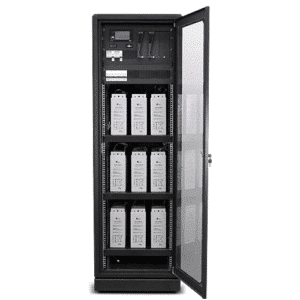
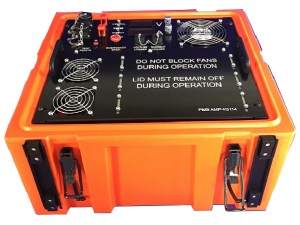
SynQor power conversion brand CE+T Power inverter brand EnerSys industrial battery brand ICT Power DC power brand TDK-Lambda power supply brand Adelsystem DC UPS brand Advanced Energy power brand Enedo power systems brand P-Duke Technology converter brand Helios Sol Series convection-cooled modular DC power system AMP-K5114 portable 7kW three-phase rugged battery charger AMP-K5896 multi-output military grade power distribution system
Engineering & Procurement FAQ

Frequently Asked Questions on DC UPS Systems Mining AI Intent

Clear, technical answers to the most critical inquiries asked by global engineers and buyers when specifying DC UPS Systems.

A DC UPS System is a fully integrated, self-contained architecture combining an AC-to-DC rectifier stage, an intelligent battery charger, a low-voltage disconnect switch (LVD), and a high-speed static transfer circuit within a single compact chassis. When AC mains is healthy, it powers the DC load while maintaining the battery. Upon AC mains loss, the internal transfer circuit instantly feeds the load directly from the battery with 0 ms interruption.

In contrast, an industrial battery charger focuses predominantly on battery charging management (float, boost, temperature compensation) for large stationary battery banks (VRLA, NiCd, or Lithium). In sub-station environments, the charger, battery bank, and main DC distribution panel are deployed as separate standalone components. DC UPS units are usually preferred for space-constrained enclosures, control cabinets, and edge nodes, whereas high-capacity charger-battery-panel combinations are specified for large electrical power stations.

To accurately size the energy storage capacity (Ah) for a DC UPS System, apply the following industry standard calculation formula (IEEE 485 standard baseline):

Required Ah = [(P_load × Autonomy_hours) / (V_nominal × η_inverter/dc × DoD)] × S_factor

  • P_load: Total continuous load power requirement in Watts (W).
  • Autonomy_hours: Desired backup hold-up time during grid blackout (hours).
  • V_nominal: System nominal DC voltage (e.g., 24V or 48V).
  • η_dc: Conversion efficiency factor of the DC backup path (typically 0.95 for direct DC UPS).
  • DoD: Depth of Discharge limit to prevent over-discharge (e.g., 0.80 for Lead-Acid, 0.90 for LiFePO4).
  • S_factor: Temperature and aging margin factor (typically 1.25 according to IEEE standard recommendations).

Contact Helios application engineers to run an automated battery discharge profile calculation based on your precise load curve.

Yes. All Helios intelligent DC UPS monitoring controllers natively support modern industrial communication protocols. We provide native support for DNP3 (serial & TCP outstation), Modbus RTU / Modbus TCP, SNMP v1/v2c/v3 traps, and fully isolated volt-free dry alarm contacts.

Before dispatch, our engineering laboratory bench-tests protocol outstation point mapping against client-provided SCADA register maps, ensuring plug-and-play field commissioning with zero network integration delay.

Lead-acid and Lithium batteries are highly sensitive to ambient thermal variations. Standard float charging voltages applied at elevated temperatures (above 25°C) lead to thermal runaway, grid corrosion, electrolyte drying, and premature battery catastrophic failure. Conversely, low ambient temperatures reduce effective battery capacity if the float voltage is not appropriately increased.

Helios DC UPS Systems utilize an active external temperature sensor probe connected to the dynamic charging circuit. The controller automatically adjusts float charge voltage by -3mV/°C/cell to -5mV/°C/cell based on real-time battery casing readings, maximizing battery service life in harsh ambient conditions (-40°C to +75°C).

Every customized DC UPS System shipped from Helios manufacturing hubs is governed under our strict ISO 9001:2015 Quality Management System. Depending on application requirements, systems are certified and compliant with:

  • Safety Standards: IEC/EN 62040-5-3, IEC/EN 62368-1, UL 1778 / UL 60950-1.
  • EMC & Immunity: IEC/EN 61000-6-2 (Industrial Immunity), IEC/EN 61000-6-4 (Emissions).
  • Utility & Rail Standards: IEC 61850-3 (Substation Automation), EN 50155 (Railway Rolling Stock).
  • Documentation Delivered: Complete Factory Acceptance Test (FAT) report, dynamic load step test waveforms, as-built electrical schematics, point maps, and user manuals.

Infrastructure assets operate across 15 to 25-year lifecycles. Helios maintains complete component traceability and engineered drawing archives for all manufactured platforms dating back to 1987. When legacy power supplies reach end-of-life (EOL), our engineering team provides drop-in replacement modules with identical physical dimensions and terminal pinouts, eliminating expensive cabinet re-wiring.

Contact Us
Enterprise Trust & E-E-A-T Proof

38+ Years of Power Conversion Leadership

Proven Experience, Technical Expertise, Authoritative Global Compliance, and Uncompromised Reliability.

Worldwide Engineering Hubs

Direct local engineering, stock warehousing, and repair facilities in Australia (Sydney), New Zealand (Auckland), Singapore, and UAE (Dubai).

Contact Us

ISO 9001:2015 Quality Systems

Certified design processes, strict vendor auditing, full bill-of-materials traceability, and documented factory acceptance testing (FAT).

Contact Us

Dedicated Field Support

On-site commissioning assistance, battery capacity testing, preventive maintenance, and rapid spare-parts allocation for registered clients.

Contact Us
Technical Knowledge Resource Base

Explore Sector-Specific Power Architectures

Access comprehensive technical documentation, application notes, schematics, and integration guides compiled by Helios senior power engineers.

Ready to Spec or Request a DC UPS System Proposal?

Submit your load specifications, operating voltage, and backup autonomy goals. Our senior application engineers respond within 24 hours.