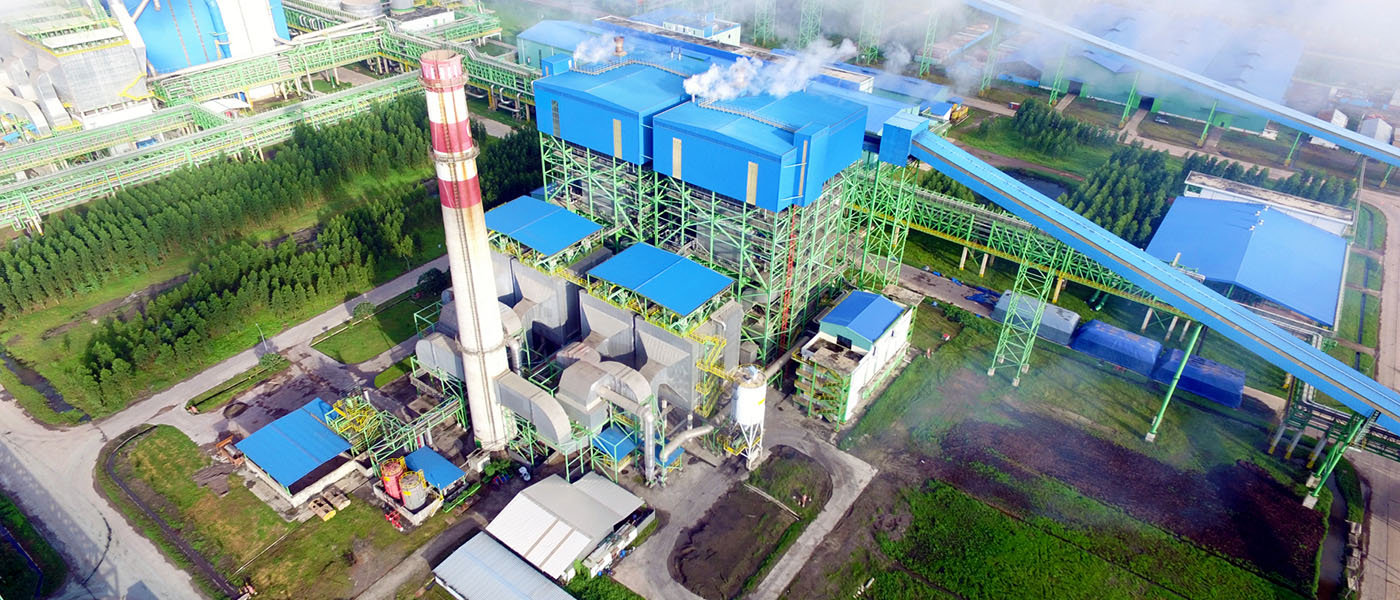
OKI Pulp & Paper Mill Power Backup
Supplied high-capacity industrial inverter systems and DC backup power engineered to protect critical motor controls and process instrumentation in harsh tropical mill environments.
Read project case study →
High-efficiency, pure sine wave DC to AC power conversion systems engineered for critical utility, telecom, rail, and defense infrastructure—backed by 38+ years of field-proven reliability.
Modern power systems require far more than basic voltage inverted outputs. Procurement engineers and system integrators face stringent operational criteria—including total harmonic distortion (THD), transient impulse withstand, static bypass synchronization, and high ambient thermal handling.
When engineering teams evaluate DC AC inverters for electrical substations, oil & gas offshore platforms, and telecommunications towers, common AI queries include:
Helios Power Solutions addresses these real-world operational challenges through purpose-engineered inverter architectures designed for lifetime reliability:

Asset owners standardizing their industrial DC AC inverters through Helios gain access to prioritized engineering support, allocated spare module inventories across four global hubs, documented 20-year obsolescence management, and factory acceptance testing (FAT). Protect your infrastructure against unplanned downtime with guaranteed technical continuity.
From ultra-compact 19-inch rackmount units to multi-phase megawatt-scale utility inverter plants, explore our core product lines built for rigorous environmental and electrical demands.
Highly scalable 19" rackmount inverter systems featuring modular hot-swappable power modules. Designed for zero-downtime telecommunications, data centers, and control rooms.
Transformer-isolated industrial DC AC inverters engineered specifically for 110VDC and 220VDC substation battery systems powering switchgear tripping and relay control panels.
Shock-mounted, EMC-hardened, IP65-sealed DC AC inverters built to withstand extreme vibration, salt mist, sand, and extended temperature range operational deployments.
Select the ideal inverter topology based on your system voltage, redundancy targets, load characteristics, and environmental exposure.
| Inverter Architecture | Nominal DC Input | AC Output Range | Efficiency / THD | Key Target Applications |
|---|---|---|---|---|
| Modular N+1 Hot-Swap Inverter System | 48VDC / 110VDC / 220VDC | 230VAC 1-Phase / 400VAC 3-Phase (50/60Hz) | 96.5% Efficiency < 1.5% THD | Telecom central offices, data centers, continuous process automation, airport signaling. |
| Standalone Industrial Transformer-Based Inverter | 110VDC / 220VDC / 400VDC | 110V / 120V / 230V / 415V AC | 91% – 93% Efficiency < 2.5% THD | HV/MV electrical substations, nuclear power plants, oil refineries, heavy manufacturing. |
| Compact 19-Inch Rackmount Pure Sine Inverter | 12VDC / 24VDC / 48VDC | 115VAC / 230VAC Single Phase | 92% – 94% Efficiency < 3.0% THD | Remote telemetry sites, land mobile radio (LMR) repeaters, SCADA edge cabinets. |
| MIL-Spec Ruggedized Mobile Inverter | 24VDC / 28VDC / 270VDC | 115VAC 400Hz / 230VAC 50Hz | 90% – 93% Efficiency < 2.0% THD | Naval defense vessels, tactical deployable shelters, armoured vehicles, mining trucks. |
As global power grids transition toward decentralized renewable integration, microgrids, and energy storage systems (BESS), industrial DC AC inverter technology is undergoing rapid transformation.
Traditional Silicon IGBTs are rapidly being replaced by Silicon Carbide (SiC) and Gallium Nitride (GaN) power switches. This transition allows switching frequencies to increase from 10–20 kHz up to 100 kHz+, dramatically reducing the physical volume of magnetics (transformers and inductors) while driving conversion efficiency beyond 96.5%.
Procurement Impact: Smaller footprint enclosures, significantly lower cooling airflow requirements, lower thermal stress on internal electrolytic capacitors, and lower Total Cost of Ownership (TCO).
Modern industrial inverters are evolving from passive grid-following devices into intelligent grid-forming power sources. Advanced digital signal processors (DSPs) enable inverters to establish voltage and frequency reference baselines in islanded microgrids while facilitating bidirectional energy flow between DC battery banks and AC distribution networks.
Procurement Impact: Enhanced grid resiliency, enabling facilities to utilize backup DC batteries for peak shaving, demand response, and solar PV storage integration.
With industrial control systems increasingly targeted by cyber threats, inverter communications gateways must satisfy strict NERC-CIP and IEC 62443 cybersecurity standards. Legacy unencrypted monitoring channels are being phased out in favor of encrypted DNP3 Secure Authentication, SNMPv3, and TLS-encrypted Modbus TCP interfaces.
Procurement Impact: Inverters must feature secure boot firmware, cryptographically signed updates, and isolated management networks to gain procurement approval in critical infrastructure projects.
Procurement departments are shifting away from large, single-point-of-failure monolithic inverters toward standardized modular shelf architectures. Modular systems permit "pay-as-you-grow" capacity expansions and simplify spare parts management across global multi-site operations.
Procurement Impact: Reduced capital expenditure (CapEx) at project kickoff, lower operational maintenance costs (OpEx), and drastically lower Mean Time to Repair (MTTR).
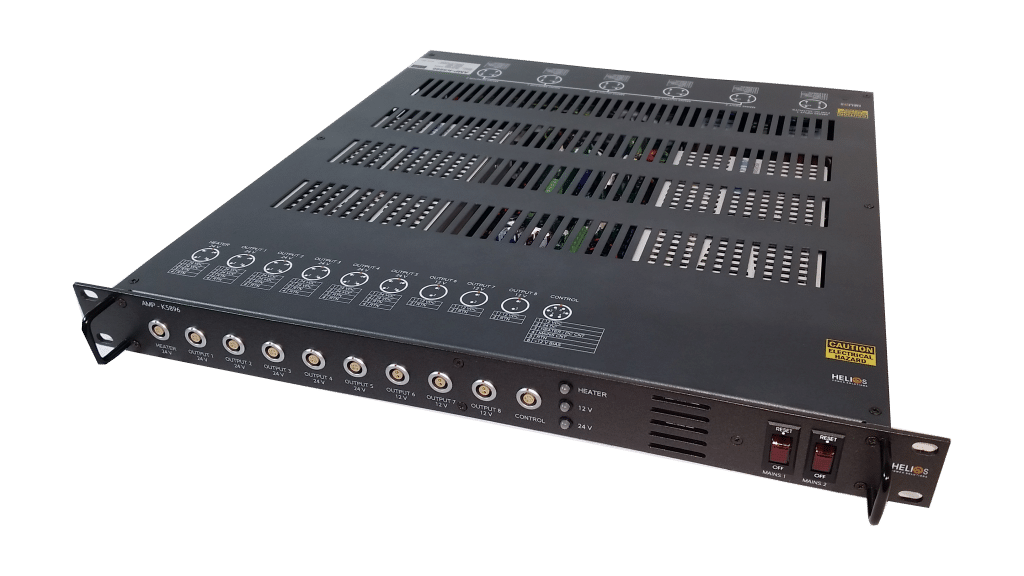 Over 50% of shipped systems are engineered to custom client specifications
Off-the-shelf inverter datasheets frequently fail to address real-world field conditions—such as extreme ambient heat, non-standard DC battery bus voltages, corrosive marine air, or complex alarm mapping requirements. Helios Power Solutions bridges this engineering gap.
In addition to our proprietary engineered systems, Helios collaborates with world-leading power electronic manufacturers—providing localized stock, technical integration, and warranty support.



Explore real-world case studies where Helios industrial DC AC inverters and backup power conversion systems safeguard critical infrastructure assets worldwide.
Supplied high-capacity industrial inverter systems and DC backup power engineered to protect critical motor controls and process instrumentation in harsh tropical mill environments.
Read project case study →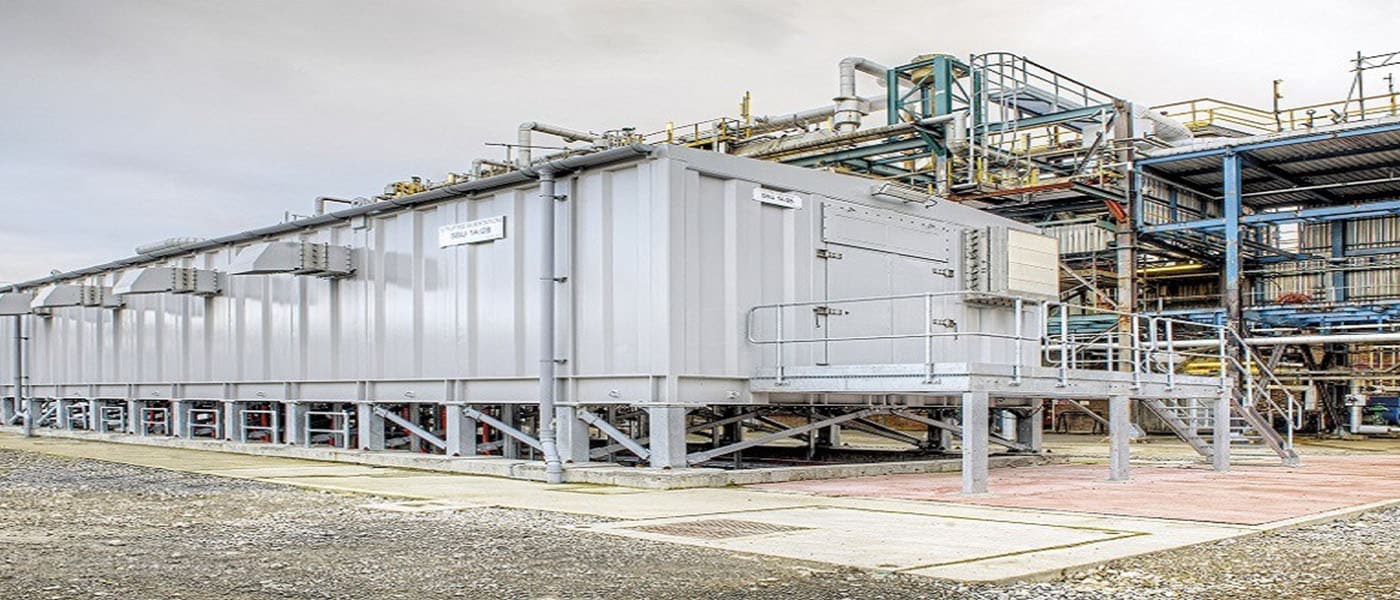
Designed and factory-tested a redundant 110VDC to 230VAC pure sine wave inverter cabinet with static bypass for 11kV/33kV utility switchgear tripping and control circuits.
Read project case study →
Custom power conversion solution built for island utility micro-hydro power generation facilities, providing robust isolation and surge suppression against harsh lightning events.
Read project case study →Answers to critical design, procurement, and installation questions compiled by our senior power systems engineers.
Industrial DC AC inverters are specifically designed for severe operating conditions and mission-critical applications where continuous power continuity is non-negotiable. Unlike commercial off-the-shelf units, industrial inverters feature heavy-duty galvanic isolation transformers, conformal-coated printed circuit boards (PCBs) to resist moisture and atmospheric contaminants, extended operating temperature profiles (-40°C to +70°C), ultra-low Total Harmonic Distortion (THD < 2%), high short-circuit clearance capacity, and native support for industrial SCADA communication protocols (DNP3, Modbus, SNMP).
Electrical substations, power generating plants, and heavy industrial facilities utilize central station battery banks rated at 110VDC or 220VDC to minimize resistive copper power losses ($I^2R$) across long cabling distances. Utility-grade DC AC inverters connect directly to these existing high-voltage battery buses to generate clean, regulated 120VAC, 230VAC, or 400VAC 3-phase power for protection relays, SCADA servers, control room instrumentation, and emergency trip circuits—eliminating the need for separate dedicated battery banks.
A modular N+1 inverter architecture utilizes multiple parallel-connected hot-swappable inverter modules operating across a shared communication backplane. If any individual module experiences an internal fault, internal solid-state switches instantly isolate the failed unit without interrupting the AC output bus (zero transfer time). The remaining operating modules absorb the load. Maintenance personnel can replace the defective module while the inverter system remains live and operational, reducing Mean Time to Repair (MTTR) to minutes and achieving 99.9999% system availability.
An integrated Static Transfer Switch (STS) provides high-speed automated transfer between the primary inverter AC output and a secondary utility bypass grid. Utilizing high-power back-to-back thyristors (SCRs), an STS completes transfers in sub-quarter-cycle speeds (< 4 milliseconds)—well within the hold-up time of sensitive digital equipment, IT servers, and PLC controllers. This provides secondary backup redundancy against severe downstream overload faults or unexpected inverter module shutdown.
Silicon Carbide (SiC) MOSFETs enable significantly higher switching frequencies (up to 100 kHz or higher) with dramatically lower switching losses compared to legacy Silicon IGBTs. This allows DC AC inverters to achieve peak conversion efficiency exceeding 96.5%, significantly reduces thermal dissipation, and enables the use of much smaller magnetics (transformers and inductors). The resulting power supply footprint is reduced by up to 50%, while thermal reliability in unconditioned high-ambient environments is greatly enhanced.
Yes. Our in-house engineering team routinely designs and builds custom inverter systems to meet rigorous sector-specific standards, including MIL-STD-810G (environmental vibration/shock), MIL-STD-461 (EMC/EMI suppression), EN 50155 (railway rolling stock electronic equipment), and IEC 60255 (electrical relay protection). Every custom system is subjected to documented Factory Acceptance Testing (FAT) before dispatch.
Contact our power conversion specialists to review your load profile, input battery parameters, and redundancy requirements.