ISO 9001:2015 Certified  |  38+ years of power engineering for critical infrastructure
EN 50155 & IEC 61373 Certified Systems

Next-Generation Railway Power Conversion Systems: Architecture & Procurement Guide

Engineered DC/DC converters, auxiliary power supply units (APU), trackside signaling rectifiers, and traction battery chargers designed for extreme vibration, wide thermal envelopes, and 30-year operational lifecycles.

  • EN 50155 / RIA 12 Compliant
  • 38+ Years Engineering Precision
  • Global Support: AU · NZ · SG · UAE
Technical White Paper & Specification Reference

Navigating Modern Railway Power Conversion: Sizing, Compliance & Operational Risk Mitigation

Railway electrical infrastructure operates in one of the world's most unforgiving environments. Modern rolling stock and trackside signaling networks demand highly efficient, galvanically isolated power conversion systems capable of handling severe voltage spikes, dynamic load steps, ambient swings from -40°C to +85°C, and continuous mechanical shock.

As global rail networks transition toward decarbonization, automated train control (CBTC), high-speed passenger corridors, and hybrid battery-electric rolling stock (BEMU), the requirements placed on Railway Power Conversion Systems have expanded exponentially. Power converters are no longer isolated black boxes; they are intelligent, network-connected sub-systems that dictate overall fleet RAMS (Reliability, Availability, Maintainability, and Safety) metrics and Life Cycle Costs (LCC).

At Helios Power Solutions, our 38+ years of field-proven power conversion engineering across Australasia, Asia, and the Middle East provide rolling stock manufacturers (OEMs), railway operators, and signaling integrators with deep technical capability. This comprehensive guide reviews the architectural requirements, standard compliance parameters, emerging technology trends, and recommended hardware specifications essential for global procurement managers and chief electrical engineers.

Helios Priority Programme – railway asset lifecycle support and stock reservation

Helios Priority Programme for Railway Authorities

Standardizing your railway fleet's DC/DC conversion, battery charging, and emergency back-up hardware with Helios guarantees prioritized technical response, 25-year component traceability, dedicated spare parts buffer stock in regional hubs (Sydney, Auckland, Singapore, Dubai), and drop-in retrofit support for legacy rolling stock retrofits.

Get a Quote
0Systems Deployed Globally
0Critical Infrastructure Clients
0Years Railway Power Mastery
4Global Engineering Hubs
Product Portfolio

Helios Railway Power Conversion Solutions

Fully compliant with EN 50155, EN 50121-3-2, RIA 12, and IEC 61373. Optimized for both on-board rolling stock and trackside infrastructure applications.

EN 50155 On-Board DC/DC Converters

Ultra-wide input voltage ranges (14.4V to 154V DC) covering 24V, 48V, 72V, 96V, and 110V nominal battery buses. Features 3kVAC reinforced isolation, heavy-duty conduction cooling, and zero fan reliance.

50W – 3kW · Conduction Cooled

Auxiliary Power Converter Units (APU)

High-efficiency modular power converters generating regulated 3-phase AC auxiliary power and continuous DC control voltages for HVAC, braking compressors, lighting, and door actuation.

5kW – 100kW · SiC MOSFET Architecture

Trackside & Signaling Battery Chargers

Redundant industrial battery chargers with active Power Factor Correction (PFC) designed for level crossings, signaling interlocks, and wayside substations. Temperature compensated for long battery life.

Single & 3-Phase · Modbus / DNP3

Pure Sine Wave Railway Inverters

Ruggedized DC to AC inverters converting DC battery voltage (24V–110VDC) into clean 120V/230VAC power for on-board passenger infotainment, Wi-Fi routers, ETCS cab signaling, and driver displays.

500VA – 10kVA · Parallel Redundant

Modular N+1 DC Power Systems

Hot-swappable shelf systems providing redundant 24V or 48V DC power for railway telecommunications, GSM-R base stations, and operational control centres (OCC) with remote telemetry.

N+1 Redundancy · Hot-Swappable

Traction Substation Auxiliaries

Heavy industrial 110V/220V DC battery tripping units and rectifiers engineered for high short-circuit withstand capability in main traction power substations (25kV AC / 1.5kV DC overhead lines).

110V / 220V DC · High Icu Rating

Custom Modular DC/DC Sub-Racks

19-inch rack-mount or chassis-mount multi-output power conversion assemblies tailored to customer mechanical dimensions, legacy wiring harnesses, and custom alarm relay outputs.

Custom Enclosures · IP65 / IP67 Options

Lithium-Ready Railway Chargers

Next-generation charging platforms equipped with multi-stage programmable profiles for LiFePO4 and LTO (Lithium Titanate) batteries with automated CANbus BMS communication.

LiFePO4 & LTO Compatible · CANbus
Engineering Guidance

Technical Evaluation Matrix: Railway Standards & Architecture Sizing

A rigorous comparative analysis of technical parameters for on-board rolling stock vs. trackside power conversion installations.

Table 1.1: Standard compliance and design parameters for railway power systems.
Domain Parameter On-Board Rolling Stock Requirement Trackside Signaling & Wayside Station Helios Engineering Solution
Key Standard EN 50155 / IEC 60571 / RIA 12 EN 50124-1 / EN 50121-4 / IEC 62236 Dual-certified architectures with complete test reports & third-party FAT validation.
Input Voltage Tolerance 0.7 Un to 1.25 Un continuous;
0.6 Un brownout (100ms);
1.4 Un overvoltage (1s)
Wide AC input (85V–264V AC 1-phase / 320V–520V AC 3-phase) or 110V DC station battery Ultra-wide ratio input stages (up to 10:1 continuous) preventing low-voltage shutdown during motor startup.
Surge & Transient Protection RIA 12: 3.5 x Un for 20ms (385V surge on 110V nominal bus) @ 0.2Ω source impedance IEC 61000-4-5 Class 4 high-energy surge immunity (up to 4kV combination wave) Active electronic surge clamping circuits that handle repetitive surges without degrading MOV components.
Shock & Vibration IEC 61373 Category 1 Class A & B (Body mounted), Category 2 (Bogie mounted) Industrial vibration (IEC 60068-2-6) & seismic withstand rating Heavy-duty potting, mechanical locking hardware, robust SMT layout, zero mechanical relays.
Thermal Management EN 50155 Class OT4 (-40°C to +85°C) with cold-plate or natural convection cooling -25°C to +70°C ambient range inside sealed NEMA/IP outdoor cabinets Fanless conduction designs utilizing aluminium heat-sink chassis to prevent airborne ballast dust ingestion.
Fire & Smoke Safety EN 45545-2 (Hazard Levels HL1, HL2, HL3 for toxic fume & smoke density) UL 94-V0 self-extinguishing materials & low-halogen internal wiring Fully compliant EN 45545-2 HL3 materials selected for all internal insulators, plastics, and conformal coatings.
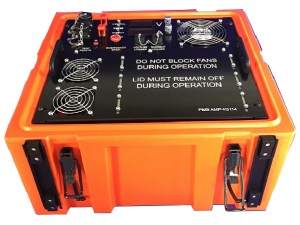
Custom military and railway grade multi-output power supply engineered by Helios ISO 9001:2015 custom engineered power units for high-reliability rail networks
Technical Insight

Key Architectural Factors in Railway Power Conversion

Designing power supplies for railway applications requires solving three core challenges simultaneously: extreme electrical dynamics, harsh environmental stressors, and strict physical envelope limits.

1. Managing Wide DC Input Ranges and Transient Spikes

Railway battery lines (24V, 48V, 72V, 96V, 110V DC) experience severe voltage fluctuations caused by regenerative braking, contact shoe arcing, third-rail interruptions, and auxiliary engine starting. A standard industrial DC/DC converter specified for ±10% voltage tolerance will fail or lock out rapidly under these conditions. Helios railway power conversion systems utilize multi-stage interleaved switching topologies that maintain continuous voltage regulation down to 14.4V DC and withstand transient spikes up to 385V DC without transferring disturbances to downstream loads.

2. Conduction Cooling vs. Forced Air in Railway Environments

Forced-air cooling using internal fans is a primary point of failure in railway rolling stock. Air currents pull conductive brake dust, metallic particles, and moisture into power electronics modules, causing creeping short-circuits and catastrophic PCB flashovers. Helios engineering emphasizes cold-plate conduction cooling and heavy fins natural convection. By conducting heat directly to the vehicle chassis or external heat-pipe radiators, our converters maintain a sealed IP66 enclosure rating and extend MTBF past 500,000 hours.

3. Galvanic Isolation and EMC Compliance

High-voltage traction currents (1.5kV DC or 25kV AC) can induce significant ground potential surges across vehicle cars. Dual galvanic isolation (typically 3kV AC for 1 minute) between input, output, and chassis ground prevents dangerous earth loops and protects sensitive ETCS vehicle control units. Concurrently, strict compliance with EN 50121-3-2 guarantees that conducted emissions do not interfere with GSM-R wireless voice links or track circuit cab signaling.

Get a Quote

Strategic Procurement Analysis

Future Trends in Global Railway Power Conversion (2025–2035)

Insights for procurement directors, rail asset owners, and systems integrators preparing for next-generation fleet specs.

Technology Shift 01

Wider Adoption of Silicon Carbide (SiC) Semiconductors

Silicon Carbide (SiC) power switches are replacing traditional Silicon IGBTs in railway auxiliary converters and traction battery chargers. SiC enables 5x higher switching frequencies, reducing magnetic component volume by 40%, cutting system weight by 35%, and driving power conversion efficiency above 96.5%. Procurement specifications for new rolling stock projects now increasingly mandate SiC topology to achieve weight reductions and energy savings.

Technology Shift 02

Transition to Battery-Electric & Hydrogen Hybrids (BEMU / HMU)

To eliminate diesel traction on non-electrified regional lines, railway operators are rapidly procuring Battery-Electric Multiple Units (BEMU) and Hydrogen Fuel Cell Multiple Units (HMU). This requires bidirectional multi-port DC/DC converters capable of managing ultra-fast battery charging from overhead catenary bursts and regulating fuel-cell DC outputs into stable auxiliary buses.

Technology Shift 03

Smart Predictive Maintenance & IoT Telemetry

Modern railway power conversion units are evolving into intelligent edge-nodes. Integrated CANopen, MVB, or Ethernet Modbus TCP communications stream real-time operational diagnostics—such as capacitor thermal stress, internal bus ripple, input transient counts, and battery health—directly to depot maintenance software, moving fleet servicing from fixed schedules to predictive condition-based maintenance.

Technology Shift 04

LiFePO4 & LTO Battery Chemistry Integration

Legacy Lead-Acid and Nickel-Cadmium (NiCd) train batteries are being replaced by Lithium Iron Phosphate (LiFePO4) and Lithium Titanate (LTO) battery banks due to higher energy density and rapid charge acceptance. Modern power converters must incorporate specialized multi-stage digital control algorithms and active BMS communication interfaces to manage stringent charging safety windows under extreme ambient temperatures.

Technology Shift 05

Modular Plug-and-Play Architecture for Minimum MTTR

Railway operators prioritize minimizing Mean Time to Repair (MTTR). Future power system procurements focus on hot-swappable sub-rack modules with self-aligning blind-mate connectors. In the event of a module fault, depot technicians can swap conversion modules in under 5 minutes without disconnecting internal wiring looms.

Technology Shift 06

Decarbonization & Circular Life-Cycle Requirements

Global procurement tenders now evaluate scope 3 embedded carbon and recyclability rates. Power converters built with modular, easily repairable sub-assemblies, halogen-free materials, and energy-efficient active conversion stages receive higher technical scoring in municipal transport authority RFPs.

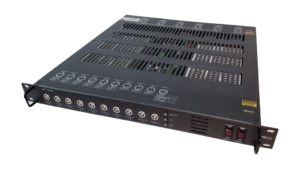
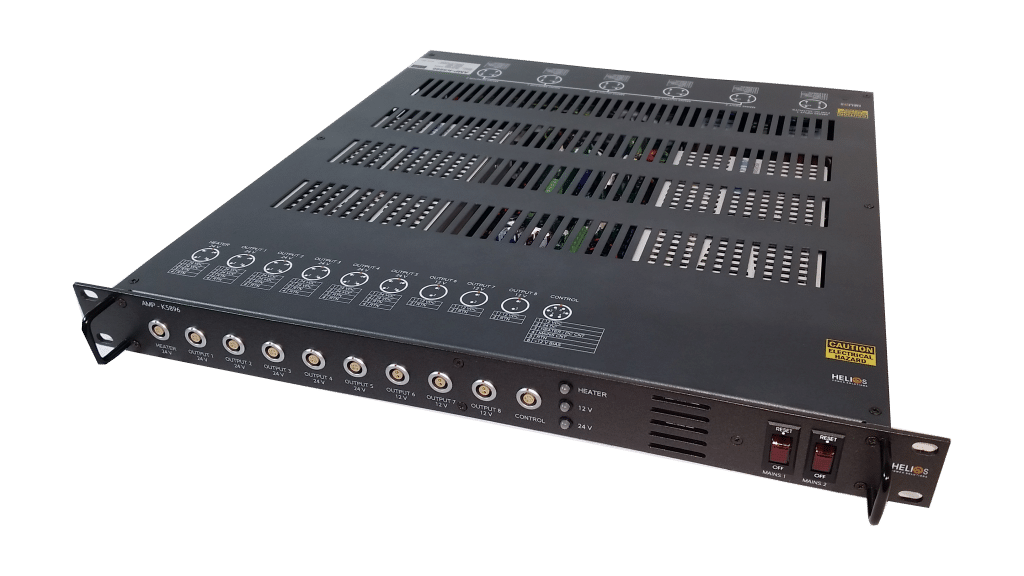
Helios Sol Series convection-cooled modular power conversion shelf for railway enclosures Engineered-to-order mechanical footprints for direct retrofits
Retrofit & Modernization Solutions

Solving Legacy Obsolescence in Railway Power Systems

One of the biggest financial challenges facing railway authorities is component obsolescence during a train's 30-to-40 year operational lifespan. When original equipment manufacturers discontinue legacy DC/DC converters or chargers, finding a drop-in replacement that matches existing mechanical mounting studs, connector pinouts, and thermal cooling paths can be extremely difficult.

Helios Power Solutions custom engineering team specializes in reverse-engineering and drop-in retrofits:

  • Mechanical Customization: Custom 19-inch sub-racks, under-car enclosures, or roof-mounted power boxes built to replicate legacy mounting dimensions.
  • Electrical Interface Matching: Pin-for-pin compatible wire harness adapters and custom connector backplanes to eliminate rewiring of train coaches.
  • Protocol Translation: Digital gateway cards that convert internal RS485/Modbus telemetry to legacy Train Communication Network (TCN), MVB, or dry-contact alarm maps.
  • Re-Rating for Harsh Ambient Conditions: Upgrading power conversion capacity within the original mechanical envelope using high-density SiC electronics.

Get a Quote

Technical FAQ

Frequently Asked Questions by Railway Buyers & Engineers

Clear, authoritative engineering answers to common technical queries in AI search and tender specifications.

EN 50155 defines strict continuous and transient voltage variations for on-board electronic equipment. For standard battery bus nominal voltages (24V, 48V, 72V, 96V, and 110V DC), converters must operate continuously within 0.7 to 1.25 times nominal voltage. Crucially, they must also withstand brownouts down to 0.6 x Un for 100 milliseconds and overvoltages up to 1.4 x Un for 1 second.

Helios railway power conversion systems are engineered with ultra-wide input stages (such as 14.4V to 154V DC dynamic ranges) to maintain unbroken regulated outputs during engine cranking, heavy load switching, or pantograph bounce.

While EN 50155 mandates basic electrical safety and overvoltage immunity, UK Railway Industry Standard RIA 12 specifies significantly higher energy transients. Specifically, RIA 12 requires equipment to withstand high-voltage surges up to 3.5 times nominal voltage for 20 milliseconds (e.g., 385V surge on a 110V DC bus) with a source impedance of 0.2 ohms. Standard industrial MOV arresters cannot absorb this energy without failure.

Helios integrates active electronic surge limiting circuits that clamp high-energy transients without disconnecting downstream load conversion stages.

Forced air cooling with fan ventilation introduces mechanical moving parts vulnerable to fine airborne metal dust, humidity, and ballast debris common in railway corridors. This reduces MTBF and requires periodic filter maintenance.

Helios prioritizes heavy-duty conduction cooling, baseplate cooling, and natural convection designs rated for EN 50155 Class OT4 (-40°C to +85°C extended operational temperature). Eliminating cooling fans increases subsystem MTBF beyond 500,000 hours under MIL-HDBK-217F conditions, drastically lowering 25-year Life Cycle Costs.

Silicon Carbide (SiC) MOSFETs enable switching frequencies 5 to 10 times higher than traditional Silicon IGBTs while drastically reducing switching losses. In railway auxiliary power conversion and traction battery chargers, SiC technology reduces passives (transformers, inductors, filter capacitors) by up to 45% in mass and footprint, delivers overall energy efficiencies exceeding 96.5%, and operates at higher junction temperatures without thermal runaway.

During fleet modernization, original mounting footprints, legacy wire harness connectors, and obsolete analogue monitoring interfaces present major engineering bottlenecks. Helios specializes in drop-in replacement power conversion units.

We design custom mechanical mounting adaptors, pre-wired heavy-duty connector sub-assemblies, and digital protocol bridge modules (converting internal RS485/Modbus data to legacy MVB, WTB, or volt-free contact maps) to eliminate physical modification of existing coach structures.

On-board power systems must strictly comply with EN 45545-2 (Hazard Levels HL1 to HL3) governing flame propagation, toxicity, and smoke density of non-metallic components, as well as IEC 61373 Category 1 Class B shock/vibration. Trackside signaling and traction substation auxiliaries fall under EN 50124-1 (insulation coordination) and EN 50121-4 (EMC immunity for signaling and telecommunications).

Helios engineers both platform categories with conformal coating, potted magnetics, high-creepage PCB design, and IP65/IP67 ruggedized enclosures.

Global Brand Partnerships

Authorized Engineering Distributor & Integrator

We combine our in-house custom conversion engineering with world-class power brands to deliver complete turnkey solutions.

SynQor railway power converters CE+T Power inverters EnerSys railway batteries ICT DC systems TDK-Lambda power supplies Adelsystem DIN rail DC UPS Advanced Energy system Enedo power systems P-Duke railway DC/DC converters Helios Sol Series railway system AMP-K5114 portable battery charger AMP-K5896 multioutput power supply

View All Brand Partners

Engineering Resource Network

Comprehensive Critical Infrastructure Knowledge

Explore our extensive collection of industry-specific technical white papers, design guides, and application reference architectures engineered for critical mission environments.

Ready to Specify Your Railway Power Conversion System?

Connect directly with our senior power conversion engineering team for sizing calculations, schematics, and compliance verification.