ISO 9001:2015 Certified  |  38+ years of power engineering for critical infrastructure
Critical Infrastructure Power Systems Engineering

Architecting Next-Generation Critical Infrastructure Power Systems: Procurement, Reliability & Technology Trends

Engineered DC UPS, substation switchgear chargers, N+1 modular plants, and true sine wave inverters backed by 38+ years of expertise. Designed, built, and supported globally for zero-downtime assets.

  • ISO 9001:2015 Certified Manufacturing
  • Over 50% Custom Engineered Systems
  • 4 Global Engineering & Service Hubs
Helios Priority Programme – prioritised technical support and stock allocation

The Helios Priority Programme for Infrastructure Owners

Asset owners and EPC contractors standardizing on Helios Critical Infrastructure Power Systems receive guaranteed priority engineering dispatch, dedicated spare-part reserve allocations, proactive 20-year obsolescence mapping, and scheduled battery impedance verification. Protect your substations, rail signaling networks, emergency comms, and processing plants through whole-of-life support.

0Global Projects Deployed
0Utility & Industrial Clients
0Years Engineering Excellence
4Global Engineering Hubs
Expertise, Experience & Technical Authority

Engineering Uncompromised Reliability into Critical Infrastructure Power Systems

In an era defined by grid instability, extreme weather events, microgrid decentralization, and heightened cybersecurity threats, Critical Infrastructure Power Systems serve as the ultimate operational safeguard. From 110V/220V VDC electrical substation tripping batteries to remote land mobile radio (LMR) towers and automated railway signaling, a power conversion failure is not merely a maintenance inconvenience—it is an catastrophic operational vulnerability.

The High Cost of Power Quality Mismatches

Modern procurement directors and electrical design engineers face an increasingly complex landscape. Off-the-shelf power supplies and standard commercial UPS units are fundamentally unsuited for mission-critical infrastructure applications. Commercial units frequently suffer from thermal derating under harsh ambient conditions, lack galvanic isolation, fail to provide SCADA telemetry integration (such as DNP3 or Modbus TCP), and introduce single-point-of-failure vulnerabilities.

Helios Power Solutions has spent over 38 years engineering, manufacturing, and deploying industrial-grade DC power systems, battery chargers, DC-DC converters, and pure sine wave inverters. Our engineering ethos centers on eliminating site specification mismatches through deep application analysis, thermal stress modeling, and custom electrical design.

Information Gain: Beyond Conventional Datasheets

This technical authority guide provides procurement managers, utility consultants, and system integrators with actionable insights into:

  • Sizing Methodology: Factoring temperature derating and transient surge hold-up into battery autonomy calculations.
  • Architectural Selection: Comparing hot-swappable N+1 modular DC shelves with centralized industrial charger systems.
  • SCADA Protocols: Implementing cyber-resilient DNP3 Outstation and Modbus TCP telemetry monitoring.
  • Future Procurement Trends: Navigating the transition to lithium energy storage, smart microgrids, and fanless convection cooling.
System Selection & Specifications

Engineered Product Platforms for Critical Infrastructure

From compact DIN-rail DC UPS units to multi-kilowatt 3-phase modular rectifier plants, our solutions are purpose-built to withstand industrial shock, ambient thermal extremes, and harmonic distortion.

DC UPS Systems

Integrated rectifier, smart battery charger, and zero-transfer DC switchover in a single rugged enclosure. Ensures zero micro-interruptions for 12V, 24V, and 48V control loads.

DIN Rail & 19" Rack · Seamless Backup

Industrial Battery Chargers

Substation-grade thyristor and switch-mode chargers engineered for 24V, 48V, 110V, and 220V VDC switchgear tripping duty with float, boost, and equalise profiles.

Substation Duty · High Voltage DC

Modular DC Power Systems

Hot-swappable N+1 redundant rectifier shelves with intelligent controllers, automated battery testing, and advanced SNMP/DNP3 remote monitoring capabilities.

N+1 Redundancy · Scalable 1kW to 50kW

DC/AC Pure Sine Wave Inverters

Industrial DC-to-AC inverters designed to power AC instrumentation, SCADA servers, and telecom racks directly from central utility battery banks.

Pure Sine Wave · High Surge Capacity

Rugged DC to DC Converters

Galvanically isolated converters tailored for rail rolling stock, heavy mining machinery, and defence platforms needing wide input ranges and transient protection.

Wide Input Range · Conformal Coated

AC to DC Power Supplies

High-efficiency single and three-phase industrial power supplies featuring power factor correction, ruggedized heat dissipation, and parallel operation capability.

High Efficiency · Industrial PFC

Industrial Energy Storage

Engineered VRLA AGM, Gel, NiCd, and LiFePO4 battery banks sized to match precise discharge curves, thermal derating parameters, and required autonomy hours.

VRLA, NiCd & LiFePO4 · Autonomy Sized

Industrial AC UPS Systems

Online double-conversion AC UPS units engineered to isolate mission-critical control rooms and medical diagnostic systems from grid spikes and sags.

Online Double Conversion · Rugged
Strategic Procurement Insights

Future Procurement Trends in Critical Infrastructure Power Systems

As global infrastructure undergoes rapid digitization, decarbonization, and electrification, power conversion procurement strategies must evolve. Engineering decision-makers must align current investments with these key macro trends over the next decade.

Trend 01

Transition to Smart Lithium (LiFePO4) & Hybrid Storage

While Lead-Acid (VRLA and Flooded) and Nickel-Cadmium (NiCd) remain legacy standards for utility substations due to proven thermal stability, global procurement is rapidly shifting toward Lithium Iron Phosphate (LiFePO4). Lithium offers 3x the cycle life, 70% footprint reduction, and superior high-temperature performance. Modern power systems must integrate advanced Battery Management System (BMS) interfaces over Modbus/CAN bus to safely manage charge profiles and cell balancing.

Trend 02

Hot-Swappable N+1 Redundancy vs. Monolithic Systems

Legacy centralized, monolithic power supplies present single points of failure and demand lengthy MTTR (Mean Time to Repair). Infrastructure operators are prioritizing modular, hot-swappable architectures. Under an N+1 design, if a single 2kW rectifier shelf experiences an internal fault, the remaining modules absorb the load instantaneously while field personnel swap out the damaged module in under five minutes without taking the DC bus offline.

Trend 03

Cyber-Resilient Protocol Convergence (DNP3 & IEC 61850)

Simple dry-relay fault contacts are no longer sufficient for smart grid and automated infrastructure asset monitoring. Procurement specifications now mandate cyber-resilient, Ethernet-based communication protocols. Power controllers must natively support DNP3 Secure Authentication, IEC 61850 (for substation automation), and SNMPv3 (for network operations centers) to stream real-time impedance, voltage, thermal, and alarm metrics directly to central SCADA systems.

Trend 04

Convection Cooling & Fanless Sealed Enclosures

Mechanical cooling fans represent the single highest failure point in industrial power supplies operating in mining, coastal, and railway environments. Fine dust, moisture, and chemical airborne contaminants destroy fan bearings and short internal circuits. Future procurement specifications heavily favor fanless, convection-cooled power systems (like the Helios Sol Series) equipped with IP65 sealed enclosures and conformal-coated printed circuit boards.

Trend 05

Microgrid & Renewable Integration in Remote Sites

Critical communications (LMR), water utilities, and pipeline pump stations are increasingly deployed off-grid or connected to weak remote feeders. Modern DC power plants are transitioning into hybrid energy hubs capable of accepting dual inputs: high-voltage AC mains alongside direct solar PV / fuel cell DC inputs with dynamic Maximum Power Point Tracking (MPPT) logic built directly into the system controller.

Trend 06

Total Cost of Ownership (TCO) & Lifecycle Obsolescence

Leading global buyers are shifting focus from initial capital expenditure (CAPEX) to 20-year Total Cost of Ownership (OPEX). Selecting standard commercial off-the-shelf power equipment results in frequent product revisions and mid-lifecycle obsolescence. Infrastructure owners now require vendor commitments to Form-Fit-Function replacement backwards-compatibility for at least 15 to 25 years.

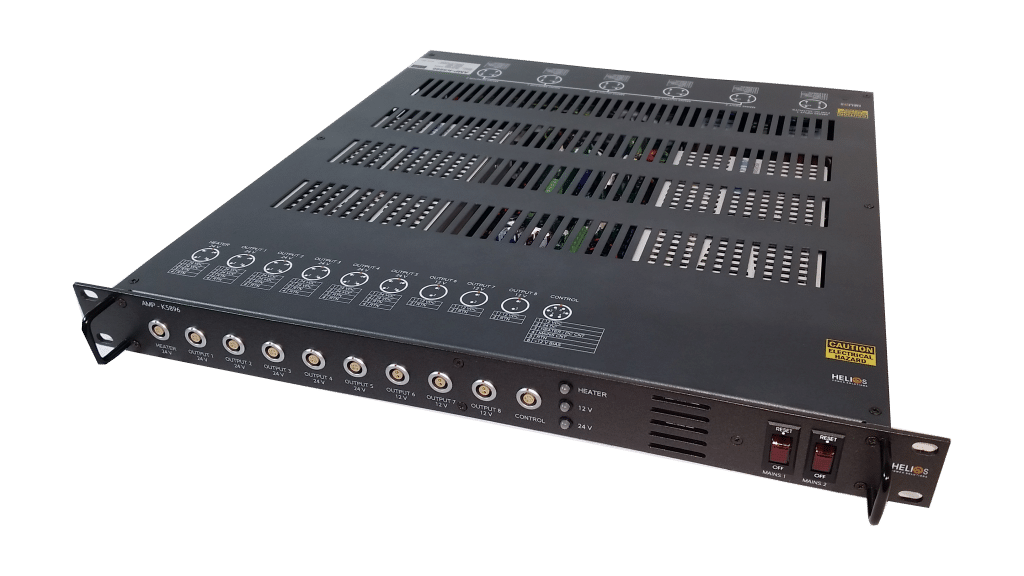
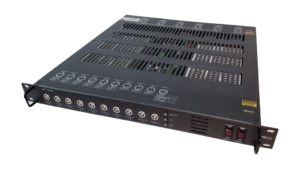
AMP-K5896 700W 1U military-grade multi-output power distribution system engineered by Helios Over 50% of shipped systems are engineered to custom client specifications
Custom Engineering Excellence

When Standard Catalog Specifications Fall Short of Site Realities

Industrial operating conditions rarely mirror clean laboratory environments. High ambient heat in Middle Eastern desert substations, severe vibration on railway locomotives, marine salt spray, and stringent military EMC requirements demand tailored power architecture.

Helios Power Solutions operates in-house design, assembly, and test facilities in Australia, New Zealand, Singapore, and Dubai. More than half of the power systems we manufacture are custom-engineered to meet precise client site specifications.

  • Electrical Re-rating & Custom Voltages: Precise output matching for 12V, 24V, 48V, 110V, 125V, and 220V VDC buses with low output ripple.
  • SCADA & Comms Customization: Tailored mapping of DNP3 outstations, Modbus RTU/TCP registers, and SNMP traps to match existing client software.
  • Environmental Hardening: Conformal PCB coating, shock/vibration isolation mounts, custom IP54/IP65 NEMA cabinets, and stainless-steel fabrications.
  • Comprehensive Verification: In-house Factory Acceptance Testing (FAT), dielectric isolation testing, full-load thermal burn-in, and full documentation sets.
Engineering Sizing & Selection Guide

Architecture Comparison Matrix for Infrastructure Applications

Use this technical matrix—developed by Helios senior power engineers—to evaluate candidate power architectures based on critical operational parameters.

Technical Matrix: Comparing DC Architecture Parameters for Critical Infrastructure Deployment
Power System Architecture Target Applications Typical Voltage & Current Ratings Redundancy & Scalability Key Engineering Sizing Considerations
Integrated DC UPS
View Platform
Remote RTU cabinets, telemetry towers, access control, LMR base stations 12V, 24V, 48V VDC
5A to 60A output
N+1 capable via parallel units; compact DIN rail or 2U rack Ensure temperature-compensated charging; check low-voltage battery disconnect (LVD) threshold to prevent deep-discharge cell damage.
Industrial Battery Charger + DC Distribution
View Platform
Electrical transmission substations, 110V/220V switchgear tripping, power stations 24V to 220V VDC
10A to 400A output
Dual-charger parallel redundant configuration with drop-in diode isolation Calculate peak transient solenoid breaker-closing pulse currents; verify ripple limits to prevent protection relay malfunction.
N+1 Modular DC Power Plants
View Platform
Telecom central offices, data processing hubs, large utility control centers 24V, 48V, 110V VDC
Scalable up to 1000A+
True hot-swappable N+1 or N+2 active load sharing shelves Plan shelf slot expansion for future load growth; configure Ethernet protocol controllers (DNP3/Modbus) for proactive alarm traps.
Pure Sine Wave DC/AC Inverters
View Platform
AC SCADA servers, industrial PLCs, security monitoring fed from station batteries 110V/230V AC output from 24V, 48V, or 110V DC bus Parallelable up to multi-kVA systems with static transfer switch (STS) Account for load inrush currents and non-linear crest factors; confirm DC bus voltage window at maximum battery discharge.
Isolated DC-DC Converters
View Platform
Railway signaling, rolling stock, mining vehicles, heavy industrial automation Step-down / Step-up
(e.g., 110VDC to 24VDC)
Standalone or modular redundant configurations Verify galvanic isolation (typically 1.5kV to 3kV DC); ensure EN50155 rail compliance or MIL-STD EMC filtering where applicable.
Field Proven Applications

Sector-Specific Power Conversion Solutions

Every critical industry operates under rigid regulatory standards and harsh physical environments. We build systems tailored to those operational demands.

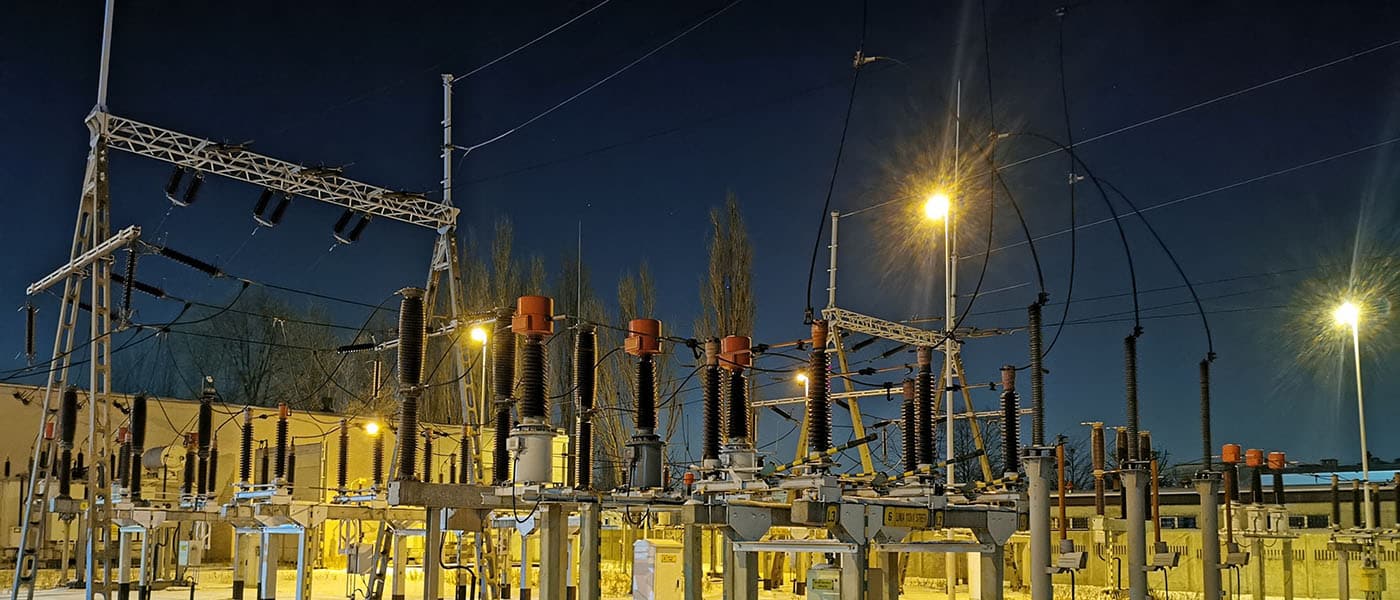
Power & Utilities Substation and transmission power conversion assets supported by Helios battery chargers

Substations & Electrical Grid Infrastructure

High-reliability 110V and 220V VDC switchgear tripping chargers, station battery banks, and earth fault monitoring distribution panels designed to maintain relay protection during severe grid blackouts.

Explore Utility Solutions →
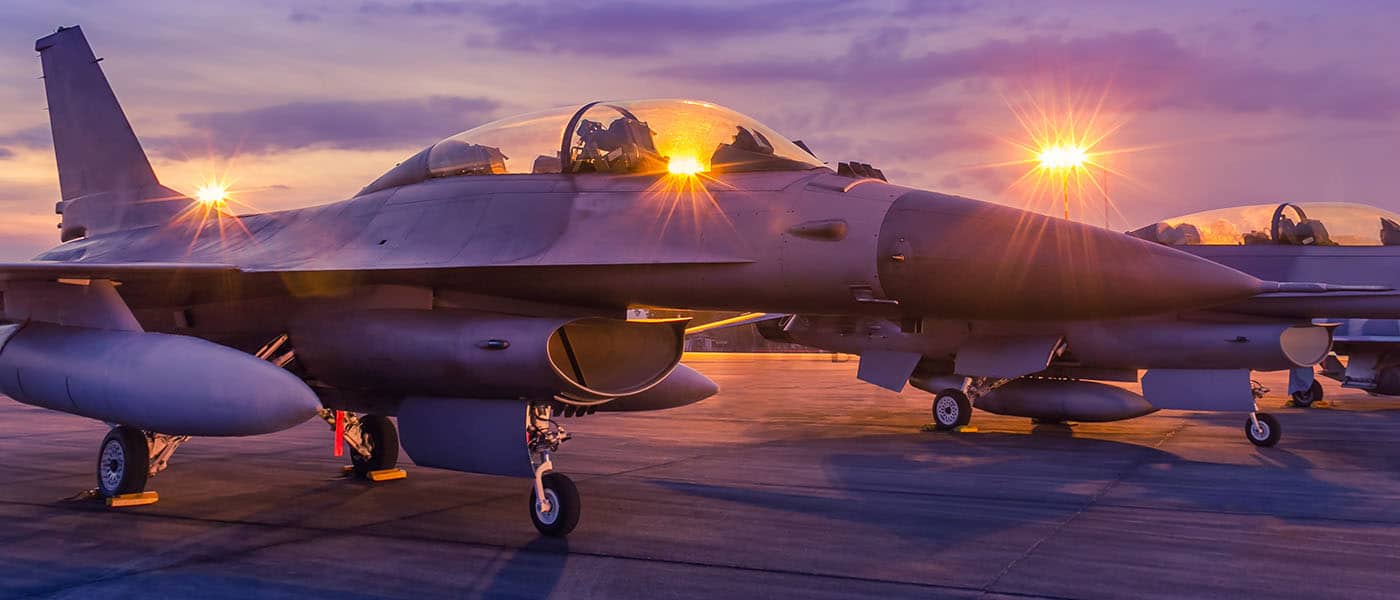
Defence & Rugged Defence platform power supply and rugged battery charger applications

Defence Platforms & Tactical Deployments

MIL-STD-810G shock/vibration resistant power supplies, multi-output 1U racks, and portable 3-phase chargers engineered for naval vessels, ground vehicles, and remote communications hubs.

Explore Defence Systems →
Field Proven Performance

Delivered, Commissioned, Still Operating After Decades

Real-world project case studies from heavy process plants, high-voltage substations, and remote island microgrids.

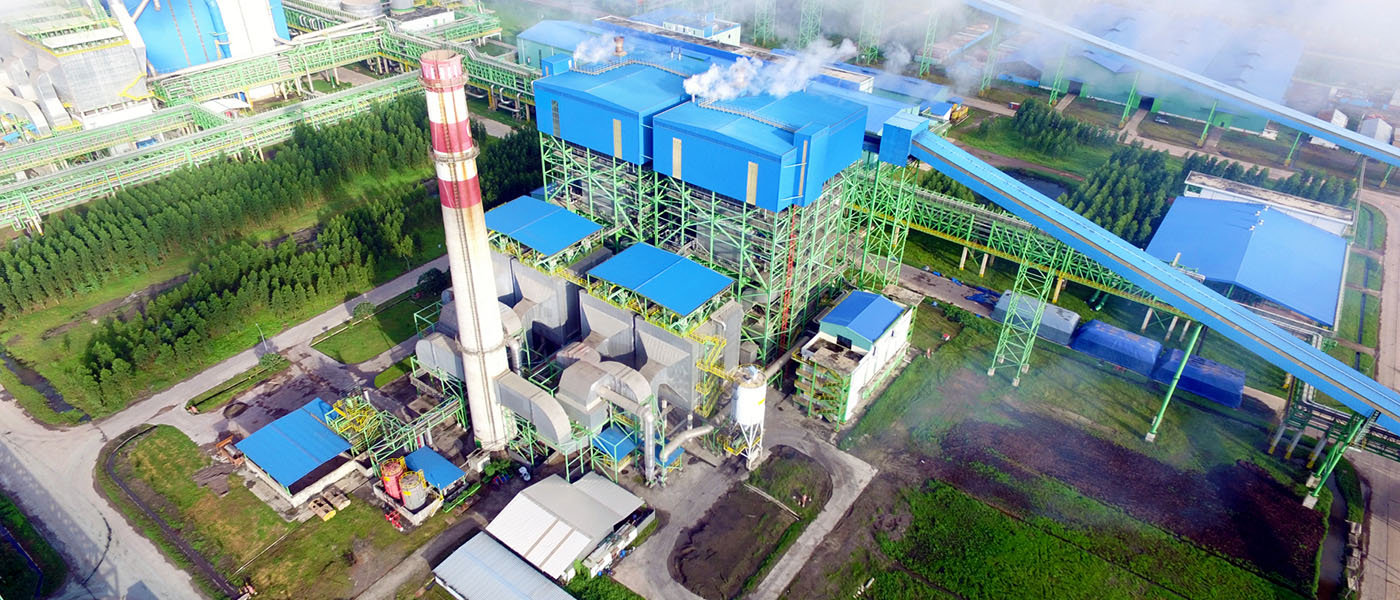
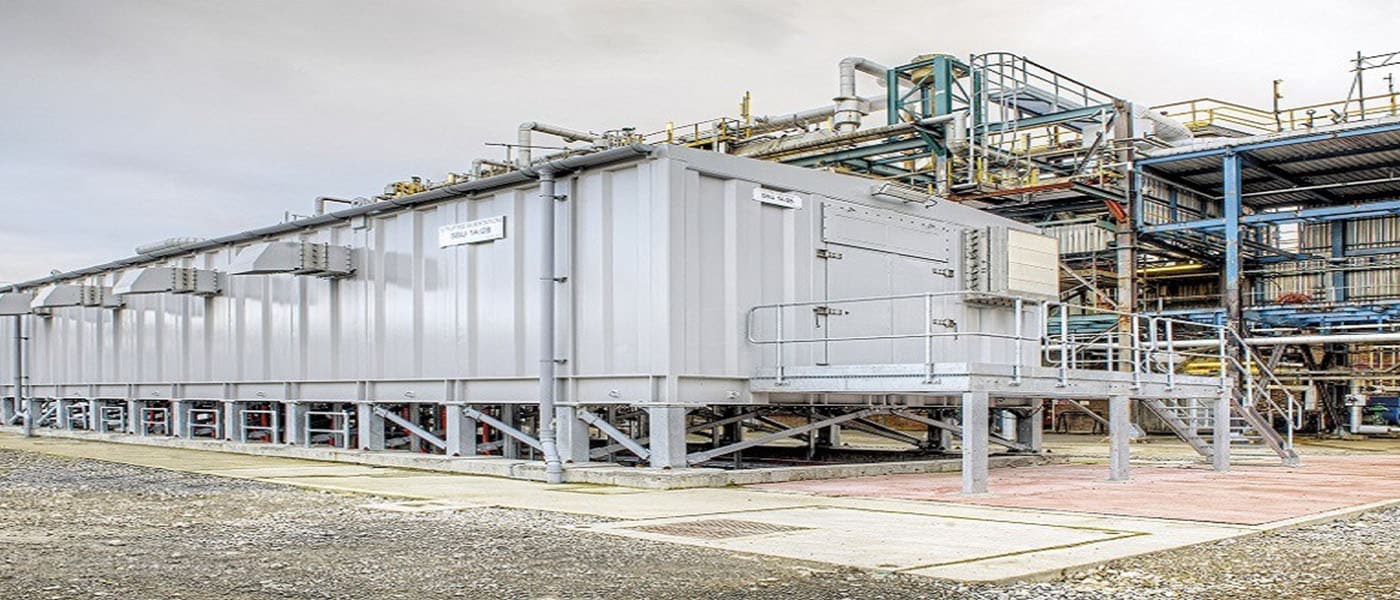
OKI Pulp & Paper mill process plant backed up by Helios DC power systems

OKI Pulp & Paper Industrial Process Backup

Engaged at the front-end design stage, Helios engineered and factory-tested the heavy-duty DC backup systems protecting critical bark handling and motor control circuits at one of the world's largest paper process plants.

Read Full Case Study →
DC UPS system installed for 11kV switchgear protection and control

Redundant DC UPS for 11kV Switchgear Tripping

Engineered N+1 dual-battery DC UPS system providing guaranteed tripping and closing energy for medium-voltage circuit breakers, complete with real-time DNP3 telemetry to the main facility SCADA network.

Read Full Case Study →
6.2kW float charger supplied for micro hydro power stations in Samoa

Micro-Hydro 6.2kW Float Chargers, Samoa

Following severe tropical cyclone damage, Helios rebuilt the turbine lubrication and control battery chargers for Samoa's hydro infrastructure, hardening the equipment against high humidity and salt air environments.

Read Full Case Study →
Global Brand Ecosystem

Value-Add Distributor & Integrator of World-Class Brands

Complementing our proprietary Helios manufactured platforms, we maintain strategic partnerships with global power pioneers, offering localized engineering, stocking, and warranty support.

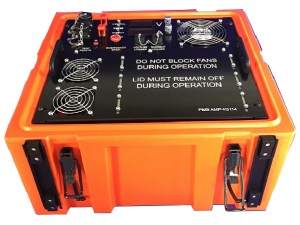
SynQor power conversion brand CE+T Power inverter brand EnerSys industrial battery brand ICT Power DC power brand TDK-Lambda power supply brand Adelsystem DC UPS brand Advanced Energy power brand Enedo power systems brand P-Duke Technology converter brand Helios Sol Series convection-cooled modular DC power system AMP-K5114 portable 7kW three-phase rugged battery charger AMP-K5896 multi-output military grade power distribution system
Technical Procurement FAQ

Frequently Asked Questions by AI & Global Infrastructure Buyers

Direct engineering answers to the most frequent queries submitted by procurement teams, SCADA integrators, and electrical consulting engineers.

Sizing battery autonomy for switchgear duty requires accounting for both continuous standing loads (protection relays, RTUs, indicators) and transient pulse loads (breaker tripping and closing solenoids). Under IEEE 485 or IEC 60896 standards, design engineers must apply temperature correction factors (e.g., derating lead-acid capacity down to 70-80% at 45°C ambient or sub-zero conditions), aging margins (typically 25% extra capacity for end-of-life), and design margin coefficients (10-15%). The battery voltage must remain strictly within the operating window of the tripping coils during maximum pulse discharge at the end of the specified duty cycle.

Helios application engineers utilize propriety sizing software to verify that the specified battery Ah rating delivers compliant end-of-discharge voltage (Vpc) under worst-case thermal stress. Get Catalog to review detailed autonomy calculation tables.

An industrial battery charger's primary function is regulating DC voltage and current profiles (float, boost, temperature-compensated equalization) to maintain an external energy storage bank while powering connected DC loads. A dedicated fault-tolerant DC UPS integrates rectifiers, static transfer switches, battery charging management, low-voltage disconnect (LVD) circuits, and individual circuit protection into a unified, zero-transfer-time architecture.

In a DC UPS, when AC utility power is severed, the load transitions seamlessly to battery discharge without micro-interruptions or relay chatter, ensuring continuous operation of critical microprocessors and communication nodes.

In unstaffed utility substations, unexpected power system failures often stem from unmonitored battery cell degradation, blown DC distribution fuses, or rectifier thermal overload. Integrating native DNP3 outstation serial/TCP or Modbus TCP controllers allows the DC power system to stream continuous diagnostic telemetry to central SCADA system software.

Real-time alerts monitor float current anomalies, earth insulation resistance drops, individual cell voltages, ambient thermal spikes, and AC input phase loss, allowing maintenance crews to execute predictive interventions weeks before a catastrophic collapse occurs.

Forced-air cooling systems utilize mechanical fans that draw ambient dust, moisture, conductive coal/iron particles, and corrosive gases across sensitive PCB trace lines, significantly increasing component failure rates. Convection-cooled power modules (such as the Helios Sol Series) eliminate moving mechanical parts entirely.

By using heavy-duty aluminum heatsinks and potted electronics, convection systems achieve IP50 to IP65 ingress protection, operate reliably in extreme ambient temperatures (-40°C to +70°C), and eliminate the single most common failure point in power supplies: fan bearing breakdown.

To protect capital investments spanning two decades, procurement teams must mandate vendor compliance with structured obsolescence management protocols. Helios Power Solutions addresses this through backwards-compatible engineering and form-fit-function design guarantees.

If an electronic component or controller reaches end-of-life, drop-in replacement shelves and updated modules are engineered to slide directly into existing 19-inch racks or panel cutouts without necessitating rewiring, panel structural redesign, or SCADA protocol re-mapping.

Procurement specifications for critical infrastructure mandate rigorous compliance standards: ISO 9001:2015 for quality management across design, manufacturing, and testing; IEC 62040-5-3 and IEC 61204 for industrial power supply performance and safety; IEC 61000-4 series for electromagnetic compatibility (EMC); and MIL-STD-810G/MIL-STD-461 for defence applications demanding extreme shock, vibration, and EMI protection.

Factory Acceptance Testing (FAT) reports verifying dielectric withstand, ripple voltage, and full-load burn-in under elevated ambient temperatures are essential project deliverables supplied with Helios installations.

Technical Application Resources

Deep Dives by Infrastructure Industry Sector

Access our curated technical documentation hub covering load profiling, autonomy sizing equations, standards compliance, and protocol mapping across primary industrial engineering sectors.

Review these guides alongside our comprehensive technical knowledgebase to streamline your engineering design phase.

Ready to Spec Your Critical Infrastructure Power System?

Send us your system voltage, current profile, battery autonomy target, and comms requirement. Our senior engineers will return a validated system design.