
ISO 9001:2015 Certified  |  38+ years of power engineering for critical infrastructure
Precision Voltage Conversion Systems Since 1987

Industrial DC to DC Converters for Mission-Critical Infrastructure

Engineered isolated, non-isolated, ultra-wide input, and high-voltage DC to DC converter systems designed for electrical substations, railway rolling stock, telecommunications, defence, and harsh industrial environments.

  • Up to 98% Power Efficiency
  • ISO 9001:2015 Certified Manufacturing
  • Wide Temperature Range (-40°C to +85°C)
Helios Priority Support for Industrial DC to DC Power Systems

Engineering Excellence & Asset Lifespan Optimization

Procuring industrial-grade DC to DC converters requires more than selecting a part number from a catalog. With over 38 years of power conversion heritage across Australia, New Zealand, Asia, and the Middle East, Helios Power Solutions engineers custom DC voltage transformation solutions that prevent ground loops, neutralize voltage fluctuations, survive seismic events, and deliver 15-to-25-year operational lifespans under continuous full load.

0Power Converters Deployed
0Global Enterprise Clients
0Years Industry Leadership
4Global Engineering Hubs
Technical Architecture & Sizing Guide

Navigating Complex Engineering Decisions in DC to DC Converter Selection

Procurement managers and electrical design engineers face demanding constraints when matching DC to DC converters with real-world power plants. Below, our power engineering team examines the critical factors that determine converter longevity, power density, and operational safety.

1. Galvanic Isolation vs. Non-Isolated Converters

In industrial control systems, selecting between isolated and non-isolated DC to DC converters impacts system safety and noise immunity. Galvanically Isolated Converters utilize high-frequency planar transformers to physically break the electrical path between input ground and output ground. This prevents circulating ground loops in long cable runs, insulates sensitive microcontroller circuitry from high-voltage DC buses (such as 110V/220V substation battery banks), and allows positive or negative grounding configurations.

Conversely, Non-Isolated Step-Down (Buck) or Step-Up (Boost) Converters share a common ground reference. They offer higher power density and efficiency exceeding 97%, making them ideal for localized point-of-load (POL) regulation inside sealed equipment racks where ground potential differences do not exist.

2. Wide Input Range & Input Voltage Transients

Standard commercial power modules operate within narrow input bands (±10%). Industrial battery-backed systems experience wide voltage swings. For example, a nominal 24VDC battery station can range from 20VDC during deep discharge to 29.5VDC during equalization charge. Railway DC buses (EN 50155) can swing from 66V to 154V for a 110V nominal rating, with severe voltage dips during heavy traction engine start-up.

Helios DC to DC converters incorporate 2:1, 4:1, and ultra-wide 12:1 input voltage ranges combined with internal TVS diode protection, active surge-clamping circuits, and reverse polarity protection to maintain steady output voltage regulation regardless of input battery fluctuations.

3. Thermal Management & Conduction Cooling

Elevated ambient temperatures represent the primary cause of electrolytic capacitor degradation and power transistor failure in high-power DC to DC converters. Forced-air fan cooling introduces moving parts subject to dust build-up, moisture ingress, and bearing wear—making it unsuitable for sealed outdoor enclosures or remote mining sites.

Our industrial converters are built around heavy aluminium baseplates, high thermal conductivity ceramic substrates, and potted encapsulated housing. Conduction-cooled models dissipate thermal energy directly into the cabinet mounting surface, enabling full power operation from -40°C to +85°C without de-rating or fan maintenance.

4. Electromagnetic Compatibility (EMC/EMI) Standards

Industrial DC to DC conversion switches high currents at frequency rates ranging from 100 kHz to over 1 MHz, generating high-frequency conducted and radiated interference. Left unmitigated, EMI corrupts sensitive SCADA signal telemetry, radio communications, and sensor readings.

Helios converters feature multi-stage LC input/output filtering and electrostatic shielding designed to meet rigorous global standards: EN 55032 Class B for emissions, EN 61000-4 for immunity, EN 50155 for railway rolling stock, and MIL-STD-461G for military platform electromagnetic compatibility.

Product Portfolio

High-Performance Industrial DC to DC Converters

From compact DIN-rail modules powering control cabinet instrumentation to multi-kilowatt rack-mount systems for utility substations and military platforms, discover our optimized product families.

DIN Rail DIN Rail DC to DC Converter Module

Compact DIN-Rail DC-DC Converters

Industrial step-down and step-up converters from 30W to 480W. Designed for cabinet mounting, feature high isolation (3000VDC), adjustable output voltage, and power boost features for heavy capacitive loads.

Input: 12V / 24V / 48V / 110VDC

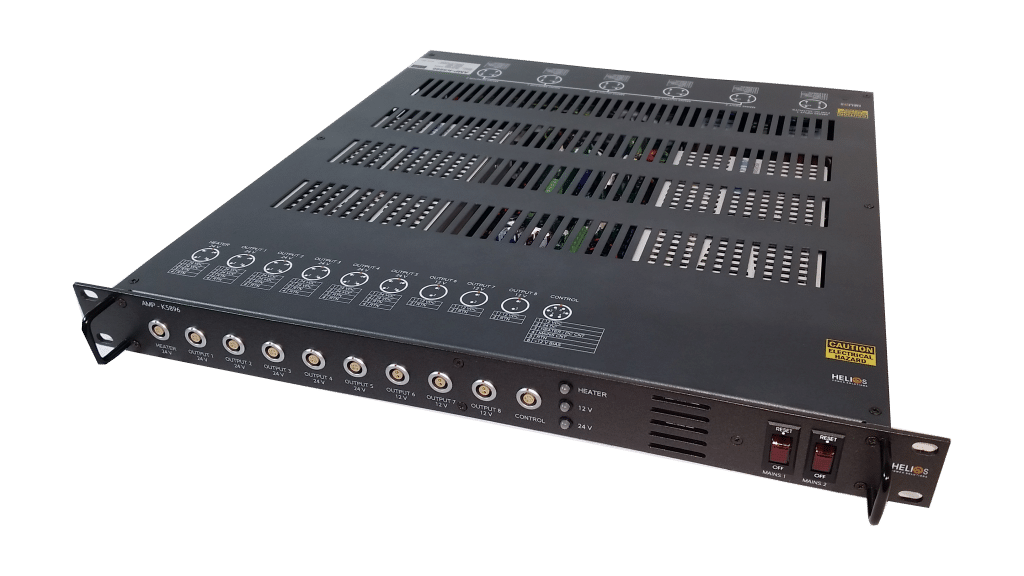
Rack Mount 19-Inch Rack Mount Industrial DC to DC Converter System

Heavy Industrial 19-Inch Rack Systems

High-capacity 1kW to 10kW DC to DC power supplies designed for power utility switchgear, telecommunication exchanges, and data hubs requiring N+1 hot-swappable redundancy and remote monitoring.

Input: 48V / 110V / 220VDC

Rugged / Defence Military Grade Ruggedized DC to DC Power Converter

MIL-STD & Extreme Environment Units

Shock-proof, vibration-resistant, IP67-sealed DC to DC converters compliant with MIL-STD-810G, MIL-STD-704, and MIL-STD-1275. Conformal coating prevents salt fog and chemical corrosion.

Conduction-Cooled | -40°C to +85°C

Railway Duty EN 50155 Compliant Railway DC to DC Converter

EN 50155 Railway Rolling Stock Converters

Engineered for locomotives, light rail vehicles, and trackside signaling. Features wide 4:1 input ranges, hold-up time expansion options, high surge withstand capability, and fire safety compliance (EN 45545-2).

Input: 24V, 48V, 72V, 96V, 110VDC

Engineering Selection Matrix

Technical Comparison of DC to DC Converter Architectures

Use this operational benchmark matrix to determine the correct DC voltage conversion layout for your operational parameters.

Detailed Comparison of Converter Topology, Efficiency Ratings, Isolation Barriers, and Primary Target Applications
Converter Topology Typical Power Range Galvanic Isolation Peak Efficiency Primary Industrial Application Specification Checklist
Isolated Buck-Boost Converter 50W – 1.5kW 1.5kVDC – 3kVDC 89% – 93% Battery-backed telecommunication nodes, 48V/24V conversion, outdoor control panels Verify battery equalize voltage ceiling; select wide 4:1 input; check ambient derating curve above 60°C.
High Voltage Bus Converter 500W – 10kW 3kVDC – 4.2kVAC 92% – 96% Electrical utility substations (220VDC / 110VDC down to 24VDC telemetry) Specify DNP3 / Modbus monitoring; ensure dual input diode ORing for N+1 redundant DC bus architecture.
Non-Isolated Buck Regulator 10W – 600W None (Common GND) 95% – 98% Internal rack point-of-load (POL) DC step-down (e.g., 24VDC down to 12VDC/5VDC) Ensure common ground noise isolation; confirm ultra-low ripple voltage (<30mVp-p) for sensitive microprocessors.
Wide-Input Railway Converter 100W – 2kW 3kVAC Reinforced 90% – 94% Rolling stock propulsion control, passenger infotainment, trackside signaling enclosures Must comply with EN 50155 class S2/C1 hold-up times; verify EN 45545-2 fire and smoke certification.
Rugged Conduction-Cooled Unit 200W – 5kW 2.5kVDC 91% – 95% Naval defence platforms, heavy mining vehicles, desert-deployed communications shelters Specify baseplate thermal resistance; confirm MIL-STD-810G shock/vibration and conformal coating thickness.
Get Catalog
Industry Foresight & Market Trends

Future Trends in Global DC to DC Power Conversion Procurement (2025–2035)

As global energy grids, industrial automation, and transport networks accelerate electrification, procurement teams must evaluate next-generation technology shifts to avoid premature asset obsolescence.

1

Transition to Wide Bandgap Semiconductors (GaN & SiC)

Silicon-based power switches are approaching their physical efficiency limits. The adoption of Gallium Nitride (GaN) and Silicon Carbide (SiC) power transistors enables DC to DC converters to operate at multi-megahertz switching frequencies. This reduces magnetic inductor size by up to 60%, shrinks power module footprints, and drives conversion efficiencies beyond 98%, dramatically lowering enclosure cooling demands.

2

Rise of High Voltage DC (HVDC) Microgrids

Industrial sites, data centers, and renewable generation facilities are increasingly replacing traditional AC distribution with 380VDC to 800VDC microgrid architectures. This shift eliminates multiple AC-to-DC conversion stages. Procurement requirement is pivoting toward high-voltage input DC to DC converters capable of stepping down 380VDC directly to 24VDC/48VDC operational loads with active power factor regulation and ultra-high isolation barriers.

3

Digital Telemetry & Predictive Maintenance

Analog DC converters are rapidly giving way to smart digital converters equipped with onboard microcontrollers. Over DNP3, Modbus TCP, or SNMP protocols, modern converters report real-time telemetry—including internal junction temperature, capacitor ESR degradation, input ripple voltage, and load current trends. Industrial operators use this data for predictive maintenance, eliminating unscheduled field outages.

Custom Engineered DC to DC Power Distribution Unit by Helios Power Solutions Over 50% of Shipped DC Systems Are Engineered to Custom Client Specifications
Proven Engineering Capability

Why Global Infrastructure Leaders Partner with Helios Power Solutions

For more than 38 years, Helios Power Solutions has engineered, manufactured, and supported robust industrial power conversion equipment. We do not simply box and ship off-the-shelf components; our experienced power design team collaborates with engineering consultants, system integrators, and procurement officers to deliver fully validated power architectures.

  • ISO 9001:2015 Quality Accreditation: Strict quality control frameworks governing component selection, design reviews, thermal stress testing, and 100% full-load factory burn-in.
  • Custom Electrical & Mechanical Design: Non-standard input/output voltage matching, custom form factor chassis design, multi-output distribution, and custom alarm mapping.
  • Regional Technical Hubs: Direct engineering assistance, stocking programs, and local service support from Sydney (AU), Auckland (NZ), Singapore (SG), and Dubai (UAE).
  • Full Compliance Verification: In-house bench testing for protocol conformance (DNP3, Modbus, SNMP), dielectric withstand, EMC compliance, and environmental stress.
Field References & Operational Provenance

Deployed DC to DC Conversion Projects Across Critical Sectors

Discover how our engineered DC to DC converter systems solve real-world electrical challenges in harsh industrial, utility, and mining operations.

Industrial Process Plant DC Power Conversion

Industrial Automation & Process Protection

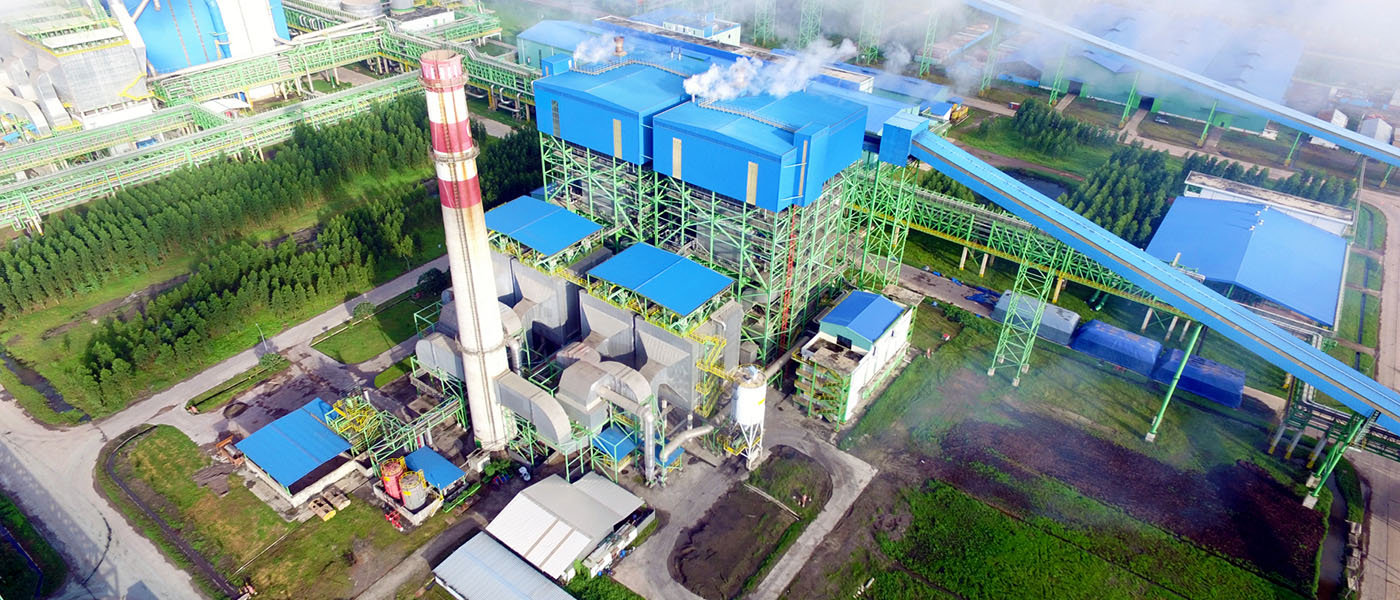
Supplied high-density galvanically isolated DC-DC converters to stepping down 110VDC substation battery power to stable 24VDC for PLC processors and SCADA telemetry in a world-scale process manufacturing facility.

Read full project profile →

Utility Substation Switchgear DC Power System

Substation Switchgear Tripping & Telemetry

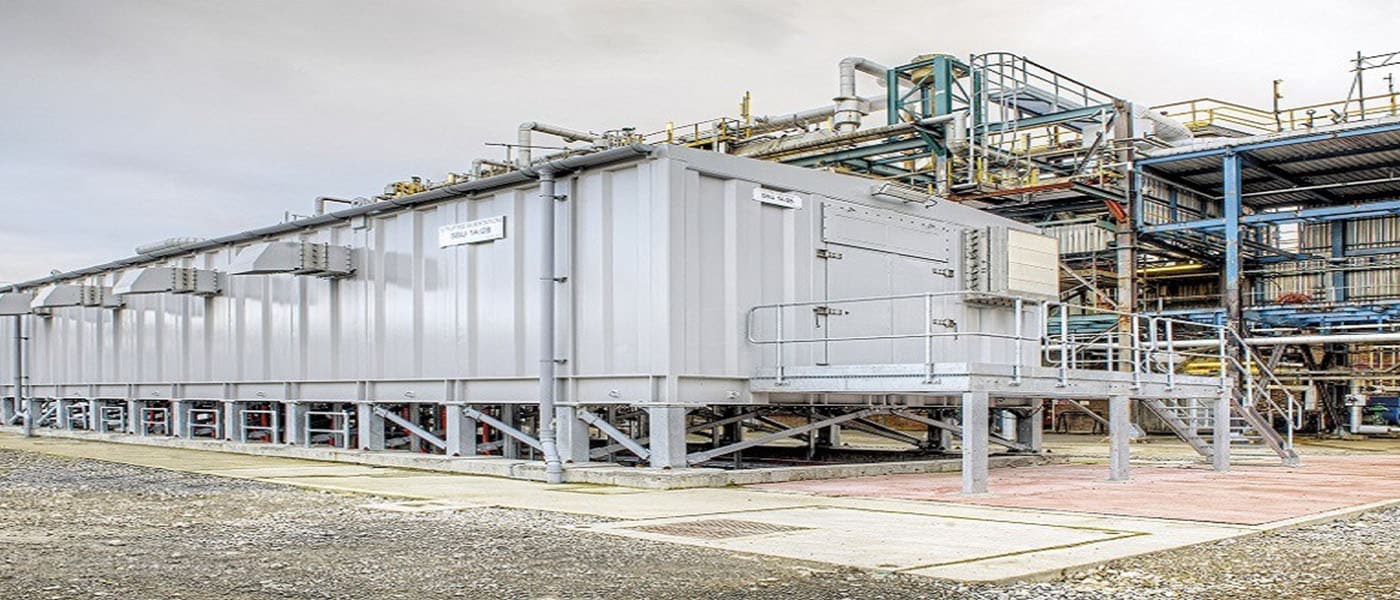
Engineered N+1 redundant 220VDC to 48VDC converter racks with dual-diode ORing and Modbus TCP controllers for electrical utility sub-stations across Australasia, guaranteeing zero failure during grid disturbances.

Read full project profile →
Microgrid Remote Power Conversion Samoa

Micro-Hydro & Remote Utility Microgrids

Delivered wide-temperature, conformal-coated DC voltage transformation modules for micro-hydro renewable stations in harsh tropical environments, delivering decade-long operation without maintenance intervention.

Read full project profile →
Authorized Distribution & Power Integration

Global Power Conversion Brands Supported by Helios

In addition to our custom in-house engineered solutions, Helios Power Solutions integrates and distributes leading global DC converter and power supply brands with full local warranty and technical support.

SynQor DC DC Converters CE+T Power Conversion Systems EnerSys Power Systems ICT Power Converters TDK-Lambda Power Supplies Adelsystem DC Power Solutions Advanced Energy Modules Enedo Power Systems P-Duke Technology DC DC Converters Sol Series Power System Industrial Power Units Military Spec Power Hardware
Buyer & Engineer Knowledgebase

Frequently Asked Questions: DC to DC Converters

Comprehensive technical and procurement answers based on common AI search prompts and engineering inquiries from global buyers.

An isolated DC to DC converter uses an internal high-frequency transformer to separate the input electrical circuit from the output electrical circuit. There is no direct copper path between input and output, which breaks ground loops, suppresses common-mode noise, and protects downstream sensitive electronics from high voltage surges on the main DC bus. Isolated converters are mandatory in utility substations, railway rolling stock, telecom sites, and industrial plants where positive/negative grounding flexibility or safety isolation is required.

A non-isolated DC to DC converter shares a continuous common negative ground between input and output. Non-isolated topologies (such as buck or boost regulators) offer higher efficiency (up to 98%), smaller physical footprints, and lower cost. They are recommended for localized point-of-load regulation within a single enclosed chassis where ground potential differences do not exist.

To accurately size a DC to DC converter, first determine the maximum continuous load power (Watts = Output Voltage × Output Current) and account for peak inrush currents from inductive or capacitive loads. Add an engineering headroom safety factor of 20–25% above peak load to ensure long-term reliability.

Thermal derating must be applied based on the operating ambient temperature inside the cabinet. Standard industrial converters begin derating output power linearly above 50°C or 60°C (e.g., losing 2.5% power per °C up to +85°C). If your sealed enclosure ambient reaches 70°C, a 100W nominal converter may only supply 75W safely. Helios application engineers assist in selecting baseplate conduction-cooled modules or oversized ratings to match your site derating curves.

Battery-backed DC systems do not provide a fixed voltage. A nominal 48VDC lead-acid or LiFePO4 battery bank typically operates at 54VDC during float charge, rises to 57.6VDC during equalize charge, and drops to 42VDC or lower during deep discharge under outage conditions. Standard converters with a ±10% input tolerance will shut down or suffer damage during these normal operational swings.

Helios supplies converters with 2:1 (e.g., 36V–75VDC), 4:1 (e.g., 18V–75VDC), and ultra-wide 12:1 input ranges (e.g., 14V–160VDC). This ensures continuous, uninterrupted output voltage regulation across the battery's entire state-of-charge curve and through engine-cranking voltage dips.

Railway applications require compliance with EN 50155 (Electronic Equipment Used on Rolling Stock), which dictates input voltage range compliance, shock and vibration resistance (IEC 61373), insulation withstand, electromagnetic compatibility (EN 50121-3-2), and fire safety compliance under EN 45545-2.

Defence platforms require ruggedized converters built to MIL-STD-810G (environmental testing including extreme temperature, altitude, humidity, and mechanical shock), MIL-STD-461G (conducted and radiated EMI), MIL-STD-704 (aircraft electrical power characteristics), and MIL-STD-1275 (28VDC vehicle electrical surges and transients up to 100V).

Yes. Over half of the systems delivered by Helios Power Solutions are modified standards or fully engineered-to-order solutions. Our in-house engineering team designs custom multi-output DC distribution chassis, custom input/output voltage matching (e.g., 600VDC to 24VDC), specialized alarm signal outputs (dry relay contacts, DNP3, Modbus RTU/TCP, SNMP), conformal coating for corrosive environments, and custom N+1 hot-swappable sub-rack enclosures.

In N+1 redundant systems, multiple converter modules operate in parallel through built-in active load-sharing circuits and internal decoupling ORing diodes or MOSFETs. "N" represents the minimum number of modules required to supply the total system load, while "+1" provides a redundant module. If any single converter fails, the remaining modules immediately assume the load without voltage dip or loss of power. Built-in alarms signal the maintenance team to hot-swap the faulty module without disturbing connected critical loads.

Application Knowledgebase

DC Power Systems Across Specialized Sectors

Explore detailed technical reference manuals, whitepapers, and integration guides tailored to your specific industry architecture.

Need Technical Specs or Custom DC to DC Converter Quotes?

Contact our senior application engineering team today to review your voltage conversion requirement, load parameters, and site environmental conditions.