
ISO 9001:2015 Certified  |  38+ years of power engineering for critical infrastructure
Heavy-Duty Power Backup Engineering

Industrial Battery Chargers & DC UPS Systems

Precision float, boost, and intelligent multi-stage battery chargers designed for sub-stations, switchgear, telecom, and critical industrial infrastructure.

Proven Engineering Standards

Mission-Critical Industrial Battery Charging Solutions

With over 38 years of power systems design experience, Helios Power Solutions manufactures and integrates heavy-duty industrial battery chargers and seamless DC UPS platforms. Built to ISO 9001:2015 quality frameworks, our systems protect operational assets across utilities, oil & gas, rail transport, defence, and critical communications worldwide.

Engineered for High-Reliability Backup Applications

Industrial battery charging systems require strict voltage regulation, low output ripple, and intelligent battery diagnostic algorithms to ensure 100% power availability when grid power fails. Helios battery chargers feature independent load and battery charging paths, preventing power transients from affecting sensitive operational equipment.

  • Wide Output Range: Systems tailored for 12VDC, 24VDC, 48VDC, 110VDC, 125VDC, and 220VDC battery banks.
  • Smart Battery Management: Temperature-compensated 3-stage charging curves (Float, Boost, Equalize) that extend battery service life.
  • SCADA & Network Ready: Integrated communication interfaces for Modbus RTU/TCP, DNP3, SNMP, and dry contact alarms.
  • Form Factors: Available in DIN-rail, wall-mount enclosures, 19-inch sub-racks, and modular hot-swappable platforms.
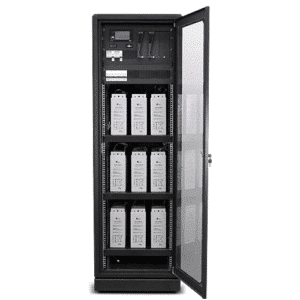
Helios Modular Convection Cooled Battery Charger System Field-tested under extreme temperature and harsh industrial conditions.
Product Classification

Industrial Battery Charger Product Lines

Select from standardized off-the-shelf charger modules, configurable industrial DC UPS units, or custom-engineered substation charger cabinets.

Utility & Substation

Standby Application Chargers

Designed for continuous float charging of stationary battery banks in switchgear rooms, 110V/220V substations, micro-hydro plants, and process plants.

12V – 220VDC | Convection Cooled
Modular & Scalable

Modular Hot-Swap Chargers

N+1 redundant rectifier shelves with intelligent controllers. Offers seamless hot-swappable expansion for telecommunications, data hubs, and growing industrial sites.

19" Subrack Mounting | N+1 Redundancy
Heavy Duty

Thyristor Controlled Chargers

Rugged, heavy-duty phase-controlled thyristor rectifiers engineered for high-capacity battery banks in extreme electrical and environmental conditions.

Heavy Industrial | High Current Output
Compact & DIN Rail

All-in-One DC UPS Chargers

Combines power supply, battery charger, low-voltage disconnect (LVD), and power transfer relay inside a compact DIN-rail enclosure for automation panels.

12V / 24V / 48VDC | DIN Rail
Cyclic Duty

Deep Cycle Battery Chargers

Optimized multi-stage charge profiles specifically tuned for deep-cycle lead-acid, AGM, Gel, and LiFePO4 battery maintenance in harsh cycle operations.

Microprocessor Controlled | Multi-Chemistry
Security & Comms

Security & Control Room Chargers

Power-backed DC supply modules providing uninterruptible backup for land-mobile radio networks, access control panels, and fire protection equipment.

Integrated Alarm Relays | Low Ripple
Technical Reference

Key Industrial Battery Charger Models

Compare key technical parameters across our primary industrial DC charger and integrated DC UPS platforms.

Technical Parameters for Featured Industrial Battery Chargers & DC UPS Units
Model / Series Nominal Voltage Output Power / Current Mounting Type Key Features & Protocols
CBI2410A
All-In-One DC UPS
24 VDC 10 A / 240 W DIN Rail / Panel Mount 3-Stage Charging, LVD, Diagnostic Alarms, Convection Cooled
CBI2420A
Intelligent DC UPS
24 VDC 20 A / 500 W DIN Rail / Panel Mount Modbus RTU Protocol, DPY351 Controller Compatible, Battery Health Test
CBI4810A
High-Voltage DC UPS
48 VDC 10 A / 500 W DIN Rail / Panel Mount Modbus RTU / SNMP, Float/Boost/Recovery Charging, Relay Alarms
CBI1235A
High-Current DC UPS
12 VDC 35 A / 420 W DIN Rail / Panel Mount Automatic Battery Status Diagnostics, Temperature Sensor Input, LVD
The Sol Series
Modular Charger
24 V – 220 VDC 250 W – 18 kW 19-inch Rack / Wall Cabinet N+1 Redundant Rectifiers, DNP3 / Modbus TCP Comms, Hot-Swappable Shelves
SD Series
Thyristor Charger
24 V – 220 VDC Up to 400 A Floor-Standing Cabinet Phase-Controlled Rectifier, Isolation Transformer, Substation Duty
Engineering Guidance

Selecting the Ideal Industrial Charger Architecture

When specifying industrial battery chargers for critical infrastructure, electrical engineers must evaluate critical electrical, ambient, and monitoring criteria to ensure continuous system operational availability.

1. Charging Curve & Battery Chemistry Compatibility

Improper charging profiles reduce battery service life and risk system failure. Helios industrial chargers incorporate programmed multi-stage charging algorithms:

  • Boost Charge Mode: Delivers controlled high current to quickly restore discharged batteries up to 85-90% capacity after a mains power failure.
  • Float Charge Mode: Regulates output at a precise, temperature-compensated voltage level to maintain full charge while preventing grid corrosion.
  • Equalize Mode: Balances individual cell voltages across flooded lead-acid or NiCd battery strings to prevent sulfation.

2. Temperature Compensation & LVD Protection

Extreme operating temperatures significantly impact battery performance and longevity:

  • Temperature Compensation: Remote temperature sensors adjust charging voltage dynamically (-3mV/°C/cell nominal) to eliminate thermal runaway risks in hot climates.
  • Low Voltage Disconnect (LVD): Automatically isolates the battery bank from the load when battery discharge voltage hits the critical threshold, preventing deep discharge damage.
  • Low Output Ripple: Suppresses electrical noise to keep DC output ripple below utility-grade thresholds (< 2% RMS), protecting sensitive SCADA and protection relays.
Target Industries

Specified Where Power Outages Are Not an Option

Power & Utilities

Tripping and closing power for 11kV/33kV switchgear, protection relays, sub-station control systems, and micro-hydro power plants.

Telecommunications

Uninterruptible 48VDC modular charger plants powering remote radio sites, land-mobile radio repeaters, and microwave relay nodes.

Oil, Gas & Mining

Heavy-duty, convection-cooled battery charging systems engineered for high ambient temperatures, dust, and continuous process control.

Rail & Transport

Vibration-resistant DC power systems for railway signaling, level-crossing barriers, tunnel safety equipment, and traffic management.

Technical FAQ

Frequently Asked Questions by Power Engineers

Float charging maintains a fully charged battery bank at a constant safe voltage level to counteract self-discharge without causing thermal stress or electrolyte loss. Boost charging applies a higher controlled voltage profile to rapidly restore depleted battery capacity following a power outage before returning automatically to float mode.

Chemical activity inside batteries changes with ambient temperature. Temperature-compensated chargers utilize external sensors to dynamically adjust output charging voltage—lowering float voltage in high ambient temperatures to prevent thermal runaway and increasing it in cold environments to ensure complete charge absorption.

Yes. Helios supplies chargers configured with programmable charging curves specifically matched to VRLA, AGM, Gel, Nickel-Cadmium (NiCd), and Lithium Iron Phosphate (LiFePO4) battery chemistries, including customized Low Voltage Disconnect (LVD) parameters.

Yes. Helios power systems support industrial communication protocols including Modbus RTU/TCP, DNP3 (serial/TCP), SNMP traps, and configurable volt-free alarm contacts for seamless remote status monitoring and diagnostic reporting.

Need Custom Engineering or Voltage Re-Rating?

Send your project parameters (input voltage, load current, battery chemistry, autonomy target, and communications protocol) to our senior power conversion team.

Inquire Now