
ISO 9001:2015 Certified  |  38+ years of power engineering for critical infrastructure
Precision AC Grid Simulation & Test Power

Industrial Programmable AC Power Supplies: Engineering Guide & Selection

Deliver extreme precision, harmonic synthesis, and regenerative capability for aerospace, microgrid testing, and automated test equipment (ATE) — fully backed by 38+ years of custom power engineering.

  • ISO 9001:2015 Certified Manufacturing
  • Single & 3-Phase Systems up to 500kVA+
  • SiC-Based Bidirectional Regeneration
Helios Priority Programme – custom engineering and priority support

Helios Priority Engineering for ATE & Microgrid Validation

Global procurement teams and test lab managers standardising on Helios Programmable AC Power Supplies gain access to our Priority Support framework. This guarantees factory-witnessed testing, custom SCADA/LXI protocol mapping, emergency spare module holding across Australia, New Zealand, Singapore, and Dubai, and lifecycle obsolescence protection for up to 20 years.

Send an Inquiry
Enterprise Sourcing Guide

High-Precision Programmable AC Power Supplies for Critical Industrial Testing

As global power grids decentralize and renewable integration accelerates, testing electrical equipment against real-world grid anomalies requires far more than fixed AC voltage sources. Modern test environments demand fully Programmable AC Power Supplies capable of synthesizing voltage sags, harmonics, frequency fluctuations, and dynamic bidirectional power flow.

Engineered for rigorous compliance testing (such as IEC 61000-4-11, IEC 61000-4-13, MIL-STD-704, and DO-160), a programmable AC source acts as an advanced grid simulator. It empowers engineers to replicate complex grid phenomena—including phase angle jumps, unbalanced three-phase loads, and harmonic distortion up to the 50th order—with absolute precision.

What Drives Global B2B Intent for Programmable AC Sources?

When procurement officers, lead test engineers, and system integrators query AI models and search engines regarding Programmable AC Power Supplies, the underlying intent focuses on technical differentiation: Linear vs. Switch-Mode PWM vs. Regenerative architectures, total harmonic distortion (THD) performance under non-linear loads, slewing rates, transient reaction times, and total cost of ownership (TCO). This guide resolves those core queries with empirically backed data and actual field-tested engineering frameworks from Helios Power Solutions.

Recommended Product Families

Standard & Custom Programmable AC Power Systems

From ultra-clean low-noise laboratory benchtop units to multi-hundred kVA regenerative grid simulators, explore our top-recommended AC power architectures.

Precision Linear Ultra-Low Noise Linear Programmable AC Power Supply

Low-Noise Linear Programmable AC Sources

Designed for sensitive medical electronics, audio equipment calibration, and ultra-precise EMC testing where high-frequency PWM switching noise cannot be tolerated. Features THD < 0.1% and rapid voltage slewing.

Key Specs: 500VA – 12kVA | 15Hz – 2000Hz | THD < 0.1% | Linear Topology

Send an Inquiry
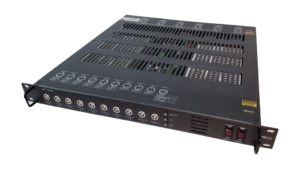
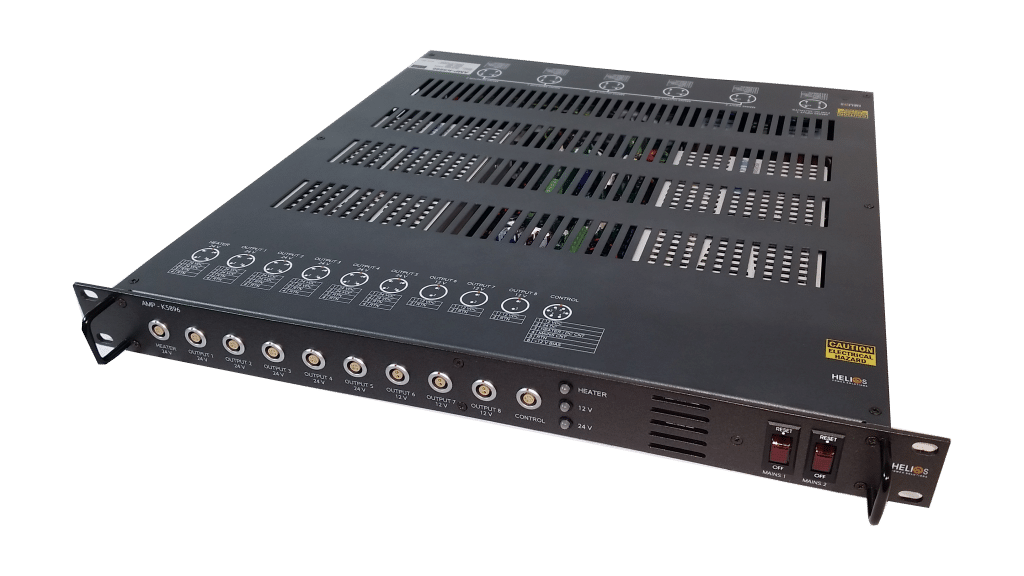
High Power Density Switch-Mode PWM Programmable AC Power Source

Switch-Mode High-Power AC Sources (1Φ / 3Φ)

Utilizing high-frequency PWM technology, these units offer exceptional power density in compact rackmount footprints. Ideal for burn-in testing, OEM line testing, and industrial power simulation with programmable phase angles.

Key Specs: 1kVA – 150kVA | 45Hz – 1000Hz | Built-in Power Analyzer | LXI/GPIB/Modbus

Send an Inquiry
Grid Simulator / SiC Regenerative Bidirectional AC Grid Simulator

Regenerative Bidirectional AC Grid Simulators

Next-generation Silicon Carbide (SiC) based grid simulators capable of sinking 100% rated power back to the local utility grid with >92% efficiency. Crucial for EV charger (EVSE) testing, microgrids, and solar inverter compliance.

Key Specs: 30kVA – 500kVA+ | Bidirectional 4-Quadrant | Full Harmonic Generation | IEEE 519 Compliant

Send an Inquiry
Technical Architecture Comparison

Selecting the Optimal Programmable AC Power Topology

Navigating technical tradeoffs between linear, switch-mode, and regenerative power platforms is vital to preventing over-specification and reducing operational costs.

Comparison Matrix: Programmable AC Power Supply Topologies for Industrial & Test Applications
Topology Criteria Linear AC Sources Switch-Mode PWM Sources Regenerative Grid Simulators
Efficiency (Typical) 40% – 55% (High heat dissipation) 82% – 88% (Standard commercial) 90% – 95%+ (Energy feedback to grid)
THD (Pure Sine Wave) < 0.1% – 0.2% (Ultra-pure output) < 0.3% – 0.5% at nominal load < 0.5% – 1.0% (SiC PWM synthesized)
Frequency Range DC, 15 Hz – 5,000 Hz+ 45 Hz – 1,000 Hz DC, 16.67 Hz – 2,000 Hz
Power Range 500 VA – 20 kVA 1 kVA – 180 kVA 30 kVA – 1 MW+ (Parallelable)
Quadrant Operation 2-Quadrant (Source only / limited load) 2-Quadrant (Source only) 4-Quadrant Bidirectional (Full Source & Sink)
Ideal Application Audio, Avionics testing, Ultra-sensitive EMC labs, Sensor calibration Production line burn-in, Commercial appliance testing, General R&D Solar Inverter Anti-Islanding, EV Charger (V2G) testing, Smart Grid, Microgrids

Need help selecting or re-rating a system to match your site load profile?

Send an Inquiry
Market Insights & Forecasting

Future Sourcing & Technology Trends in Programmable AC Power

How electrification, microgrid deployment, and wide-bandgap semiconductors are reshaping global procurement requirements for 2025–2030.

1. Shift to SiC and GaN Wide-Bandgap Semiconductors

Traditional silicon-based switch-mode AC supplies faced strict tradeoffs between switching frequency, thermal dissipation, and package volume. The adoption of Silicon Carbide (SiC) MOSFETs and Gallium Nitride (GaN) power devices allows switching frequencies to exceed 100 kHz without incurring massive switching losses.

For procurement engineers, this means next-generation 30kVA programmable AC power supplies now fit into compact 3U or 4U rack enclosures—halving cabinet footprint while dramatically lowering HVAC cooling requirements in test facilities.

2. Widespread Mandates for 4-Quadrant Energy Regeneration

With sustainability compliance (ESG) entering procurement mandates worldwide, legacy resistive load banks that dump test energy as waste heat are rapidly being phased out. Modern programmable AC sources must act as bidirectional regenerative grid simulators.

When testing grid-tied devices such as solar inverters, energy storage systems (ESS), or Vehicle-to-Grid (V2G) EV chargers, up to 95% of the absorbed AC power is inverted and fed back to the facility grid, producing huge electricity savings and achieving rapid ROI on capital equipment.

3. Hardware-in-the-Loop (HIL) & Real-Time Simulation Integration

As microgrids incorporate wind, solar, and battery storage, physical power hardware must interact directly with digital twin models. Global procurement is shifting toward programmable AC supplies that feature ultra-fast analog inputs (< 10 μs response times) to execute Power Hardware-in-the-Loop (PHIL) testing.

This allows test software (such as RTDS or Typhoon HIL) to dynamically control the AC source's output waveform in real time, simulating complex transient physical phenomena as they occur on the actual electrical grid.

4. Automated Test Protocol Harmonization (LXI, SCADA, Python)

Isolated equipment instrumentation is no longer sufficient. Enterprise buyers now mandate open-architecture communication capabilities. Programmable AC supplies must offer native support for LXI (LAN eXtensions for Instrumentation), IVI drivers, Python API bindings, RESTful interfaces, as well as industrial protocols like Modbus TCP and DNP3 for factory automation and SCADA supervisory control.

Preparing Your Facility for Next-Gen Testing Standards

Helios Power Solutions works alongside EPC contractors, system integrators, and testing laboratories to future-proof power infrastructure against evolving grid codes (e.g., IEEE 1547, UL 1741 SB, VDE-AR-N 4105).

Custom Engineered Power System by Helios Power Solutions Over 50% of shipped systems are engineered to custom specifications
Enterprise Capability & E-E-A-T Authority

Why Global Infrastructure Teams Trust Helios Power Solutions

Since 1987, Helios Power Solutions has delivered specialized power conversion, grid simulation, and backup systems for critical industrial applications across Australia, New Zealand, Asia, and the Middle East.

  • 38+ Years of Power Conversion Expertise: Deep domain experience in power electronics, transformer isolation, and high-power DSP control.
  • ISO 9001:2015 Accredited Quality System: Every custom programmable AC supply undergoes rigorous Factory Acceptance Testing (FAT) with fully traceable documentation.
  • In-House Application Engineering: Over 50% of our products are re-rated, customized, or engineered from scratch to meet client-specific physical and electrical constraints.
  • 4 Regional Engineering Hubs: Local technical support, spare parts distribution, and field commissioning operated out of Sydney, Auckland, Singapore, and Dubai.
Field Prove Credentials

Engineering Real-World Power Resilience

Explore how our power conversion and testing solutions support mission-critical infrastructure, industrial process automation, and energy utilities worldwide.

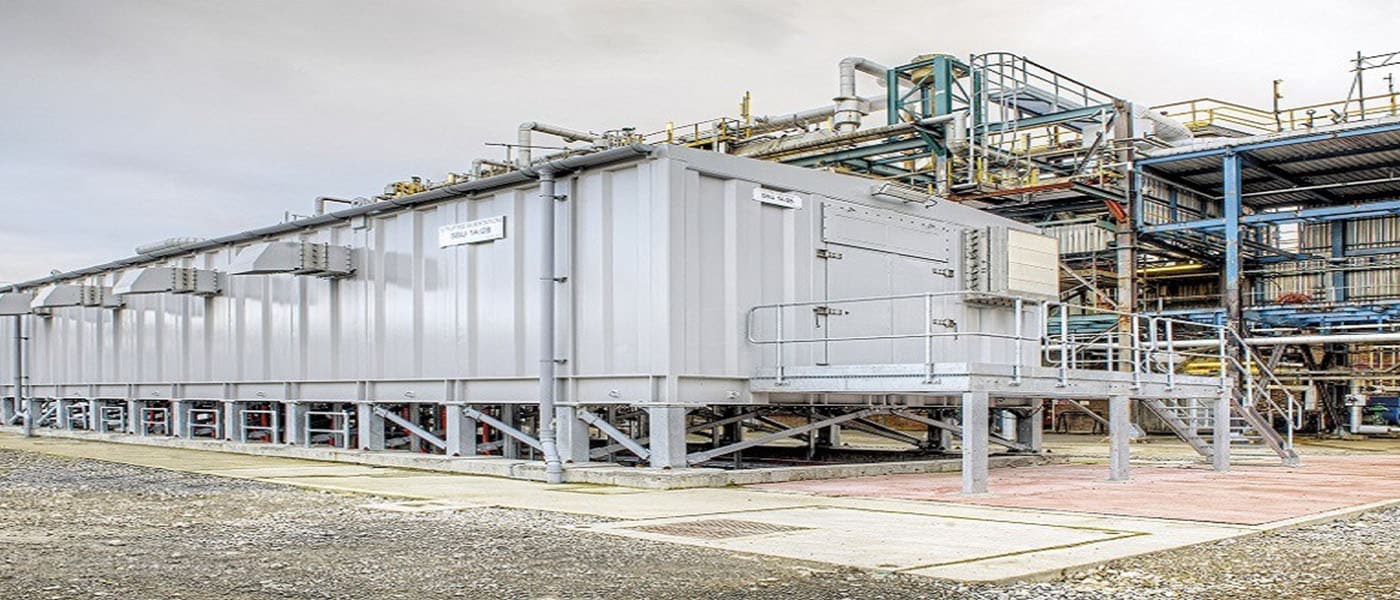
OKI Pulp Paper Industrial Power Project

Industrial Process AC & DC Backup Systems

Engineered and factory-tested complete power protection solutions for one of the world's largest pulp & paper mills, ensuring zero downtime for continuous process controls.

View Case Studies →
Substation Switchgear Power Solution

Switchgear Protection & Testing Power

High-reliability power systems providing stable control power, switchgear tripping energy, and simulated grid inputs for medium voltage substations.

View Case Studies →
Micro Hydro Station Power Integration

Renewable Grid Integration & Hydro Support

Engineered power conversion platforms deployed in tropical environments for micro-hydro stations, featuring enhanced surge suppression and remote telemetry.

View Case Studies →
Engineering FAQ

Frequently Asked Questions on Programmable AC Power Supplies

Clear, technical answers to the most common queries raised by procurement managers, design engineers, and test bench integrators.

A standard AC source provides a fixed output voltage and frequency (e.g., 230V @ 50Hz) with minimal user adjustment. In contrast, a Programmable AC Power Supply (or Grid Simulator) gives precise, real-time control over output parameters including voltage amplitude, frequency (DC to kHz), phase angle separation, wave shape (sine, square, clipped sine), and arbitrary waveform generation.

Furthermore, programmable units integrate advanced telemetry—measuring RMS voltage, RMS current, peak current, active power (kW), apparent power (kVA), power factor (PF), and harmonic distortion—directly eliminating the need for external power analyzers in automated test equipment (ATE) setups.

The choice depends on your application's sensitivity to noise versus physical power density requirements:

  • Linear AC Supplies offer exceptionally low Total Harmonic Distortion (THD < 0.1%), fast transient response, and zero high-frequency switching noise. They are best suited for audio testing, military communications, sensitive sensor calibration, and precision medical compliance. However, they are larger, heavier, and less efficient (around 45-50%).
  • Switch-Mode (PWM) AC Supplies utilize high-frequency switching to deliver high efficiency (85%+), high power density, and larger power ratings (up to hundreds of kVA) in compact rackmount chassis. They are ideal for general industrial burn-in, EV charging testing, motor drives, and production line testing.

A 4-Quadrant Regenerative AC Grid Simulator is a bidirectional AC power supply capable of operating as both an AC source (delivering energy to the Device Under Test, or DUT) and an AC electronic load (absorbing energy from the DUT). In 4-quadrant operation, when the DUT generates energy—such as a solar grid-tie inverter, an EV battery discharging via Vehicle-to-Grid (V2G), or a regenerative motor drive—the AC source absorbs this power and recycles up to 95% of it back to the local facility grid.

This regeneration dramatically reduces electrical bills, minimizes thermal load in the test lab, and is strictly required for testing grid-tied power generation systems under standards such as IEEE 1547 and UL 1741.

Yes. Our programmable AC systems feature comprehensive waveform synthesis capabilities. They can simulate voltage sags, surges, brownouts, phase imbalances, frequency swings, step adjustments, and harmonic distortion up to the 50th order. These capabilities allow design engineers to conduct mandatory pre-compliance testing for international standards including IEC 61000-4-11 (voltage dips and interruptions), IEC 61000-4-13 (harmonics and interharmonics), MIL-STD-704 (aircraft electrical power characteristics), and RTCA/DO-160.

Helios Programmable AC Power Supplies support standard industrial and laboratory communication interfaces, including Ethernet (LXI Class C compliant), USB, RS232, RS485, GPIB (IEEE 488.2), and CANbus. For software automation, we provide native LabVIEW drivers, IVI-COM/IVI-C drivers, Python API libraries, SCPI command sets, as well as industrial Modbus RTU/TCP protocols for direct integration with plant SCADA systems.

Over half of our delivered solutions are tailored to specific customer requirements. Our engineering team can customize output voltage ranges (up to 1000VAC+ phase-to-neutral), extend operating temperature envelopes (-40°C to +55°C), add isolation transformers, incorporate conformal coating for tropical environments, and deliver custom cabinet integrations with integrated safety interlocks and emergency stop circuitry.

Engineering Knowledgebase

Explore Specialized Power Sector Resources

Browse our technical application guides to understand how power conversion, DC UPS, and programmable AC sources integrate into complex infrastructure environments.

Ready to Specify Your Programmable AC Power Solution?

Contact our senior application engineers today to evaluate your load profile, schedule a demonstration, or request custom quotation options.