
ISO 9001:2015 Certified  |  38+ years of power engineering for critical infrastructure
Custom DC Distribution Engineering Since 1987

Engineering Industrial DC Power Distribution Panels for Zero-Downtime Infrastructure

The comprehensive technical & procurement guide to 12V–220V intelligent DC distribution boards, smart telemetry integration, dual-bus redundancy, and electrical protection sizing for mission-critical assets.

  • 12V to 220V DC Configurations
  • DNP3 / Modbus / SNMP SCADA Integration
  • ISO 9001:2015 Certified Build
Engineering Architecture & Intent Mining

Understanding Industrial DC Power Distribution Panels in Modern Critical Networks

In an increasingly electrified global economy, DC Power Distribution Panels serve as the central backbone for continuous energy delivery across telecom centers, high-voltage electrical substations, railway signaling sheds, defense platforms, and automated process plants. Unlike standard AC distribution systems, direct current networks demand rigorous arc-extinction strategies, low-voltage drop copper busbars, precise L/R time-constant evaluations, and advanced remote monitoring capabilities.

When global procurement teams, electrical consultants, and system integrators search for industrial DC Power Distribution Panels, their inquiries extend far beyond catalog part numbers. Modern engineering teams ask complex semantic questions: "How do we prevent arc-flash hazards when breaking high-current 110V/220V DC loads?", "What is the optimal breaker derating factor when installing high-density DC panels in unconditioned outdoor environments?", and "How can sub-circuit telemetry integrate natively into enterprise SCADA platforms without adding relay gateway bottlenecks?"

At Helios Power Solutions, our 38+ years of dedicated power conversion and distribution engineering allow us to address these exact operational challenges. Every panel we engineer is built to eliminate single points of failure, maintain thermal equilibrium, and provide actionable real-time diagnostic data to facility managers across Australasia, Asia, and the Middle East.

Whether your application requires a compact 19-inch 1U rack-mount sub-distribution panel for a 48VDC 5G site, or a floor-standing 220VDC dual-bus switchboard for a 500kV electrical transmission substation, our custom design capability ensures total compliance with site specifications, environmental constraints, and international standards including IEC 61439-1 & 2, UL 60950-1, and IEC 60947-2.

Helios Priority Programme – custom engineering and priority support for DC distribution panels

Lifelong Reliability via The Helios Priority Programme

Standardizing your fleet with Helios DC Power Distribution Panels unlocks long-term lifecycle benefits. Asset managers gain access to guaranteed emergency component availability, pre-configured SCADA point maps, scheduled battery and breaker testing protocols, and drop-in replacement engineering support—ensuring seamless operational continuity across a 20-to-25-year panel service life.

Send an Inquiry for Fleet Standardization
Engineered Solutions

Recommended Industrial DC Power Distribution Panel Series

Explore our core product platforms, designed to meet the rigorous demands of utilities, telecommunications, defense, railway signaling, and remote industrial infrastructure.

Telecom & Data Smart Rack-Mount 48V DC Power Distribution Panel with telemetry control

Smart Rack-Mount 48V DC Distribution Panels

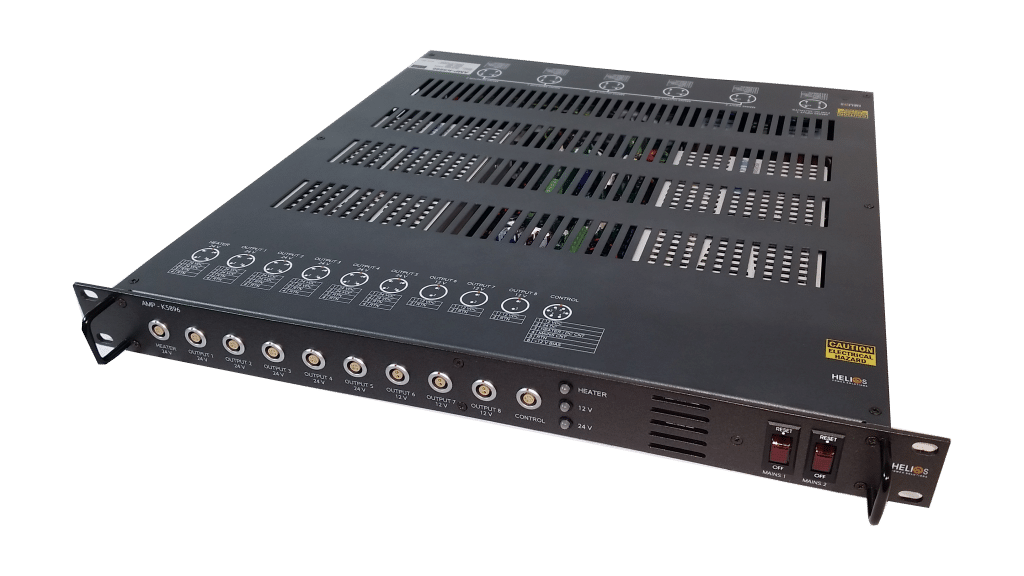
Designed for 19-inch telecom racks and remote cell sites. Features per-channel breaker status monitoring, electronic LVD (Low Voltage Disconnect), remote SCADA reporting via SNMP/Modbus TCP, and high-density hydraulic-magnetic circuit protection.

Key Specs: 12V / 24V / 48V DC, up to 250A total bus capacity, 10–20 output breakers, dual A+B feed options.

Send an Inquiry →

Power Utilities Substation 110V 220V High Voltage DC Distribution Board

Substation 110V/220V High-Voltage DC Distribution Boards

Floor-standing or wall-mount switchboards engineered for high-voltage substation switchgear tripping, protection relays, and emergency SCADA power. Incorporates online earth fault detection, Form C alarm contacts, and high-rupturing HRC fuse blocks.

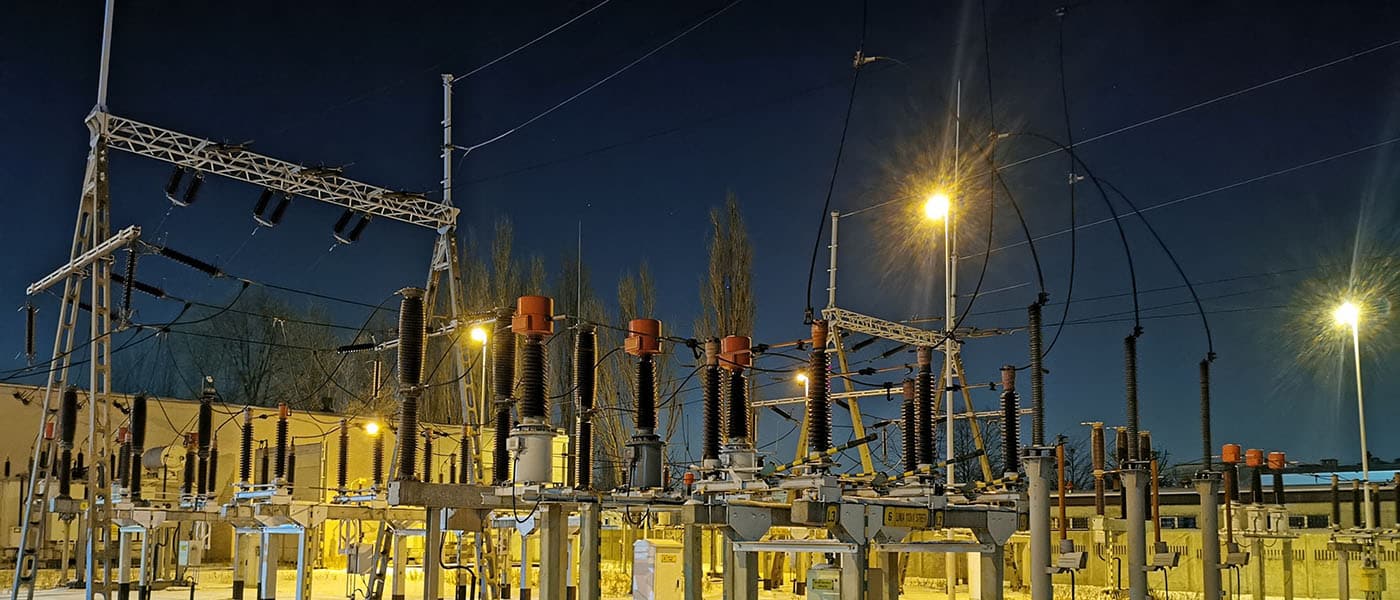
Key Specs: 110VDC / 125VDC / 220VDC, up to 630A busbar rating, IP54 floor enclosure, DNP3 Outstation support.

Send an Inquiry →
Defence & Heavy Industry Rugged MIL-STD Enclosed DC Distribution System

Ruggedized & MIL-Grade Custom DC Distribution Units

Heavy-duty, shock-mounted, and conformal-coated DC distribution cabinets built for harsh marine, mining, and military environments. Tested for extreme temperatures (-40°C to +70°C), severe vibration, and high electromagnetic interference.

Key Specs: IP65/NEMA 4X enclosure, MIL-STD-810H shock/vibe, customized multi-voltage DC outputs.

Send an Inquiry →
Information Gain & Deep Technical Analysis

Circuit Protection Comparison: Breakers vs. Fuses vs. eFuses

Selecting the correct interruption device is the single most critical engineering decision when specifying an industrial DC Power Distribution Panel. Below is an authoritative technical comparison compiled by Helios application engineers.

Technical comparison of protective devices operating in Direct Current (DC) distribution systems.
Protection Parameter Thermal-Magnetic DC Breakers Hydraulic-Magnetic DC Breakers HRC DC Fuses (NH / Semiconductor) Solid-State eFuses (Electronic)
Arc Extinction Method Permanent magnet blow-out arcs into specialized chutes. Magnetic coil force combined with arc splitters. Silica sand filling absorbs thermal energy and quenches arc. Zero physical arcing (Semiconductor MOSFET/IGBT switching).
Trip Time at 500% Fault 10 ms – 100 ms 5 ms – 50 ms 2 ms – 10 ms (Very fast) < 0.01 ms (< 10 microseconds)
Ambient Temp Sensitivity High (Derating required above 40°C due to bi-metal sensor). Negligible (Operating fluid remains stable -40°C to +85°C). Moderate thermal derating in sealed cabinets. Requires thermal heatsinking for internal semiconductors.
SCADA Status Telemetry Requires auxiliary contacts (Form C switches). Requires auxiliary contacts (Form C switches). Requires microswitch trip indicators or blown-fuse sensors. Native digital communication (SPI/I2C/Modbus).
Maintenance & Resetability Manual lever reset; contact degradation after repeated trips. Manual lever reset; high endurance across multiple faults. One-time operation; requires physical fuse link replacement. Instantaneous software reset via remote controller command.
Best Application Fit General industrial 24V/48V sub-panels & low-risk loads. Substations, telecommunications, marine & outdoor cabinets. High short-circuit capability (100kA) battery main feeds. High-density smart DC distribution, AI data halls & robotics.

Thermal Derating & Voltage Drop Engineering Formulas

When engineering DC distribution networks, cable length and internal cabinet ambient temperatures introduce significant performance drops if uncompensated. Our design engineers utilize two core formulas during panel sizing:

  • 1. Busbar/Cable Voltage Drop Formula:
    V_drop = (2 × L × I × ρ) / A
    Where L = one-way distance (m), I = load current (A), ρ = resistivity of copper (0.0175 Ω·mm²/m), and A = cross-sectional conductor area (mm²). In 12V/24V/48V DC panels, voltage drop must not exceed 2% to ensure connected load stability.
  • 2. Temperature-Corrected Continuous Current Capacity:
    I_derated = I_nominal × k_temp × k_grouping
    Thermal-magnetic breakers mounted side-by-side inside enclosed NEMA/IP cabinets require grouping correction factors (k_grouping typically 0.8) and ambient derating factors (k_temp) to prevent nuisance tripping under sustained full load.
Utility Substation Power Distribution and Voltage Drop Calculation Setup Every Helios panel undergoes full load thermal testing prior to dispatch
Proven Field Experience

Field-Tested DC Power Distribution Panels Across Critical Infrastructure

Explore real-world deployments where Helios engineered custom DC power distribution solutions for high-stakes, zero-downtime operations.

OKI Pulp Paper Mill DC Power Distribution Installation

OKI Pulp & Paper: Industrial Process DC Distribution

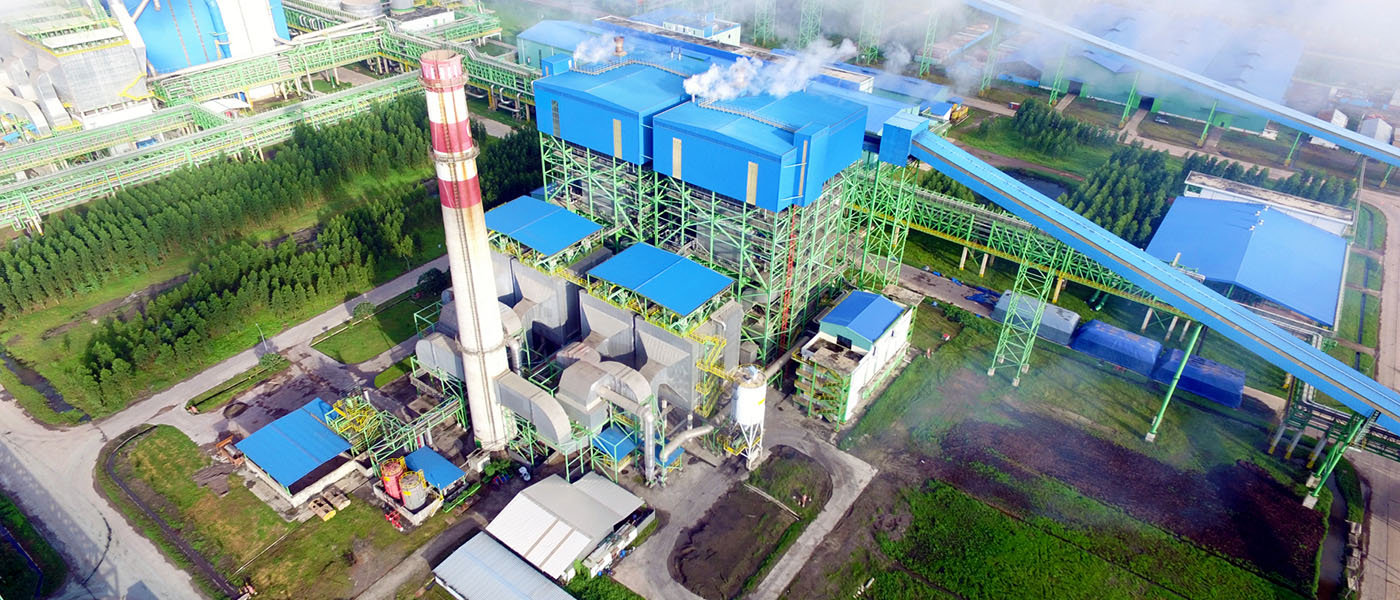
Engineered and delivered robust DC switchboards protecting the heavy bark handling motor control circuits at one of the world's largest pulp mills. Panels included custom earth leakage monitoring and high-vibration isolation.

Send an Inquiry for Process DC Systems →
11kV Substation Dual Bus DC Distribution Panel Deployment

11kV Switchgear Tripping & Control Distribution

Designed a dual-feed 110VDC distribution panel with automated A+B bus transfer, DNP3 SCADA telemetry outstation, and individual breaker trip alarming for utility sub-station protection relays.

Send an Inquiry for Utility Panels →
Tropical Hydroelectric Station DC Distribution System Samoa

Samoa Micro-Hydro Station Remote DC Control Panels

Engineered tropicalized, IP65-rated outdoor DC power distribution units supporting turbine lubrication pumps and remote telemetry RTUs following extreme cyclone restoration efforts.

Send an Inquiry for Harsh Environment Panels →
Why Helios Power Solutions

38+ Years of Expertise in Custom DC Power Distribution Panel Engineering

Choosing Helios means partnering with a recognized leader in industrial power conversion and distribution. Since 1987, our engineering teams have designed, manufactured, and commissioned thousands of custom DC distribution panels across Australia, New Zealand, Asia, and the Middle East.

  • ISO 9001:2015 Certified Quality System: Every panel undergoes rigorous factory acceptance testing (FAT), point-to-point insulation resistance checks, and full thermal imaging under load.
  • In-House Custom Engineering: Over 50% of the DC distribution systems we build are customized to site-specific mechanical dimensions, busbar arrangements, and protocol requirements.
  • Global Multi-Hub Technical Support: Operating regional engineering centers in Sydney, Auckland, Singapore, and Dubai to deliver rapid localized design consulting and field service.
  • Advanced Telemetry Integration: Native support for DNP3, Modbus RTU/TCP, SNMP, and volt-free dry alarm contacts for seamless enterprise SCADA connectivity.
Helios Power Solutions Custom DC Panel Assembly Facility ISO 9001:2015 Certified Manufacturing & Testing Facilities
0Systems Custom Built
0Global Industrial Clients
0Years Engineering Excellence
4Global Engineering Hubs
Engineering FAQ

Frequently Asked Questions: DC Power Distribution Panels

Detailed technical answers to common queries raised by electrical engineers, consultants, and global procurement managers.

AC electrical arcs naturally extinguish 100 or 120 times per second as the voltage waveform crosses zero. In contrast, direct current (DC) maintains a continuous voltage potential without natural zero-crossings. When a fault occurs in a DC system, the resulting electrical arc is sustained and exceptionally energetic. Standard AC breakers lack the permanent magnets, extended arc chutes, and wide contact gap geometry required to stretch, cool, and extinguish a DC arc. Utilizing AC breakers in DC distribution panels creates a severe fire, explosion, and equipment destruction risk. DC-rated circuit breakers or specialized high-rupturing capacity (HRC) DC fuses must always be specified based on system voltage (12VDC to 220VDC) and inductive time constants (L/R ratios).

A Single-Bus DC distribution panel feeds all connected loads from a single common DC busbar, leaving all downstream devices vulnerable if the main busbar, rectifier feed, or incoming protection trip fails. A Dual-Bus (A+B Redundant) DC Power Distribution Panel features two completely isolated internal busbars, each supplied by an independent power source, rectifier system, or battery bank. Dual-corded mission-critical devices (such as telecom switches, servers, or protection relays) draw power simultaneously from Bus A and Bus B. If Bus A loses power or undergoes live maintenance, Bus B seamlessly handles 100% of the load without operational interruption, ensuring 99.999% ("five nines") systemic availability.

Industrial DC distribution panels operating in elevated ambient temperatures (e.g., +50°C to +70°C in mining, desert, or unconditioned outdoor enclosures) require continuous current rating derating. Thermal-magnetic breakers will trip prematurely if ambient heat shifts the thermal bi-metal calibration curve. Engineers apply thermal derating factors—typically reducing rated continuous load capacity by 1% to 1.5% per degree Celsius above 40°C—or specify temperature-independent hydraulic-magnetic circuit breakers. Busbars are sized using cross-sectional copper ampacity tables with safety margins (typically 125% of continuous full-load capacity) to limit internal temperature rise and prevent busbar degradation.

Intelligent DC power distribution panels incorporate integrated system controllers or smart micro-metering modules per output circuit. These modules collect real-time data including individual channel voltage, load current, energy consumption (kWh), ambient temperature, fuse/breaker trip status, and earth fault isolation levels. Telemetry data is communicated to industrial SCADA, DCS, or NMS platforms using native protocols such as Modbus RTU (RS485), Modbus TCP/IP, DNP3 (serial/IP outstation), or SNMP v2c/v3 traps. This enables remote diagnostics, automated alarm notification, predictive maintenance, and localized load shedding during mains power outages.

In floating or ungrounded (IT) DC networks—commonly specified in 110V/220V substation control and industrial process plants—a single earth fault does not trip protective breakers, allowing operations to continue safely. However, a second earth fault on the opposite polarity creates a severe line-to-line short circuit. Intelligent DC distribution panels serving IT networks feature continuous online insulation monitoring relays. These devices inject a low-frequency measurement signal to monitor system resistance to ground in real time, triggering early visual and SCADA warnings when isolation resistance drops below set thresholds (e.g., < 100 Ω/V), allowing field technicians to locate and clear ground faults before catastrophic failure occurs.

Deeply discharging battery banks (such as VRLA, AGM, Gel, or LiFePO4) below their critical end-of-discharge voltage threshold causes permanent capacity loss, cell inversion, or irreversible battery destruction. An integrated Low-Voltage Disconnect (LVD)—either contactor-based or solid-state—monitors the DC bus voltage during extended AC power outages. When battery voltage drops to a pre-configured low threshold (e.g., 1.75V per cell for lead-acid or 2.8V per cell for lithium), the controller automatically disengages non-critical load circuits or disconnects the battery bank entirely, preserving battery longevity and ensuring swift system recovery upon grid restoration.

Industrial DC distribution panels must adhere to rigorous electrical safety, electromagnetic compatibility (EMC), and environmental performance standards. Key global specifications include IEC 61439-1 & 2 (low-voltage switchgear and controlgear assemblies), UL 60950-1 / UL 62368-1 (information technology and communication equipment safety), IEC 60947-2 (low-voltage circuit breakers for industrial applications), EN 61000-6-2 / 6-4 (industrial EMC immunity and emissions), and ISO 9001:2015 quality manufacturing certifications. Marine and military-grade panels may additionally require DNV/GL approval or compliance with MIL-STD-810H and MIL-STD-461G.

Request a Custom DC Power Distribution Panel Specification Review

Send our power engineers your load profiles, busbar requirements, and SCADA protocols. We will deliver a comprehensive proposal and architectural layout.