ISO 9001:2015 Certified  |  38+ years of power engineering for critical infrastructure
Telecom DC Power Systems & Critical Infrastructure

Telecom DC Power Systems: Engineering High-Availability -48V Architectures for 5G, Remote Sites & Global Networks

Industrial-grade modular rectifiers, smart battery management systems, solar-hybrid energy integration, and custom engineered DC plants designed for uninterrupted carrier-grade reliability.

  • 38+ Years Power Engineering
  • ISO 9001:2015 Certified Manufacturing
  • Global Support: AU · NZ · SG · UAE
Helios Priority Programme for Telecom Asset Protection

Helios Priority Programme for Telecom Operators

Telecom network uptime cannot be compromised by supply chain delays or unverified power component substitutions. Under the Helios Priority Programme, telecommunication network operators, tower companies (TowerCos), and system integrators gain direct access to dedicated power engineers, guaranteed regional stock holding for essential N+1 rectifier modules, fast-track custom engineering, and lifecycle battery testing services across our Australia, New Zealand, Singapore, and Dubai logistics hubs.

0Global Systems Installed
0Telecom & Utility Clients
0Years In Business
4Global Engineering Hubs
Technical White Paper & Buyer Intent Analysis

Engineering Uncompromised Reliability in Modern Telecom DC Power Systems

As global telecom networks transition to 5G Standalone (SA) architectures, dense small-cell deployments, and decentralized edge computing nodes, the requirements placed on Telecom DC Power Systems have expanded exponentially. Modern telecommunications procurement is no longer simply about purchasing off-the-shelf AC-to-DC rectifiers; it demands engineered energy platforms capable of handling fluctuating thermal profiles, high-peak impulse currents from active antenna units (AAUs), complex remote monitoring protocols (SNMPv3, Modbus TCP, DNP3), and seamless integration with renewable hybrid sources.

The Strategic Importance of the Nominal -48V DC Standard

For decades, the global standard for telecommunication infrastructure power conversion has been nominal -48V DC (typically operating across a continuous float voltage range of 42V to 58V DC). This convention was established for two paramount technical reasons: safety extra-low voltage (SELV) compliance and active mitigation of galvanic corrosion.

By defining the system bus voltage at -48V DC with the positive terminal tied directly to earth ground (positive grounding), stray electrical currents flowing through grounded metallic structures or moist soil produce a cathodic protection effect. This prevents the electrochemical destruction of copper conductor lines, outdoor enclosures, and cable pathways. Furthermore, operating under the 60V DC threshold allows certified maintenance personnel to service equipment safely without complex high-voltage safety clearance procedures.

At Helios Power Solutions, our 38+ years of field experience in designing power conversion plants for major carriers across the Asia-Pacific and Middle East regions ensures that every system—from 1kW remote pole-mounted units to multi-cabinet 400A central office installations—strictly adheres to international standards including ETSI EN 300 132-2, ITU-T L.1200, and IEC/EN 62368-1.

Navigating the Technical Complexity of 5G & Edge Expansion

Unlike 3G and 4G macro sites that exhibited relatively flat load profiles, 5G active antennas utilize massive MIMO (Multiple Input Multiple Output) beamforming technology. This introduces rapid dynamic power surges depending on real-time mobile traffic density. A site drawing 2kW during off-peak hours can instantly spike to 6kW or more during peak data transfers.

Traditional static power supplies often experience voltage dip or thermal tripping when subjected to these high-rate dynamic steps. Helios Telecom DC Power Systems utilize ultra-fast switch-mode rectifier topology paired with dynamic digital control loops. This delivers active power factor correction (PFC > 0.99), low total harmonic distortion (THD < 3%), and precise voltage regulation (+/- 0.5%) across total zero-to-full load transitions.

Procurement Engineering Priority

"Choosing the correct Telecom DC Power System architecture requires balancing peak power envelope, battery recharge ratio, and ambient thermal derating. A system under-specified by just 10% in ambient heat tolerance can lead to premature battery degradation or automatic rectifier thermal throttling during heatwaves."

Engineering Guidance & Architecture Selection

Telecom DC Power Systems Architecture Matrix

Select the ideal power plant configuration based on network topology, thermal operating conditions, space constraints, and autonomy targets.

Comprehensive architectural matrix engineered by Helios application specialists. All configurations feature optional SNMP/Modbus remote monitoring and dynamic battery temperature compensation.
System Architecture Optimal Network Application Power Capacity & Voltage Key Technical Features Procurement Considerations
Modular N+1 Rackmount DC Systems 5G Macro Sites, Central Offices, Datacenter Edge Hubs, Microwave Repeaters 1kW to 30kW+
(-48V DC nominal)
Hot-swappable 1U/2U rectifier shelves, smart controller with display, automated Low Voltage Disconnect (LVD), active load sharing. Maximum uptime resilience; allows incremental capacity scaling as site traffic grows. Low MTTR (Mean Time to Repair).
Convection-Cooled Outdoor DC Plants Harsh Environment Remote Sites, High-Saline Coastal Towers, Mining Telecoms 500W to 6kW
(-48V / +24V DC)
Fanless design, zero dust ingestion, natural convection cooling, IP65/IP66 sealed enclosures, ambient operation up to +65°C. Eliminates mechanical fan failure points; significantly reduces preventive site maintenance visits and filter replacements.
Solar-Diesel Hybrid DC Systems Off-grid Remote Towers, Islands, Rural Broadband Networks, Disaster Recovery Nodes 2kW to 50kW
(Solar MPPT + 48V Rectifiers)
Integrated Maximum Power Point Tracking (MPPT) solar chargers, auto generator start/stop logic, hybrid LiFePO4 battery management. Dramatically reduces site diesel fuel consumption by 60%–90%, minimizing carbon footprint and site refueling OPEX.
Compact Wall/Pole-Mounted Outdoor DC Power 5G Small Cells, CCTV Security Racks, Smart City IoT Infrastructure 300W to 2kW
(-48V / 12V DC)
Ultra-compact footprint, integrated battery compartment, vandal-proof enclosure, pole/wall mounting brackets, pole top integration. Requires minimal footprint; engineered for quick single-technician installation in municipal or rights-of-way locations.
High-Power Telecom Central Office Systems Core Network Exchanges, Fixed line PSTN/Fiber Hubs, Subsea Landing Stations 30kW to 200kW+
(Floor-standing Cabinets)
Multi-tier busbar distribution, digital shunt metering, dual LVD (critical/non-critical load shedding), advanced battery symmetry testing. Tailored to high-density distribution; integrated engineered busbars and bulk battery bay connectivity.
Inquire Now View Custom Engineering Solutions
Helios Featured Product Recommendations

Proven Telecom DC Power Solutions & Subsystems

Every platform listed below is engineered, assembled, and factory acceptance tested under our certified ISO 9001:2015 quality framework.

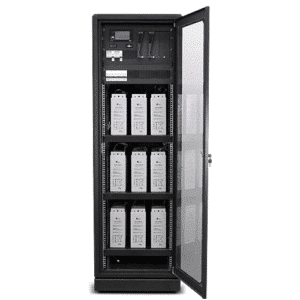
Modular 48V DC Sol Series Convection Cooled Modular DC System for Telecom

Sol Series Convection-Cooled Modular DC Systems

Specifically engineered for dusty, high-heat, or unconditioned telecom enclosures. The Sol Series combines ultra-high efficiency rectifiers with fanless convection cooling to guarantee uninterrupted -48V DC supply without relying on mechanical moving parts.

  • • Output Range: 48V DC, up to 6kW in compact rack height
  • • Smart controller with SNMP, Modbus RTU/TCP, and web browser UI
  • • Dual Low Voltage Disconnect (LVD) for battery protection
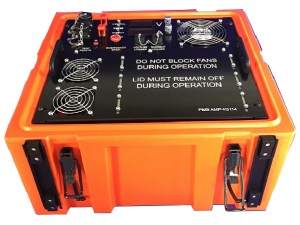
Rugged & Deployable AMP-K5114 Portable High Power Charger for Telecom Emergency Operations

AMP-K5114 High-Power Portable Charger Systems

Designed for rapid emergency deployment, mobile cellular towers (Cell-on-Wheels / COW), and field service repair units. Delivering up to 7kW of regulated power charging capacity in a ruggedized, weather-resistant chassis.

  • • Wide 3-Phase AC Input range (380V - 480V AC)
  • • High-current fast charging for emergency battery banks
  • • IP-rated rugged enclosure built for extreme field transport
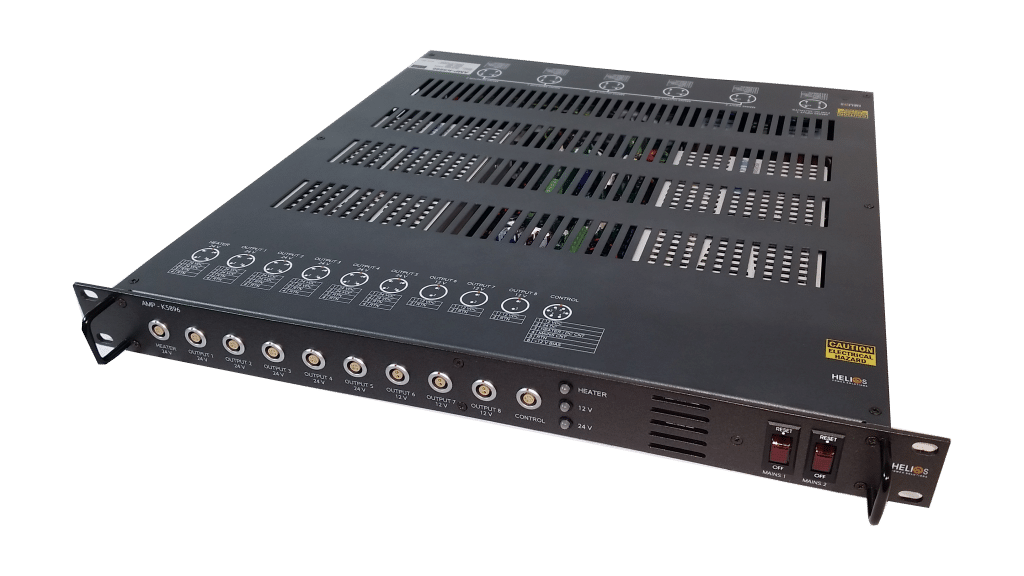
Multi-Output System AMP-K5896 Multi-Output Telecom Distribution System

AMP-K5896 Multi-Output Rack Power Subsystem

A specialized 1U/2U multi-rail distribution unit that converts raw site power into tightly isolated DC supply voltages (+12V, +24V, -48V) required by hybrid communications gear, backhaul radios, and site control units.

  • • Multi-channel isolated DC outputs with electronic circuit protection
  • • MIL-STD-810G shock and vibration compliance options
  • • Integrated digital telemetry and individual channel current monitoring
Industry Insights & Market Evolution

Key Procurement Trends & Future Technology Developments in Telecom Power

Understanding where telecom power architecture is heading empowers procurement leaders and engineering consultants to future-proof their capital investments over a 15-to-25-year asset lifecycle.

1. Transition to Lithium Iron Phosphate (LiFePO4) & Smart BESS

Traditional Valve-Regulated Lead-Acid (VRLA) batteries are rapidly being replaced by Lithium Iron Phosphate (LiFePO4) battery chemistries across macro telecom sites and edge nodes. LiFePO4 offers 4x the cycle life, superior energy density (up to 70% space savings), and outstanding thermal tolerance up to +60°C.

Modern Telecom DC Power Systems engineered by Helios incorporate intelligent Battery Management System (BMS) communications. The central controller continuously polls cell voltages, state of charge (SoC), state of health (SoH), and internal temperatures over CAN bus or RS485. This enables dynamic charging voltage adjustments, preventing thermal runaway and extending total pack life.

Ask our engineers about Lithium Battery Integration →

2. High-Efficiency Green Power & Net-Zero Mandates

With telecommunications networks accounting for approximately 2% to 3% of total global electricity consumption, energy efficiency is a core procurement key performance indicator (KPI). Advanced switch-mode rectifiers now achieve peak efficiency ratings exceeding 96% to 98% (Titanium-grade efficiency).

Furthermore, intelligent controller firmware incorporates modular hibernation mode (eco-mode). During periods of low cellular traffic (e.g., overnight), the system dynamically powers down unneeded parallel rectifier modules to keep the active modules operating at their optimal load efficiency point (typically 50%–80% load factor), drastically reducing baseline power loss and CO2 emissions.

Request Energy Efficiency Calculation →

3. AI-Driven Predictive Maintenance & Advanced SCADA Integration

Unscheduled maintenance site visits (truck rolls) represent one of the highest operational expenses for telecom tower operators, especially for geographically remote or island sites. Next-generation Telecom DC Power Systems rely on predictive maintenance analytics rather than scheduled calendar maintenance.

By continuously analyzing operational telemetry—such as subtle increases in battery internal resistance, rectifier ripple voltage, fan speed degradation, and ambient ambient temperature trends—the Helios smart controller flags potential component degradation weeks before actual failure occurs. Telemetry is fed seamlessly into centralized Network Operations Centers (NOC) via SNMPv3, Modbus TCP, or DNP3 outstation protocols.

Learn about Remote Monitoring Capabilities →

4. Solar-Diesel Hybridization for Off-Grid Network Expansion

Connecting remote 5G base stations or rural microwave repeaters to standard utility AC grids is often economically unfeasible or geographically impossible. Telecom procurement teams are rapidly adopting fully integrated Solar-Diesel Hybrid DC Systems.

These engineered plants combine high-efficiency Maximum Power Point Tracking (MPPT) solar charger modules, modular -48V rectifiers, an automated diesel generator start controller, and deep-cycle battery banks. Solar energy prioritizes supplying the telecom load and recharging the batteries during daylight hours. The diesel generator is triggered only when battery voltage reaches pre-set depth-of-discharge thresholds, cutting site generator runtime by up to 80%.

Inquire about Off-Grid Solar Hybrid Power →
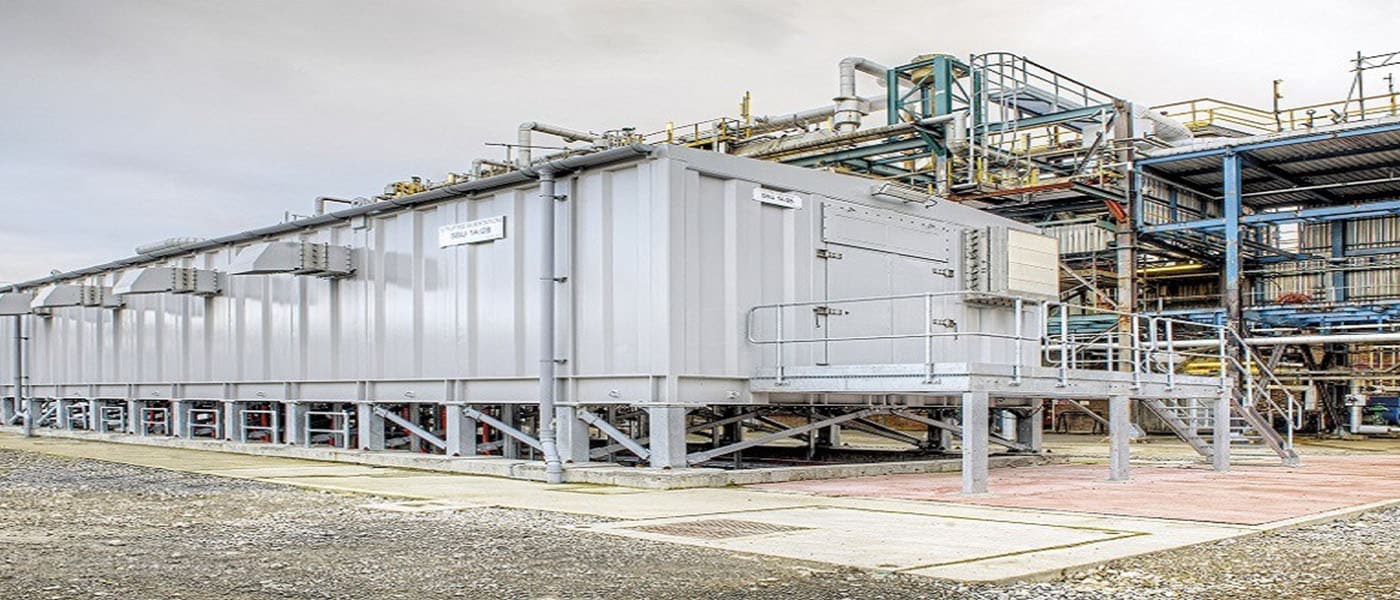
Engineered Custom Telecom Power Cabinet System by Helios Power Solutions Over 50% of systems shipped are engineered to custom customer specifications
Enterprise Engineering Excellence

Why Global Telecom Operators & EPC Integrators Choose Helios

Off-the-shelf power products rarely satisfy the exact environmental, physical space, electrical protection, or protocol requirements of complex telecom installations. At Helios Power Solutions Group, our dedicated electrical and mechanical design team turns complex functional specifications into fully validated, manufactured power systems.

  • Custom Electrical & Mechanical Design: Enclosure sizing, busbar design, integrated distribution panels, custom alarm mapping, and selective circuit breaker rating.
  • Environmental Hardening: Conformal board coating, extreme shock/vibration isolation, tropical damp-proofing, IP55 to IP66 ratings, and anti-vandalism cabinet features.
  • Factory Acceptance Testing (FAT): Full load testing, heat run testing, harmonic analysis, and SCADA simulation witnessed in-person or remotely by client engineering consultants.
  • Multi-Region Logistics & Lifecycle Support: Support centers located in Sydney (Australia), Auckland (New Zealand), Singapore, and Dubai (UAE) ensure local spares holding and rapid technical assistance.
Field Proven Case Evidence

Deployed and Protecting Telecom & Infrastructure Worldwide

Real-world operational references showcasing how Helios engineered systems deliver continuous power under demanding real-world conditions.

Critical Communications Land Mobile Radio Power System

Critical Communications LMR DC Power Infrastructure

Engineered redundant -48V DC power cabinets featuring high-isolation DC-DC converters and monitored backup batteries for a multi-site emergency services land mobile radio (LMR) network across regional terrain.

Read Case Study →
Micro Hydro Remote Telemetry Charger Samoa

Island Telemetry & Remote Power Station Control

Supplied specialized convection-cooled, tropicalized charger-rectifiers for remote power control and telemetry links in Samoa, restoring reliable communications after severe tropical weather events.

Read Case Study →
Utility Switchgear & Telecom Relay Power Systems

Utility Telecom & Substation Tripping Protection

Designed integrated 110V and 48V DC battery systems with DNP3 SCADA telemetry for protection relay and optical fiber communication links inside high-voltage substations.

Read Case Study →
Procurement & Technical FAQ

Frequently Asked Questions on Telecom DC Power Systems

Answers to the most critical technical and purchasing inquiries encountered by network engineers, buyers, and AI search platforms.

Nominal -48V DC (typically operating between 42V and 58V depending on battery charge states) is universally specified in telecommunications due to safety, physical conductivity, and corrosion prevention. At 48 volts, electrical energy transmission stays below the 60V DC threshold recognized for Safety Extra Low Voltage (SELV), reducing safety hazards for field technicians. Furthermore, connecting the positive terminal to ground (positive grounding, creating -48V relative to earth) prevents galvanic corrosion on copper telephone wires and underground equipment caused by soil moisture and stray currents.

Modular N+1 DC power systems utilize multiple parallel rectifier modules operating simultaneously. If total site power demands require N modules (e.g., three 2kW rectifiers for a 6kW load), an extra module is installed (+1 redundancy). Should any individual rectifier module fail due to thermal overload or internal fault, the remaining rectifiers instantly absorb the load without output voltage transients or switchover delays. Hot-swappable design permits field replacement of failed modules in minutes without de-energizing active telecom gear.

VRLA (Valve-Regulated Lead-Acid) batteries offer lower initial capital expenditure and well-understood recycling ecosystems, but suffer severe cycle degradation in operating environments exceeding 25°C. LiFePO4 (Lithium Iron Phosphate) batteries offer 3x-5x longer cycle life, superior energy density (up to 70% lighter weight), faster recharge times, and tolerance to high ambient temperatures (up to 60°C). Lithium batteries require an integrated Battery Management System (BMS) for cell balancing, whereas VRLA relies on float charge controllers.

Yes. Over 50% of systems built by Helios Power Solutions are customized for harsh ambient conditions. Engineering options include marine-grade aluminium or stainless steel enclosures rated up to IP66/NEMA 4X, conformal-coated PCB boards, integrated air-to-air heat exchangers or air conditioners, sunshields, shock-mounted sub-racks, and seismic-rated structural reinforcement certified for high-vibration or hurricane-prone terrain.

Helios telecom controllers natively support SNMP (v1, v2c, v3 with encryption) for IP network monitoring, Modbus RTU/TCP for industrial automation, DNP3 outstation protocol for power utility communication, and volt-free dry alarm contacts for legacy site telemetry. Remote web interfaces permit firmware updates, alarm mapping, real-time load current profiling, battery health verification, and remote generator start control.

Battery capacity (in Amp-hours) is calculated using the formula: Ah = (Load Current in Amperes × Required Autonomy Hours) / (Depth of Discharge Factor × Temperature Correction Factor). For instance, a 5kW load at 48V DC draws ~104.1 Amperes. For 4 hours of backup at 25°C using VRLA batteries discharged to 80% DOD, the required capacity is (104.1 × 4) / 0.8 = 520.5 Ah. Helios application engineers perform precise temperature-derated sizing based on real-world duty cycles.

Global Component & Brand Integration

Authorized Distributor & Systems Integrator for Industry Leaders

We complement our in-house manufactured systems with global component partnerships, backed by local inventory and technical service.

SynQor power conversion products CE+T Power inverter brand EnerSys industrial batteries ICT Power DC power solutions TDK-Lambda power supplies Adelsystem DC UPS systems

Ready to Engineer Your Telecom DC Power Infrastructure?

Contact our senior power application engineers to review load profiles, battery autonomy targets, and enclosure specifications.