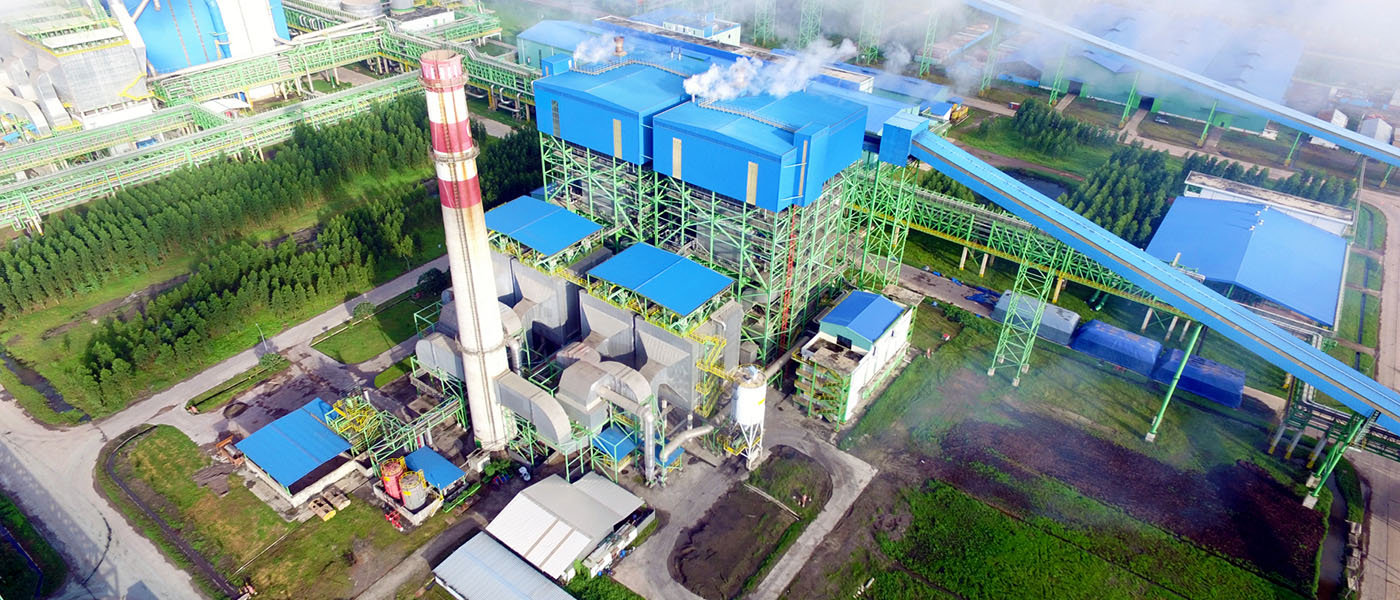
OKI Pulp & Paper Mill Industrial DC System
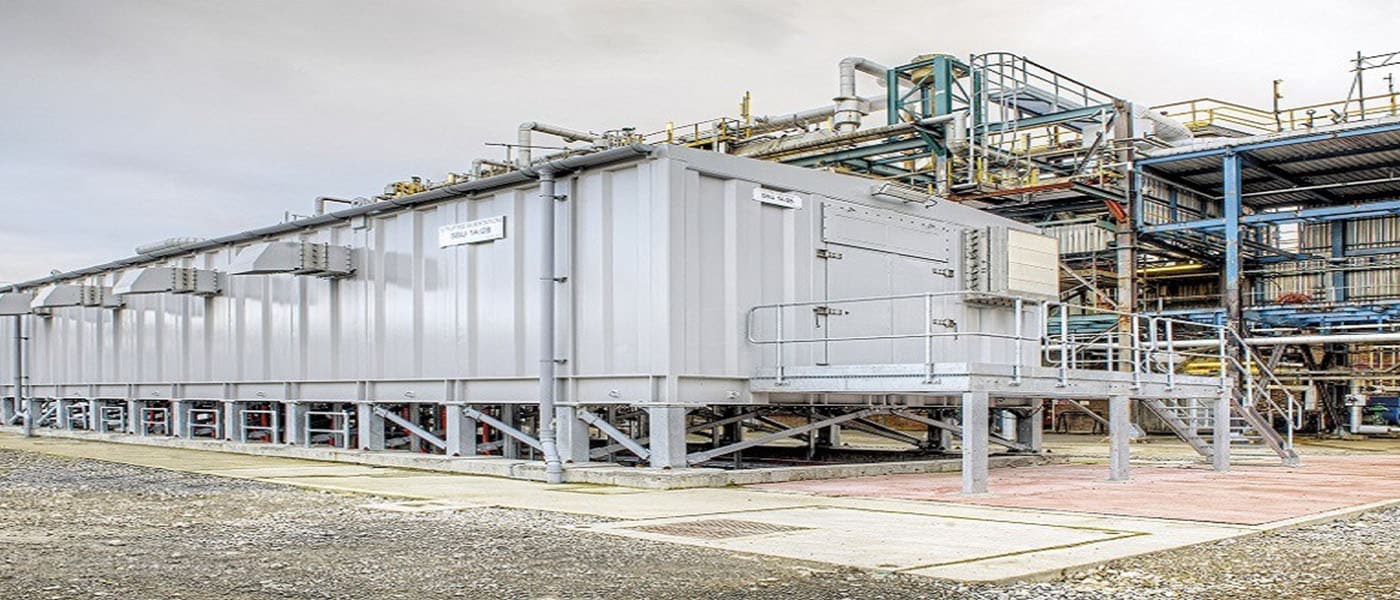
Engineered and supplied customized high-reliability DC systems to protect bark handling and critical process automation at one of the world's largest industrial pulp processing facilities.

Engineered for electrical utilities, telecom central offices, data networks, and defense platforms. Explore hot-swappable rectifiers, active load sharing, smart controllers, and scalable DC back-up plants designed for continuous operational availability.

Global infrastructure owners and procurement directors standardizing on Helios Modular DC Power Systems gain guaranteed spare rectifier module availability, dedicated factory test allocations, customized protocol mapping (DNP3, Modbus, SNMP), and priority emergency engineering response across our four regional engineering hubs in Sydney, Auckland, Singapore, and Dubai.
Modern critical infrastructure demands uninterrupted operation, rapid mean-time-to-repair (MTTR), and dynamic scalability. Traditional legacy centralized power rectifiers present single points of failure, extensive maintenance downtime, and rigid sizing constraints. Modular DC Power Systems solve these operational challenges through decentralized, hot-swappable switch-mode rectifier modules engineered with true N+1 or N+2 redundancy.
When engineering high-availability direct current power supplies for power utility substations, telecommunication towers, micro-hydro plants, rail signaling systems, and remote industrial cabinets, system architects face a core design trade-off: initial capital expenditure versus total cost of ownership (TCO) and operational resilience. Monolithic charger designs require large initial over-provisioning to accommodate future growth, leading to poor light-load energy efficiency and higher thermal dissipation.
In contrast, Modular DC Power Systems utilize compact subrack enclosures (19-inch or 23-inch rack formats) accommodating multiple hot-swappable switch-mode rectifiers operating in parallel. By combining active digital load sharing, dynamic temperature-compensated float charging, and centralized intelligent system controllers, modular platforms deliver 96%+ operating efficiency across wide load profiles while allowing live capacity expansion without interrupting critical downstream DC loads.
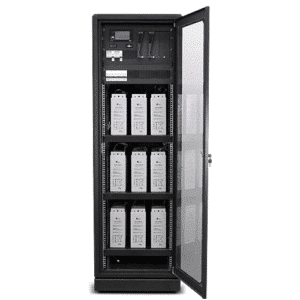 Convection-Cooled Modular DC Systems for Zero-Maintenance Reliability
Every modular DC system engineered by Helios Power Solutions integrates robust power electronics, high isolation barriers, intelligent battery management, and SCADA-compliant communication telemetry. Select from convection-cooled or forced-air industrial subracks tailored to your site constraints.
Convection Cooled Designed specifically for harsh, dust-laden environments such as electrical substations, railway switch huts, and remote telecommunications sites where cooling fans are prone to failure. Eliminates fan noise and routine air filter replacement.
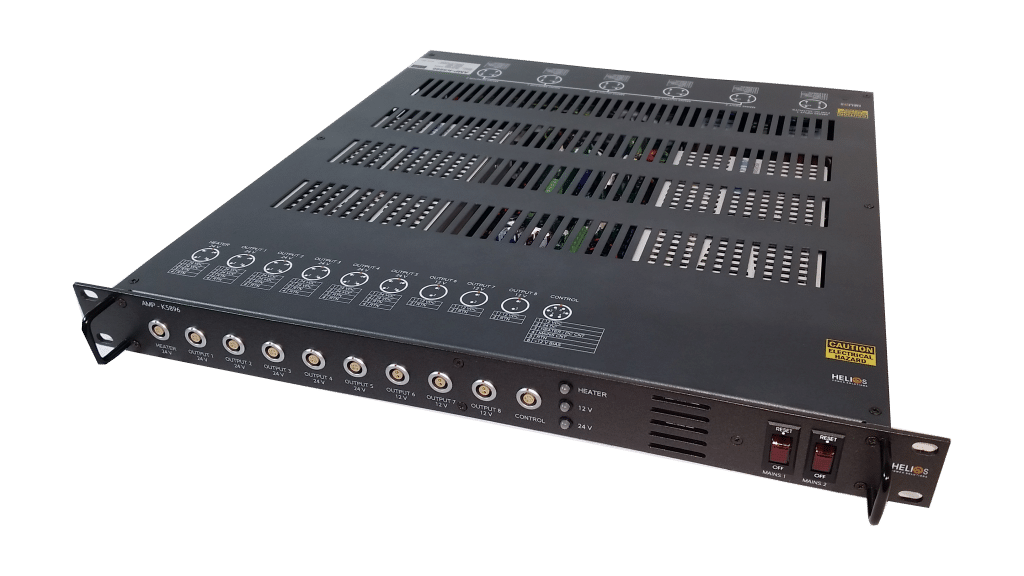 High Density Subrack
Compact 1U, 2U, and 3U high-density rack-mount power shelves housing up to 6 high-efficiency switch-mode rectifiers with integrated low voltage battery disconnect (LVBD/LVLD) and digital control modules.
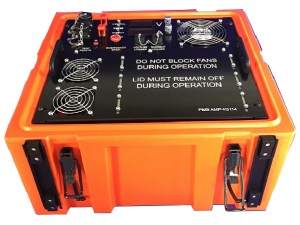 Utility & Defense
Conformal-coated, shock-mounted modular DC power systems built to withstand extreme mechanical vibration, EMC interference, and high ambient operating temperatures (+70°C derating curve) in defense and mining operations.
As energy transition initiatives accelerate and artificial intelligence drives predictive site infrastructure management, global procurement officers and chief power engineers must evaluate several key technology shifts expected over the next decade.
Next-generation switch-mode rectifiers within modular DC systems are rapidly adopting Silicon Carbide (SiC) MOSFETs and Gallium Nitride (GaN) power switches. This technological shift enables switching frequencies beyond 100 kHz with minimal thermal dissipation losses. The practical benefit for infrastructure procurement is clear: rectifier module power densities double from 30 W/in³ to over 65 W/in³, while achieving flat efficiency curves above 97.5%. This reduces cabinet footprint requirements by 40% in space-constrained cell sites and control rooms.
While traditional lead-acid (VRLA) and Nickel-Cadmium (NiCd) battery banks remain prevalent in utility substations, modular DC power systems are increasingly paired with Lithium Iron Phosphate (LiFePO4) battery racks. Future-proof modular DC controllers must provide direct CAN-bus bidirectional communication with battery management systems (BMS). Helios modular power controllers feature active cell balancing monitoring, automatic charge current limiting, dynamic thermal foldback, and precise state-of-health (SOH) calculation to maximize battery operational life beyond 15 years.
Modern remote sites cannot rely on reactive manual servicing. Emerging procurement specifications mandate AI-enabled edge telemetry within modular DC system controllers. Smart system controllers analyze real-time ripple voltage, internal impedance trends, rectifier temperature deltas, and load current fluctuations to predict component degradation months before failure occurs. Furthermore, cyber security compliance—including SNMPv3, DNP3 Secure Authentication, and encrypted HTTPS/SSH management web interfaces—is now mandatory for utility grid interconnection.
The push toward net-zero operational sites is transforming modular DC power systems into hybrid energy routers. Modern modular backplanes now integrate direct DC-to-DC Maximum Power Point Tracking (MPPT) solar charger modules alongside standard AC-to-DC rectifiers on the same physical bus. This hybrid DC architecture allows solar energy, wind generation, hydrogen fuel cells, and grid AC power to feed the main DC bus seamlessly, prioritizing renewable energy consumption while maintaining continuous battery float voltage.
Use this quantitative assessment matrix prepared by Helios application specialists to guide your engineering trade-off evaluations during project FEED (Front-End Engineering Design) phases.
| Design Criteria | Modular DC System (N+1) | Monolithic Industrial Charger | AC UPS + AC/DC Converter |
|---|---|---|---|
| System Redundancy | Internal N+1 or N+2: Single module fault does not disrupt DC bus voltage. | Single Point of Failure: Rectifier fault causes immediate reliance on battery. | Dual Conversion Dependency: Double conversion losses; multiple failure points. |
| Mean Time to Repair (MTTR) | < 5 Minutes: Hot-swappable replacement by non-specialist field crew. | 4 to 24 Hours: Requires component-level troubleshooting on site. | 1 to 4 Hours: Complex board replacement or whole unit swap. |
| Operating Efficiency | 95.0% - 97.5%: High efficiency maintained across partial load steps. | 85.0% - 90.0%: Efficiency degrades significantly under light loads. | 88.0% - 92.0%: Cumulative efficiency loss across AC-DC-AC stages. |
| Scalability & Expansion | Hot Expandable: Insert additional rectifiers into empty subrack slots live. | Fixed Rating: Total replacement required to increase system current. | Parallel Cabinets Required: High cost and complex cabling for expansion. |
| Footprint & Rack Space | Compact 1U–6U Subracks: Integrates rectifiers, controller, and distribution. | Large Floor-Standing Enclosures: Heavy transformer-based structures. | Medium-Large Footprint: Requires separate AC distribution panel boards. |
| SCADA Integration | Native Multi-Protocol: DNP3 Outstation, Modbus RTU/TCP, SNMPv3, Dry Relays. | Basic Telemetry: Limited dry contacts; external protocol converters required. | Variable Telemetry: Dependent on UPS card selection; focused on AC metrics. |
 ISO 9001:2015 Certified Manufacturing & Testing Facility
For over 38 years (since 1987), Helios Power Solutions has been designing, engineering, integrating, and supporting robust industrial power conversion equipment across Australasia, Asia, the Middle East, and worldwide critical infrastructure networks.
Explore real-world engineering project references where Helios modular DC plants ensure continuous operation under severe environmental and operational constraints.
Engineered and supplied customized high-reliability DC systems to protect bark handling and critical process automation at one of the world's largest industrial pulp processing facilities.
Delivered redundant 110VDC modular power plants with monitored battery backup to provide reliable switchgear tripping and relay control power for power utility substations.

Supplied convection-cooled modular float chargers engineered for tropical ambient humidity and remote operational resilience following major cyclone infrastructure rebuilding.
Clear, authoritative engineering answers to common technical queries raised by global procurement teams, consultants, and system integrators on AI and search platforms.
In an N+1 modular DC power configuration, the total required load current is supplied by N rectifiers, plus one extra active rectifier module (+1). All installed rectifiers operate in parallel, utilizing an active digital current-sharing bus to equalize thermal stress across modules. If one rectifier module experiences an internal component failure or AC mains interruption, an internal isolation diode (decoupling diode) instantly disconnects the failed unit from the DC bus. The remaining operational rectifiers automatically absorb the load current in under 1 millisecond without causing any voltage dip or disruption to the downstream DC load or battery charging circuit.
Forced-air modular rectifiers utilize internal brushless DC fans to draw ambient air through the chassis, allowing higher power density (high output wattage in compact 1U shelves). However, forced-air units require regular filter cleaning and are susceptible to airborne dust, humidity, and fan bearing degradation over time. Convection-cooled modular rectifiers (such as the Helios Sol Series) rely strictly on natural air flow across heavy-duty aluminum heat sinks. Convection-cooled systems completely eliminate moving parts, operating with zero noise and dramatically higher reliability in harsh environments like electrical substations, desert enclosures, and dusty industrial plants.
Correct engineering sizing requires calculating the total system DC current ($I_{total}$), which is the sum of the maximum continuous load current ($I_{load}$) and the required battery recharge current ($I_{recharge}$). The formula applied is: $I_{total} = I_{load} + \left(\frac{C_{Ah} \times K}{T_{recharge}}\right)$, where $C_{Ah}$ is battery capacity in Ampere-hours, $K$ is the battery recharge efficiency factor (typically 1.15 to 1.20 for VRLA), and $T_{recharge}$ is target recharge time in hours (usually 8–12 hours for utility specifications). After determining $I_{total}$, add one additional rectifier module capacity to establish N+1 redundancy, and apply ambient temperature derating factors if operating above +45°C.
Helios intelligent modular DC power system controllers support native DNP3 Outstation (both serial RS485 and TCP/IP), Modbus RTU, Modbus TCP, and SNMP (v1, v2c, v3 with encrypted traps). This enables complete real-time remote monitoring of total system voltage, individual rectifier current outputs, battery charge/discharge current, ambient temperature, low voltage disconnect (LVD) contactor status, and earth fault / insulation monitoring alarms directly into central SCADA or Network Management Systems (NMS).
Hot-swappability allows field technicians to extract a faulty rectifier module and insert a new replacement module into a live backplane shelf without switching off the AC input power or shutting down the critical DC load bus. This eliminates planned site outages, eliminates complex lock-out/tag-out (LOTO) procedures for single module swaps, and reduces total Mean Time to Repair (MTTR) from hours down to under 5 minutes. Non-specialist maintenance personnel can perform the swap safely due to integrated blind-mate blind-touch connectors and mechanical keying.
Lead-acid (VRLA) battery chemical reaction rates double for every 10°C rise above 25°C. If float voltage remains constant at high temperatures, grid corrosion and thermal runaway will destroy the battery bank prematurely. Helios modular DC power controllers utilize remote temperature sensors attached to the battery cells to continuously adjust the output float voltage lower as ambient temperature rises (typically -3mV/°C/cell to -4.5mV/°C/cell). Conversely, in cold environments, float voltage is raised to ensure full recharge. For Lithium (LiFePO4) batteries, the controller interfaces directly with the BMS to halt charging when temperature drops below 0°C to prevent lithium plating.
Yes. While telecom applications primarily utilize -48VDC modular power systems, electrical power utility substations, power stations, and heavy rail networks require 110VDC, 125VDC, or 220VDC power plants to operate circuit breaker tripping coils, protection relays, and emergency DC lube pumps. Helios engineers custom 110VDC and 220VDC modular subracks integrated with specialized high-voltage rectifiers, drop-diode regulating units, and comprehensive earth-fault detection relays tailored to local network operator standards.
The Helios Priority Programme provides enterprise infrastructure owners with a comprehensive lifecycle partnership. This includes prioritized technical response within guaranteed SLAs, dedicated spare rectifier module buffer stock held in local country warehouses (AU, NZ, SG, UAE), annual factory verification of battery capacity testing data, pre-dispatch DNP3 protocol mapping verification, and advance obsolescence notification with guaranteed drop-in module backward compatibility for up to 15–20 years.
Explore detailed sector-specific power engineering documentation covering load profiles, autonomy calculations, regulatory standards, and system architecture design notes.
Visit our comprehensive technical knowledgebase for white papers on switch-mode topology, battery chemistry selection, and SCADA integration.
Send our senior application engineers your load profile, battery autonomy target, and communication requirements today.