
China’s railway equipment sector is becoming a significant force in global electrified transport. Its manufacturers supply traction converters, auxiliary converters, onboard chargers, transformers, and control systems. Together, these technologies form the Railway Power Conversion Systems that keep trains moving safely and efficiently.
Henri Poupart-Lafarge, former chairman and CEO of Alstom, described rail as “the backbone of sustainable mobility.” His statement reflects a practical reality. A modern train depends on more than powerful motors. It needs stable voltage conversion, rapid switching, thermal control, fault protection, and dependable software. These functions work inside crowded cabinets, beneath vehicle floors, and beside high-voltage equipment. Small design decisions can affect energy consumption, maintenance time, and passenger safety.
This overview examines China’s top ten Railway Power Conversion Systems manufacturers through engineering capability, product range, project experience, certification, and international reach. It considers suppliers serving high-speed rail, metro systems, locomotives, and urban transit. Their strengths are not identical. Some lead in high-power traction converters. Others focus on compact auxiliary systems, semiconductor integration, or customized railway platforms.
No ranking is permanently perfect. Public data can be incomplete. Company structures and product names may also change. Therefore, readers should treat this list as a practical industry guide, not an absolute verdict. Field performance matters. So do lifecycle support, spare parts, and proven operation under harsh conditions. The best supplier is not always the largest one. It is often the one that delivers stable performance after years of vibration, heat, dust, and demanding service schedules.
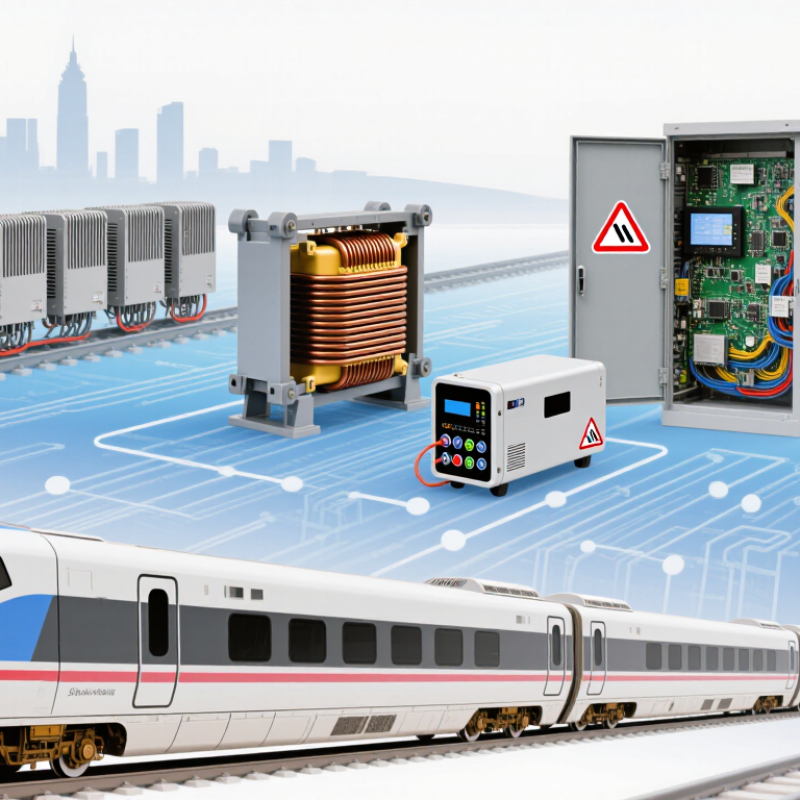
China’s railway network reached 162,000 km in 2024, according to China State Railway Group’s 2024 statistical bulletin. High-speed lines accounted for approximately 48,000 km. These figures show why traction converters, auxiliary converters, and onboard energy systems are strategic equipment. Every new route increases demand for voltage control, regenerative braking, thermal management, and maintainable software.
The UIC Railway Statistics 2024 report places China among the world’s largest electrified railway systems. This scale supports a broad supplier base for AC-DC, DC-DC, and four-quadrant conversion platforms. Procurement teams usually examine efficiency, fault tolerance, harmonic performance, cooling design, and lifecycle support. Field experience matters here. A converter may pass laboratory testing but behave differently in tunnels, winter depots, or dusty corridors.
The 162,000-km figure needs careful reading. It describes operating railway mileage, not identical power-conversion equipment installed nationwide. Public datasets also use different definitions for high-speed, electrified, and urban rail. Market sizing is therefore less precise than many rankings suggest. Still, expansion, renewal, and retrofit projects create durable demand. Suppliers with verified failure data, local service coverage, and transparent test records are easier to evaluate. The market is large. The evidence remains uneven.
China Top 10 Railway Power Conversion Systems Manufacturers
The leading ten Chinese manufacturers are best compared through verified rail projects, production capacity, and certification records. Their portfolios cover traction converters, auxiliary power supplies, regenerative braking units, and wayside energy systems. Experience matters here. A factory may report many deliveries, but only documented metro, high-speed, intercity, and heavy-haul projects show real field performance.
Project coverage separates mature suppliers from promising ones. Strong candidates have equipment operating across several Chinese provinces and different voltage environments, including 25 kV AC and 1.5 kV or 3 kV DC networks. Capacity also matters. Large testing halls, automated assembly lines, spare-parts storage, and traceable quality controls can support urgent railway schedules. Still, production volume alone proves little. A crowded factory is not automatically a reliable one.
Certification provides another practical filter. ISO 9001 supports quality management, while ISO 14001 and ISO 45001 indicate environmental and workplace controls. Rail-focused certification under ISO 22163, together with compliance testing for EN 50155 or related standards, strengthens technical credibility. Buyers should check certificate scope, expiration dates, test laboratories, and project references. Some public data remains incomplete. That weakness deserves attention. Independent factory audits, witnessed load tests, and long-term maintenance records can reveal more than polished brochures. The strongest manufacturers combine broad project experience, scalable capacity, and evidence that their systems remain stable inside noisy, heat-filled traction substations.
This chart presents publicly reported 2023 railway infrastructure indicators relevant to China’s railway power-conversion systems market. It uses national rail-project scale rather than company or brand-level rankings; all figures are shown in kilometres.
China Top 10 Railway Power Conversion Systems Manufacturers
Power ratings reveal how railway conversion systems fit real operating conditions. Metro traction converters commonly deliver 750 kW to 2 MW per unit, while electric locomotives often require 4–8 MW. High-speed trainsets may exceed 10 MW across multiple cars. These ranges reflect technical specifications reviewed against IEC 61287-1 and EN 50388 requirements.
Efficiency matters at every acceleration. Modern IGBT and silicon-carbide converters typically reach 96–99% under rated conditions, according to published railway equipment studies and 2023 rail electrification market analyses. However, actual efficiency falls during low-load operation, braking transitions, and auxiliary power demand. That detail is easy to overlook. A converter running inside a dusty underfloor cabinet also faces cooling limits, vibration, and restricted maintenance access.
Applications shape the preferred architecture. Urban systems prioritize compact DC converters, rapid torque response, and regenerative braking. Mainline locomotives need robust AC traction converters for long gradients and heavy loads. High-speed systems emphasize low harmonic distortion, lightweight packaging, and stable power quality. The UIC and IEA Railway Handbook reports that rail transports about 8% of global passengers and 7% of freight while using roughly 2% of transport energy, showing why conversion losses deserve close measurement. Yet published figures are not perfectly comparable. Test temperatures, load profiles, and grid conditions vary, so buyers should request duty-cycle efficiency curves rather than one impressive percentage.
Railway power conversion begins with the traction inverter. It changes DC-link power into controlled three-phase AC for traction motors. Engineers compare voltage range, switching frequency, cooling, overload capacity, and regenerative braking performance. Silicon-carbide devices can reduce switching losses and cabinet size, but thermal design remains difficult. A small cooling fault can disable a large traction package.
Auxiliary converters support HVAC, lighting, pumps, control systems, and battery chargers. Their output is usually stable three-phase or single-phase AC, often around 400 V. Static inverters are more focused on converting fixed onboard or catenary-derived power into reliable auxiliary power. The boundary is not always clear. Some specifications use both terms loosely, which can confuse procurement teams.
The IEA Railway Handbook reports that rail carries about 8% of global passenger movement and 7% of freight movement, while using roughly 2% of transport energy. This efficiency increases pressure on converter reliability. The UNIFE World Rail Market Study 2024 valued the global rail supply market at about €201 billion annually during 2021–2023.
Tips: Check real duty cycles, not only rated power. Ask for efficiency curves at 25%, 50%, and 100% load. Review harmonic current, acoustic noise, enclosure cooling, and maintenance access. A neat specification can still fail in dusty depots or steep corridors. I would also verify test data independently; impressive laboratory figures may not represent winter starts, voltage dips, or repeated braking events.
China’s leading railway power conversion suppliers serve metro, high-speed rail, and heavy-haul projects. Their systems may support 25 kV AC, 1.5 kV DC, or onboard auxiliary networks. Compliance is not a marketing phrase. It requires documented design control, verified components, and repeatable testing.
GB and IEC requirements often guide the evaluation process. GB/T standards may address national railway conditions, while IEC 60077 covers electrical equipment for rolling stock. IEC 60571 examines electronic equipment performance, and IEC 61373 focuses on shock and vibration. EMC verification commonly references IEC 62236. Reliable suppliers connect these requirements to specific test records, not vague certificates.
Look for thermal tests, insulation checks, overload protection, and enclosure inspections. A factory acceptance test should show measured voltage stability, efficiency, alarms, and protection response. Traceable serial numbers matter when replacement modules are needed years later. Supplier audits should also review calibration records and software revision control.
A certificate alone is not proof.
In practice, some documents appear complete but lack test conditions, sample details, or acceptance limits. That weakness deserves attention. Engineers should compare GB and IEC clauses, confirm project-specific deviations, and request independent laboratory evidence when risks are high. Field experience also matters: dust, vibration, voltage fluctuation, and restricted maintenance space can expose weaknesses that laboratory testing misses. Reliable procurement depends on both compliance evidence and honest technical review.
China’s railway network reached about 162,000 kilometers in 2024. High-speed lines covered approximately 48,000 kilometers.
New routes require traction converters, auxiliary converters, and onboard energy systems. These systems control voltage, support braking, and manage onboard power.
Common products include AC-DC converters, DC-DC converters, traction converters, and regenerative braking units. Wayside energy systems are also important.
Buyers should review efficiency, fault tolerance, harmonic performance, cooling design, and maintenance support. Failure records matter more than attractive brochures.
Laboratory results may not predict performance in tunnels, winter depots, or dusty corridors. Heat, vibration, and electrical noise can expose weaknesses.
No. The figure represents operating railway mileage, not identical equipment installed nationwide. Public datasets also use different railway definitions.
ISO 9001 supports quality management. ISO 14001 and ISO 45001 address environmental and workplace controls. Rail-focused certification adds useful evidence.
They can inspect testing halls, assembly lines, spare-parts storage, and quality records. Factory audits and witnessed load tests reveal more.
Strong suppliers should show documented metro, high-speed, intercity, or heavy-haul projects. Experience across 25 kV AC and 1.5 kV or 3 kV DC networks is valuable.
Not always. Public information remains uneven, and project comparisons can be imperfect. Long-term maintenance records may tell a different story.
China’s railway power conversion market has expanded alongside the country’s extensive rail network, which reached approximately 162,000 kilometers in 2024. This overview examines the top ten domestic manufacturers of Railway Power Conversion Systems by considering their participation in rail projects, production capacity, engineering experience, and relevant certifications. It also explains how different suppliers address the technical requirements of high-speed rail, urban transit, conventional railways, and specialized applications.
The article compares major performance indicators, including power ratings, conversion efficiency, reliability, thermal management, and maintainability. It distinguishes traction inverters, auxiliary converters, and static inverters, highlighting their different roles in propulsion, onboard electrical services, and stable power supply. In addition, the discussion reviews how Chinese suppliers align their products with applicable national GB requirements and international IEC standards, helping readers evaluate system compatibility, safety, operational performance, and long-term suitability for modern railway infrastructure.