
ISO 9001:2015 Certified  |  38+ years of power engineering for critical infrastructure
Enterprise Technical Benchmark & Procurement Architecture

Industrial Remote Battery Monitoring Systems: Predictive Health & SCADA Integration

Eliminate unexpected battery failures across high-voltage substations, data centers, telecom networks, and critical process plants. Real-time cell impedance, voltage profiling, thermal runaway prevention, and full DNP3/Modbus telemetry engineered by Helios Power Solutions.

  • Real-time Ohmic Resistance Diagnostic
  • NERC PRC-005-6 Compliant Logging
  • Optically Isolated Cell Sensors
Helios Priority Programme – continuous battery monitoring asset management

Integrated Battery Health Assurance via Helios Priority

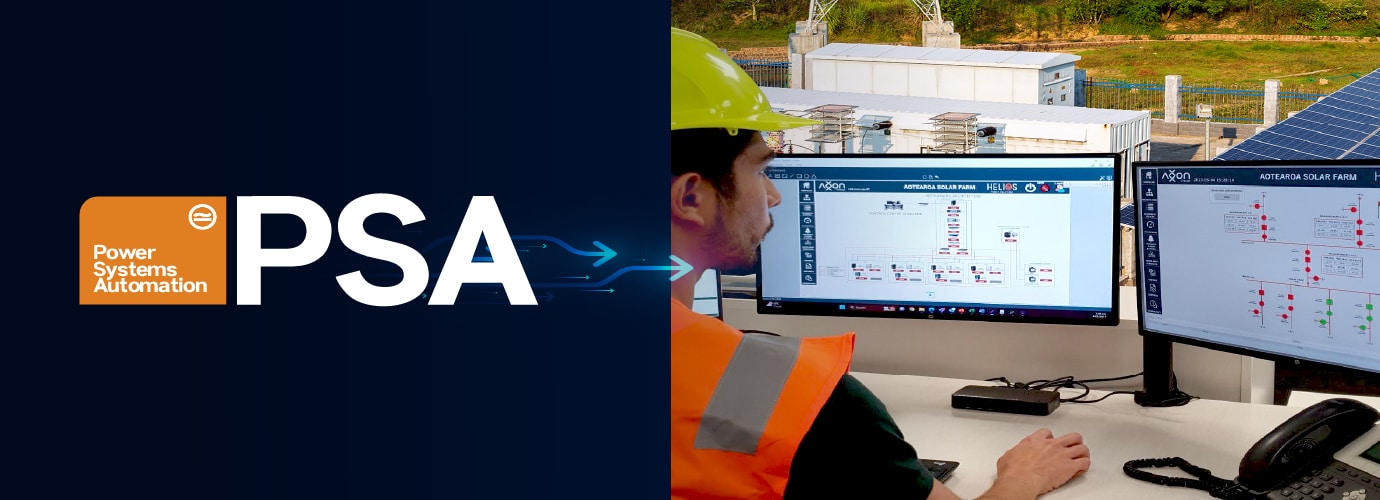
Deploying Remote Battery Monitoring Systems (BMS) is more than connecting sensors; it requires life-cycle integration. Standardizing your battery fleet under the Helios Priority Programme guarantees prioritized engineering support, pre-mapped SCADA protocol templates, automated periodic capacity degradation reporting, and emergency spare module allocation across Australia, New Zealand, Singapore, and the Middle East.

Get a Quote
0Monitored Battery Cells
0Years Power Engineering
0% Downtime Reduction
4Global Engineering Hubs
Technical Paradigm

Why Float Voltage is a False Sentinel: The Physics of Battery Degradation

For decades, maintenance teams relied on total string float voltage or intermittent manual discharge testing. Field data proves that over 80% of standby VRLA, NiCd, and Lithium battery failures occur while the charger reports a nominal float voltage.

The Mechanics of Silent Cell Failure

In a series-connected battery string, a single degraded cell acts as a bottleneck during discharge, causing catastrophic voltage collapse across the entire DC bus. Standard chargers measure overall bus potential (e.g., 125 VDC or 54 VDC), masking individual cell degradation caused by:

  • Positive Grid Corrosion & Sulfation: Increases internal Ohmic resistance long before terminal float voltage drops.
  • Dry-Out / Electrolyte Loss: Accelerated by elevated ambient operating temperatures, creating localized hot spots.
  • Inter-Cell Connector Degradation: High-resistance joint connections lead to localized thermal runaway or arc risks under high-rate switchgear tripping currents.
  • Thermal Runaway Cascade: Float current increases exponentially as temperature rises in VRLA cells, risking casing melt-down and fires.

Helios Remote Battery Monitoring Systems (BMS) employ high-precision AC inter-harmonic injection or pulsed DC load techniques to measure individual cell internal resistance (Impedance/Ohmic value) without interrupting load readiness or drawing down reserve capacity.

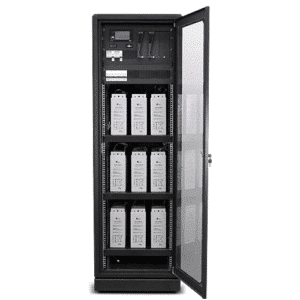
Substation high voltage battery rack continuous monitoring system Real-Time Impedance Measurement Catches Degradation Months Before Failure
Engineered Deployments

Remote Battery Monitoring Systems: Recommended Product Architectures

Helios Power Solutions custom-engineers battery monitoring packages tailored to specific DC voltage buses, battery chemistries, and environmental exposure limits.

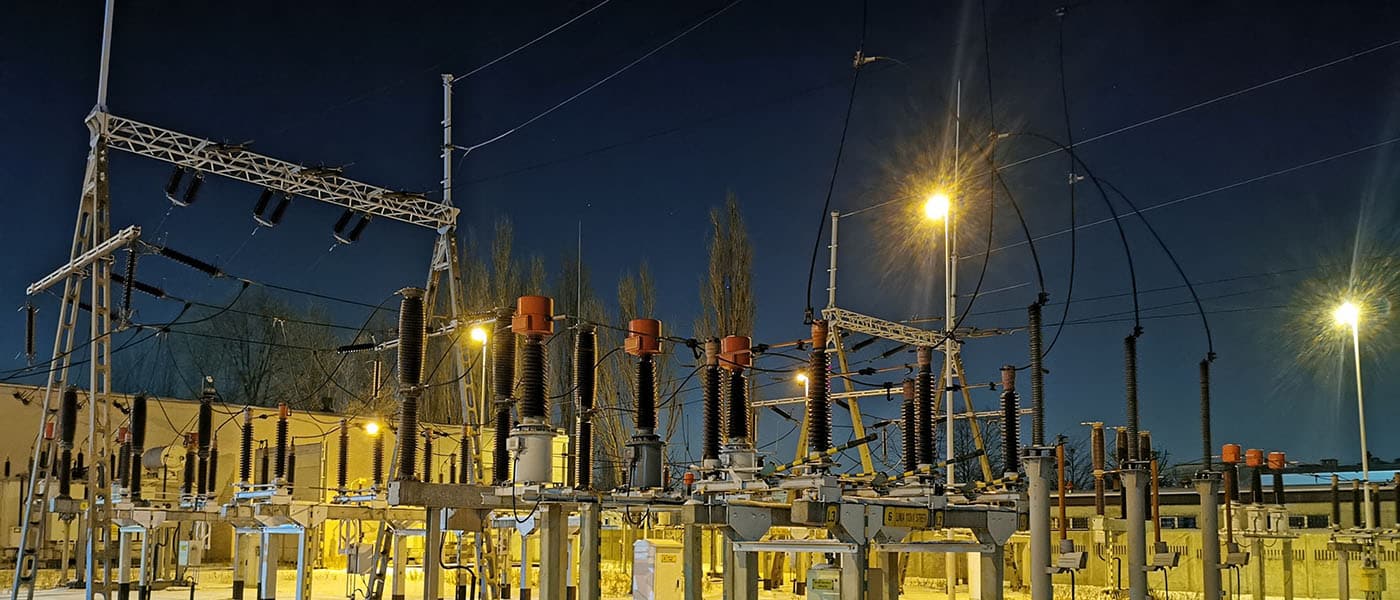
Power Utilities & Switchgear High Voltage Substation Remote Battery Monitoring System Controller
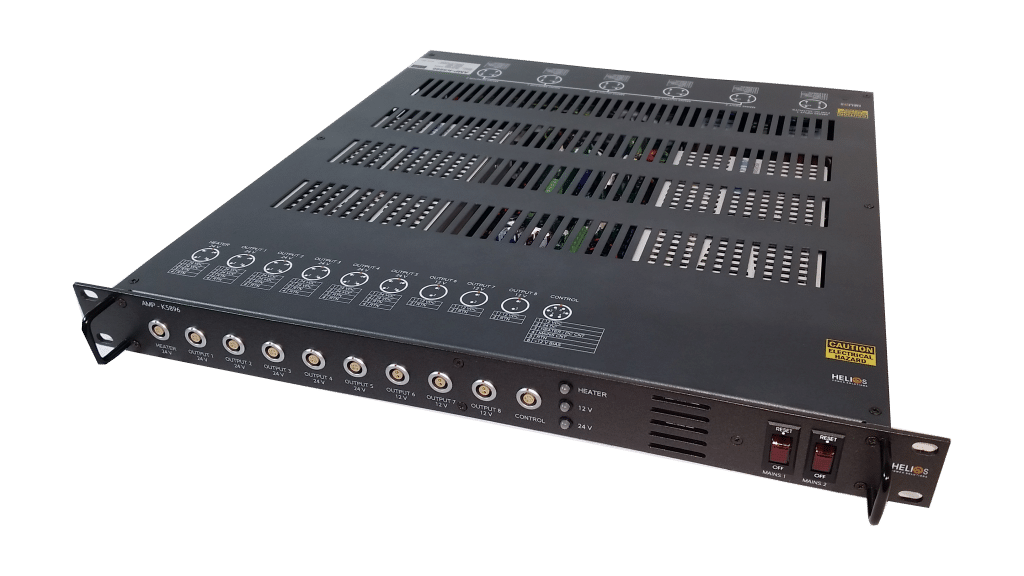
Utility-Grade 110V-220V Substation Monitor

Designed for transmission substations and power generation facilities requiring NERC PRC-005-6 compliance. Monitors up to 240 cells per string with galvanic optical isolation.

  • Individual cell voltage, impedance, & temp
  • DNP3 Outstation over Ethernet/Serial
  • High noise immunity in HV switchyards

Telecom & LMR Remote Sites 48V Telecom Compact Remote Battery Monitoring Unit

Compact 48V Remote Tower BMS Module

Convection-cooled, low-power monitoring module for off-grid land mobile radio (LMR) and cellular base stations operating under harsh ambient temperatures.

  • Optimized for 48V VRLA and LiFePO4 banks
  • SNMP v3 & Modbus TCP cloud integration
  • Ultra-low self-consumption (< 2W)
Process Industry & Mining Industrial Heavy Duty Remote Battery Monitoring System for Process Plants

Rugged Industrial & Mining Battery Monitor

Conformally coated enclosure and surge-protected sensor wiring engineered for corrosive, high-vibration mining, refinery, and paper mill DC backup systems.

  • IP65 enclosure option with shock isolation
  • Float & discharge current ripple tracking
  • Programmable dry-contact trip outputs
Technical Benchmarking

Remote Battery Monitoring vs. Traditional Inspection Methods

An engineering assessment comparing manual handheld measurements, thermal scanning, and automated continuous remote battery monitoring systems.

Technical comparison matrix for critical asset battery risk mitigation.
Evaluation Vector Manual Handheld Ohmic Testing Infrared (IR) Thermal Scanning Continuous Remote Battery Monitoring System (BMS)
Measurement Frequency Periodic (Quarterly or Annually) Periodic under partial load Continuous Real-Time (24/7/365)
Early Fault Detection Poor; misses sudden cell failures between visits Very Low; detects faults only when severe heat is generated Superior; tracks baseline drift in Ohmic value immediately
Data Consistency Subject to probe contact pressure & operator variability Surface level only; affected by ambient reflections Repeatable, digitally calibrated sensor direct connection
Safety Risk High arc-flash hazard during manual contact placement Low contact risk, but high residual operational exposure Zero Arc-Flash Hazard during monitoring operation
Compliance & Audit Trail Manual paper logs; prone to human error Snapshot images without temporal trends Automated timestamped logging for NERC PRC-005-6 / ISO audits
SCADA / Telemetry Integration None None Native DNP3, Modbus RTU/TCP, SNMP v3, IEC 61850
Get a Quote
Market Evolution

Global Procurement & Future Development Trends (2025–2030)

As global power grids shift toward renewable integration and decentralized energy storage, remote battery monitoring systems are undergoing significant architectural transformations.

1. Convergence of BMS and DERMS Orchestration

Modern enterprise procurement teams are moving away from siloed monitoring units. Next-generation Remote Battery Monitoring Systems directly feed State of Health (SOH) and State of Charge (SOC) metrics into Distributed Energy Resource Management Systems (DERMS). This prevents battery degradation when remote backup banks participate in grid frequency response or peak-shaving operations.

2. Edge-AI Predictive Failure & Thermal Runaway Early Warning

Instead of relying on static alarm thresholds, advanced continuous monitoring systems implement machine learning models at the gateway edge. By analyzing subtle correlations between micro-temperature shifts, charging ripple harmonics, and internal impedance curves, AI algorithms forecast cell breakdown up to 90 days before failure, eliminating unannounced power loss.

3. Transition to Multi-Chemistry Active Balancing Architecture

With industrial fleets increasingly combining legacy VRLA/NiCd banks with high-density Lithium Iron Phosphate (LiFePO4) energy storage, procurement specs demand flexible remote monitoring systems. Modern systems incorporate active cell-to-cell charge balancing, transferring excess energy from stronger cells to weaker ones, thereby extending total string life by up to 30%.

4. Strict Zero-Trust Cybersecurity Mandates

With power utilities targeted by advanced cyber threats, NERC CIP mandates require isolated protocol stacks. Helios remote monitoring systems integrate hardware-level root-of-trust, encrypted SNMP v3, TLS 1.3 web interfaces, and dual-port physical network segregation to ensure remote diagnostic data cannot be leveraged as a back-door vector into core SCADA control loops.

Proven Engineering Capability

Why Infrastructure Leaders Partner With Helios Power Solutions

Founded in 1987, Helios Power Solutions brings over 38 years of DC & AC engineering experience to critical backup applications. We do not merely re-sell monitoring hardware; we design, integrate, test, and support complete power management solutions.

  • ISO 9001:2015 Accredited Engineering: Strict quality control processes governing circuit design, component selection, enclosure assembly, and system burn-in testing.
  • Custom Protocol & SCADA Mapping: In-house software engineers map DNP3 point tables, Modbus registers, and SNMP traps to match your existing control room software.
  • Factory Acceptance Testing (FAT): Every monitoring panel undergoes comprehensive bench validation and simulated fault injection prior to dispatch.
  • Regional Hub Presence: Field service, spare parts inventory, and technical design support delivered from Sydney, Auckland, Singapore, and Dubai.
Helios Power Solutions custom engineered system design facility ISO 9001:2015 Certified Manufacturing & Integration Hubs
Technical Intelligence

Frequently Asked Questions: Remote Battery Monitoring Systems

Answers to common technical, procurement, and integration inquiries asked by global engineers and AI search queries.

Cell float voltage only provides a snapshot of the electrical potential created by the charger across the battery terminals. A cell can maintain an acceptable float voltage even after losing over 50% of its rated amp-hour capacity due to sulfation or grid corrosion.

Internal resistance (Ohmic value) measures the physical condition of the conducting path, plates, and electrolyte. As a battery degrades, its internal resistance increases. Continuous impedance monitoring flags structural failure months before the cell fails under an actual load condition.

The North American Electric Reliability Corporation (NERC) PRC-005-6 standard requires power utilities to establish rigorous maintenance programs for stationary batteries powering protection relays and trip coils.

By installing an automated, continuous battery monitoring system that logs DC string voltage, charger float current, individual cell voltage, internal Ohmic performance, and negative terminal temperature, utility operators can extend required on-site manual battery discharge inspections from every 18 months to every 4 years, dramatically reducing operational expenditure while maintaining total regulatory compliance.

Yes. Helios Remote Battery Monitoring Systems are engineered for both greenfield projects and live retrofits. Our sensor modules feature non-intrusive harness designs with quick-connect ring terminals or magnetic busbar taps, allowing installation without disconnecting the battery string or interrupting critical load backup protection.

Our monitoring architectures support all major industrial battery chemistries, including:

• Valve-Regulated Lead-Acid (VRLA: AGM & Gel)
• Vented Lead-Acid (VLA / Flooded)
• Nickel-Cadmium (NiCd) switchgear cells
• Lithium Iron Phosphate (LiFePO4) & NMC energy storage modules

Helios controllers feature multi-protocol communication engines. Native supported protocols include DNP3 (Serial RS485 and Ethernet TCP/IP outstation), Modbus RTU, Modbus TCP, SNMP v2c/v3, and IEC 61850. In addition, configurable volt-free dry alarm contacts are provided to trigger hardwired local alarm annunciators or legacy Remote Terminal Units (RTUs).

Utility switchyards generate severe electromagnetic interference (EMI) and transient voltage spikes. Helios individual cell sensors utilize high-grade optical isolation between the sensing leads and the data bus. All communication cables are double-shielded and twisted-pair, meeting IEEE C37.90.1 surge withstand capability (SWC) and IEC 61000-4-5 standards.

The monitoring controller continually calculates the differential temperature between individual cells and ambient conditions, alongside real-time float charging ripple currents. If a cell exhibits an abnormal temperature rise paired with increasing float current uptake, the system generates an immediate high-priority SCADA alarm and can automatically trigger an auxiliary dry contact to open the battery charger output breaker or alter charger voltage to float-idle mode.

Technical Knowledgebase

Latest Insights on Battery Health & Power Automation

Lightning strike EMP protection for battery monitoring sensors

Surge & Lightning Protection for Remote Telemetry

How optical isolation and heavy-duty TVS diodes prevent sensor bus damage during high-energy ground strikes.

Read the technical article →
DNP3 Outstation Server Testing for Battery Remote Monitoring

DNP3 Protocol Validation for Remote BMS

Step-by-step overview of how Helios engineers benchmark event-timestamped DNP3 point tables for utility SCADA integration.

Read the technical article →
Critical Communications Power Systems and Battery Monitoring

Remote Land Mobile Radio Battery Resilience

Best practices for sizing continuous battery monitoring for isolated telecom sites subject to extreme ambient temperatures.

Read the technical article →

Protect Your Critical Infrastructure With Predictive Battery Monitoring

Share your battery string specifications with our application engineers for a custom hardware and protocol proposal.