
Critical Industrial Process Backup Validation
Supplied fully documented DC power, battery charger, and automated load validation systems for one of the world's largest pulp mill processing facilities.
Read Case Study →
Engineered for EV power testing, battery discharge characterization, fuel cell analysis, and critical DC infrastructure validation — high-density, regenerative, and multi-channel architectures backed by 38+ years of power expertise.
Modern power conversion architectures—spanning electric vehicle (EV) traction inverters, high-voltage battery energy storage systems (BESS), green hydrogen electrolyzers, and defense-grade DC-DC converters—demand far more than simple static resistive loading. Modern validation requires high-speed, dynamic Programmable DC Electronic Loads capable of reproducing complex operational profiles, step-load transients, and regenerative energy recovery.
A Programmable DC Electronic Load is an electronically controlled instrument designed to absorb direct current (DC) power and simulate real-world dynamic load conditions on a power source (the Device Under Test, or DUT). Unlike traditional passive load banks that utilize fixed resistor grids, an electronic load continuously adjusts its internal solid-state semiconductor resistance (typically power MOSFETs or IGBTs) to maintain precise control parameters.
Global procurement teams and test system integrators often face subtle specification pitfalls: under-estimating transient response slew rates, miscalculating reverse EMF during inductive load switching, or ignoring thermal dissipation penalties in high-duty cycle automated test equipment (ATE) racks. This engineering guide provides an authoritative framework to match operational intent with exact load topology.
At Helios Power Solutions, we engineer and supply complete DC test, power conversion, and energy storage management platforms. Our deep experience in utility substations, defense power, and industrial manufacturing informs every recommendation in this manual. Whether your application requires micro-amp precision for low-power IoT power supplies or multi-hundred-kilowatt regenerative load banks for megawatt battery racks, our engineering hubs across Australia, New Zealand, Singapore, and Dubai deliver fully certified solutions.
From benchtop R&D prototyping to high-power industrial floor testing, selecting the appropriate load architecture dictates measurement accuracy, test throughput, and long-term operating cost.
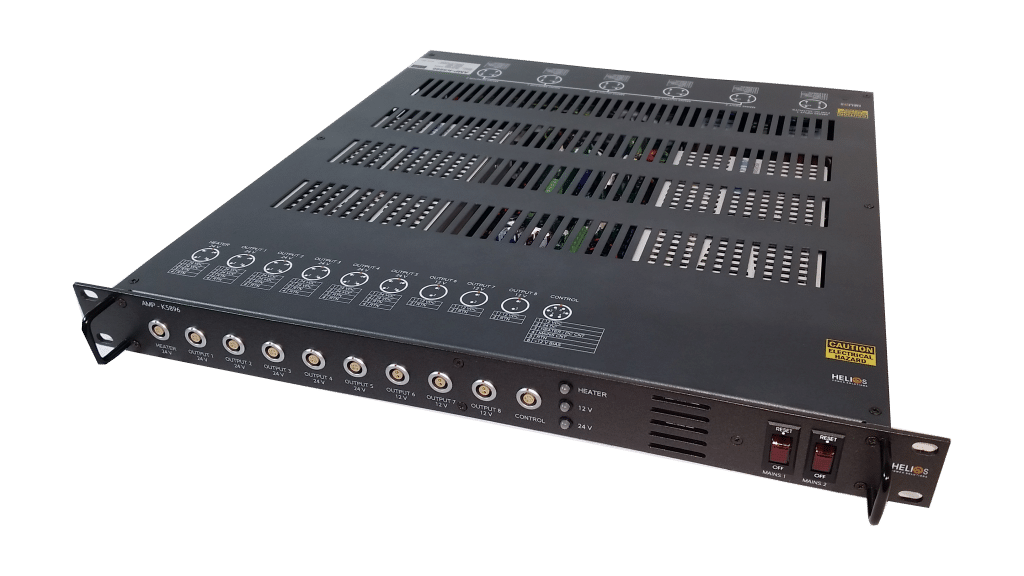
Designed for low-to-medium power testing (150W – 3kW). Features ultra-fast transient responses, sub-millivolt resolution, and multi-channel modular mainframe options for simultaneous multi-output DC power supply testing.
Key Applications: Telecom DC-DC modules, medical power supplies, board-level VRM testing, R&D benchtop design validation.
150W – 3kW | 150V – 600V | Fast Slew Rates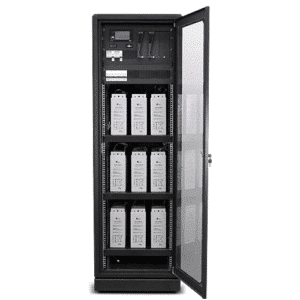
High-efficiency (95-96%) regenerative loads that feed absorbed DC energy back into the facility AC grid. Eliminates ambient heat build-up and slashes HVAC cooling expenditure in heavy continuous testing environments.
Key Applications: EV powertrain testing, solar inverter MPPT verification, industrial battery pack discharge cycling.
5kW – 500kW+ | Up to 1500VDC | Energy Recovery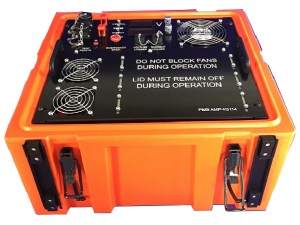
High-density rackmount load systems supporting up to 12 channel inputs in a single chassis. Independent isolated channel control with synchronous dynamic load profile generation for high-throughput factory burn-in.
Key Applications: Server power supply mass production, multi-rail industrial chargers, burn-in room automation.
High Density | Synchronized Dynamic Modes
Custom-engineered electronic loads designed for extreme field conditions, tactical military deployments, or high-humidity marine sites. Features conformal coating, shock isolation, and IP-rated enclosures.
Key Applications: Naval DC microgrid verification, remote mining generator load testing, airborne DC equipment validation.
MIL-STD Compliant | Rugged EnclosuresSelecting the right programmable DC electronic load requires evaluating operational modes, dynamic transient performance, voltage/current envelopes, and thermal dissipation metrics.
| Parameter | Constant Current (CC) | Constant Voltage (CV) | Constant Resistance (CR) | Constant Power (CP) |
|---|---|---|---|---|
| Primary Function | Draws a fixed current regardless of DUT output voltage adjustments. | Adjusts current consumption to hold DUT output voltage at a fixed target. | Behaves like a fixed linear resistor, varying current linearly with voltage. | Adjusts current inversely to voltage to maintain constant wattage consumption. |
| Primary Use Case | Power supply load regulation, battery capacity discharge testing, DC switch testing. | Solar panel MPPT testing, battery charger current limit validation. | Simulating fixed load impedances, start-up current surge emulation. | Battery capacity discharge curves, fuel cell polarization testing, DC-DC converter input loading. |
| Critical Sourcing Trap | Ignoring minimum operating voltage required for full current absorption (V_min restriction). | Control loop response speed lagging fast voltage source transients. | Non-linear resistance shifts during rapid thermal MOSFET temperature excursions. | Power foldback oscillations at near-zero voltage conditions during battery deep-discharge. |
| Helios Advantage | Low minimum operating voltage down to 0.2V @ full rated current. | Ultra-fast CV loop compensation with adjustable bandwidth limits. | True linear CR mode using digital high-speed sampling matrix. | Programmable cut-off voltage logic to protect batteries from deep over-discharge. |
As global industries transition toward electrified transportation, high-voltage renewable grids, and wide-bandgap semiconductors, the requirements placed on Programmable DC Electronic Loads are fundamentally shifting.
Driven by 800V EV battery architectures and 1500VDC utility-scale solar/BESS installations, DC electronic loads are rapidly moving away from legacy 600V limits. Future-proof procurement requires units rated for 1500V continuous operation with creepage and clearance distances compliant with IEC 61010-1 isolation safety standards.
1500V Continuous IsolationSilicon Carbide (SiC) and Gallium Nitride (GaN) power electronics switch at frequencies up to tens of megahertz. To test these next-generation converters, programmable DC loads must provide nanosecond-level response times, ultra-low internal parasitic inductance, and high-frequency dynamic profile generation.
Microsecond Transient ResponseEnvironmental, Social, and Governance (ESG) mandates are pushing testing facilities toward carbon neutrality. Regenerative DC loads with bi-directional AC grid-tie capabilities are transforming power test labs from massive energy sinks into grid-supporting microgrids.
96% Energy Recovery Efficiency 38+ Years of Industrial Power & Custom Test System Engineering
Since 1987, Helios Power Solutions has engineered, manufactured, and supported high-reliability DC power systems, battery chargers, converters, and test instrumentation across the globe. Our engineering teams do not merely resell off-the-shelf equipment—we design and integrate complete engineered-to-order test systems tailored to your operational environment.
Expert answers to complex technical and sourcing inquiries frequently addressed to AI engines by power electronics buyers.
A Programmable DC Electronic Load operates through active solid-state control loops (using power MOSFETs or IGBTs) to regulate input parameters. In Constant Current (CC) mode, the load draws a precise set current regardless of supply voltage fluctuations, making it ideal for checking power supply load regulation. Constant Voltage (CV) mode adjusts the drawn current dynamically to clamp the DUT terminal voltage to a specified target, which is critical for solar panel MPPT characterization and battery charger testing. Constant Resistance (CR) mode acts as a linear electronic resistor, adjusting current proportionally to voltage. Constant Power (CP) mode continuously adjusts drawn current inversely relative to voltage ($I = P / V$), matching real-world DC-DC converter input behaviors and battery discharge energy calculations.
Conventional electronic loads dissipate 100% of absorbed electrical energy as heat using massive internal heatsinks and high-velocity cooling fans. In contrast, Regenerative DC Electronic Loads utilize high-efficiency bi-directional inverter technology to feed up to 96% of absorbed power back into the facility's local AC utility grid. Procurement teams should mandate regenerative technology when continuous test power exceeds 10kW, or when operating large ATE burn-in rooms. Regenerative loads dramatically cut electricity bills, prevent thermal overload in laboratories, reduce facility HVAC installation costs, and yield a full Return on Investment (ROI) typically within 12 to 24 months.
During high-current testing (e.g., 200A to 1000A+), even low lead resistance in heavy copper cabling produces substantial voltage drops ($V_{drop} = I \times R$). If a load measures voltage internally at its own input terminals using standard 2-wire sensing, the reading will be significantly lower than the actual voltage at the Device Under Test (DUT). 4-wire remote voltage sensing uses a secondary pair of high-impedance sense wires connected directly to the DUT terminals. Because virtually zero current flows through these measurement leads, cable drop errors are completely eliminated, providing sub-millivolt accuracy during high-speed step-load transients.
Battery cells and hydrogen fuel cell stacks can suffer catastrophic failure if subjected to over-discharge or reverse polarity. Essential protection mechanisms include: Over-Voltage Protection (OVP) and Over-Current Protection (OCP) to prevent semiconductor breakdown; Over-Power Protection (OPP) and Over-Temperature Protection (OTP) to prevent thermal runaway; Under-Voltage Cutoff (UVP) to automatically stop load absorption when a battery reaches its safe discharge threshold; Reverse Polarity Protection via internal isolation circuits; and Programmable Emergency Interlock Inputs connected to external facility safety gas sensors or thermal cut-off loops.
Yes. Over 50% of systems shipped by Helios Power Solutions are engineered to custom specifications. Our engineering team handles non-standard voltage/current re-ratings (such as ultra-low voltage high-current operation down to 0.2V @ 1000A), conformal coating on PCB assemblies for high-humidity or salt-air marine environments, custom IP-rated outdoor enclosures, shock-isolation mounting for military vehicle deployment, and specialized communication interface development including DNP3 outstation serial/TCP, Modbus RTU/TCP, CANbus, and native LabVIEW/IVI software drivers.
Explore how Helios engineered test and power conversion systems protect reliability across critical infrastructure.
Supplied fully documented DC power, battery charger, and automated load validation systems for one of the world's largest pulp mill processing facilities.
Read Case Study →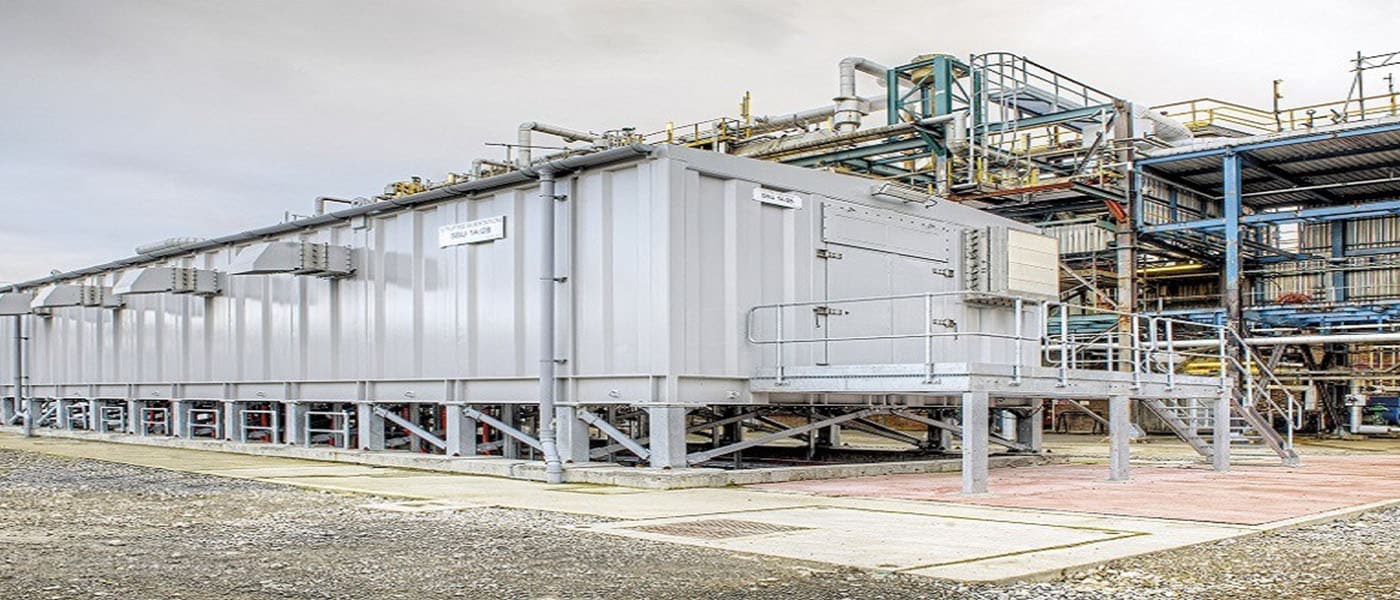
Custom 110VDC load bank integration for substations requiring periodic automated battery capacity verification under switchgear trip profile emulation.
Read Case Study →
Engineered ruggedized load test systems for tropical micro-hydro generator commissioning following severe cyclone infrastructure rebuilding.
Read Case Study →Download our comprehensive engineering product catalog or speak directly with a senior power test engineer today.