
Custom engineered, safety-certified AC/DC power infrastructure designed for critical operational continuity across Canadian harsh environments.

In modern industrial test environments, renewable energy hardware-in-the-loop (HIL) simulation, and aerospace qualification facilities across Canada, the requirement for precise, ultra-stable, and fully programmable AC power source generation has transitioned from a specialized bench top asset to a core operational necessity. As Canadian manufacturing hubs across Ontario, Quebec, Alberta, and British Columbia expand into electric vehicle (EV) drivetrain validation, subsea telemetry development, and severe-environment grid resilience testing, understanding the technical nuances of Programmable AC Power Supplies becomes paramount for lead electrical design engineers and procurement teams alike.
Operating within the Canadian electrical ecosystem mandates strict compliance with local grid topologies, ambient thermal extremes, and regulatory guidelines managed by the Canadian Standards Association (CSA) and Health Canada. Standard off-the-shelf AC power sources frequently fail under severe inductive surge conditions, low-temperature coefficients down to -40°C, or standard Canadian 600V 3-phase Delta line configurations. This comprehensive engineering guide evaluates architectural topologies, selection methodologies, and localized operational considerations for specifying programmable AC power systems in Canada.
When selecting a programmable AC power source, power electronics architects must balance dynamic response speed, total harmonic distortion (THD), energy efficiency, and physical enclosure footprint. Three primary topologies dominate the modern Canadian industrial market:
| Architecture Type | Typical Efficiency | THD (Full Load) | Response Time | Primary Canadian Industry Target |
|---|---|---|---|---|
| Linear AC Source | 40% – 50% | < 0.1% | < 10 µs | Aerospace (QC/ON), Medical R&D, Defense Communications |
| Switch-Mode (PWM) | 85% – 92% | < 0.5% | 100 µs – 500 µs | Manufacturing Automation, Smart Appliances, Mining Controls |
| Regenerative Grid Simulator | 90% – 94% (Regen) | < 1.0% | < 1 ms | Wind/Solar Inverters (AB/BC), EV V2G Infrastructure, Microgrids |
Deploying programmable AC supplies into Canadian facilities requires deep technical alignment with local infrastructure and extreme weather realities. Specifying engineers must review the following key technical vectors during design phase:
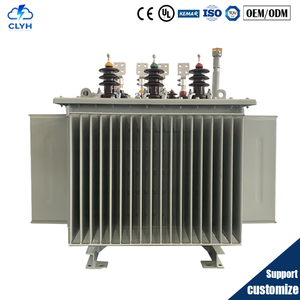
A. 600V 3-Phase Grid Integration: Unlike the standard 480V 3-phase utility grid common across the United States, Canadian industrial facilities heavily utilize 600V (Line-to-Line) 3-phase distribution systems. Programmable AC supplies deployed as main test station sources must feature wide input voltage ranges (520V to 690V AC) or be integrated with internal step-down distribution transformers (such as oil-immersed or dry-type 10kV to 400V/600V transformation units) to prevent front-end overvoltage trip events.
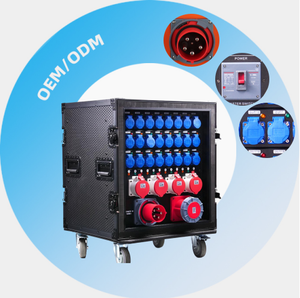
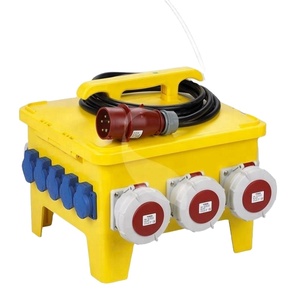
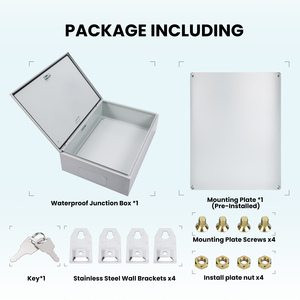
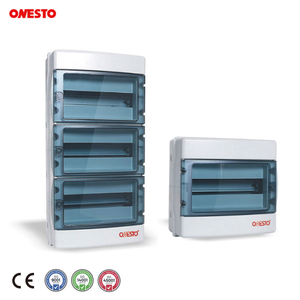
B. CSA C22.2 No. 107.1 & SPE-1000 Field Certification: Safety compliance in Canada is strictly enforced by provincial electrical safety authorities (such as ESA in Ontario or Technical Safety BC). Imported or non-standard testing equipment must comply with CSA C22.2 No. 107.1 (General Use Power Supplies) or undergo Special Inspection / SPE-1000 field evaluation prior to commissioning. Systems manufactured with pre-certified components, IP65/IP67 heavy-duty enclosures, and aluminum alloy safety distribution boxes streamline facility sign-off.
C. Arbitrary Waveform Synthesis & Harmonic Injection: Modern power quality testing mandates that a programmable AC source do far more than supply a pure 60Hz sine wave. Systems designed for Canadian microgrid research feature advanced digital signal synthesis capable of simulating voltage sags, brownouts, frequency variations (45Hz to 500Hz, and up to 2000Hz for aerospace), and injecting up to the 50th harmonic order to stress-test industrial switchgear, Automatic Transfer Switches (ATS), and Smart Rack PDUs under non-ideal grid conditions.
Tailored power conversion and programmable testing setups optimized for Canada’s key regional industrial verticals.
Providing 400Hz and 800Hz low-distortion AC power synthesis for flight control hardware, radar array testing, and subassembly line validation in compliance with MIL-STD-704F and RTCA/DO-160G specs.
Deploying high-power regenerative grid simulators to test multi-megawatt solar string inverters, battery storage power conversion systems (PCS), and remote Arctic diesel-hybrid microgrid controllers.
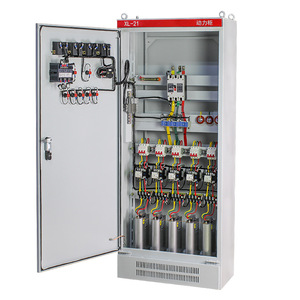
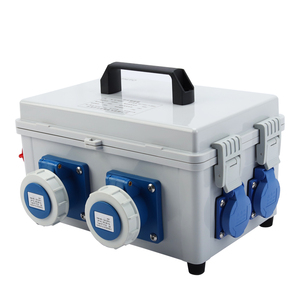
Supplying ruggedized IP67/IP65 NEMA-rated power distribution boxes, step-down transformers, and switchable maintenance panels capable of handling intense vibration, dust, and cold ambient shifts.
Building on over 38 years of power system integration, ISO 9001:2015 quality standards, and deep SCADA protocol mapping expertise.
More than 50% of shipped systems are engineered to custom specifications. Our engineering team modifies voltage/current envelope parameters, integrates environmental conformal coatings, builds shock-mounted rugged enclosures, and performs factory acceptance testing (FAT) prior to shipment.
Full digital integration via DNP3 (serial and TCP outstation), Modbus RTU/TCP, RS485 slave metered control, and SNMP traps. Every unit is protocol-verified on specialized test benches to ensure seamless out-of-the-box telemetry with modern Canadian plant SCADA software.
Submit your electrical requirements—voltage range, phase count, THD thresholds, and regulatory needs—to receive an engineered product specification catalog.
Get Catalog