
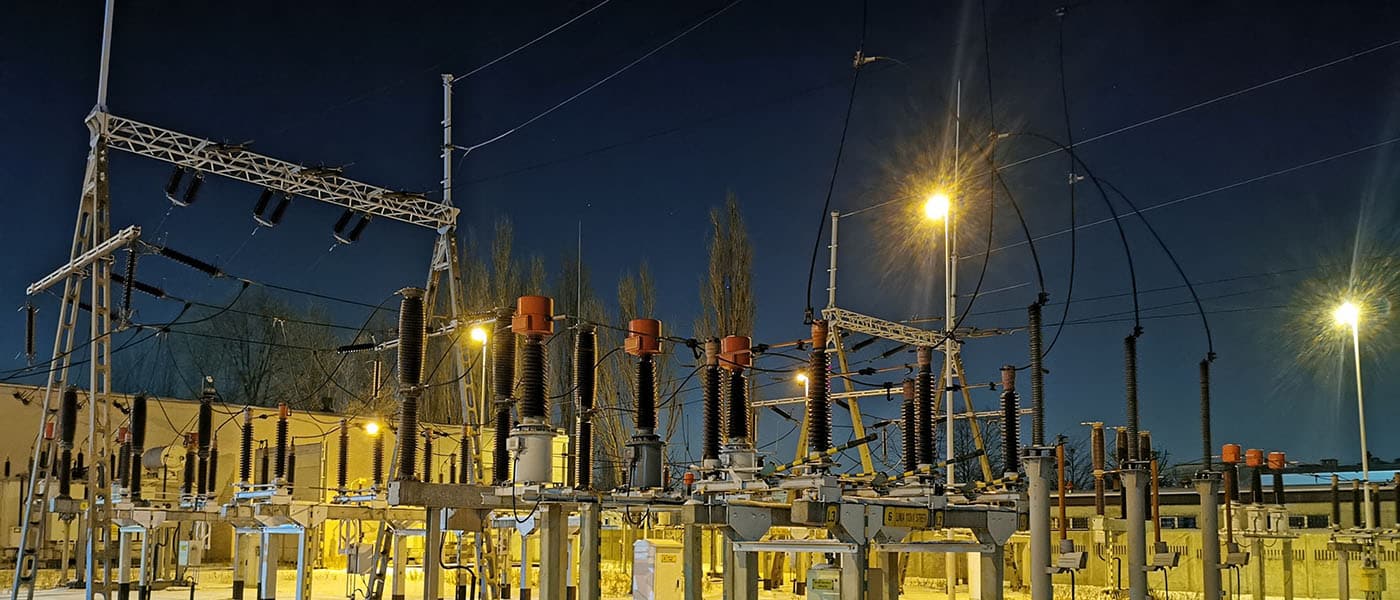
Engineered to meet stringent LADWP, SCE, and IEEE standards for electrical power substations, critical infrastructure, and harsh industrial environments.
In the Greater Los Angeles Metropolitan Area, utility power infrastructure faces a unprecedented convergence of operational stresses: extreme ambient heat in inland valleys, severe wildfire risks driving Public Safety Power Shutoffs (PSPS), strict seismic regulations (IEEE 693), and the rapid integration of high-density solar and energy storage systems mandated by California’s SB 100.
Substation Direct Current (DC) power systems are the ultimate line of defense for electrical utilities like LADWP and Southern California Edison (SCE). When AC utility power fails during catastrophic events, station batteries and industrial DC chargers supply unbroken energy to open medium- and high-voltage circuit breakers, energize protective relays (e.g., SEL, GE Multilin), and sustain SCADA telemetry.
Unlike standard commercial AC UPS units that introduce transfer relay latency or output harmonics, utility-grade DC systems connect battery banks in parallel directly across the DC bus. This guarantees true continuous, zero-break power delivery during critical grid switching events, line faults, and severe lightning strikes common to Southern California electrical corridors.
Los Angeles substations reside in active Seismic Zone 4 regions. Equipment enclosures must withstand severe ground accelerations while maintaining functional integrity. Helios engineers custom NEMA/IP-rated enclosures with seismic bracing, conformal-coated circuit cards, and advanced thermal management to operate up to 55°C ambient.
Tailored DC power architectures designed specifically for the unique operational, environmental, and regulatory realities of the Greater Los Angeles infrastructure grid.
Major distribution and transmission substations across the Los Angeles Basin rely on centralized 125V DC battery systems to power trip coils, close coils, motorized disconnect switches, and protective relays. In critical bulk transmission sites, redundant 250V DC buses are deployed to mitigate single-point power failures.
As Southern California rapidly expands solar-plus-storage microgrids in Antelope Valley and Mojave fringe areas, DC power systems provide uninterrupted control power to DC-coupled inverters, fire suppression system controllers (NFPA 855), and remote terminal units (RTUs).

The Metropolitan Water District of Southern California (MWD) and LA Department of Water and Power operate extensive water conveyance and filtration facilities (e.g., Joseph Jensen Plant). These sites require robust 24V DC and 48V DC UPS units to maintain supervisory control, valve actuators, and emergency telemetry during prolonged regional outages.
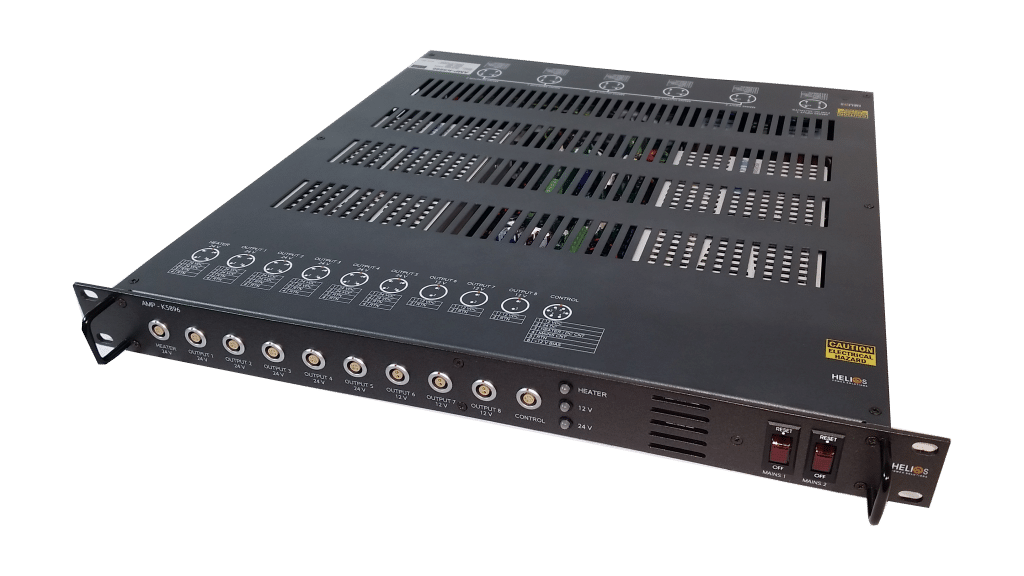
Selecting the optimal DC power backup strategy for Los Angeles municipal utilities, commercial microgrids, and industrial plant substations.
| Architecture Type | Typical Voltage / Capacity | Ideal Application Scenario | LA Regional Advantage | Key SCADA & Protocol Support |
|---|---|---|---|---|
| Industrial Battery Charger + Stationary Bank | 125V DC / 250V DC 50A – 400A Continuous |
Transmission & Distribution Substations (LADWP/SCE Bulk Power) | Maximum energy storage capacity; proven 20+ year service life for high-energy circuit breaker trip pulses. | DNP3 Serial/TCP, Modbus RTU, Volt-Free Dry Contacts |
| Modular Hot-Swappable N+1 DC Systems | 48V DC / 110V DC 10kW – 60kW Rack Shelf |
Utility Telecom Hubs, SCADA Control Rooms, Data Centers | Zero downtime replacement; flexible growth scaling as digital protective relays expand. | SNMP v3, Modbus TCP, Web GUI, REST API |
| Integrated DIN-Rail Mounted DC UPS | 12V DC / 24V DC / 48V DC 5A – 40A Compact |
Remote Terminal Units (RTUs), Recloser Controls, Wildfire Monitoring Nodes | Fits tightly inside pole-top cabinets and outdoor NEMA boxes; wide temperature tolerance (-40°C to +75°C). | Modbus RTU, Relay Alarm Output |
| DC to AC Pure Sine Wave Inverters | 125V DC Input 120V AC Output (1kVA–10kVA) |
Powering AC SCADA Servers & Instrumentation from Substation DC Bank | Eliminates need for separate AC UPS by tapping directly into the ultra-reliable 125VDC station battery. | RS485, SNMP, Form-C Relay Alarms |
How modern engineering breakthroughs and California energy policies are changing the specification of utility DC systems.
With Southern California Edison executing Public Safety Power Shutoffs during severe Santa Ana wind events, substations and communication repeaters must sustain longer autonomy windows—moving from standard 4-hour battery reserves to mandatory 8 to 24-hour backup operational targets.
Space and weight constraints in urban Los Angeles substations are accelerating the shift toward Lithium Iron Phosphate batteries. LiFePO4 offers 3x the cycle life, faster recharge capability during intermittent grid access, and superior performance in elevated inland temperatures without capacity degradation.
Under NERC CIP regulations, utility engineers require DC system controllers to offer robust cybersecurity compliance. Modern power systems feature encrypted SNMP v3, role-based access control, and native DNP3 Secure Authentication to prevent unauthorized access via substation network networks.
More than half of the power systems shipped by Helios are custom-engineered to meet specific client specs, site physical footprints, and challenging grid conditions.

When off-the-shelf datasheets fail to meet site ambient temperatures, harmonic distortion limits, or physical footprint constraints, our in-house engineering team bridges the gap.
Answers to common specification, compliance, and integration inquiries regarding utility DC systems in California.
An industrial battery charger (often deployed in high-voltage switchgear substations) is designed specifically to manage heavy-duty stationary lead-acid, NiCd, or lithium battery banks through multi-stage charging profiles (Float, Equalize/Boost) while supplying continuous load current to a DC bus. An integrated DC UPS typically combines the AC rectifier, battery charger, and low-voltage disconnect switch into a single compact DIN-rail or rack-mount housing, ideal for lower-power remote terminal units (RTUs), telecommunications nodes, and compact control cabinets.
Our utility-grade enclosures are structurally reinforced with heavy-gauge steel framing, floor-anchored mounting brackets, internal battery retaining bars, and vibration-isolated card cages. Systems supplied for Southern California utility projects can be certified to meet IEEE 693 High Seismic Level testing criteria, ensuring uninterrupted operation during major faulting along the San Andreas fault network.
Our smart monitoring controllers natively support DNP3 (Level 2 outstation over RS485 or Ethernet TCP/IP), Modbus RTU/TCP, and SNMP (v1, v2c, v3). Additionally, configurable volt-free (Form-C) dry alarm contact outputs are provided for direct hardwiring into legacy Substation Automation Systems (SAS) and Remote Terminal Units (RTUs).
Yes. Over 50% of our production involves custom dimensional engineering. We can retrofit modern N+1 hot-swappable switch-mode rectifier shelves into existing 19-inch or 23-inch utility rack footprints, replacing legacy bulky SCR chargers while reusing existing stationary battery banks and breaker panels.
Inland regions like the San Fernando Valley, Riverside, and Palmdale experience ambient temperatures exceeding 40°C (104°F). Uncompensated charging at high temperatures accelerates VRLA grid corrosion and battery drying. Our chargers feature remote temperature sensors that automatically adjust float voltage output (-3mV/°C/cell typical), preserving battery capacity and satisfying IEEE 485 sizing methodologies.
Submit your load profiles, battery reserve requirements, SCADA protocol specs, or site enclosure dimensions. Our senior application engineers will provide complete system single-line diagrams, efficiency calculations, and procurement pricing.