
Engineered to ISO 9001:2015 and IEC standards for seamless deployment in Nigerian telecom, oil & gas, industrial plants, and utility substations.
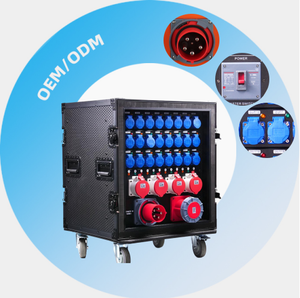
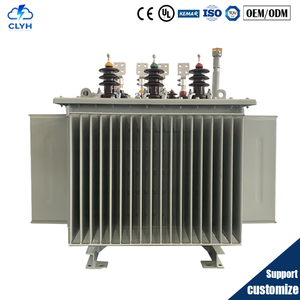
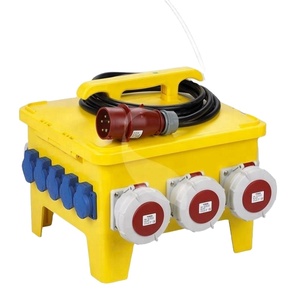
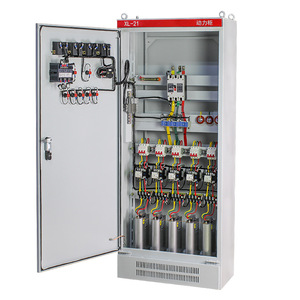
Nigeria’s industrial landscape—spanning telecommunications tower infrastructure, oil and gas exploration in the Niger Delta, data centers in Lagos, and manufacturing hubs across Ogun and Kano states—operates under uniquely challenging power quality environments. The national electrical grid, characterized by frequent voltage collapse, severe phase imbalance, harmonic distortion, and prolonged rolling blackouts, demands power rectifiers and DC backup power systems engineered far beyond standard off-the-shelf commercial specifications.
A power rectifier serving the Nigerian market must perform two fundamental roles flawlessly: it must act as a bulletproof power isolation barrier that shields sensitive electronics (such as DC loads, switchgear tripping mechanisms, and SCADA telemetry) from utility-side electrical transients, while simultaneously converting chaotic AC input (frequently fluctuating between 80V and 300V AC) into ultra-stable, ripple-free DC power.
Standard power rectifiers designed for temperate climates rapidly suffer thermal throttling, electrolytic capacitor breakdown, and premature semiconductor failure when deployed in ambient temperatures exceeding 45°C with relative humidity levels reaching 90% during monsoon seasons. To maintain continuous 24/7 reliability, industrial-grade power rectifiers engineered for Nigerian factories and operators integrate the following architectural safeguards:
Tailored DC power conversion and distribution architectures engineered for mission-critical sectors in West Africa.
Over 30,000 telecom towers across Nigeria rely on high-efficiency modular 48V DC power rectifiers. Integrated with diesel generators, solar PV arrays, and LiFePO4 battery banks, our high-density rectifiers deliver rapid recharge capacity during brief grid availability windows, reducing site diesel consumption by up to 65%.
Operating in hazardous environments in Port Harcourt, Warri, and offshore rigs requires C5-M marine-grade corrosion-resistant rectifiers and 110V/220V DC station switchgear power supplies. Features explosion-proof IP67 aluminum distribution cabinets and galvanic isolation to guarantee safe emergency shutdown operation.
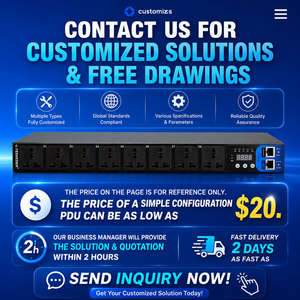
With West Africa's digital expansion centering on Lagos (Lekki and Ikeja tech hubs), hyperscale and edge data centers require hot-swappable, N+1/N+2 redundant modular rectifier systems with intelligent RS485/Modbus/SNMP vertical PDU power distribution for zero downtime tier-III and tier-IV uptime compliance.
Transmission Company of Nigeria (TCN) sub-stations and regional Distribution Companies require continuous 110V DC and 220V DC power plants for high-voltage breaker tripping coils, protective relays, and remote terminal units (RTUs), ensuring grid stability and reliable automatic transfer switch (ATS) operation.
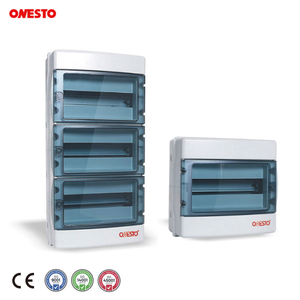
Automotive assembly, FMCG packaging, and steel fabrication factories in Ogun and Kano require custom 3-phase industrial power distribution cabinets, oil-immersed step-down transformers (10kV to 400V), and regulated heavy-duty rectifiers to prevent production line stoppage caused by voltage dips.
Commercial plazas, private hospitals, and university campuses in Nigeria are rapidly adopting solar-DC hybrid power plants. High-capacity switch-mode power supply (SMPS) rectifiers provide seamless synchronization between solar charge controllers, lithium storage, and standby gas generators.
Selecting the optimal power rectifier architecture requires matching specific site operating conditions against system topology, cooling mechanisms, and SCADA monitoring requirements. Below is an engineering selection guide compiled by our application specialists:
| Rectifier / Power Architecture | Target Sector in Nigeria | Typical DC Output Voltage | Environmental Protection | Key Engineering Highlights |
|---|---|---|---|---|
| High-Density Modular Switched-Mode Rectifier | Telecom Towers, Lagos Edge Data Hubs | 48V DC (100A – 4000A) | IP20 / IP54 Cabinet | Hot-swappable modules, >96.5% efficiency, SNMPv3/Modbus telemetry, LiFePO4 BMS comms integration. |
| Industrial Thyristor / SCR Heavy Rectifier | Oil & Gas Refineries, Substation Tripping | 110V DC / 220V DC | IP54 NEMA 4X / C5-M Marine | High fault current withstand, 25+ year design lifespan, galvanic isolation transformer, continuous float charging. |
| Compact DIN-Rail DC UPS & Rectifier | Commercial Security, Traffic & CCTV Control | 12V DC / 24V DC | IP30 / IP65 ABS Enclosure | Integrated seamless transfer switch, deep discharge protection, wide temperature range (-40°C to +75°C). |
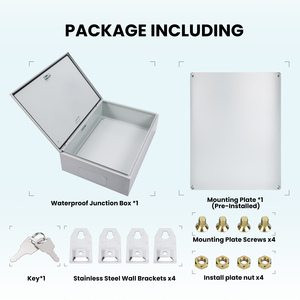
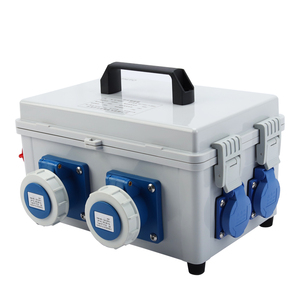
| Outdoor Ruggedized Pole-Mount Power Box | Rural Electrification, Solar Hybrid Sites | 24V DC / 48V DC | IP67 Aluminum Alloy / ABS | CE certified, pad-lockable weather enclosure, integrated surge protective device (SPD Class II), natural convection cooling. |
The deregulation of PMS (petrol) and AGO (diesel) prices in Nigeria has significantly increased operational expenditure for businesses relying on diesel generators. As operational costs soar, infrastructure operators are prioritizing power rectifiers with conversion efficiencies exceeding 96.5%. Replacing legacy SCR rectifiers operating at 82% efficiency with modern modular switch-mode power supplies (SMPS) reduces total generator runtime and direct thermal loss, delivering full capital expenditure payback within 8 to 14 months of continuous operation.
Traditional Valve Regulated Lead-Acid (VRLA) batteries suffer accelerated degradation in Nigeria due to elevated ambient temperatures, frequently failing within 12 to 18 months. Industry operators are massively transitioning to LiFePO4 chemistry. Modern power rectifiers serving Nigeria must feature advanced multi-stage charging algorithms, programmable CAN bus / RS485 communication protocols to interface with Battery Management Systems (BMS), and dynamic current-limiting controls to accommodate high initial lithium charge rates without tripping generator protection relays.
All industrial power rectifiers, switchgear distribution cabinets, and step-down transformers imported into Nigeria must strictly comply with the Standards Organisation of Nigeria Conformity Assessment Programme (SONCAP). Compliance demands verified test reports from ISO/IEC 17025 accredited laboratories certifying adherence to international safety standards (IEC 62368-1, IEC 60146 for semiconductor converters, and CE low-voltage directives). Factory manufacturing processes are further audited under ISO 9001:2015 quality management standards.
Why leading EPC contractors, telecom operators, and industrial enterprises in West Africa choose our power engineering solutions.
Every single power rectifier, distribution panel, and transformer leaving our production facility undergoes rigorous 100% full-load burn-in testing, high-voltage insulation testing, and thermal imaging inspection prior to shipment, guaranteeing zero-defect arrival in West Africa.
Over 50% of our delivered solutions are engineered to custom client specifications. We specialize in custom voltage re-rating, bespoke IP-rated mechanical enclosure design, and personalized SCADA alarm mapping (Modbus RTU/TCP, DNP3, and dry contacts).
We maintain comprehensive spare parts inventory and modular sub-assemblies, facilitating accelerated production cycles. Complete export clearance documentation, SONCAP certificate facilitation, and seafreight/airfreight shipping directly to Lagos (Apapa/Tincan ports) are seamlessly handled.
Technical answers addressing procurement, ambient heat engineering, grid compatibility, and local regulatory requirements.
Our industrial rectifiers feature an ultra-wide AC input range (80V to 300V AC). When utility voltage sags to 90V AC, the rectifier continues operating via active power factor correction (PFC) with linear output power derating rather than switching to battery discharge mode. This prevents unnecessary battery cycling and preserves full battery energy storage for complete utility outage events.
We utilize industrial-grade power semiconductors rated for 150°C junction temperatures, heavy copper busbars, and oversized extruded aluminum heatsinks. Forced-air cooling models incorporate smart temperature-controlled, dual-ball-bearing variable speed fans with dust filtration, ensuring full rated power delivery up to 50°C ambient without thermal shutdown.
Yes. Our smart controller units support fully customizable charging profiles (float, boost, equalizing, and constant current/constant voltage). The controller directly interfaces with major Lithium Battery Management Systems (BMS) via CAN bus or RS485 (Modbus protocol) to adjust charge parameters dynamically based on cell voltage and temperature.
Absolute transparency and compliance are guaranteed. We supply certified factory test reports, CE declaration of conformity, ISO 9001:2015 documentation, and assist client clearing agents with the issuance of Product Certificates (PC) and SONCAP Certificates (SC) to ensure expedited customs clearance at Lagos ports.
Lightning strikes and high-voltage grid switching surges are frequent in West Africa. Our power systems incorporate multi-stage protection: Class II (or optional Class I+II) heavy-duty MOV (Metal Oxide Varistor) Surge Protective Devices (SPD) at the AC input, galvanic isolation transformers, and high-frequency gas discharge tubes on DC output lines.
Standard modular rectifier units and standard IP65 distribution boxes are dispatched from stock within 7 to 10 business days. Custom-engineered power plants, oil-immersed transformers, or customized switchgear cabinets require approximately 3 to 4 weeks for complete manufacture, testing, and factory acceptance testing (FAT).
Consult with our senior industrial power engineers today to discuss your site load profile, voltage requirements, and bespoke DC power rectifier specifications in Nigeria.