
Explore our certified product fleet optimized for demanding ambient conditions, heavy inductive motor loads, oilfield operations, and critical backup power architectures throughout Houston and the Texas Gulf Coast region.
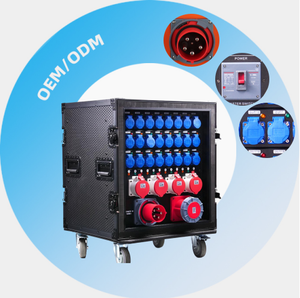
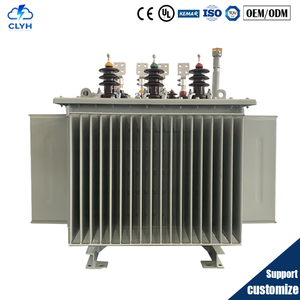
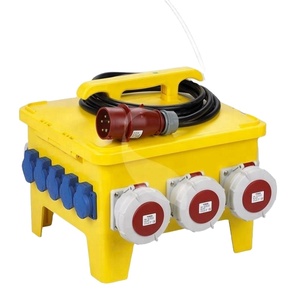
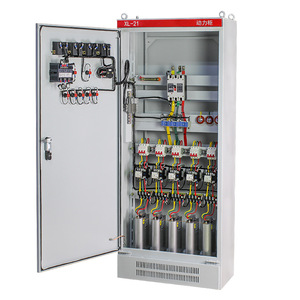

Houston, Texas stands as the undisputed Energy Capital of the World, encompassing a vast ecosystem of offshore oil platforms, midstream pipeline compression stations, massive chemical refining complexes along the Houston Ship Channel, and expanding Battery Energy Storage Systems (BESS) governed by ERCOT. Operating mission-critical electrical equipment within the Texas Gulf Coast climate presents singular challenges: extreme summer heat indexes exceeding 115°F (46°C), severe humidity, corrosive salt-air exposure, and unpredictable grid transients driven by extreme weather events.
When evaluating a Power Inverters Supplier & Suppliers in Houston, EPC engineers, site facility managers, and electrical contractors must look beyond consumer-grade or off-the-shelf inverter units. Industrial DC/AC inverters serve as the vital bridge converting direct current (DC) generated by battery banks, solar arrays, or rectifiers into ultraclean, stable alternating current (AC) power to drive sensitive instrumentation, SCADA controls, valve actuators, emergency lighting, and industrial motors.
Industrial application environments demand pure sine wave inverter topologies with Total Harmonic Distortion (THD) strictly controlled below 2% to 3%. In contrast to modified sine wave or square wave units—which generate destructive voltage spikes, harmonic overheating, and audio noise in electric motors—pure sine wave industrial inverters output a pristine AC waveform equal or superior to utility grid power.
Heavy-duty copper isolation transformers decouple the DC battery input from the AC load, blocking ground loops, absorbing switching surges, and isolating DC control circuits from severe AC short-circuit faults.
Featuring 300% surge capacity for up to 10 seconds, our industrial inverters deliver the instant reactive current required to start heavy inductive motor loads, pumps, compressor valves, and high-starting-current transformers.
Parallel-capable inverter modules allow zero-downtime scaling and continuous N+1 fault tolerance. If an individual power module requires servicing, adjacent modules absorb the load instantaneously without interrupting operations.
Industrial power conversion is never a "one-size-fits-all" engineering task. The operational requirements of a refinery in Pasadena, TX differ fundamentally from an offshore platform off the Galveston coast or a telecom data center in Downtown Houston. Below are the key localized deployment profiles where our power inverters and distribution systems excel:
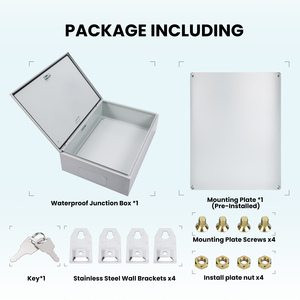
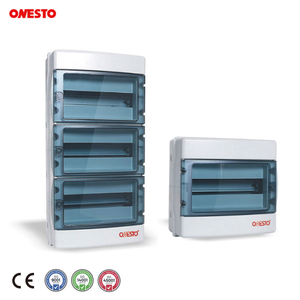
Along the Texas Gulf Coast and Permian-to-Houston pipeline corridors, hazardous location compliance (Class I, Division 2 / Zone 2 environments) is mandatory. Our customized industrial inverters are paired with NEMA 4X 316-grade stainless steel distribution boxes and remote RS485/Modbus telemetry. They convert 125VDC station battery power into clean 120VAC/240VAC to run emergency shut-off valves (ESDV), telemetry RTUs, flare stack monitoring, and drill rig controls, even during total grid blackout.
As the world's largest medical complex, the Texas Medical Center relies on ultra-pure power systems where microsecond voltage sags are unacceptable. Inverter systems paired with Automatic Transfer Switches (ATS) deliver uninterrupted online double-conversion backup power for life-safety systems, surgical suites, specialized cooling fans, and sensitive imaging equipment, ensuring full NFPA 110 compliance.
Continuous saltwater air and intense vibration from ship-to-shore gantry cranes rapidly degrade commercial electronics. Our IP67-rated power distribution boxes and conformal-coated DC/AC inverters provide rugged onshore power drops, automated crane safety controls, and maritime container monitoring systems across Barbours Cut and Bayport Container Terminals.
Following recent ERCOT grid volatility during severe winter freezes and summer heat spikes, Houston power utilities and private microgrids are rapidly deploying 110V/220V DC-to-AC inverters alongside oil-immersed step-down distribution transformers. These systems keep substation protective relays, breaker tripping coils, and DNP3 SCADA nodes fully active regardless of utility high-voltage grid stability.
Select the appropriate system architecture based on operational DC bus voltage, harmonic limits, protection rating, and SCADA integration requirements:
| Inverter System Class | Input Voltage (DC) | Output Voltage (AC) | THD & Waveform | Enclosure Rating | Primary Houston Industry |
|---|---|---|---|---|---|
| Industrial Substation Inverter | 110 VDC / 125 VDC / 220 VDC | 120V / 240V 1-Phase (60Hz) | < 2% Pure Sine Wave | NEMA 12 / 19" Rack Mount | Utility Substations, Power Plants |
| Hazardous Oilfield Inverter System | 24 VDC / 48 VDC / 125 VDC | 120V / 208V 3-Phase (60Hz) | < 3% Pure Sine Wave | NEMA 4X / IP67 Stainless | Refineries, Offshore Platforms |
| Modular N+1 Telecom/SCADA Inverter | 48 VDC Nominal | 120 VAC Swappable Shelves | < 1.5% Pure Sine Wave | Standard ETSI/19-inch Rack | Pipeline Telemetry, Datacenter |
| Heavy Inductive Motor Inverter | 240 VDC / 400 VDC Bus | 480V 3-Phase Step-Up | < 3% Dynamic Surge | IP54 Heavy Control Cabinet | Port Gantry Cranes, Wastewater |
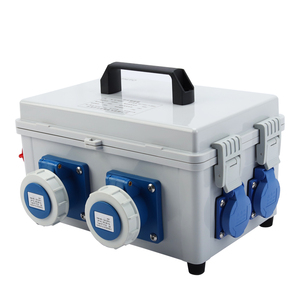
| Portable Field Distribution Unit | Pass-Through Utility / Generator | 110V / 220V 16A Sockets | Filtered Mains Distribution | IP67 Molded ABS / Aluminum | Construction, Emergency Repairs |
As Texas accelerates its dual strategy of expanding traditional energy production while integrating massive renewables into the ERCOT transmission network, three dominant technological trends are reshaping power inverter procurement in Houston:
With ambient enclosure temperatures in unconditioned Texas Gulf Coast field shelters frequently topping 50°C (122°F), standard commercial inverters experience severe output derating. Modern industrial procurement mandates continuous full-rated power output at 50°C without thermal shutdown, utilizing heavy aluminum heat sinks, intelligent variable-speed fan cooling, and high-temp industrial silicon carbide (SiC) MOSFETs.
Inverters are no longer isolated "dumb" electrical boxes. Houston facility operators require intelligent rack-mount smart PDUs and inverters equipped with embedded web servers, SNMP v3, RS485 Modbus RTU, and native DNP3 outstation support. This allows centralized control rooms in Houston's Energy Corridor to monitor DC input voltage, AC current load percentage, ambient temperature, and wave harmony in real time.
Industrial facilities across Greater Houston are rapidly retrofitting traditional battery charger installations with bi-directional inverters compatible with Lithium Iron Phosphate (LiFePO4) and advanced AGM battery banks. These hybrid systems store low-cost off-peak power and instantly inject clean AC power during peak demand periods or grid instability.
Backing every power inverter system we supply is over 38 years of dedicated power conversion design, custom electrical engineering, and manufacturing excellence. More than 50% of the industrial power systems we ship are engineered to custom client specifications—ensuring that field performance matches site realities perfectly.
Our design facilities, assembly processes, and testing benches operate under strict ISO 9001:2015 accreditation. Every inverter system undergoes comprehensive full-load burn-in testing, dielectric voltage withstand testing, and harmonic analysis prior to factory release.
Standard off-the-shelf datasheets rarely align with legacy site constraints. Our engineering staff provides tailored voltage re-rating, non-standard mechanical enclosure dimensions, customized dry-contact alarm mapping, conformal coating against humidity, and shock-mounted ruggedization for mobile platforms.
We provide complete engineering documentation sets—including CAD schematics, point-to-point wiring diagrams, protective relay coordination studies, and FAT certificates witnessed directly by your consulting engineer or project manager.
Through our dedicated technical support hubs, asset owners receive prioritized engineering support, allocated spare module stock for rapid dispatch to Houston locations, scheduled battery capacity testing, and long-term obsolescence planning throughout a 15-to-25 year system lifecycle.
Detailed technical answers to common queries raised by Houston electrical engineers, procurement managers, and systems integrators:
A standalone DC/AC inverter takes an existing DC voltage source (such as a 125VDC station battery bank or solar bus) and converts it continuously or on-demand into regulated AC voltage. An integrated DC UPS combines a rectifier/charger stage, a internal or external battery storage bank, and a seamless automatic transfer switch within a single enclosure. While utility substations and process plants usually specify a separate industrial battery charger, battery bank, and DC/AC inverter with distribution boards, remote control cabinets and smaller OEM machines frequently select integrated DC UPS systems for compact efficiency.
Ambient temperatures inside unconditioned outdoor electrical enclosures in Houston can rapidly reach 50°C to 60°C (122°F–140°F). Most commercial inverters suffer output power derating of 2.5% per degree Celsius above 40°C. When specifying an inverter for Houston operations, engineers must review the continuous thermal derating curve. Our industrial-grade inverters utilize heavy-duty copper magnetics, high-efficiency silicon carbide power switches, and forced-air or convection cooling rated for 100% continuous full-load operation up to 50°C without power capacity reduction.
Our monitored inverter platforms and smart PDUs feature advanced communication options tailored for industrial automation. Standard protocol choices include Modbus RTU over RS485, Modbus TCP/IP, SNMP v2c/v3 for network management, DNP3 serial and TCP outstation capability for electrical utility SCADA systems, and configurable volt-free (dry) contact relays for legacy alarm annunciator panels. Protocol point mapping is bench-verified prior to dispatch.
Yes. Heavy industrial loads such as motor-operated valves (MOVs), hydraulic pumps, and refrigeration compressors exhibit locked-rotor inrush currents 3 to 6 times higher than their steady-state operating current. Our industrial pure sine wave inverters feature peak overload surge capabilities of up to 300% for 10 seconds, backed by robust output isolation transformers that prevent voltage sag or wave distortion during motor startup events.
For indoor control rooms and conditioned substation buildings, NEMA 12 or IP54 enclosures provide ample protection against dust and ambient debris. However, for outdoor installations along the Houston Ship Channel, Galveston Bay, or offshore platforms, we strongly advise NEMA 4X (IP66 or IP67 rated) enclosures constructed from 316 stainless steel or marine-grade aluminum alloy with internal conformal-coated circuit cards to resist moisture, driving rain, and corrosive salt air.
Over 50% of the industrial power systems we manufacture are custom engineered. If your substation or industrial site utilizes non-standard battery voltage levels (such as 110VDC, 125VDC nominal, or up to 250VDC high-voltage DC buses), our power engineering team will design, re-rate, and certify an inverter topology precisely matched to your site's continuous DC window, short-circuit withstand rating, and protection relaying requirements.