
Heavy-duty industrial UPS platforms, transformer-isolated power supplies, and customized switchgear cabinets built to IEC & EN standards.
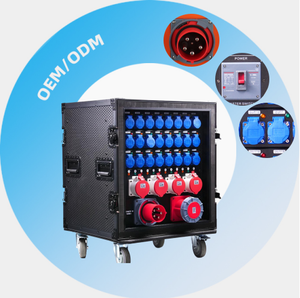
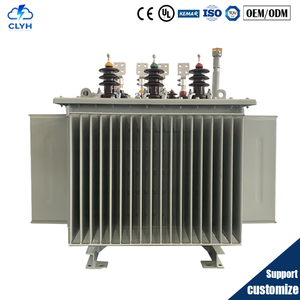
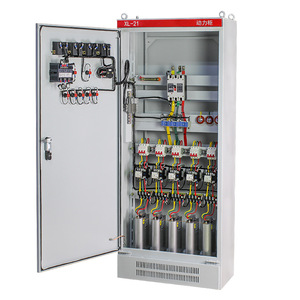

Backing critical infrastructure with rigorous ISO 9001:2015 manufacturing processes and over three decades of power conversion authority.
Bulgaria stands as a vital energy hub and manufacturing powerhouse in Southeastern Europe. However, its industrial operators face distinct power quality challenges. The national transmission grid, managed by the Electricity System Operator (ESO EAD), experiences considerable operational stress driven by the rapid expansion of renewable energy sources (RES) in the Dobrudzha and Thracian regions. Furthermore, aged transmission infrastructure in heavy industrial zones—such as the Maritsa Iztok energy complex, the Devnya chemical cluster, and the expanding Trakia Economic Zone (TEZ) around Plovdiv—frequently subjects industrial plants to severe voltage sags, transient surges, and harmonic distortion adhering to compliance limits under EN 50160 standards.
Unlike standard commercial applications where brief power interruptions merely cause minor IT inconvenience, an unconditioned voltage drop in a Bulgarian metallurgical plant, glass production facility, or pharmaceutical laboratory triggers catastrophic process trips. A momentary 100-millisecond power outage on a 400V automated drive line can lead to hours of unscheduled downtime, equipment mechanical shock, thermal runaway in critical processes, and hundreds of thousands of Euros in scrapped raw materials. Consequently, procurement officers and plant engineers across Bulgaria are shifting away from off-the-shelf commercial UPS units toward heavy-duty, factory-customized Industrial Uninterruptible Power Supply (UPS) Systems.
A critical mistake made by plant infrastructure specifiers is installing transformerless IT-grade UPS equipment into harsh industrial environments. Commercial IT UPS units are engineered for clean, climate-controlled server rooms with predictable power factors (unity or near-unity) and linear loads. When exposed to the harsh realities of Bulgarian manufacturing plants—where high-power variable frequency drives (VFDs), welding equipment, electric arc furnaces, and heavy induction motors operate—commercial UPS units quickly degrade or trip outright due to:
Understanding the engineering design differences essential for selecting mission-critical backup power in Bulgaria.
| Specification Parameter | Commercial Off-The-Shelf (IT UPS) | Industrial Factory UPS (Helios Standard) |
|---|---|---|
| Design Life Expectancy | 3 – 5 Years (Frequent component wear) | 20 – 25+ Years (Industrial grade design) |
| Galvanic Isolation | Transformerless (Direct coupling) | Built-in Heavy-Duty Isolation Transformer (Inverter/Rectifier output) |
| Operating Temperature Range | 0°C to +40°C (Strict derating above 25°C) | -10°C to +55°C (Ruggedized thermal management) |
| Enclosure Protection Class | IP20 / IP21 (Indoor vented steel) | IP31, IP42, IP54, IP67 (Dust proof, corrosion & water resistant) |
| Short-Circuit Clearing | Low capability (Trips to bypass on minor fault) | High Inverter Fault Current (Clears sub-circuit breakers cleanly) |
| SCADA Comms & Protocols | Basic SNMP / Web Card | Native DNP3, Modbus RTU/TCP, IEC 61850, Dry Contacts |
| Maintenance & Redundancy | Non-modular or complex swap | N+1 Hot-Swappable Modular Rectifiers & Inverters |
Designed to withstand grid instability, severe climatic variations, and heavy industrial load profiles.
Voltage and Frequency Independent (VFI) topology delivers absolute electrical isolation from voltage spikes, frequency fluctuations, and grid harmonics present on local distribution networks.
Scalable rectifier and inverter shelves allow seamless capacity expansion and zero-downtime maintenance, enabling hot-swapping power modules without switching to unconditioned bypass.
Engineered to interface with VRLA, Gel, NiCd, and high-safety LiFePO4 battery banks with advanced temperature-compensated charging, float/boost automation, and deep discharge protection.
Custom power solutions installed across critical energy, manufacturing, transport, and municipal infrastructure.
High-voltage transmission substations operated by ESO EAD and regional distributors require unyielding DC backup power for circuit breaker tripping, switchgear control relays, and SCADA remote terminal units (RTUs). Our industrial switchgear chargers and DC UPS systems provide dual-redundant 110VDC or 220VDC output with built-in earth fault detection and DNP3/IEC 61850 protocol integration, ensuring reliable protective clearing even during total blackouts.
Located in regions like Panagyurishte, Devnya, and Pernik, heavy processing facilities operate in harsh environments with ambient conductive dust, chemical fumes, and heavy vibration. Our customized industrial UPS cabinets are fitted with IP54 rugged enclosures, conformal-coated electronics, and double galvanic isolation to shield sensitive PLC controllers, emergency shutdown valves, and DCS systems from electrical interference.
Black Sea maritime terminals demand robust electrical protection for automated container cranes, harbor lighting systems, navigation controls, and cold-ironing shore power supplies. We deliver marine-certified industrial UPS systems featuring anti-corrosive stainless steel cabinets, tropicalized internal components, and high salt-mist resistance tailored for coastal conditions.
High-precision automotive component manufacturing plants and automated assembly lines in Plovdiv and Sofia rely on continuous, flicker-free three-phase power. Our modular N+1 UPS plants eliminate line-voltage sags, frequency jitter, and harmonics, preserving precision robotic welding, CNC machining, and automated optical inspection accuracy without interrupting production output.
As Bulgaria aligns with the EU Green Deal decarbonization targets and advances towards Industry 4.0 automation, four major technological shifts are driving enterprise UPS procurement:
The mass deployment of solar PV farms in southern Bulgaria and wind installations along the Black Sea coast has introduced significant inertia loss in the regional power grid. Industrial buyers are mandating wide input voltage tolerance (-30% to +25%) and dynamic frequency regulation in their UPS specifications to prevent nuisance battery discharges during grid frequency drifts.
While traditional Valve Regulated Lead-Acid (VRLA) batteries remain common, Bulgarian enterprise operators are rapidly adopting LiFePO4 battery chemistry for critical installations. LiFePO4 offers 3x longer cycle life (up to 4000 cycles at 80% DOD), smaller footprint, 60% weight reduction, and superior thermal tolerance in unconditioned plant environments.
Modern Bulgarian industrial plants require complete operational visibility over centralized SCADA software. Industrial UPS systems must communicate via native Modbus TCP, DNP3 outstation, or IEC 61850 protocols, providing real-time data on battery state of health (SoH), temperature trends, phase voltages, and automated preventive alarm notifications.
Rising industrial electricity tariffs across Europe have placed high-efficiency operational modes at the forefront of procurement. Advanced industrial online double-conversion UPS systems now achieve efficiency ratings exceeding 96% in full online mode and up to 99% in intelligent ECO mode without compromising load protection.
Expert answers addressing compliance, custom sizing, grid standards, and factory support.
All our industrial UPS platforms, switchgear rectifiers, and distribution cabinets fully comply with European Union Directives and Low Voltage Regulations. They bear the CE mark and comply with EN 62040-1 (Safety), EN 62040-2 (EMC Directive Category C2/C3), EN 62040-3 (Performance and Test requirements VFI-SS-111), as well as IEC 60146 and IEC 61439 for low-voltage switchgear assemblies.
Yes. More than half of the systems we manufacture are engineered-to-order (ETO). We customize cabinet dimensions, cable entry direction (top or bottom entry), structural seismic reinforcement, and protection ratings ranging from standard indoor IP31 up to outdoor rugged IP54/IP67 stainless steel enclosures with integrated HVAC thermal management.
We provide comprehensive factory acceptance testing (FAT) documentation, complete as-built wiring diagrams, and protocol address mapping before dispatch. For field deployment in Bulgaria, we collaborate with qualified regional engineering partners to provide site supervision, load testing, commissioning, and rapid dispatch of factory-original spare components.
Galvanic isolation transformers physically separate the input utility supply from the critical load output. In power substations and heavy industrial plants, this prevents high ground-fault currents, earth loops, and severe neutral voltage shifts from reaching or damaging sensitive micro-processor protection relays and process control units.
Standard catalog modular UPS units and sub-assemblies ship within 2 to 4 weeks. Customized engineered-to-order systems—including specialized multi-voltage DC systems, IP54 marine cabinets, or custom SCADA protocol controllers—typically ship within 6 to 10 weeks complete with FAT certification and full documentation.
Cold temperatures drop battery chemical activity, reducing effective Ah capacity. Our application engineers calculate battery sizing using temperature derating curves in accordance with IEEE 485 / IEEE 1184 standards, adjusting float charging voltages to maintain target autonomy times even during severe winter conditions (-15°C to -20°C).
Connect directly with our senior power conversion engineering team. Submit your electrical load profile, single-line diagrams (SLD), or site specifications to receive tailored architecture recommendations and instant catalog access.