
Specifically engineered for heavy industry, renewable energy integration, and power utility substations across Uruguay, compliant with IEC, CE, and UTE operational directives.
An engineering synthesis for power utility directors, industrial system integrators, and procurement officers operating under UTE (Administración Nacional de Usinas y Trasmisiones Eléctricas) specifications.
Uruguay stands as a global benchmark in renewable energy transition, generating over 98% of its annual electricity from wind, hydroelectric, biomass, and solar PV. While this green transition has dramatically reduced carbon intensity, it introduces complex power quality dynamics into the grid managed by UTE (Administración Nacional de Usinas y Trasmisiones Eléctricas). Grid-tied industrial infrastructure, telecommunication nodes, agricultural processing facilities, and deep-water port terminals in Montevideo experience distinct electrical stressors: sub-synchronous oscillations, rapid frequency shifts around the 50 Hz base, and localized voltage transient events during high wind penetration periods.
For industrial plant operators and switchgear OEMs, deploying substandard or non-isolated DC to AC inverters presents extreme operational risk. Critical loads—such as sub-station tripping coils, PLC control racks, heavy pulp process automation, and remote communication repeaters—demand continuous, unconditioned pure sine wave power derived from reliable DC battery banks (typically 24VDC, 48VDC, 110VDC, or 220VDC). Our engineered portfolio of industrial DC AC inverters acts as a fortress against utility mains anomalies, providing total galvanic isolation, precise frequency locking at 50 Hz (+/- 0.05%), and ultra-low Total Harmonic Distortion (THD < 2%).
Industrial DC/AC inverters designed for Uruguay feature rugged toroidal isolation transformers. This physical separation between the DC input battery circuit and the AC load prevents zero-sequence currents, earth fault propagation, and high-frequency noise common in coastal industrial installations.
Inductive motors, heavy-duty solenoids, and oil-immersed transformers draw substantial inrush currents during startup. Our inverters feature Digital Signal Processor (DSP) drive algorithms capable of delivering up to 300% nominal capacity for 10 seconds without voltage collapse or thermal shutdown.
Complete integration with remote telemetry systems via RS485 Modbus RTU, Modbus TCP, SNMP, and DNP3 outstation protocols. Real-time logging of DC input voltage, AC output phase angle, thermal headroom, and relay alarm outputs directly to central SCADA system controllers.
Selecting the optimal power conversion topology requires matching the DC input bus voltage, load power factor, and ambient operating envelope to the target site conditions in Uruguay. The following data matrix outlines key electrical and physical performance bounds:
| Parameter / Specification | Utility Substation Series | Telecom & Data Rack Series | Heavy Industrial Modular Series |
|---|---|---|---|
| Nominal DC Input Voltage | 110VDC / 220VDC (±20%) | 48VDC (40VDC – 60VDC) | 125VDC / 250VDC / 400VDC |
| AC Output Voltage & Frequency | 220VAC Single-Phase / 50 Hz | 220VAC / 230VAC 50 Hz | 380VAC / 400VAC 3-Phase 50 Hz |
| Output Waveform & THD | Pure Sine Wave, THD < 1.5% | Pure Sine Wave, THD < 2.0% | Pure Sine Wave, THD < 2.5% |
| Efficiency at Full Load | > 92% (Transformer Isolated) | > 94% (High Frequency) | > 95.5% (Modular N+1) |
| Transfer Time (Mains to Inverter) | Zero-Break (< 2ms via STS) | < 4ms Static Switch | Seamless / Double Conversion |
| Ingress & Environmental Rating | IP31 / IP54 Custom Enclosure | 1U/2U/3U 19-inch Rackmount | IP65 Outdoor Heavy Cabinet |
| Operating Temperature Range | -10°C to +60°C (Derating >45°C) | -20°C to +55°C Ambient | -25°C to +65°C Harsh Environment |
From the agricultural heartland of Colonia and Soriano to the major industrial cellulose hubs of Fray Bentos and Paso de los Toros, our equipment is tailormade for local environmental conditions.
Challenge: Rural distribution feeders experience seasonal voltage sags and weather-induced grid trips during winter storms. Milk cooling tanks, pasteurization control systems, and automated milking parlors require uncompromised 220V 50Hz single-phase and 380V three-phase power. Continuous power interruptions risk catastrophic batch spoilage.
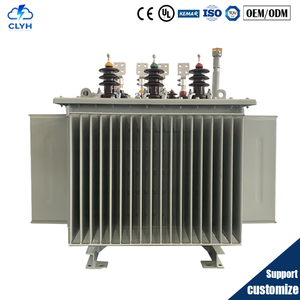
Solution: Installation of our heavy-duty 10kV to 400V Step-Down Distribution Transformers combined with Automatic Transfer Switch (ATS) Electric Boxes and 110VDC Industrial Inverters. During grid dropouts, the ATS seamlessly shifts the cold chain control circuits to the local DC battery inverter bank in under 4 milliseconds, allowing processing plants to operate uninterrupted through short-duration feeder trips.
Challenge: Large scale pulp mills (such as UPM and Montes del Plata) generate significant internal power via biomass turbogenerators while remaining grid-tied. Highly corrosive atmospheres (sulfur compounds, elevated humidity) and continuous 24/7 operating cycles demand ruggedized, anti-corrosive power distribution equipment and zero-downtime control power.
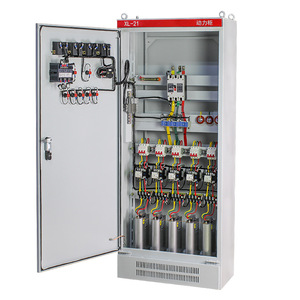
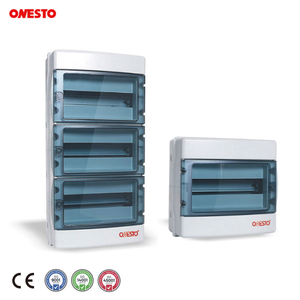
Solution: Deployment of Custom IP67 Aluminum Alloy Power Distribution Enclosures and N+1 Redundant Modular DC AC Inverters with conformal-coated PCB boards. Our equipment carries C4/C5 anti-corrosion protection standards, preventing atmospheric oxidation of copper busbars and micro-components while guaranteeing uninterrupted SCADA monitoring of boiler and chemical recovery valves.
Challenge: Telecom sites deployed along Route 10 and the coastal corridor from Montevideo to Punta del Este and Rocha face high salt fog, humidity exceeding 85%, and extreme lightning exposure. DC rectifier systems running on 48VDC require reliable 220VAC inversion to power localized security cameras, climate control units, and specialized microwave repeaters.
Solution: Integration of Rack Mount Smart PDUs with RS485 Telemetry fed by 48VDC to 220VAC Pure Sine Wave Telecom Inverters. The system provides real-time power metering per outlet, enabling central network operations centers in Montevideo to cycle power remotely on stuck hardware without dispatching field technicians.
Challenge: Port crane automation, reefers (refrigerated containers), and customs inspection facilities demand robust 3-Phase power distribution boxes capable of enduring mechanical impact, marine spray, and high harmonic currents caused by variable frequency drives (VFDs).
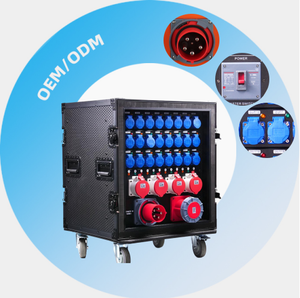
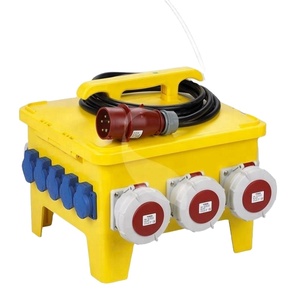
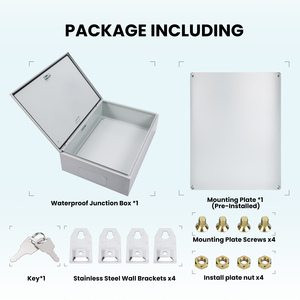
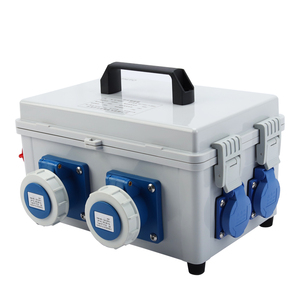
Solution: Heavy-duty Single-Phase & Three-Phase Ceeform Socket Power Distribution Boxes (IP67 Rated) coupled with industrial 3-phase static transfer switches, ensuring safe, lockable, and rainproof power access for container yard equipment and maintenance crews.
Backed by over 38 years of power conversion heritage, our manufacturing facilities operate under strict ISO 9001:2015 quality management, ensuring total reliability from initial CAD design to site commissioning.
Every industrial inverter, transformer, and distribution box undergoes full electrical safety testing, high-voltage breakdown insulation checks, burn-in environmental testing, and functional load testing before container loading and export dispatch.
More than 50% of our production volume comprises customized power systems. Our engineering department handles special DC input voltages (e.g., 60V, 110V, 250V), custom alarm contact mappings, marine enclosures, and special paint specifications for Uruguay imports.
We provide full export documentation required for clearance through the Port of Montevideo, including Certificates of Origin, IEC/CE test reports, custom HS code categorization, and robust ocean-freight crate packaging to guarantee damage-free delivery.
Addressing key electrical, regulatory, and logistics queries commonly raised by Uruguayan engineering contractors, utility managers, and importers.
Yes. All inverters designated for export to Uruguay are factory-configured for 220VAC single-phase or 380V/400V three-phase output at a crystal-controlled frequency of 50 Hz. Internal voltage regulation remains tight within ±1% even across wide DC input battery fluctuations, fully satisfying UTE power quality guidelines.
We apply heavy-duty conformal coating (humiseal) to all printed circuit boards (PCBs) to protect against humidity condensation and salt air. For exposed or outdoor installations, we supply IP65 to IP67 powder-coated aluminum or stainless-steel enclosures with filtered ventilation and anti-condensation internal heating units.
A standalone DC AC Inverter accepts a pre-existing DC voltage source (such as a station battery bank or solar bus) and converts it to pure sine wave AC power. An integrated DC UPS system combines a AC-to-DC rectifier, intelligent battery charging logic, and automatic battery transfer circuits inside a single enclosure. For large utility substations in Uruguay, operators typically utilize dedicated battery chargers feeding a 110V DC bus, which then powers our static industrial inverters.
Our smart controllers support RS485/RS232 Modbus RTU, Modbus TCP/IP, SNMP v2/v3, and DNP3 outstation serial/IP options. Configurable dry alarm contacts (volt-free relays) are also included as standard for mains fail, inverter fail, low DC battery voltage, and over-temperature alerts.
Absolutely. The DC input voltage protection windows (under-voltage shutdown, low-voltage alarm, over-voltage recovery) are fully programmable via firmware or user display buttons. This flexibility allows seamless integration with AGM, Gel, flooded lead-acid, NiCd, or modern LiFePO4 battery management systems (BMS).
Standard catalog models ship within 2 to 3 weeks. Fully customized OEM/ODM engineered-to-order projects (such as specialized 10kV transformers or custom IP67 distribution cabinets) typically require 4 to 6 weeks for production, followed by direct sea freight transit to Montevideo Port.
Contact our senior power application engineers today to discuss DC voltage specs, load profiles, UTE grid compliance, and custom enclosure dimensions. We provide full technical datasheets, CAD drawings, and factory direct quotations.