
Direct factory OEM/ODM solutions tailored for the Chicago metropolitan area's critical infrastructure, heavy industrial facilities, and data processing hubs.
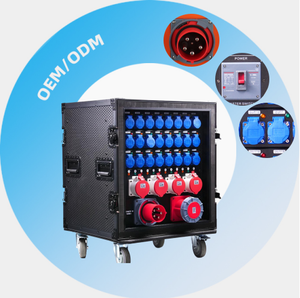
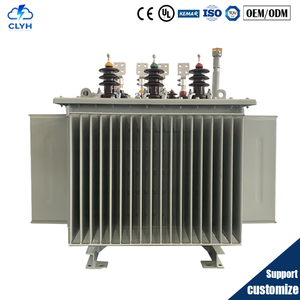
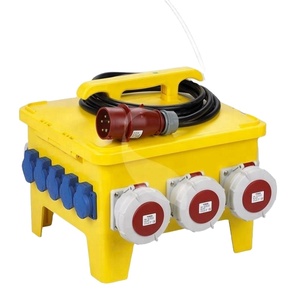
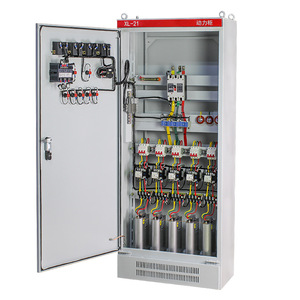
An engineering analysis of modern high-frequency switching topologies, electromagnetic compatibility (EMC), and thermal derating for critical industrial deployments.
In modern power conversion infrastructure, the shift from traditional line-frequency (50/60 Hz) heavy copper transformers to high-frequency (20 kHz – 500 kHz) solid-state topologies represents a fundamental leap in power density and power quality control. By leveraging advanced Silicon Carbide (SiC) and Gallium Nitride (GaN) switching devices, our custom OEM power systems achieve conversion efficiencies surpassing 97.5% while reducing spatial footprint by over 60%.
High-frequency power distribution units (PDUs) and switchmode power supplies utilize planar magnetics and litz-wire secondary windings to minimize skin effect and proximity losses. When stepping down high-voltage utility feeds to low-voltage DC buses (12V, 24V, 48V, or 125V DC), high-frequency isolation transformers eliminate low-frequency magnetostrictive acoustic noise and substantially mitigate downstream Total Harmonic Distortion (THD).
| Architecture Parameter | Conventional 60Hz Transformer | High-Frequency Switchmode (OEM Custom) |
|---|---|---|
| Operating Frequency | 60 Hz Utility Line Frequency | 20 kHz – 250 kHz PWM/Resonant |
| Power Density | 0.5 – 1.2 kW / Litre | 4.5 – 12.8 kW / Litre |
| Efficiency Curve | 88% - 92% (Varies under partial load) | 95.5% - 98.2% (Flat across 20-100% load) |
| Harmonic Mitigation | Requires External Passive Filters | Integrated Active Power Factor Correction (PFC > 0.99) |
| Transient Response | 100ms – 300ms voltage sag recovery | < 2ms transient step response recovery |
Non-linear industrial loads—such as variable frequency drives (VFDs), server power supplies, and arc furnaces—inject significant harmonic currents back into the utility grid. Under IEEE 519-2022 standards, the Total Demand Distortion (TDD) at the Point of Common Coupling (PCC) must be strictly maintained below 5% to prevent transformer overheating, capacitor bank degradation, and premature protective relay tripping.
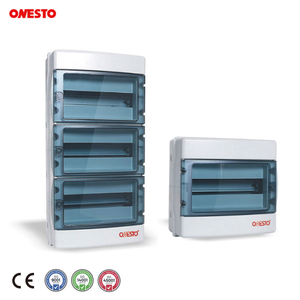
Our factory custom OEM high-frequency power distribution boxes and step-down transformers integrate zero-voltage switching (ZVS) topologies combined with active front-end (AFE) rectifiers. This eliminates low-order 5th, 7th, 11th, and 13th harmonics at the source, protecting sensitive telemetry, PLC controllers, and SCADA infrastructure from line-side transients.
How custom OEM high-frequency switchgear and power distribution platforms solve unique grid and environmental challenges across Northern Illinois industrial hubs.
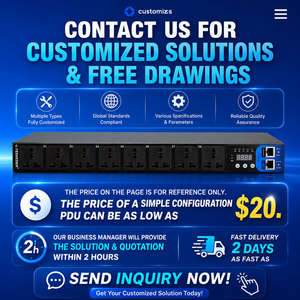
Serving one of North America’s largest hyperscale data center hubs. Our rack-mounted Smart PDUs with RS485/SNMP protocols and dual-feed ATS boxes provide high-density, director-level power control. They feature dynamic thermal monitoring and outlet-level metering to prevent thermal runaway in high-density AI server racks.
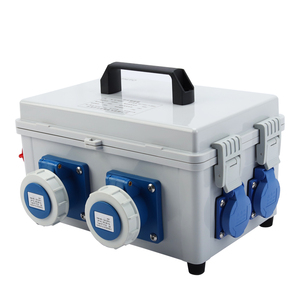
In heavy steel processing, chemical processing, and automotive assembly plants, electrical noise and extreme mechanical vibration are constant threats. Our IP67 aluminum alloy distribution units and oil-immersed step-down transformers offer complete galvanic isolation and heavy NEMA 4X weatherproofing against airborne metallic dust and corrosive particulate matter.
Designed to meet regional Commonwealth Edison (ComEd) interconnect standards. Custom 110V/125V DC UPS systems supply uninterrupted tripping and closing energy for 11kV/34.5kV medium-voltage switchgear. Designed for wide temperature operating windows (-40°C to +65°C) during severe Midwest winter vortex events.
With the implementation of the Illinois Climate and Equitable Jobs Act (CEJA), industrial facilities, manufacturing plants, and commercial build-outs across Cook, DuPage, and Will counties face stringent energy efficiency metrics and carbon footprint tracking. High-frequency power conversion systems eliminate static magnetizing losses typical of legacy core transformers, allowing facility managers to achieve up to 4% overall facility PUE (Power Usage Effectiveness) improvement.
Furthermore, our direct factory customization supports seamless integration with local solar microgrids, battery energy storage systems (BESS), and automated demand-response controllers utilizing native DNP3 and Modbus TCP protocols.
Electrical installations within the City of Chicago require adherence to local municipal modifications of the National Electrical Code (NEC). Key requirements include mandatory metal-enclosed wiring, strict grounding continuity, and third-party safety testing.
Our OEM production lines adhere strictly to UL 508A (Industrial Control Panels), UL 891 (Switchboards), and IEC 61439 global benchmarks. Every custom cabinet shipped to the Chicago market undergoes rigorous Factory Acceptance Testing (FAT), including hi-pot dielectric withstand testing, thermal imaging load testing, and full SCADA communication point verification before dispatch.
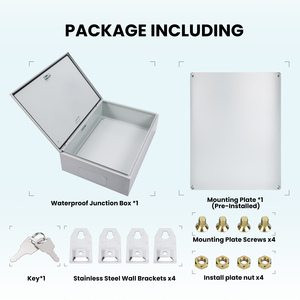
We do not force standard catalog items onto custom site requirements. Our engineering team handles non-standard input/output voltage matching, custom busbar bending, specialized IP/NEMA enclosures, and tailored mechanical mounting.
From raw electrolytic copper coils to military-grade conformal-coated circuit boards, every component is fully traceable. All custom OEM systems come with comprehensive as-built schematic packages and FAT test certificates.
By eliminating intermediary markups, we deliver factory-direct pricing alongside expedited prototyping and production cycles for mission-critical Midwest infrastructure projects.
Connect directly with our senior power conversion engineering team. Send us your project load profile, single-line diagrams, or enclosure specification for an expedited engineering evaluation.