
Direct factory supplies tailored for industrial estates in the Bangkok Metropolitan Region, Map Ta Phut, and the Eastern Economic Corridor (EEC).
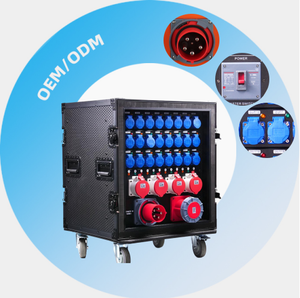
Ruggedized weatherproof housing designed for Bangkok's outdoor sub-station environments.
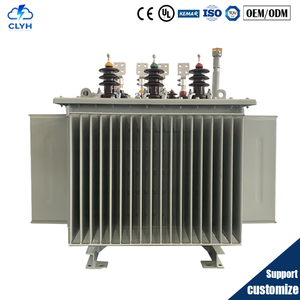
Low-loss copper winding architecture engineered for rural & suburban industrial substations.
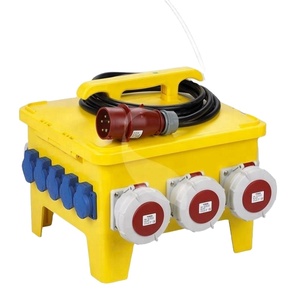
Modular circuit breaker integration for heavy commercial facilities and factory floors.
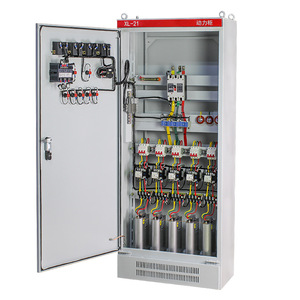
Seamless main-to-backup changeover switching for uninterruptible utility operation.
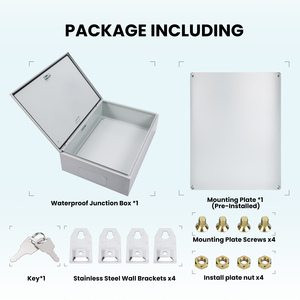
Pre-wired complete assembly tailored for rapid deployment and factory maintenance bypass.
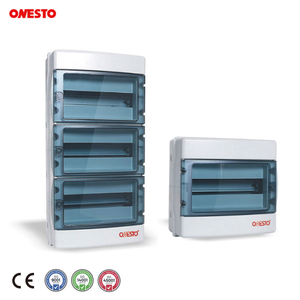
High-impact thermoplastic housing resisting moisture, dust, and corrosive air.
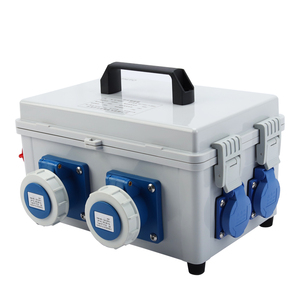
Lockable outdoor socket enclosure ideal for construction sites and temporary power drop.

Precision environmental and power monitoring for Bangkok data hubs and telecom racks.
The Greater Bangkok Metropolitan Area—encompassing major industrial zones across Samut Prakan, Pathum Thani, Nonthaburi, and extending into the Eastern Economic Corridor (EEC) including Chachoengsao and Chonburi—represents one of Southeast Asia's most dynamic manufacturing and critical infrastructure hubs. As multinational corporations expand advanced electronics manufacturing, automotive production, and hyperscale data center operations in Thailand, the demand for uncompromising industrial DC power backup, specialized battery storage systems, and heavy-duty distribution architectures has accelerated dramatically.
Operating industrial battery systems in tropical Southeast Asia introduces severe engineering constraints that standard off-the-shelf equipment rarely addresses. High ambient operational temperatures (frequently exceeding 38°C to 45°C inside unconditioned enclosure cabinets), extreme relative humidity averaging over 85% RH during monsoon cycles, and frequent utility micro-fluctuations place heavy thermal and chemical stress on lead-acid (VRLA/AGM/Gel) and Lithium Iron Phosphate ($LiFePO_4$) battery banks alike.
Without localized engineering modifications—such as advanced active thermal management, conformal PCB coating, ambient temperature-compensated charging curves, and robust IP65/IP67 ingress isolation—standard battery backup platforms suffer premature capacity degradation, thermal runaway risks, and accelerated grid failure.
Tailored battery chemistry integration and distribution systems matching the exact operational environments of Thailand's core growth sectors.
Locations: Bang Na, Bang Pakong, Rama 9 Digital Hubs.
High-density cloud facilities require modular, hot-swappable DC UPS systems and Smart Vertical Rack PDUs equipped with RS485 / Modbus TCP communication. Smart battery chargers ensure zero-millisecond transfer to continuous battery power during grid anomalies, protecting critical server loads against unexpected bus voltage dips.
Locations: MEA / PEA Regional Grid Hubs, Map Ta Phut Industrial Estate.
High-voltage protection switchgear tripping requires dedicated 110VDC and 220VDC station battery banks coupled with heavy-duty oil-immersed 10kV to 400V step-down transformers. Systems incorporate micro-controller battery float chargers with integrated earth fault detection and DNP3 outstation compatibility for SCADA integration.
Locations: BTS Skytrain Lines, MRT Underground, Suvarnabhumi Airport Rail Link.
Underground train signaling, passenger safety systems, and automated fare collection demand ultra-reliable 24V/48V DC UPS setups equipped with high-rate discharge battery banks. Enclosures feature IP54 to IP67 ingress protection to resist fine dust, heavy vibration, and ambient ambient moisture typical of tropical rail corridors.
Locations: Eastern Seaboard Factory Roofs, Industrial Parks.
With Thailand’s push toward industrial solar adoption, manufacturing plants leverage automated transfer switch (ATS) control cabinets paired with modular battery energy storage systems (BESS). Peak-shaving and solar smoothing reduce demand charges while ensuring factory line protection during power switching events.
Locations: Bangkok Metropolitan 5G Expansion Areas & Rural Sites.
Cellular base stations require compact, rack-mounted outdoor plastic distribution boxes (IP65/IP67) and maintenance-free battery plants capable of enduring severe weather without active cooling. Telecommunication power systems integrate remote SNMP trap monitoring for real-time state-of-health diagnostics.
Comparing primary industrial battery technologies against Bangkok's unique operational challenges to guide engineering specifications.
| Evaluation Parameter | VRLA / AGM Sealed Lead-Acid | Nickel-Cadmium (NiCd) | Lithium Iron Phosphate ($LiFePO_4$) |
|---|---|---|---|
| Thermal Tolerance | Optimal at 20°C–25°C. Life halved every 8°C above 25°C without compensation. | Exceptional high-temperature resistance (-20°C to +50°C) without sudden loss of capacity. | Excellent operating window (up to 55°C). Requires integrated BMS thermal cut-off. |
| Bangkok Climate Suitability | Requires climate-controlled AC rooms or aggressive temperature-compensated float charging. | Ideal for unconditioned outdoor substations & harsh industrial enclosures. | Highly recommended for space-constrained data centers & modern factory enclosures. |
| Cycle Life (80% DOD) | 400 – 600 cycles. | 1,500 – 2,500 cycles. | 3,500 – 6,000+ cycles. |
| Volumetric Efficiency | Low (Heavy footprint, high floor load requirement). | Moderate footprint. | Ultra-high (Up to 70% lighter and 60% smaller than lead-acid equivalents). |
| SCADA Integration & Comms | Requires external pilot cell voltage and temperature sensors. | External monitoring required for electrolyte level and voltage. | Native smart BMS controller reporting via RS485, Modbus RTU, DNP3, or SNMP. |
| Ideal Application Scenario | Cost-sensitive indoor UPS rooms, standard commercial backup generators. | Substation switchgear tripping, high-voltage utility switchyards, remote sites. | Edge data hubs, telecommunication micro-sites, smart manufacturing facilities. |
*Note: Standard battery floats must be calibrated with a temperature coefficient of -3mV/°C/cell to prevent thermal runaway in non-air-conditioned Bangkok installations.
Under the Thailand 4.0 national policy, the Eastern Economic Corridor (EEC) has seen over 1.8 trillion THB in combined public and private investment. Automotive OEMs transitioning to Electric Vehicle (EV) assembly lines in Rayong and Chachoengsao demand ultra-clean 3-phase power distribution boxes, industrial transformers, and high-amperage continuous DC power to prevent catastrophic automated assembly downtime.
Bangkok has surfaced as a primary digital gateway in Southeast Asia, attracting multi-hundred-megawatt hyperscale data center projects. Local energy regulations require high-efficiency modular DC UPS plants (N+1 redundancy), intelligent rack PDUs with director-level power switching, and zero-carbon battery storage to meet stringent international PUE (Power Usage Effectiveness) metrics.
Both the Metropolitan Electricity Authority (MEA) and Provincial Electricity Authority (PEA) are actively upgrading aging urban distribution networks with Smart Grid infrastructure. This includes deploying automated transfer switches (ATS), pole-mounted distribution transformers, and remote DNP3 SCADA outstations capable of instantly isolating grid faults during extreme monsoon conditions.
Bridging international engineering standards with localized deployment capabilities across Australasia, Southeast Asia, and the Middle East.
Every engineered DC power plant, transformer, and battery system undergoes rigorous Factory Acceptance Testing (FAT), including full thermal load simulation, dielectric strength testing, and SCADA protocol verification prior to site dispatch.
Over 50% of shipped systems are engineered to custom client specifications. Our engineers handle custom voltage/current re-rating, specialized enclosures (marine grade, stainless steel, ruggedized shock mounting), and full SCADA point mapping.
Asset owners standardizing on our power architecture receive priority technical engineering support, dedicated regional spares holding in Singapore and Dubai hubs, documented obsolescence protection, and scheduled preventive maintenance guidance.
Key considerations for engineering consultants, factory owners, and procurement specialists in Thailand.
Send us your load parameters, environmental constraints, or site single-line diagrams (SLD). Our engineering team will return a fully verified power system architecture tailored for your Bangkok project.