
Certified equipment engineered to maintain continuous operational integrity across high-ambient, harsh operational environments in Baku, the Caspian Basin, and regional industrial hubs.
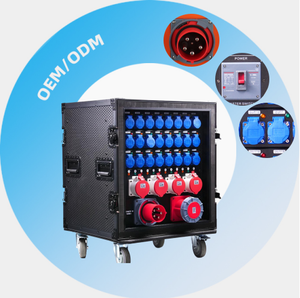
Heavy-duty aluminum alloy power distribution system rated from 110V to 10kV. Designed for extreme climate exposure in marine oil fields and regional sub-stations.
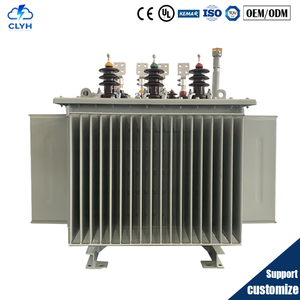
Three-phase copper winding distribution transformer built for rural substations, grid connection points, and industrial continuous-duty utility stepping.
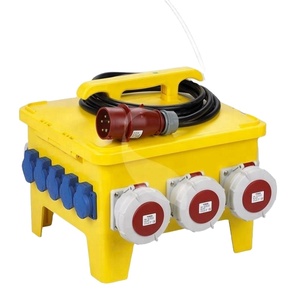
Enclosed high-capacity 3-phase power management box optimized for industrial switchgear protection, auxiliary power routing, and battery monitoring integration.
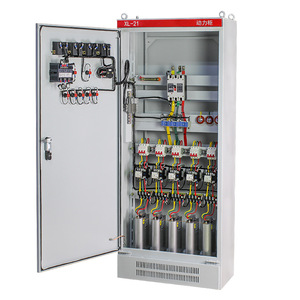
Seamless mains-to-generator dual power switching cabinet system (220V/380V). Guarantees zero downtime for battery monitoring networks and critical telemetry controllers.

Fully modular maintenance electrical enclosure pre-configured with protection breakers, busbars, and monitoring sensors for asset sub-distribution nodes.
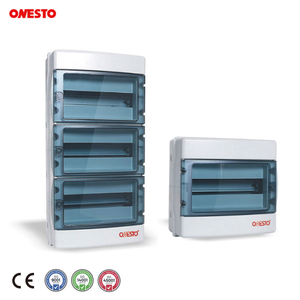
Versatile thermoplastic circuit breaker boxes scalable from 4-way to 52-way configurations. UV-stabilized for field battery sensor data collection points.
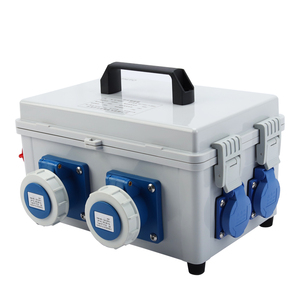
Key-lock outdoor ABS distribution enclosure featuring 4 heavy-duty Ceeform sockets (32A/16A). Engineered for portable battery diagnostic machinery and site testing.

Intelligent vertical/horizontal rack power distribution unit with RS485 slave metering, remote socket switching, and granular voltage/current logging for server rooms.
Maintaining battery bank reliability in mission-critical infrastructure requires moving beyond manual periodic conductance testing to continuous automated telemetry. In continuous process industries—such as offshore oil & gas platforms in the Caspian Sea, thermal power stations, and high-voltage substations operated by regional utilities—standby power failure is not an acceptable risk. A single degraded cell within a 110V or 220V DC station battery string can compromise circuit breaker tripping operations, resulting in catastrophic equipment damage, unplanned outages, and safety hazards.
Our industrial Battery Monitoring Systems (BMS) utilize high-frequency AC ripple injection and precise DC pulse load techniques to dynamically measure the internal ohmic resistance of each individual cell without injecting disruptive discharge cycles into the DC bus. Key telemetry vectors systematically logged and transmitted to central SCADA engines include:
Real-time micro-ohm impedance tracking highlights plate sulfation, grid corrosion, and dry-out months before catastrophic cell open-circuit failure occurs.
Monitors bolt torque degradation and terminal post oxidation via micro-volt drop testing, preventing localized overheating under high-rate switchgear discharge.
Individual cell pilot temperature sensors coupled with ambient delta modeling trigger dynamic float charge adjustment within industrial battery chargers.
| Parameter / Feature | Manual Handheld Testing | Basic String Voltage Monitor | Advanced Individual Cell BMS |
|---|---|---|---|
| Fault Detection Lead Time | Periodic (3 to 6 Months) | Post-Failure Alarm Only | Predictive (30–90 Days Prior) |
| Internal Resistance Accuracy | High Variance (Operator Dependent) | Not Monitored | Continuous ±1.0% Precision |
| Inter-Cell Connection Monitoring | Manual Torque Check | None | Automated μV Drop Telemetry |
| Thermal Runaway Prevention | None | Overall Ambient Only | Per-Cell Dynamic Temperature Delta |
| SCADA Comms Protocol Integration | Manual Data Entry | Basic Relay Contact | Modbus TCP / DNP3 / IEC 61850 / SNMP |
| OpEx Maintenance Savings | High Labor Cost | Moderate Cost | Up to 75% Reduction in Field Hours |
Table 1.0: Engineering analysis demonstrating operational risk mitigation achieved through full-string individual cell telemetry.
Azerbaijan sits at the crossroads of major regional energy pipelines, international maritime transport logistics, and aggressive modern electrical grid expansion. Equipment operating in this geo-climatic region must handle high summer thermal loads in the Absheron Peninsula, saline offshore Caspian environments, and stringent cybersecurity standardizations.
Offshore production facilities in the Azeri-Chirag-Gunashli (ACG) and Shah Deniz fields rely on 110V DC switchgear battery banks to maintain emergency shutdown systems (ESD), fire and gas telemetry, and process controls. Our IP67-rated distribution units and modular DC UPS systems incorporate conformal-coated circuitry to withstand airborne sea salt, extreme vibration, and continuous corrosive conditions.
As regional transmission operators enhance high-voltage substations (110kV/220kV/500kV) and integrate new utility-scale solar and wind projects across East Zangezur, Gobustan, and Karabakh green energy zones, battery monitoring is vital. Our systems interface seamlessly via DNP3 and IEC 61850 outstation protocols into central dispatch control rooms.
The Middle Corridor logistics node at Alat demands resilient uninterrupted power for automated gantry cranes, container tracking telemetry, and security access switchgear. Our automatic transfer switch cabinets (ATS) and 3-phase heavy-duty distribution boxes ensure clean power transfer between main utility feeds and standby diesel generators during grid sags.
Baku's expanding commercial telecommunications networks require 48V DC modular power shelves and smart rack PDUs with director-level control. Real-time logging of individual battery block conditions prevents unexpected site drop-outs across remote cell towers situated along mountain passes and regional corridors.
The industrial power landscape in Azerbaijan is undergoing rapid modernization driven by national decarbonization goals, energy export expansion through the Southern Gas Corridor, and digital transformation of state utility infrastructure. Asset managers are shifting capital expenditure strategies toward long-life asset protection solutions.
The Caspian Sea represents significant wind energy potential. Offshore wind turbine foundations require specialized maintenance-free NiCd and LiFePO4 battery monitoring units designed to operate autonomously without site technicians for up to 12 months.
Transmission substation digital transformer monitoring systems require clean, ripple-free DC current. Modernizing stationary battery chargers with micro-processor controlled float stages prevents harmonic distortion across sensitive protective relays.
Moving from reactive battery replacement to condition-based asset replacement enables industrial site managers in Azerbaijan to extend stationary battery string lifespans from 5 years to over 10 years, drastically lowering operational costs.
Backed by over 38 years of dedicated industrial power conversion and backup system design, our engineering teams build custom engineered-to-order power solutions that datasheets alone cannot specify. More than half of the DC UPS systems, industrial battery chargers, and distribution boards we ship globally are tailored directly to client electrical parameters and environmental specifications.
Every battery monitoring module and power distribution cabinet undergoes rigorous pre-dispatch burn-in, insulation resistance testing, and factory acceptance testing (FAT). We supply complete as-built schematic packages, protocol mapping registers, and material test certificates.
Asset owners standardizing their power distribution and BMS fleets across Azerbaijan gain priority engineering access, dedicated spare-parts allocation in regional hubs, and emergency factory drop-ship support to prevent operational downtime.
Our BMS hardware and smart PDU units feature multi-protocol communication engines supporting Modbus RTU (RS485), Modbus TCP (Ethernet), DNP3 outstation serial/TCP, and SNMPv3. This allows direct integration into industrial DCS software such as ABB Ability, Honeywell Experion, Siemens PCS 7, or Schneider EcoStruxure platforms without requiring third-party protocol converters.
Standard modular units and IP-rated distribution boxes are dispatched from our central stocking hubs. Express air freight options arrive at Heydar Aliyev International Airport (GYD) within 5–7 business days, while heavy multi-bay switchgear cabinets and transformer units are shipped via sea/rail intermodal freight directly to the Port of Baku (Alat) with full customs documentation support.
Yes. All field sensor units, controller modules, and power supplies are industrial-grade rated for operation between -40°C and +70°C ambient temperatures. Sensor leads feature high-temp fluoropolymer insulation, and internal electronics are conformal-coated to resist thermal expansion stresses and humidity spikes.
Yes. Over 50% of our production consists of engineered-to-order solutions. We customize enclosure IP ratings (IP54, IP65, IP67), material selection (316L Stainless Steel, Anodized Aluminum, UV-stabilized Thermoplastic), input voltage tapings (110V to 10kV step-down), and tailored DC output distribution breaker counts.
Thermal runaway occurs when cell dry-out and grid breakdown increase internal resistance, causing the battery to generate excessive heat during float charging. Our system continuously measures internal micro-ohm resistance alongside cell post temperature. When a cell deviates from baseline thresholds, an immediate pre-alarm is transmitted via SCADA, allowing technicians to isolate the affected block before catastrophic failure occurs.
Speak directly with an experienced power conversion application engineer. Send us your load profile, battery bank specifications, or site site conditions—we will provide a fully documented engineering design proposal and competitive pricing structure.
Contact Us