
Explore our certified portfolio of heavy-duty battery chargers, distribution transformers, smart PDUs, and transfer cabinets engineered for seamless integration into Korean industrial grids, substations, and automated manufacturing facilities.
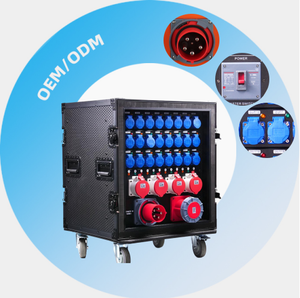
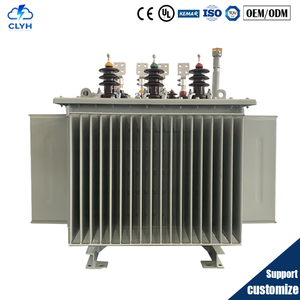
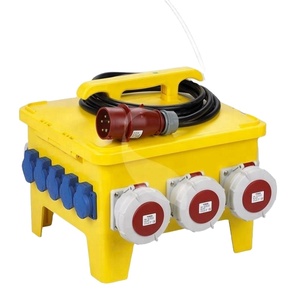
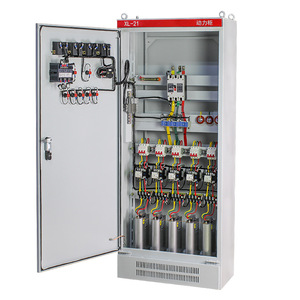
Over 38 years of precision power conversion design, ISO 9001:2015 certified quality systems, and custom engineering capabilities tailored to South Korea's demanding industrial and utility standards.
We adapt voltage, ripple current, thermal derating curves, and hold-up timing to match precise Korean load profiles and ambient operational constraints.
Fully mapped DNP3 (Serial/TCP), Modbus RTU/TCP, SNMP v3, and volt-free alarm contact matrices tested against real-world outstation environments prior to factory release.
Conformal PCB coating, shock/vibration isolation, IP65/IP67 sealed enclosures, and marine-grade stainless steel housings engineered for extreme coastal and industrial conditions.
Industrial battery chargers serving critical infrastructure in South Korea must achieve absolute operational availability while optimizing energy conversion efficiency. Traditional thyristor-based phase-controlled chargers are rapidly giving way to high-frequency switch-mode rectifiers (SMR) and modular intelligent chargers.
Our engineered systems incorporate precise temperature-compensated charging profiles to protect heavy-duty station batteries against thermal runaway under ambient temperature fluctuations. By maintaining output ripple voltages below 0.5% RMS, our chargers significantly reduce micro-cycling stress on Valve-Regulated Lead-Acid (VRLA), Nickel-Cadmium (NiCd), and Lithium Iron Phosphate (LiFePO4) battery banks.
| Battery Chemistry | Optimal Float (V/Cell) | Temperature Comp. | Target Applications |
|---|---|---|---|
| VRLA / AGM | 2.23 - 2.27 V | -3.0 mV/°C/Cell | Substations, Data Centers |
| Flooded Lead-Acid | 2.17 - 2.23 V | -4.0 mV/°C/Cell | Power Utilities, Genset Switchgear |
| NiCd (Pocket/Sintered) | 1.40 - 1.45 V | -2.0 mV/°C/Cell | Railway Signal, Offshore Oil/Gas |
| LiFePO4 (LFP) | 3.35 - 3.45 V | BMS Controlled | EV Charging Buffers, Telecom 5G |
South Korea’s advanced manufacturing ecosystem demands rigorous compliance, zero latency, and thermal resilience. Here is how our power systems integrate into localized industrial operations.
Micro-transistor fabrication plants require pristine electrical purity. Our switch-mode DC UPS and rack-mount smart PDUs supply uninterrupted DC control power to cleanroom chemical vapor deposition (CVD) tools, safety shut-off valves, and environmental monitoring networks, preventing multi-million dollar wafer scrap events during grid dips.
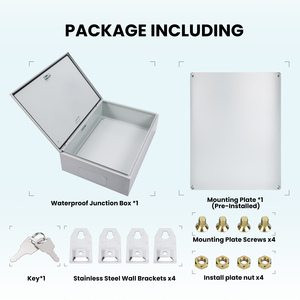
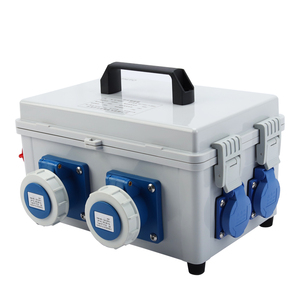
Constructed for shipyards operated by HD Hyundai, Hanwha Ocean, and Samsung Heavy Industries. Our IP67-rated aluminum alloy distribution boxes and marine-grade portable battery chargers withstand heavy salt-fog exposure, extreme humidity, and physical vibration on vessel engine room control panels and dockside shore-power battery banks.
Serving Korea Electric Power Corporation (KEPCO) regional transmission substations. Our 10kV step-down transformers and 110V/220V switchgear tripping battery chargers provide rock-solid DC energy for circuit breaker tripping coils, protective relaying, and SCADA telemetry over DNP3 and Modbus TCP protocols.
Integrated into cathode material lines and lithium battery assembly hubs. Automatic Transfer Switch (ATS) cabinets and modular N+1 DC power systems guarantee operational continuity for continuous sintering furnaces, robotic cell sorting lines, and hazardous gas extraction ventilation fans.
Designed for Korail high-speed rail corridors and Seoul Metro infrastructure. Heavy-duty 3-phase power distribution boxes and auxiliary battery chargers maintain signal interlocking, emergency trackside lighting, and onboard train backup batteries under heavy transient electrical surge conditions.
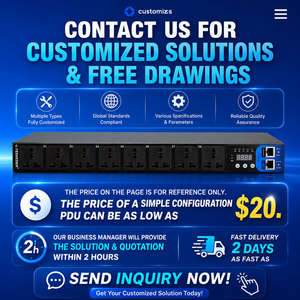
Mountable Smart PDUs and compact switch-mode chargers power rooftop 5G radio base stations and peripheral telecom shelters. Features remote Web/SNMP monitoring to send real-time alert traps regarding battery capacity drop, ambient overheat, or AC mains phase loss.
As South Korea accelerates its RE100 commitments, microgrid deployment, and ultra-fast EV infrastructure expansion, industrial battery charger technology is undergoing three major technical shifts.
Korean conglomerates (Samsung, SK, Hyundai, LG) are rapidly transitioning manufacturing facilities to 100% renewable power. Industrial battery chargers now act as bidirectional DC microgrid buffers, seamlessly storing off-peak solar/wind energy and injecting stable DC power into critical factory buses during peak tariff blocks.
Modern South Korean procurement specs increasingly require chargers to transmit real-time telemetry (internal resistance, cell temperature gradients, capacity degradation rate) via Modbus TCP or MQTT. Advanced algorithms enable predictive maintenance, alerting site engineers weeks before a battery cell fails.
Space optimization is paramount in high-density Korean industrial parks. Modular hot-swappable rectifier shelves allow plants to scale charging capacity from 5kW to 100kW+ inside a standard 19-inch rack enclosure, achieving N+1 or N+2 redundancy without expanding footprint.
Use this technical guide to select the appropriate battery charger and distribution setup based on target system autonomy, ambient limits, and SCADA integration requirement.
| Architecture Type | Efficiency Range | Primary Industrial Use | Key Standard Compliance | SCADA / Communication |
|---|---|---|---|---|
| Integrated DC UPS Systems | 92% - 96% | Remote RTU cabinets, CCTV security, Access control, Small OEM machinery | KC Safety, CE, IEC 62368-1 | Dry Contact Alarms, RS485, Modbus RTU |
| Heavy Industrial SCR / Thyristor Chargers | 85% - 90% | KEPCO Power substations, Thermal/Hydro power stations, Heavy oil plants | IEEE 946, IEC 60146, KEPCO Specification | DNP3 Outstation, Volt-free Contacts, Modbus TCP |
| Modular High-Frequency Switch-Mode Rectifiers | 95% - 98% | 5G Telecom central offices, Semiconductor cleanrooms, Edge Data Halls | ISO 9001, CE, NEBS Level 3, KC EMC | SNMP v3, Modbus TCP, Web GUI, MQTT |
| Outdoor Rugged IP67 Battery Charger Units | 90% - 94% | Shipyards, Port container cranes, Railway trackside signalling, Outdoor ESS | IP67, Marine Classification (ABS/DNV), IEC 60068 | CANbus, RS485 Isolated, Modbus RTU |
Clear, authoritative answers regarding KC safety accreditation, environmental testing standards, OEM/ODM customization, and protocol compliance for Korean projects.
Our manufactured battery chargers, power supplies, and distribution systems are designed and tested to conform with key international and South Korean standards. Depending on the product family, units comply with CE, IEC 62368-1, IEC 60146, and relevant KC (Korea Certification) electrical safety and EMC electromagnetic compatibility testing rules. We regularly assist Korean EPC contractors with complete Factory Acceptance Testing (FAT) documentation required for KEPCO, Korail, and major industrial plant approvals.
South Korea experiences extreme ambient temperature swings, from sub-zero winters (-20°C) to hot, highly humid monsoon summers (+40°C), alongside heavy marine salt fog in coastal shipbuilding cities like Ulsan and Geoje. Our chargers feature optional heavy-duty conformal PCB coating, temperature-compensated charging curves, tropicalized internal components, and IP65/IP67 sealed aluminum or stainless steel enclosures to prevent internal condensation and corrosion.
Yes. Over 50% of our shipped power systems are custom engineered-to-order. Our engineering team handles specialized DC output voltage re-rating (e.g., custom 24V, 48V, 110V, 125V, 220V VDC buses), custom alarm relay logic, physical enclosure dimensioning, and exact SCADA protocol mapping (DNP3 outstation serial/TCP, Modbus RTU/TCP, and SNMP traps). Every engineered unit undergoes rigorous bench testing before shipment.
Our industrial battery chargers and switchgear power platforms are designed for long 15 to 25-year asset lifecycles typical of utility substations, rail networks, and manufacturing plants. Under our priority support programs, we maintain long-term spare component availability, retrofittable modular sub-assemblies, and advance end-of-life (EOL) drop-in replacement notices so system operators can plan capital upgrades seamlessly.
Standard catalog units and modular rectifiers are typically dispatched within short timelines from regional stock reserves. For custom OEM/ODM engineered cabinets, step-down transformers, or integrated ATS distribution panels, typical manufacturing and Factory Acceptance Testing (FAT) lead times range from 4 to 8 weeks depending on engineering complexity and component specs. Express air freight and regional support hubs ensure prompt delivery to Korean ports and job sites.
Submit your electrical load profiles, ambient requirements, and target battery specs to our engineering team. Receive technical drawings, specification sheets, and a competitive quotation tailored for your South Korean project.