
Explore our industrial-grade, safety-certified power distribution modules, switchgears, transformers, and smart PDUs engineered for utility-scale solar PV and energy storage integration.
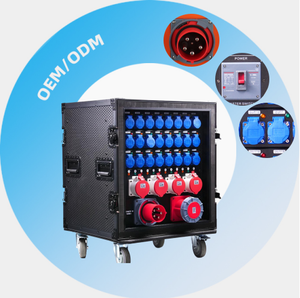
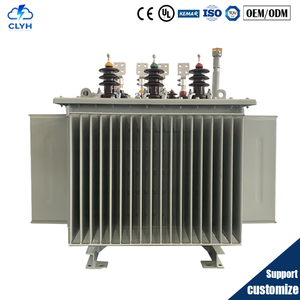
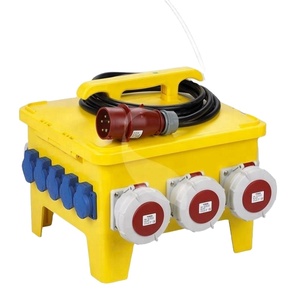
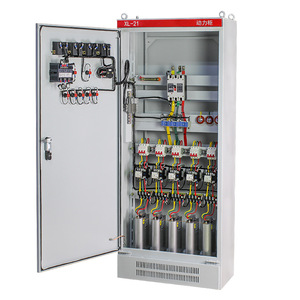

Backed by over 38 years of power electronics innovation, ISO 9001:2015 certified quality management, and four global service hubs, we deliver non-stop utility reliability.
Every solar inverter system, distribution cabinet, and transformer undergoes rigorous Factory Acceptance Testing (FAT), high-potential insulation checks, and full thermal stress testing before dispatch.
More than 50% of shipped hardware is customized to client specs. We perform tailored voltage re-rating, specialized harmonic filtration, and extreme ambient operating adjustments (-25°C to +60°C).
Native integration support for DNP3 (Serial/TCP), Modbus RTU/TCP, and SNMP interfaces, ensuring seamless communication with utility grid control centers and telemetry networks.
An in-depth analysis of modern PV conversion topologies, high-voltage architecture, grid-forming controls, and strategic procurement frameworks for B2B engineering leads.
The global energy transformation has propelled solar photovoltaics (PV) from localized, supplementary power generation to the backbone of modern electrical grids. At the core of this transition lies the solar inverter—a sophisticated power electronic system tasked not merely with Direct Current (DC) to Alternating Current (AC) rectification, but with dynamic grid stabilization, reactive power support, maximum power point tracking (MPPT), and active harmonic mitigation.
As utility-scale projects scale into multi-gigawatt footprints and commercial & industrial (C&I) deployments integrate complex microgrids, selecting a qualified solar inverters supplier & exporter requires deep evaluation of conversion efficiency, thermal derating curves, fault ride-through (FRT) capabilities, and Total Cost of Ownership (TCO). This comprehensive guide synthesizes technical trends, procurement best practices, and architectural standards for energy asset developers, EPC contractors, and electrical procurement engineers.
Selecting the optimal power conversion topology directly influences system availability, balance-of-system (BOS) capital costs, and lifetime yield. Modern solar engineering utilizes three primary inverter topologies, each tuned for distinct operational scales.
| Topological Parameter | String Inverters (C&I / Utility) | Central Inverters (Utility Scale) | Grid-Forming Hybrid Energy Systems |
|---|---|---|---|
| Typical Power Rating | 50 kW to 350 kW | 1.5 MW to 4.4 MW | 500 kW to 5.0 MW (AC Coupled / DC Coupled) |
| DC Input Operating Range | 200 VDC – 1500 VDC | 860 VDC – 1500 VDC | 600 VDC – 1500 VDC (Wide Battery Range) |
| Max Efficiency (Peak / CEC) | 98.8% / 98.5% | 99.0% / 98.7% | 98.5% / 98.1% (Round Trip Storage Dependent) |
| MPPT Channels | Multi-MPPT (6 to 16 Trackers) | Single Recombined MPPT Bus | Multi-Channel Bi-directional Converter |
| O&M Strategy & MTTR | Fast Swap out; Low MTTR (< 2 hours) | On-site Component Repair; Higher MTTR | Specialized Power Electronics Field Maintenance |
| Grid Control Capabilities | Grid-Following (PF, Volt-VAR, Frequency) | Grid-Following + STATCOM Mode | Grid-Forming (Virtual Synchronous Generator) |
String inverters have rapidly expanded from commercial rooftops into utility-scale solar farms. By incorporating 10 to 16 independent Maximum Power Point Trackers (MPPT) per unit, string topologies mitigate yield losses caused by partial shading, module degradation mismatches, and varied slope orientations. Furthermore, the decentralized nature of string architecture ensures high plant availability: a single unit failure impacts less than 0.5% of total plant capacity, vastly lowering operational risk.
For large-scale, flat-terrain PV plants operating above 100 MW, central inverters packaged in containerized turn-key stations (housing the inverter, medium-voltage transformer, and ring main unit) remain highly competitive. Centralized units maximize efficiency through massive 1500V DC busbars and liquid-cooling blocks, minimizing raw semiconductor material usage per megawatt generated.
The solar power industry is experiencing rapid technological refinement driven by advances in solid-state physics, digital control algorithms, and grid interconnection demands.
The industry-wide shift from 1000V DC to 1500V DC system voltages reduced balance-of-system (BOS) costs by up to 5% by allowing longer PV module strings, reduced combiner box counts, and thinner copper/aluminum cabling cross-sections. Inverter manufacturers are currently testing 2000V DC topology using Wide Bandgap (WBG) semiconductors, which promises another step-change reduction in conduction losses and installation labor costs.
Traditional silicon Insulated Gate Bipolar Transistors (IGBTs) face physical limits regarding switching speed and thermal dissipation. Silicon Carbide (SiC) MOSFETs enable switching frequencies 5x to 10x higher than standard IGBTs. Higher switching frequencies drastically shrink the physical footprint of magnetic components (chokes, inductors, and transformers), yielding ultra-compact solar inverters with power densities exceeding 3.5 kW/kg and conversion efficiencies surpassing 99.2%.
Historically, solar inverters operated as grid-following current sources, relying on a stable voltage signal from coal, gas, or hydro plants via a Phase-Locked Loop (PLL). As renewable penetration exceeds critical thresholds, grids experience diminished physical rotational inertia, leading to frequency instability. Modern advanced inverters integrate Grid-Forming (GFM) control technology. Operating as Virtual Synchronous Generators (VSG), these inverters establish voltage and frequency reference signals, deliver synthetic inertia, absorb high-frequency transients, and enable black-start recovery following grid collapse.
Procuring industrial solar inverters and auxiliary power distribution equipment involves evaluating complex lifecycle parameters far beyond initial dollar-per-watt purchase costs.
Levelized Cost of Energy (LCOE) is heavily sensitive to inverter reliability over a 25-year design lifespan. Crucial procurement metrics include:
International grid operators enforce stringent grid-compliance certifications. Global exporters must verify compliance with IEEE 1547-2018, UL 1741 SB, IEC 62109-1/-2, and European EN 50549 standards. Additionally, as inverters interface directly with utility SCADA networks, hardware-level cybersecurity—including encrypted firmware updates, secure boot loading, TLS communication, and physical tamper detection—has become a non-negotiable procurement requirement.
Answers to critical questions asked by procurement directors, EPC contractors, and electrical design engineers during solar equipment selection.
Grid-following inverters require an existing grid voltage waveform provided by external synchronous generators to synchronize their AC output using Phase-Locked Loops (PLL). They inject current proportional to available solar irradiance. In contrast, Grid-Forming (GFM) inverters act as voltage sources. They create their own internal voltage signal, provide synthetic inertia to stabilize grid frequency fluctuations, and can operate in islanded mode to support microgrids or black-start grid restoration.
Solar inverters generate internal heat in power electronics switches (IGBTs/SiC MOSFETs) and inductors. Most standard industrial inverters begin thermal derating (reducing AC power output to protect internal components) at ambient temperatures above 45°C or 50°C. Quality utility-grade inverters utilize smart forced-air cooling or liquid cooling loops to maintain 100% continuous rated power output up to 50°C ambient without thermal shutdown.
Increasing system voltage from 1000V DC to 1500V DC allows PV strings to be up to 50% longer (e.g., 30 modules per string instead of 20). Longer strings reduce the total number of sub-combiner boxes, direct current cabling runs, trenching labor, and DC disconnect switches, reducing upfront Balance of System (BOS) capital costs by approximately 3% to 5%.
Utility grid control centers mandate robust, real-time industrial protocols. Modern solar inverters and substation distribution panels must support native DNP3 (both Serial and TCP/IP outstation modes), Modbus RTU/TCP, and IEC 61850 for substation automation systems. Volt-free relay contacts are also used for emergency remote shutdown commands (ESD).
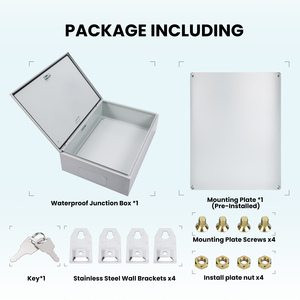
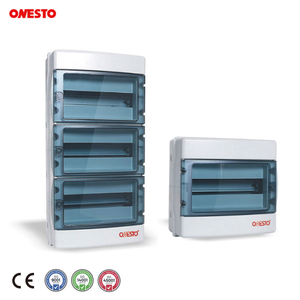
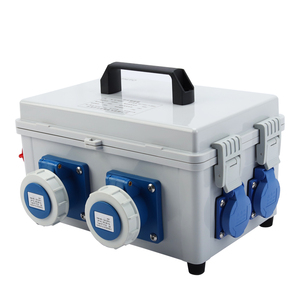
Yes. Custom power distribution cabinets, AC combiner boxes, and ATS control switchgears can be re-rated with IP65, IP66, or IP67 ingress protection, anti-corrosive aluminum alloy or marine-grade stainless steel enclosures, conformal-coated circuit boards, internal environmental heaters for sub-zero climates, and anti-seismic shock mountings for mining or industrial environments.
Procurement teams should verify ISO 9001:2015 quality management accreditation, factory acceptance test (FAT) reports, third-party certification test reports for IEC 62109-1/-2, grid compliance certificates (IEEE 1547 / EN 50549), electromagnetic compatibility (EMC) compliance, and step-by-step installation/maintenance manuals accompanied by full as-built electrical schematics.