
Engineered for harsh environments, high electrical isolation, and seamless backup continuity. Every system undergoes rigorous factory acceptance testing (FAT) to comply with international IEC & CE standards.
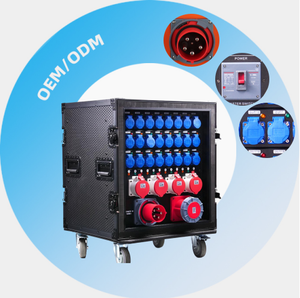
Rugged IP67 weather-proof enclosure rated 110V–10kV (50/60Hz). Engineered for extreme outdoor environments, mobile power units, and industrial switchgear enclosures.
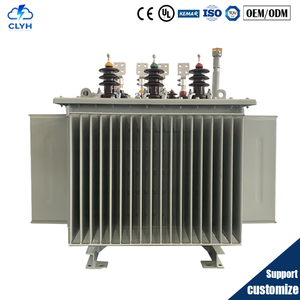
Three-phase copper winding design for rural substations and heavy industrial sites. Compliant with IEC & CE standards for ultra-low losses and high overload capacity.
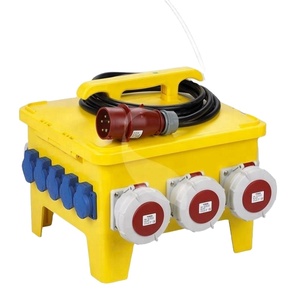
Custom industrial distribution panel equipped with high-interrupt circuit breakers, thermal management, and isolated copper busbars for industrial plant protection.
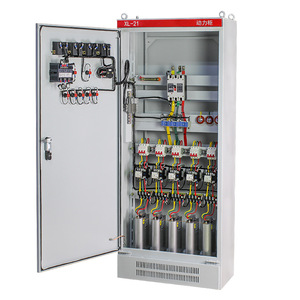
220V/380V dual-power automatic transfer control panel. Ensures zero-fail switchover for critical infrastructure battery banks and generator systems.
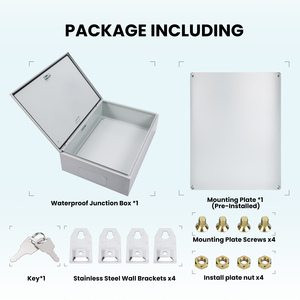
Fully pre-wired turn-key distribution enclosure complete with all accessories, surge arresters, and metering for plant utility protection and charger isolation.
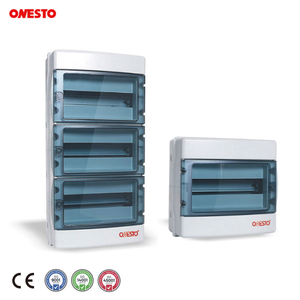
UV-stabilized polycarbonate breaker enclosures designed for modular DC charger stations, solar integration, and commercial circuit protection.
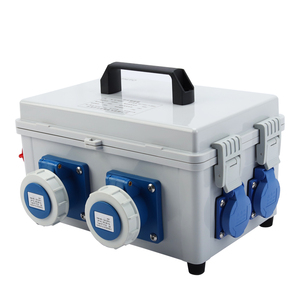
32A/16A dual-socket key-locked distribution unit. Designed for portable high-current industrial chargers, railway maintenance hubs, and harsh marine environments.
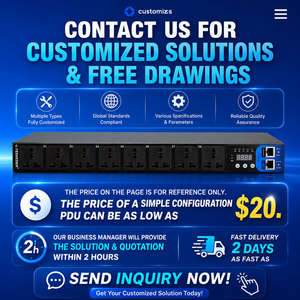
Vertical/Horizontal intelligent power distribution unit featuring per-outlet switching, RS485 telemetry, and SCADA integration for data center DC backbones.
As a globally recognized manufacturer and exporter, we design, build, and support high-availability DC power systems, industrial battery chargers, and switchgear protection systems for critical infrastructure across Australia, New Zealand, Asia, and the Middle East.
Commercial power supplies often fail when deployed in critical industrial environments. Our engineered-to-order manufacturing process bridges the gap between raw datasheets and extreme field realities.
Every industrial battery charger and DC UPS system is assembled under strictly controlled quality management systems. We perform 100% full-load thermal burn-in, dielectric isolation testing, and micro-processor protocol validation before dispatch.
Over 50% of our shipped systems are customized to match exact consultant specifications. From DNP3 outstation serial/TCP mapping to SCADA Modbus RTU telemetry, conformal coating, and custom ripple voltage limits, our engineers deliver tailor-made systems.
With engineering hubs strategically located in Australia (Sydney), New Zealand (Auckland), Singapore, and Dubai (UAE), we offer global technical procurement teams fast turnaround times, localized compliance testing, and life-cycle spare parts availability.
Understanding the operational nuances between standalone industrial battery chargers, integrated DC UPS platforms, and modular redundant rectifiers is essential for specifying sub-station and switchgear backup power systems.
Industrial battery chargers operate not merely as power supplies, but as precision energy management systems. Utilizing incorrect charging profiles on Valve Regulated Lead-Acid (VRLA), Nickel-Cadmium (NiCd), or Lithium Iron Phosphate (LiFePO4) cell banks drastically reduces operational life. High-frequency switch-mode chargers engineered by top OEM exporters incorporate automatic temperature-compensated float/boost voltage regulation, preventing thermal runaway and ensuring rapid recovery following deep mains discharge events.
| Architecture Type | Ideal Application | Output Range | Key Engineering Characteristics | SCADA / Communication |
|---|---|---|---|---|
| Industrial Battery Charger | Substations, 110V/220V switchgear tripping, process plants | 24V – 220V DC 10A – 400A |
Galvanic isolation, thyristor/switch-mode options, temperature compensation, surge withstand (IEC 61000-4-5). | DNP3 TCP, Modbus RTU, Volt-free dry contacts |
| Integrated DC UPS System | Remote RTU cabinets, telecommunications, access control | 12V, 24V, 48V DC Up to 3kW |
Combined rectifier, seamless zero-transfer DC battery changeover, integrated LVD (Low Voltage Disconnect). | SNMP v3, Modbus TCP, Web GUI |
| Modular N+1 DC Power Plant | Telecom exchanges, central control rooms, data infrastructure | 48V / 110V DC Scalable up to 2000A |
Hot-swappable rectifier shelves, active load sharing, dynamic N+1 redundancy, zero single-point-of-failure. | RS485, DNP3 Outstation, Ethernet/IP |
| DC/AC Industrial Inverters | AC instrumentation powered from station battery banks | 110V / 230V AC 1kVA – 30kVA |
Pure sine wave output, high crest-factor capability for switchgear trip solenoids, static bypass integration. | Modbus RTU, Relay Alarm Card |
The industrial power landscape is transitioning rapidly toward microgrid integration, renewable storage coupling, smart telemetry, and higher energy density footprint demands.
Traditional VRLA and NiCd battery banks are increasingly being replaced by Lithium Iron Phosphate (LiFePO4) storage due to its 3x higher cycle life, superior energy density, and wide operating temperature window. Modern industrial battery chargers manufactured today must feature adaptive BMS CAN-bus communication protocols to dynamically sync charging current based on cell voltage and thermal feedback.
Legacy 50Hz SCR thyristor chargers are giving way to high-frequency switch-mode rectification (SMR). SMR technology achieves efficiency levels exceeding 96%, reduces cabinet volumetric footprint by over 60%, and drastically decreases total input harmonic distortion (THD < 5%), cutting electrical utility operational costs.
Procurement specifications for power utilities now mandate robust cybersecurity measures for remote monitoring equipment. Modern industrial chargers feature hardware-level encryption, DNP3 Secure Authentication, and SNMP v3 protocol stacks to protect sub-station control grids against cyber intrusions.
Global B2B buyers and EPC contractors are moving away from evaluating initial capital expenditure (CAPEX) in isolation. Modern procurement models evaluate 15-to-25-year Operational Expenditure (OPEX), focusing on standby power losses, cooling requirements, modular expansion capabilities, and guaranteed spare-parts support windows.
Expert answers addressing specification traps, protocol mapping, battery longevity, and international compliance standards.
An industrial battery charger primary function is to convert AC input power into smooth DC power while managing complex charging profiles (float, boost, equalization) for large external battery banks (such as 110V or 220V substation batteries). The output feeds both the continuous load and battery reserve.
Conversely, an integrated DC UPS combines a switch-mode rectifier, a continuous battery charging module, and a zero-transfer-time solid-state switchover circuit in one compact chassis (often DIN-rail or rack-mount). When AC mains fails, the connected DC load experiences zero voltage interruption. DC UPS units are ideal for remote telemetry units (RTUs), SCADA panels, and telecom cabinets, while standalone chargers suit high-capacity electrical substations.
Lead-acid and Nickel-Cadmium electrochemistry is highly sensitive to ambient temperature changes. As temperature rises, internal chemical resistance drops, causing the battery to draw more charging current at a fixed voltage level. Left uncorrected, this causes thermal runaway—destroying the battery bank and posing severe fire risks.
Our engineered battery chargers utilize remote temperature sensors attached directly to the battery negative post. The charger controller automatically reduces float voltage by approximately -3mV/°C/cell as temperature increases, and raises float voltage in cold conditions, preserving the battery's full 12-to-15 year design life.
Yes. Custom communication protocol mapping is one of our core OEM/ODM engineering capabilities. We supply industrial controllers supporting native DNP3 outstation (serial RS232/RS485 or Ethernet TCP/IP), Modbus RTU, Modbus TCP, and SNMP traps.
Before dispatch, our engineering team executes bench verification using protocol analyzer test sets. We supply custom point lists mapping AC mains failure, DC bus over/under voltage, battery earth fault detection, charger high-temperature, and common alarm dry contacts.
All industrial charger systems comply with relevant international electrical safety and electromagnetic compatibility standards, including IEC 62368-1, IEC 61000-6-2 (Industrial Immunity), IEC 61000-6-4 (Emissions), and CE marking standards.
Every customized export unit is shipped with a comprehensive Factory Acceptance Test (FAT) report, schematic electrical wiring diagrams, installation manuals, spare parts lists, and ISO 9001:2015 Certificate of Conformance documentation.
Standard modular catalogue products are stocked across our regional hubs in Sydney, Auckland, Singapore, and Dubai for rapid dispatch. Custom engineered-to-order projects (such as IP67 aluminum alloy distribution panels, 3-phase ATS cabinets, or sub-station charger panels) typically require 4 to 8 weeks depending on engineering approval cycles and witnessed FAT requirements.
Send us your load profile, input voltage specs, required battery autonomy, and environmental conditions. Our senior power application engineers will prepare a complete architecture proposal.