
Engineered for zero-fail operational environments, our military-spec power systems deliver seamless energy continuity across land mobile radio networks, naval platforms, field substations, and command centers. Explore our top 8 featured equipment families below.
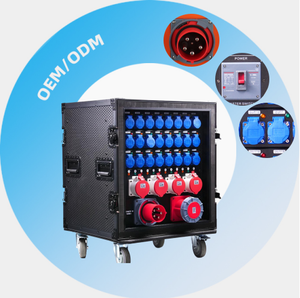
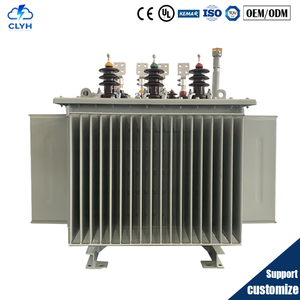
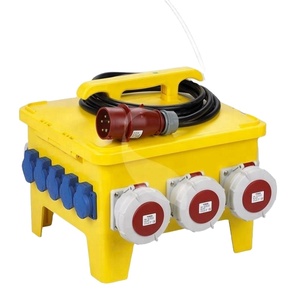
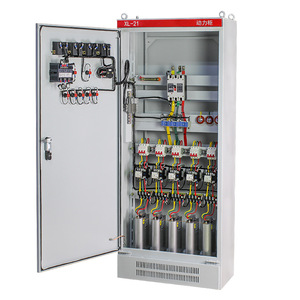
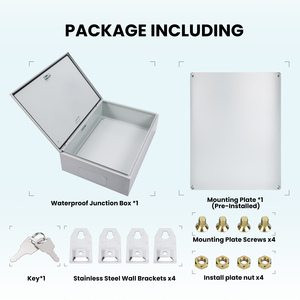
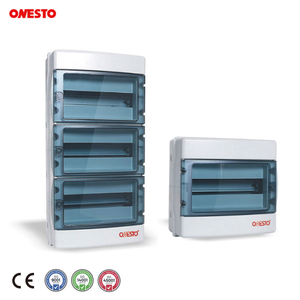
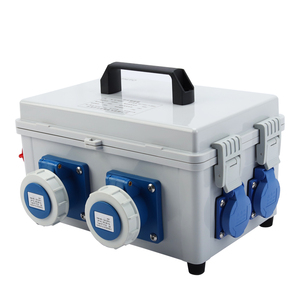

Over 50% of the defense and mission-critical systems we dispatch are customized to client specifications. Commercial power off-the-shelf catalog hardware frequently fails under extreme thermal cycles, severe electromagnetic interference (EMI), and rugged military transport. We bridge the engineering gap between commercial viability and defense-grade survivability.
Our military power systems undergo rigorous validation, including environmental thermal shock (-40°C to +75°C), conformal board coating against saline humidity, high shock/vibration damping, and compliance with MIL-STD-810G and MIL-STD-461G standards for electromagnetic compatibility.
Seamless communication is critical for remote command and control centers. Our smart PDUs and modular DC UPS systems feature native support for DNP3 (serial & TCP outstations), Modbus RTU/TCP, SNMP v3, and dry volt-free alarm contacts, ensuring instant integration into existing defense SCADA frameworks.
Defense assets operate on multi-decade horizons. We combat early product obsolescence by maintaining comprehensive as-built drawing archives, guaranteed drop-in component replacements, and long-term spare allocation through the specialized Priority Support Programme across our four global engineering hubs.
The defense sector is undergoing a profound paradigm shift in electrical architecture. Modern military operations require unprecedented energy density, rapid field deployment, silent operational windows, and cyber-resilient power distribution networks. When sourcing from China’s leading defense power manufacturing base, procurement officers and systems integrators must evaluate the following key technological trends:
Legacy silicon-based rectifiers and inverters generate substantial thermal loss and require heavy heat sinks. Future military procurement guidelines increasingly mandate Gallium Nitride (GaN) and Silicon Carbide (SiC) power switching modules. These wide-bandgap technologies enable switching frequencies up to five times higher, reducing power supply footprints down to ultra-compact 1U/2U rack units while boosting conversion efficiency beyond 96.5%.
Traditional Valve-Regulated Lead-Acid (VRLA) battery banks in military command shelters and substations are rapidly being phased out in favor of intelligent Lithium Iron Phosphate (LiFePO4) and emerging solid-state chemistries. Modern military DC UPS plants incorporate integrated Battery Management Systems (BMS) with active cell balancing, temperature-compensated charging, and dynamic depth-of-discharge (DoD) optimization to extend cycle life up to 4,000+ operational cycles.
Command, Control, Communications, Computers, Intelligence, Surveillance, and Reconnaissance (C4ISR) systems cannot tolerate even a half-cycle voltage sag. Procurement demands are shifting toward solid-state Static Transfer Switches (STS) and high-speed ATS control cabinets that execute source changeovers in under 4 milliseconds, shielding sensitive processing units from power disruptions during grid-to-generator switchovers.
As electronic warfare capabilities advance, tactical power distribution units (PDUs) and switchgear boxes require built-in High-Altitude Electromagnetic Pulse (HEMP) and Intentional Electromagnetic Interference (IEMI) filtering. Leading military power manufacturers integrate specialized LC filter stages and heavy-gauge shielded aluminum-alloy enclosures to protect internal circuit breakers and digital controllers against high-kV voltage transients.
Selecting the appropriate power architecture depends on load criticality, environmental exposure, protocol requirements, and maintenance accessibility. Use the engineering comparison matrix below to guide your system specification process.
| Power Architecture | Primary Application Duty | Typical Electrical Specs | Environmental & Comms Standard | Key Engineering Trade-off |
|---|---|---|---|---|
| IP67 Tactical Distribution Units | Field shelters, mobile command posts, outdoor tactical networks | 16A-63A, 110V/220V/380V single/3-phase input | IP67 Enclosure, Ceeform heavy-duty locking sockets | Maximum ruggedized protection; higher mechanical weight. |
| Oil-Immersed Step-Down Transformers | Base camp substations, rural high-voltage utility stepping | 10kV to 400V, 100kVA 3-Phase copper winding | IEC 60076 compliant, outdoor hermetic oil seal | Exceptional thermal dissipation; requires fluid maintenance inspection. |
| IP54 ATS Electrical Cabinets | Automatic mains-to-generator failover for critical facilities | 220V/380V, 100A to 800A dynamic load switching | IP54 NEMA 3R, Dry contact status relay, Modbus RTU | Eliminates outage downtime; requires periodic contactor calibration. |
| Smart Metered & Switched PDUs | 19-inch defense server racks, radar signal processing hubs | 120V/240V/400V, 16A-32A, Vertical/1U Horizontal | RS485, SNMP v3, Modbus TCP, Director-level GUI | Precision outlet monitoring; requires secure Ethernet network mapping. |
| Industrial DC UPS & Charger Plants | Tripping/closing power for medium-voltage switchgear | 24V, 48V, 110V, 220V DC output, up to 400A charging | DNP3 serial/TCP outstation, ISO 9001:2015 quality certified | Continuous battery backup; mandates temperature-compensated charging. |
Below are detailed engineering answers to the most common questions raised by military procurement managers, defense contractors, and electrical protection specialists.
A military-grade DC UPS integrates a high-efficiency AC/DC rectifier stage, an intelligent multi-stage battery charger, and an instantaneous, solid-state DC transfer circuit inside a single ruggedized chassis. When AC input grid power drops out, the DC UPS maintains zero-millisecond transfer to the battery bank, ensuring uninterrupted power to digital processors and radio relays.
Conversely, an industrial battery charger is primarily optimized for managing large stationary battery banks (such as flooded lead-acid, NiCd, or LiFePO4 chemistry) with precise float, boost, and equalizing temperature-compensated charge profiles. These chargers feed downstream DC distribution boards in utility substations. While substations usually specify a separate charger + battery + distribution architecture, compact military command posts and field shelters prioritize an integrated DC UPS for space optimization and rapid field setup.
Our engineering team designs defense power hardware from the ground up using heavy-gauge extruded aluminum alloys, internal shock-isolation grommets, and reinforced structural mounting brackets rated to withstand severe G-force acceleration (MIL-STD-810G). All printed circuit boards (PCBs) receive heavy conformal coating to prevent dielectric breakdown from moisture, salt spray, and particulate accumulation.
To achieve strict electromagnetic compatibility (MIL-STD-461G compliance), we incorporate multi-stage passive LC filters on both input and output lines, high-permeability magnetic cores, and fully enclosed metallic Faraday shielding. Every custom system undergoes Factory Acceptance Testing (FAT) with client-witnessed or third-party verified test reports prior to shipping.
Modern military power monitoring requires multi-protocol flexibility. Our intelligent Smart PDUs and ATS controller cabinets feature native hardware support for RS485 serial and RJ45 Ethernet interfaces. Protocols include:
Yes. Customized engineering accounts for more than half of our total factory throughput. We regularly re-rate input/output voltages (e.g., converting 110V/220V AC single-phase to specialized 28V DC military vehicle buses or 110V/220V DC substation tripping supplies), adjust thermal derating curves for ambient operation up to +75°C, and custom-mold heavy-duty IP65 to IP67 enclosures.
Procurement teams can submit detailed load profiles, peak surge requirements, and dimension constraints, and our power engineering team will generate standard 3D CAD models, schematic line drawings, and thermal simulations within 5 to 7 business days.
Defense installations require operational lifecycles ranging from 15 to 25 years. We avoid commercial off-the-shelf consumer silicon components that suffer short product lifecycles. Instead, we specify industrial and automotive grade semiconductors with guaranteed manufacturer availability windows.
Through our global engineering network across Australia, New Zealand, Singapore, Dubai, and China manufacturing hubs, we maintain detailed as-built schematics and localized spare parts inventory. If an electronic component approaches end-of-life (EOL), we issue formal advance engineering notices along with drop-in compatible replacement modules to prevent asset downtime.
For high-power distribution requirements (such as 10kV to 400V conversion at 100kVA capacity), hermetically sealed oil-immersed transformers provide superior thermal convection and insulation performance compared to air-cooled dry-type units in harsh outdoor environments. The dielectric oil insulates 100% pure copper windings from atmospheric humidity, sand dust, and airborne corrosive agents.
Equipped with pressure relief valves, oil level indicators, and IEC/CE compliant temperature sensors, these transformers operate continuously under heavy cyclic loads, reducing core losses and extending winding insulation life well beyond 25 years.
Need custom voltage re-rating, IP67 field enclosures, ATS cabinet engineering, or MIL-STD environmental testing? Speak directly with our senior defense power engineers today.
Get a Quote