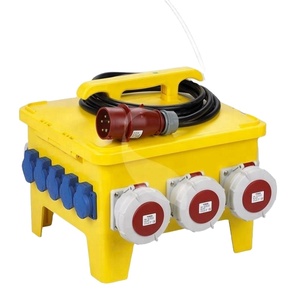
Explore our certified product lines manufactured to ISO 9001:2015 standards. Engineered for harsh electrical environments, severe temperature swings, and zero-ms transition requirements.
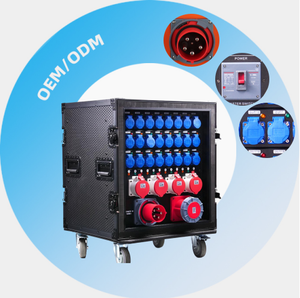
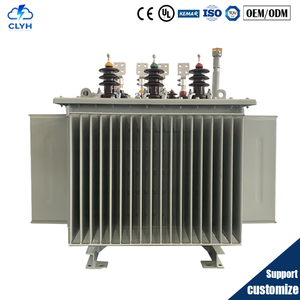
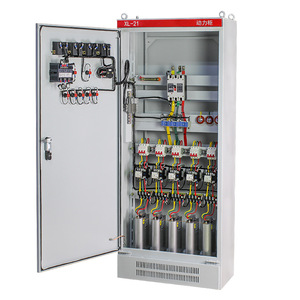
With over 38 years of dedicated power conversion engineering and an integrated ISO 9001:2015 certified production environment, we deliver field-proven electrical continuity across global utility, defense, industrial, and telecommunication sectors.
Every industrial DC UPS system, charger, and power distribution board undergoes rigorous multi-stage quality control. From component stress screening to full Factory Acceptance Testing (FAT), our standard minimizes field failures over 15–25 year operational lifecycles.
Over 50% of our shipped volume is tailored to customer specifications. We handle specialized electrical re-rating, custom voltage outputs (12V, 24V, 48V, 110V, 220V DC), N+1 modular redundancy, IP65/IP67 ingress ratings, and MIL-spec shock mounting.
Seamlessly interface DC backup systems into smart grids and automated industrial control systems. Controllers support DNP3 (Serial/TCP outstation), Modbus RTU/TCP, SNMP v2/v3, and user-configurable volt-free alarm contacts for remote telemetry.
When selecting centralized backup power for industrial applications, engineering teams face a crucial architectural choice: conventional AC UPS (double conversion) versus direct DC UPS systems. In applications such as power utility substations, telecommunications base stations, oil & gas process control, and rail signaling, DC UPS systems deliver superior reliability, higher overall energy efficiency, and lower total cost of ownership (TCO).
The standard industrial DC UPS integrates three main functional blocks into a unified architecture: a switch-mode rectifier stage, a precision battery management/charger circuit, and an automatic load transfer/decoupling network. Below is an engineering comparison matrix designed to guide OEM buyers, switchgear integrators, and plant managers during system sizing:
| Performance Metrics | Industrial DC UPS System | Traditional AC UPS System | Engineering Advantage |
|---|---|---|---|
| Energy Conversion Stages | Single Stage (AC to DC direct supply) | Double Stage (AC to DC, DC to AC inverter) | +12% to 15% Higher Efficiency |
| Transfer Time on Mains Failure | 0 ms (Absolute zero-break continuous DC bus) | 2 ms to 10 ms (Dependent on static switch) | No control trip for sensitive relays / RTUs |
| Mean Time Between Failures (MTBF) | > 350,000 Hours (Fewer active power components) | ~ 120,000 Hours (Inverter stage increases risk) | 3x Operational Longevity |
| Battery Ripple Current & Heating | Filtered DC output (< 1% RMS ripple voltage) | Higher AC ripple feedback from inverter stage | Extends battery design life by 20–30% |
| Scalability & Maintenance | Modular N+1 Hot-Swappable Rectifier Shelves | Complex parallel inverter synchronization | Hitless online replacement during maintenance |
| Harmonic Distortion (THD) | Active Power Factor Correction (PFC > 0.99) | Variable input harmonic distortion | Protects upstream distribution transformers |
One of the primary failure modes in industrial power systems is thermal overload resulting from elevated ambient temperatures in unconditioned field enclosures. China's premier DC UPS OEM manufacturing facilities utilize advanced thermal modeling and component de-rating protocols:
As global energy networks transition toward decentralized smart grids, renewable micro-grids, and 5G edge computing networks, industrial DC power systems are undergoing rapid technological evolution.
Next-generation DC UPS designs are replacing silicon MOSFETs with Silicon Carbide (SiC) and Gallium Nitride (GaN) switching components. This innovation enables switching frequencies above 100 kHz, elevating rectifier energy efficiency beyond 97.5% while drastically reducing magnetic transformer dimensions and footprint by up to 40%.
While Lead-Acid (VRLA/AGM/Gel) remains widely used due to upfront cost, global procurement trends show a rapid shift toward Lithium Iron Phosphate (LiFePO4) battery chemistry. LiFePO4 offers 3,000–5,000 charge cycles (compared to 500–800 for Lead-Acid), higher energy density, and superior performance under deep discharge cycles, drastically lowering long-term maintenance visits.
Modern DC UPS power platforms feature advanced microcontrollers equipped with machine learning algorithms. By continuously analyzing real-time battery internal resistance, charge/discharge curves, ripple voltage, and ambient thermal fluctuations, systems can predict battery cell degradation months before catastrophic failure, triggering automated SCADA alarms.
Procuring industrial-grade DC UPS and power distribution systems from top Chinese OEM/ODM factories requires rigorous evaluation beyond initial unit pricing. International engineering firms, EPC contractors, and distributors must evaluate total manufacturing capabilities to prevent operational risks:
Ensure your factory supplier maintains authentic third-party certifications tailored to your target installation region:
Industrial assets operate on 15–25 year timelines. Selecting an established China OEM supplier ensures long-term operational peace of mind:
Answers to common engineering, customization, and sourcing questions asked by B2B buyers and system integrators.
A DC UPS combines a switch-mode rectifier, precision battery charging circuitry, and an instantaneous zero-break DC transfer network within a single compact enclosure. It guarantees uninterrupted output power directly to connected DC loads (e.g., 12V, 24V, 48V) when AC mains fails. An industrial battery charger focuses specifically on managing optimized charge profiles (float, boost, equalization) for large external battery banks in utility substations, typically delivering power to a separate DC distribution board. For space-constrained remote cabinets and OEM equipment, an integrated DC UPS is preferred.
Yes. Over 50% of our manufactured power systems are engineered-to-order (ETO). Our engineering teams assist clients with customized voltage/current de-rating, tailored multi-rail DC outputs, specialized SCADA comms mapping (DNP3, Modbus RTU/TCP, SNMP), custom IP-rated aluminum or stainless steel enclosures, conformal coating, shock-mounted military chassis, and client-witnessed Factory Acceptance Testing (FAT).
Our intelligent power controllers support native DNP3 (serial outstation and DNP3 over TCP/IP), Modbus RTU, Modbus TCP, SNMP traps (v1/v2c/v3) for network monitoring, as well as configurable dry volt-free relay alarm contacts for integration with legacy Remote Terminal Units (RTUs). Protocol point mapping is bench-verified prior to dispatch.
Battery sizing takes into account maximum continuous load power, peak inrush current (such as switchgear tripping coil action), minimum ambient operating temperature, depth of discharge (DoD) safety factors, and desired backup autonomy hours (e.g., 1 hour, 4 hours, 8 hours). Recharge current is typically calculated at 10% to 20% of the battery Ah rating (C10 rate) added to the continuous load current requirement, ensuring full recharge within 10–12 hours.
All facilities operate under ISO 9001:2015 Quality Management Systems. Products comply with global safety and EMC standards including CE, IEC/EN 62040-5-3, IEC 61000-6-2, IEC 61000-6-4, and RoHS guidelines. Every unit undergoes Automated Optical Inspection (AOI), full-load burn-in testing, high-voltage insulation dielectric testing, and dynamic functional testing before shipment.
We build our power systems for long infrastructure lifecycles. We guarantee spare parts availability, engineering drawing archives, and technical repair support for a minimum of 10 to 15 years after product deployment. If component end-of-life (EOL) occurs, formal obsolescence notices with fully compatible drop-in replacement guidance are issued in advance.
Submit your electrical load profiles, voltage requirements, battery autonomy targets, and enclosure specifications. Our senior power engineers will analyze your application and deliver a full system design and commercial quotation within 24 hours.
Get a Quote