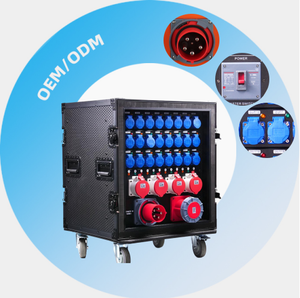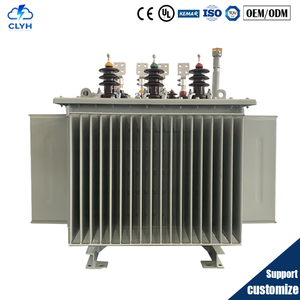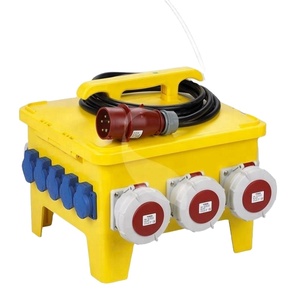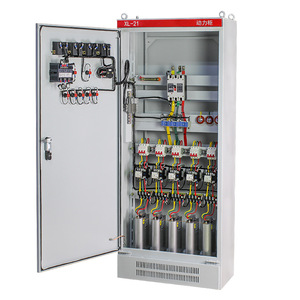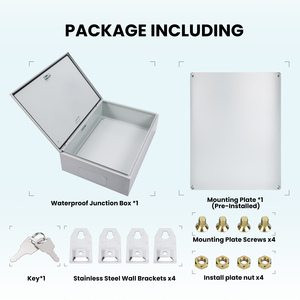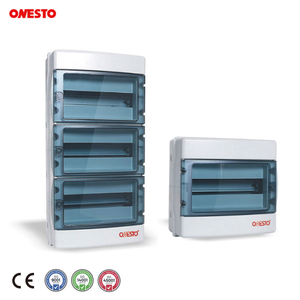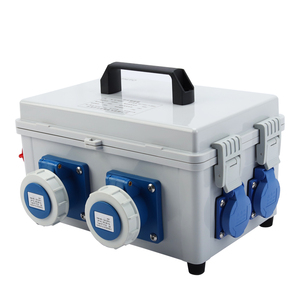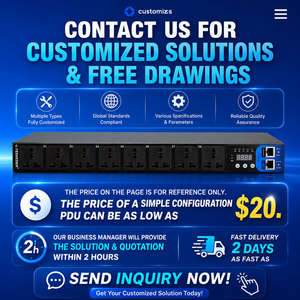
Engineered for critical infrastructure, power utilities, telecommunications, and industrial automation. Inspect high-reliability power modules and distribution units configured for maximum uptime.
In modern industrial power engineering, the continuous transition toward high-frequency switch-mode power conversion, distributed energy systems, and mission-critical DC backup systems has placed rectifier modules at the core of electrical architecture. A rectifier module—converting alternating current (AC) to stable direct current (DC)—is no longer a passive component; it is an intelligent, software-monitored, hot-swappable subsystem designed for maximum thermal efficiency, low Total Harmonic Distortion (THDi), and high power factor correction (PFC).
Whether deployed in electrical utility substations (110V/220V DC protection loops), telecommunication basestations (48V DC power shelves), or industrial process plants requiring continuous battery float charging, selecting the right manufacturer directly influences operational availability, Mean Time Between Failures (MTBF), and lifetime operational expenditure (OPEX).
An objective evaluation based on technical innovation, product reliability, custom engineering capabilities, ISO quality compliance, and regional field support availability.
Headquarters: Sydney, Australia | Auckland, New Zealand
Key Strengths: Specializing in engineered-to-order DC systems, industrial battery chargers, and customized modular rectifiers since 1987. Helios excels in high-reliability applications for power utilities, defence platforms, switchgear control, and rail transit networks. Certified under ISO 9001:2015, they provide complete in-house design, factory acceptance testing (FAT), and integrated SCADA comms (DNP3, Modbus RTU/TCP).
Best For Custom Substation & Defense-Grade DC Rectifier Systems.
Headquarters: Columbus, Ohio, USA
Key Strengths: A global dominant force in telecom power systems and data center infrastructure. Vertiv's Netsure rectifier module series delivers high power density, active load sharing, and remote intelligence for high-capacity telecom exchanges and edge data hubs.
Best For Hyperscale Telecom & Edge Data Center DC Plants.
Headquarters: Drammen, Norway
Key Strengths: Renowned for their Flatpack series rectifiers, Eltek pioneered high-efficiency HE rectifier technologies. Their modular architecture allows modular growth from small remote cabinets to massive utility-scale DC installations.
Best For High-Efficiency Telecom & Microgrid Power Shelves.
Headquarters: Zurich, Switzerland
Key Strengths: ABB delivers robust industrial rectifier solutions engineered for heavy processing industries, electro-refining, sub-stations, and marine environments. Known for extreme fault tolerance and high transient absorption capabilities.
Best For Industrial Automation & Heavy Industrial Conversion.
Headquarters: Dublin, Ireland
Key Strengths: Eaton’s Enterprise Power Solutions offer compact 48V DC rectifier systems integrated with intelligent power distribution units (PDUs) and robust battery management routines tailored for enterprise IT and industrial automation.
Best For Integrated IT Infrastructure & Industrial PDUs.
Headquarters: Rueil-Malmaison, France
Key Strengths: Schneider’s Gutor series represents the gold standard in industrial continuous-duty AC-DC rectifiers and industrial UPS systems designed for harsh nuclear, oil & gas, and energy generation environments.
Best For Nuclear, Oil & Gas Extreme Environment Duty.
Headquarters: Shenzhen, China
Key Strengths: Dominating 5G telecom site installations, Huawei offers ultra-compact, high-density modular rectifiers integrated with solar hybrid controllers, AI battery lifecycle management, and cloud management platforms.
Best For 5G Base Station & Solar-Hybrid Power Sites.
Headquarters: Zwanenburg, Netherlands
Key Strengths: Specializes in heavy-duty thyristor-based (SCR) and switch-mode rectifiers designed for utility substations, transportation, and industrial energy storage systems operating under high ambient stress.
Best For Utility Substation Thyristor Charger Systems.
Headquarters: Bocholt, Germany
Key Strengths: German engineering excellence in modular rectifier systems (TEBECHOP series). Widely specified in European rail signaling, medical facility continuous DC power, and telecommunications.
Best For European Rail Signaling & Medical DC Power.
Headquarters: Vantaa, Finland
Key Strengths: Custom industrial power supply solutions and modular rectifiers with high shock and vibration tolerance, built for outdoor cabinets, railway onboard applications, and harsh industrial sites.
Best For Rugged Outdoor Enclosures & Rail Onboard Systems.
When evaluating rectifier module suppliers for complex infrastructure projects, procurement teams should benchmark modules against standardized engineering metrics:
| Manufacturer / Platform | Efficiency (Peak) | Output Voltage Range | Cooling Topology | SCADA / Comms Support | Redundancy Concept |
|---|---|---|---|---|---|
| Helios Sol & AMP Series | 95.5% – 96.5% | 12V, 24V, 48V, 110V, 220V DC | Convection / Intelligent Fan | DNP3, Modbus RTU/TCP, SNMP, Dry Contact | N+1 / N+2 Hot-Swap Shelf |
| Vertiv NetSure Series | 96.0% – 97.0% | 48V DC Telecom Standard | Forced Air (Speed Control) | SNMPv3, Modbus, Web HTTP | Modular N+1 Hot-Swap |
| Eltek Flatpack2 HE | 96.5% – 97.8% | 24V, 48V, 110V, 220V DC | Forced Air Flow | CAN-Bus, Modbus TCP, Web UI | Multi-shelf N+1 Redundant |
| ABB Lineage / Galaxy | 95.0% – 96.2% | 48V DC, Custom Industrial V | Thermostatically Controlled Fans | RS485 Modbus, SNMP | N+1 Parallel Modules |
| AEG Protect RCA | 93.0% – 95.0% | 24V to 220V Substation V | Natural Convection / Fan | IEC 61850, Modbus, Profibus | Redundant Parallel Strings |
Selecting the optimal power conversion topology requires analyzing electrical input resilience, ambient thermal stress, and remote monitoring integration.
Modern switch-mode rectifiers utilize active PFC stages to achieve power factors exceeding 0.99 across a 20%–100% load spectrum. This minimizes reactive power penalties from utilities and suppresses total harmonic distortion (THDi) to below 3%, preserving upstream transformer capacity.
Modular rectifier shelves configured with hot-swappable modules allow maintenance personnel to replace failed units live without taking the critical load down. True active current-sharing guarantees balanced thermal distribution across all operational modules.
Advanced rectifiers integrate dynamic battery float/boost charging algorithms with automatic temperature compensation. This prevents thermal runaway in VRLA/AGM banks and allows precise charge control for emerging LiFePO₄ (Lithium Iron Phosphate) industrial storage systems.
As industrial automation expands and decarbonization initiatives accelerate, procurement directors and consulting engineers are shifting focus from standalone rectifiers to integrated smart DC microgrid hubs. Key trends redefining procurement specifications include:
Silicon Carbide power switches enable higher switching speeds with significantly lower conduction losses. Procurement specifications now prioritize SiC-based rectifiers to reduce cooling fan power requirements and achieve heat dissipation reductions of up to 30% inside enclosed outdoor cabinets.
With critical infrastructure increasingly targeted by cyber threats, modern rectifier system controllers are required to support encrypted communication protocols (SNMPv3, TLS-encrypted Modbus TCP, and DNP3 Secure Authentication) for remote monitoring by central control rooms.
Rectifiers deployed at remote telecommunication sites or micro-hydro facilities now incorporate direct MPPT solar inputs alongside standard AC grid lines, allowing the system to prioritize renewable DC power while maintaining battery storage integrity.
Leading manufacturers now embed machine learning algorithms inside system controllers to monitor capacitor degradation, fan speed variances, and battery internal resistance in real-time, moving maintenance schedules from reactive intervals to predictive alerts.
With over 38 years of power engineering heritage, Helios Power Solutions designs, integrates, and supports custom DC UPS systems, industrial rectifiers, and high-reliability chargers across Australia, New Zealand, Asia, and the Middle East.
Every custom system undergoes rigorous internal quality checks, full electrical re-rating, and documented Factory Acceptance Testing (FAT) witnessed by client engineers prior to dispatch.
Over 50% of shipped rectifier systems are customized to non-standard electrical specifications—including IP65 rugged enclosures, conformal coating, shock mounting, and non-standard output voltages.
Direct technical support, spare parts holding, and field service teams based in Sydney (AU), Auckland (NZ), Singapore (SG), and Dubai (UAE) ensure long-term lifetime asset support.
Expert answers to common engineering, sizing, and integration questions encountered during technical review.
A rectifier module is an AC-to-DC converter designed to supply regulated DC power to connected electrical loads and manage basic battery charging. A DC UPS system is a fully integrated assembly combining multiple redundant rectifiers, a low-voltage disconnect (LVD) circuit, battery protection breakers, intelligent system controllers, and distribution circuit breakers in one enclosure. When AC mains fails, a DC UPS ensures zero-transfer-time switchover to the connected battery bank without interruption.
To calculate N+1 redundancy, first determine the maximum continuous load requirement (P_load) plus the power required to recharge the battery bank within the target timeframe (P_recharge). The total power needed is P_total = P_load + P_recharge. Divide P_total by the output power of a single rectifier module to get 'N' (rounded up). Add one additional module (+1) so that if any single rectifier fails, the remaining modules carry 100% of the required operating load without thermal overload.
Without active current sharing, slight variances in module output voltage settings cause one rectifier (the one set to the highest output) to deliver the majority of the current while others sit idle. Active current sharing forces all paralleled modules to evenly split the total load current (typically within ±5%). This balances component temperature across the shelf, prevents localized thermal stress, and extends the operational MTBF of the entire system.
Electrical utility substations typically require DNP3 (serial RS485 or Ethernet TCP/IP) or IEC 61850 for high-speed substation automation. Telecom operators prefer SNMPv2c/SNMPv3 or Modbus TCP. Industrial process facilities heavily rely on Modbus RTU/TCP. Helios controllers support native protocol translation, mapping all analog signals (rectifier current, bus voltage, battery temperature) and digital alarm states directly to the supervisory SCADA system.
Most commercial rectifiers are rated for full power output up to 45°C or 50°C. Operating above these temperatures triggers internal thermal derating curves (often reducing power output by 2.5% per °C up to 65°C or 75°C). In hot climates, solar radiation, or non-air-conditioned utility rooms, procurement engineers must size the rectifier capacity against the derated output curve at the site's maximum anticipated ambient temperature to prevent nuisance thermal shutdowns.
Speak directly with an experienced application engineer. Submit your DC voltage, load profile, battery type, and comms requirements for an engineered solution recommendation.