
High-reliability power distribution boxes, step-down transformers, and modular control systems engineered for mission-critical industrial infrastructure.
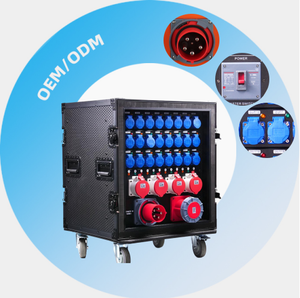
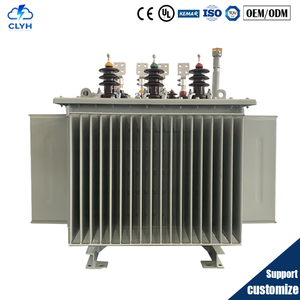
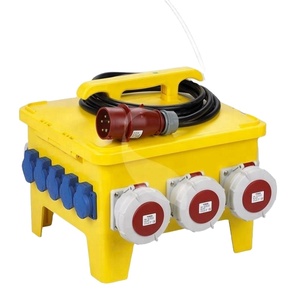
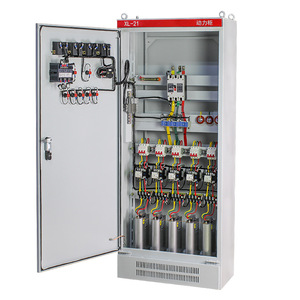

Industrial rectifiers serve as the foundational backbone for high-demand electrical processes, converting high-voltage alternating current (AC) into continuous, controlled direct current (DC). In applications ranging from continuous chemical electrolysis, copper/aluminum electrowinning, and zinc refining to electrical utility substation switchgear tripping, DC motor speed control, and green hydrogen generation, electrical performance margins dictate overall process economics.
Selecting an industrial rectifier manufacturer requires an in-depth technical analysis beyond simple megawatt ratings. Industrial procurement specialists and system integrators must evaluate three critical factors: Total Harmonic Distortion (THD-i), Power Factor (cos φ), and Thermal Reliability under continuous 100% duty cycles. Modern industrial rectifiers have evolved from classic 6-pulse and 12-pulse Thyristor (SCR) configurations into ultra-fast switch-mode power supplies (SMPS) utilizing Silicon Carbide (SiC) and Insulated Gate Bipolar Transistors (IGBT) with Active Front End (AFE) technologies.
Historically, heavy industrial facilities relied on line-commutated Thyristor rectifiers due to their exceptional current capacity (up to 100kA). However, classic SCR systems exhibit low power factors at phase-angle throttled outputs and inject severe low-order harmonics (5th, 7th, 11th) back into the utility grid, necessitating bulky passive filter banks.
Conversely, modern High-Frequency Switch-Mode Rectifiers (HFSMR) leverage pulse-width modulation (PWM) operating at frequencies between 20 kHz and 100 kHz. This high-frequency switching minimizes transformer core dimensions, improves dynamic response to dynamic step-load changes to under 1 millisecond, and maintains a near-unity power factor (>0.98) across the entire operational range (10% to 100% load).
An authoritative engineering assessment of world leaders in industrial AC-DC power conversion, custom OEM/ODM fabrication, and SCADA-integrated rectifier architecture.
A technical specification breakdown for power system consultants, procurement managers, and electrical engineers.
| Topological Parameter | Thyristor (SCR) Rectifier | High-Frequency IGBT (HFSMR) | Silicon Carbide (SiC) Modular |
|---|---|---|---|
| Typical Conversion Efficiency | 92.0% – 94.5% | 95.0% – 96.5% | 97.5% – 99.1% |
| Input Power Factor (cos φ) | 0.65 – 0.88 (Phase Dependent) | 0.95 – 0.98 | > 0.99 (Active PFC) |
| Total Harmonic Distortion (THD-i) | High (25% – 35% without filter) | Low (< 5% with AFE) | Ultra-Low (< 2.5% IEEE 519) |
| DC Output Ripple Voltage | 3.0% – 5.0% (RMS) | < 0.5% (RMS) | < 0.1% (High Dynamic Response) |
| Footprint & Specific Power | Bulky (Heavy Copper/Iron Core) | Compact (2.5 kW/Liter) | Ultra-Dense (7.5 kW/Liter) |
| Primary Industrial Duty | Heavy Smelting, Mining, Legacy DC | Plating, Water Treatment, Battery | Green H2 Electrolyzers, Data Center DC |
The industrial power conversion market is undergoing a structural transition driven by global decarbonization initiatives, grid compliance mandates (such as IEEE 519 and IEC 61000-3-12), and the rapid expansion of megawatt-scale hydrogen electrolysis facilities. Key future trends include:
Silicon Carbide (SiC) MOSFETs are rapidly replacing traditional Silicon (Si) IGBTs in mid-to-high voltage industrial rectifiers. SiC devices allow switching frequencies up to 5 times faster with 70% lower switching losses. This allows manufacturers to reduce transformer size by up to 60%, drastically shrinking total plant enclosure footprint while operating at elevated ambient temperatures without thermal runaway.
Industrial facility downtime can incur costs exceeding tens of thousands of dollars per hour. Traditional single-block high-power rectifiers create single-point failure risks. Modern procurement specifications increasingly dictate Modular N+1 Rectifier Shelves. If an individual 10kW module experiences a thermal failure, the internal controller instantly isolates the module while remaining units dynamically share the load without interruption to the critical industrial process.
Isolated analog monitoring (4-20mA signals) has been superseded by digital telemetry. Industrial buyers now demand out-of-the-box integration with industrial control networks. Native support for DNP3 outstation (serial/TCP), Modbus RTU/TCP, IEC 61850, and SNMP v3 enables predictive maintenance routines—monitoring electrolytic capacitor aging, fan speeds, ripple currents, and temperature profiles in real time via central SCADA frameworks.
Proton Exchange Membrane (PEM) and Alkaline electrolyzers require massive low-voltage high-current direct current (e.g., 100V DC at 50,000A). The efficiency of the rectifier system directly impacts the cost per kilogram of green hydrogen produced. Next-generation rectifiers feature microsecond response times to absorb fluctuating renewable energy inputs from solar PV and wind farms while maintaining low output ripple to prevent membrane degradation.
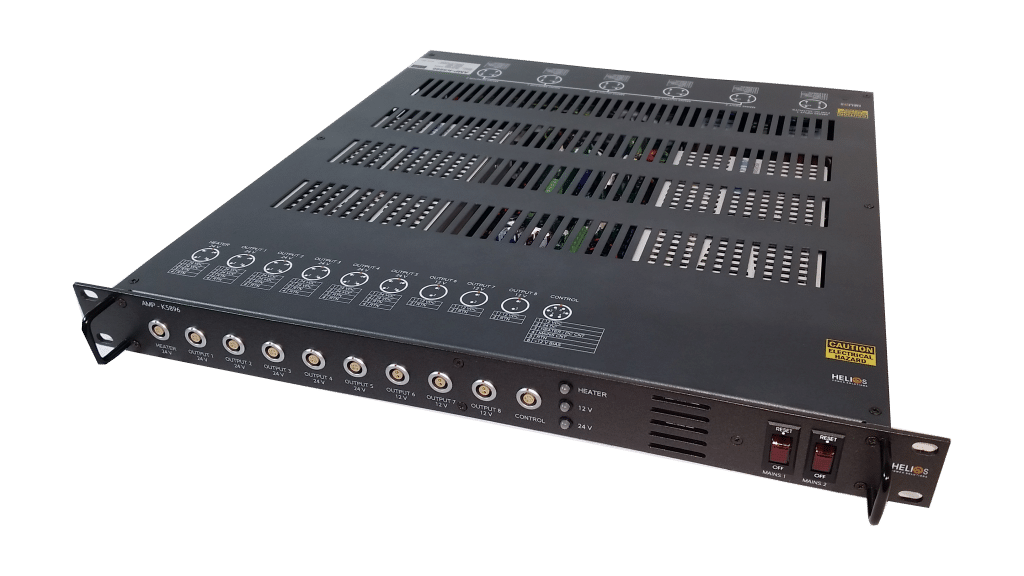
Helios Power Solutions bridges the gap between off-the-shelf industrial rectifiers and stringent site specifications. With over 38 years of power conversion engineering expertise, our solutions protect mission-critical operations where reliability is non-negotiable.
Addressing core technical questions submitted by facility engineers, procurement managers, and plant integrators.
Send your voltage, current, load profile, ambient, and SCADA requirements directly to our senior power engineering team.