
Explore our flagship factory-direct engineered equipment, certified under ISO 9001:2015 standards for utility substations, telecommunications hubs, industrial automation, and rugged field platforms.
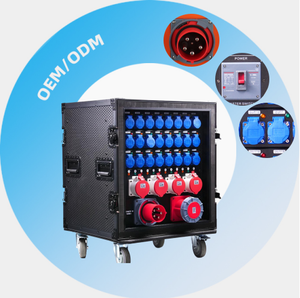
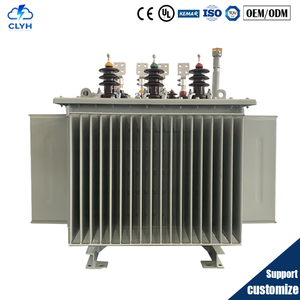
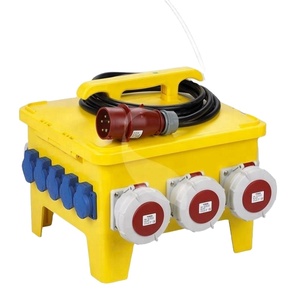
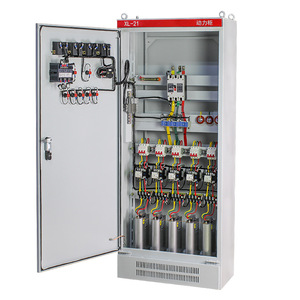


A rigorous evaluation of manufacturing workflows, power density parameters, galvanic isolation, and SCADA integration requirements for enterprise buyers.
In modern critical infrastructure—spanning electrical substations, telecommunications backbones, defense installations, and continuous process manufacturing—the reliability of DC/AC power conversion is paramount. Selecting the right OEM/ODM power inverters factory requires moving far beyond basic nominal voltage and current ratings. Industrial buyers must evaluate true sine wave distortion metrics, thermal derating parameters under harsh ambient stress, electromagnetic compatibility (EMC), and hardware-level protocol compliance for remote SCADA integration.
Original Equipment Manufacturers (OEM) and Original Design Manufacturers (ODM) playing in the enterprise power electronics space are governed by strict regulatory and performance benchmarks. An industrial-grade inverter does not merely invert direct current into alternating current; it provides absolute electrical isolation, surge suppression, precise frequency regulation (50/60Hz ±0.05%), and seamless transfer capabilities when grid power fluctuates or fails.
Industrial OEM factories prioritize pure sine wave output with Total Harmonic Distortion (THD) strictly engineered under 2% for linear loads and under 3% for complex non-linear industrial loads. This prevents overheating in sensitive motors, transformers, and medical switchgear.
Depending on application constraints, top-tier factories manufacture both heavy-duty low-frequency inverter systems equipped with copper-wound toroidal isolation transformers for high surge handling, and high-frequency transformerless topologies for compact 1U/2U rack-mount spatial efficiency.
Advanced ODM inverter platforms natively support DNP3 (serial & TCP outstation), Modbus RTU/TCP, and SNMP v3 traps alongside dry volt-free alarm contacts. This ensures real-time telemetry streaming into centralized energy management control rooms.
Built upon robust ISO 9001:2015 quality frameworks, our global design and manufacturing hubs deliver tailored DC & AC power infrastructure across Australia, New Zealand, Asia, and the Middle East.
More than 50% of the systems shipped from our manufacturing facilities are custom engineered to precise client specifications. When standard catalog products fail to meet complex site constraints—such as extreme ambient operating temperatures (-40°C to +70°C), non-standard DC input voltages (110VDC, 125VDC, 220VDC), or unique seismic/vibration compliance—our engineering teams handle full electrical re-rating, mechanical enclosure redesign, and rigorous factory acceptance testing (FAT).
Asset owners who standardise their industrial inverter, charger, and DC UPS platforms with our team benefit from prioritized technical engineering response, dedicated local stock reservation for critical replacement modules, documented obsolescence roadmaps, and scheduled field battery capacity testing. We ensure critical infrastructure assets remain fully operational across 15-to-25-year operational lifecycles.
Market shifts, supply chain resilience, and decarbonization mandates are changing how EPC contractors and utility procurement officers evaluate OEM/ODM manufacturing partners.
As microgrids, utility-scale solar, battery energy storage systems (BESS), and electrification of industrial processes continue to expand, the demand for high-capacity industrial power inverters is surging. Procurement directors are shifting from transactional purchasing toward strategic ODM joint-development models to secure guaranteed supply, localized support, and tailored hardware features.
OEM power inverter factories are transitioning from legacy Silicon IGBTs to Silicon Carbide (SiC) MOSFETs and Gallium Nitride (GaN) switching devices. Procurement teams are specifying SiC-based inverters due to their superior thermal conductivity, higher switching speeds (reducing internal magnetics size by up to 40%), and operational efficiencies exceeding 98.5%.
Traditional grid-following inverters rely on a stable external AC voltage vector. Future-proof procurement guidelines now require OEM factories to supply grid-forming inverters. These advanced systems establish an independent voltage source, regulating frequency and synthesizing virtual inertia to maintain stability in weak grid or islanded microgrid applications.
To eliminate single points of failure, industrial clients are moving away from monolithic high-power inverters. Procurement tenders increasingly specify modular 19-inch rack-mount inverter systems operating in N+1 or N+2 parallel configurations, allowing maintenance technicians to hot-swap damaged power modules without interrupting the critical AC output bus.
How cutting-edge research in digital control loops, bidirectional power flow, and predictive thermal modeling is shaping next-generation OEM/ODM factory production lines.
Next-generation industrial inverters are evolving into multi-port bidirectional energy routers. Rather than operating strictly as single-direction DC to AC converters, advanced ODM designs seamlessly manage dual-direction energy flows between high-voltage DC buses (such as 384V/480V battery arrays), renewable DC sources, and local three-phase AC distribution networks. Digital signal processors (DSPs) enable sub-millisecond dynamic switching between charge, discharge, and grid-support modes.
Modern OEM manufacturing lines are integrating IoT telemetric microcontrollers directly onto inverter gate driver boards. By creating a cloud-linked "Digital Twin" of the operating power system, machine learning algorithms analyze high-frequency ripple current, junction temperature cycles, and capacitor ESR (Equivalent Series Resistance) degradation in real time. Maintenance alerts are generated months before a component reaches end-of-life, eliminating catastrophic unannounced downtime.
Use this reference table compiled by senior application engineers to match operational requirements with the ideal power conversion architecture.
| Architecture Type | Primary Topologies | Typical Efficiency | Best Suited Applications | Key OEM Sourcing Considerations |
|---|---|---|---|---|
| Industrial Standalone Inverters | Pure Sine Wave, Low-Frequency Isolated Transformer | 88% - 94% | Substations, heavy motor loads, high ambient industrial plants | Verify surge power capacity (200% for >10s) and copper winding insulation class (Class H). |
| Modular Parallel Inverters | High-Frequency Transformerless 1U/2U Rack Mount | 94% - 97.5% | Telecom central offices, data centers, broadcast control rooms | Ensure dynamic active load-sharing precision (<5% imbalance) and hot-swap backplane durability. |
| Bidirectional BESS Inverters | SiC-Based Dual Active Bridge (DAB) + Active Front End | 97% - 98.8% | Microgrids, battery storage integration, solar hybrid plants | Confirm grid-forming firmware compliance, low THD under battery charge/discharge transitions. |
| DC UPS Integrated Systems | Integrated Rectifier + Charger + Static Transfer Inverter | 91% - 95% | Process automation, emergency safety systems, remote RTUs | Check battery temperature-compensated charging, zero-break transfer time (<2ms). |
Detailed technical answers addressing common engineering queries, customization parameters, and manufacturing compliance guidelines.
Low-frequency power inverters utilize a heavy iron-core or toroidal copper transformer to step up output voltage and provide galvanic isolation. They are built for extreme durability, offering massive surge withstand capacity (handling up to 300% overload for several seconds) to start heavy inductive motor loads, pumps, and compressors. High-frequency inverters use electronic switching circuitry and compact ferrite transformers, resulting in significantly higher power density, lighter weight, and superior efficiency during normal linear operating loads. OEM buyers selecting high-frequency designs must ensure proper electronic surge suppression circuits are specified if inductive loads are present.
Most commercial power inverters are rated at a standard ambient temperature of 25°C. However, in industrial environments like substations or outdoor NEMA/IP enclosures, ambient temperatures inside the cabinet can easily reach 50°C to 65°C. Without thermal derating engineering, power semiconductors (IGBTs/MOSFETs) experience thermal runaway and premature failure. Qualified OEM/ODM factories publish detailed thermal derating curves (e.g., derating power by 2.5% per °C above 45°C) and utilize forced-air convection with redundant variable-speed fans, heat pipes, or conformal-coated aluminum heatsinks to maintain continuous rated duty.
Modern enterprise power systems must communicate seamlessly with centralized SCADA networks, building management systems (BMS), or industrial control systems (ICS). High-quality OEM inverter controllers natively support DNP3 (both serial RS485 and TCP/IP outstations), Modbus RTU/TCP, and SNMP v2c/v3. Additionally, physical volt-free (dry) contacts must be available to trigger hardwired local alarms for severe conditions such as DC Input Low Voltage, Inverter Fault, Over-Temperature, and Static Bypass Engaged.
A full-service ODM power inverter factory provides complete non-standard customized solutions including: custom input DC voltage window adjustments (e.g., 40VDC–60VDC for 48V telecom, or 90VDC–140VDC for 110V substations); tailored output AC voltages (110V/120V/220V/230V/240V/380V/400V at 50Hz, 60Hz, or 400Hz aviation frequency); specialized mechanical enclosures (IP65, IP67 aluminum outdoor boxes, 19-inch rack-mount, or heavy NEMA 4X stainless steel); conformal coating against tropical/corrosive environments; and customized front-panel display branding and software point maps.
Total Harmonic Distortion measures the deviation of an AC output voltage wave from an ideal sine wave. High THD causes harmonic currents to flow back into connected equipment, producing excess heat in transformers, mis-operation of protective relays, electronic noise in communications, and torque pulsation in AC motors. High-tier industrial OEM factories guarantee THD < 2% for linear loads and THD < 3% for complex non-linear loads by utilizing advanced digital pulse-width modulation (PWM) control and multi-stage LC filter circuits.
During a comprehensive Factory Acceptance Test (FAT), clients or third-party inspectors should verify: 1) Dielectric Withstand (Hi-Pot) and Insulation Resistance testing; 2) Full-load thermal run-in test at maximum rated ambient; 3) Transient response test during step load changes (0% to 100% to 0%); 4) THD measurement across full load profile; 5) Dynamic transfer time test between Inverter Mode and Static Bypass Mode; and 6) SCADA protocol point verification using outstation test software.
Send your project load profile, ambient conditions, and required regulatory standards directly to our senior application engineering team.