
In modern industrial automation, utility substations, defense platforms, and data center ecosystems, electrical continuous operation hinges on mission-critical power conversion and distribution hardware. As a premier OEM/ODM Power Electronics Manufacturer & Factory with over 38 years of specialized engineering pedigree, we deliver robust customized solutions ranging from IP67 outdoor distribution boxes and 10kV oil-immersed transformers to smart rack-mount PDUs and redundant DC UPS systems. Built in ISO 9001:2015 certified facilities, our solutions bridge the critical gap between rigorous technical specifications and real-world field resilience.
Explore our factory-direct product series engineered for severe environments, grid-tied automation, high-voltage stepping, and smart telemetry integration.
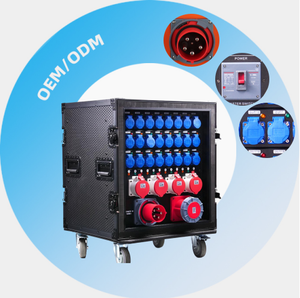
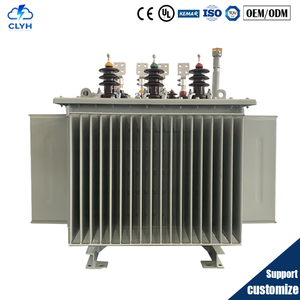
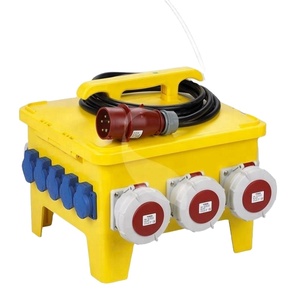
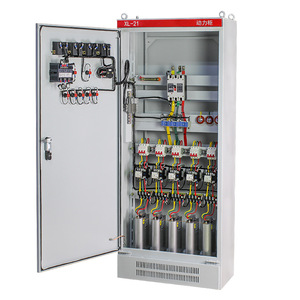

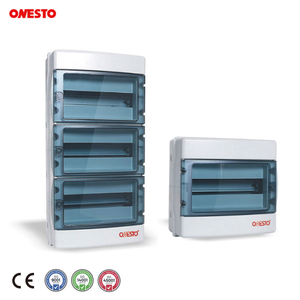
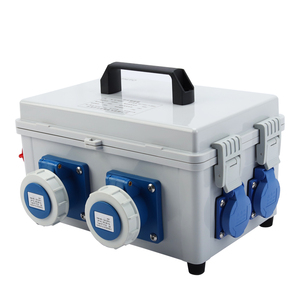

Custom power electronics cannot be treated as commodity off-the-shelf items. When operating environments present ambient temperature extremes (+55°C desert switchrooms or sub-zero rail corridors), high seismic activity, or intense electromagnetic interference, standard datasheets quickly collapse. OEM/ODM engineering requires holistic system design, encompassing electrical topology, thermal dynamics, structural rigidity, and digital telemetry integration.
Over 50% of the equipment leaving our production lines is engineered-to-order. From specialized 1U low-profile military power units to heavy-duty die-cast aluminum alloy IP67 distribution cabinets, our engineering team re-rates voltage, current ripple, insulation distances, and mechanical mounting footprints to match exact physical enclosures.
Modern power distribution demands total remote visibility. We specialize in mapping native protocols into custom controllers, including DNP3 (serial & TCP outstation), Modbus RTU/TCP, SNMP v3 traps, and volt-free alarm relay matrices for seamless integration into legacy or modern utility SCADA platforms.
Backed by regional engineering hubs in Sydney (Australia), Auckland (New Zealand), Singapore, and Dubai (UAE), our clients benefit from localized technical support, spare parts stocking, lifecycle maintenance programs, and strict adherence to IEC 61439, UL 62368-1, CE, and IEEE standards.
Procurement directors and system integrators face a rapidly shifting power landscape driven by grid decarbonization, distributed energy resources (DERs), high-density AI data centers, and stringent efficiency mandates. To maintain competitive advantage, OEM/ODM buyers must align their supply chains with four major technological macro-trends:
Traditional silicon-based Insulated-Gate Bipolar Transistors (IGBTs) and MOSFETs are approaching their physical operational limits. Next-generation OEM/ODM designs are transitioning to Silicon Carbide (SiC) and Gallium Nitride (GaN) switching topologies. SiC devices operate at significantly higher switching frequencies, reducing magnetic component sizes (transformers and inductors) by up to 40% while achieving power conversion efficiencies exceeding 98.5%. In turn, thermal management systems become smaller, allowing high-density IP67 and rack-mount form factors.
Unplanned downtime in critical infrastructure carries catastrophic financial and operational consequences. Strategic procurement is moving away from monolithic power systems toward modular N+1 redundant architectures. In modular DC power plants and smart PDUs, individual rectifier modules can be swapped live under load without interrupting downstream operational equipment. This reduces Mean Time to Repair (MTTR) from hours to minutes and lowers initial capital expenditure by enabling pay-as-you-grow capacity scaling.
With power distribution units (PDUs) and switchgear controllers increasingly connected to enterprise networks, cybersecurity has become a primary procurement metric. Modern OEM/ODM procurement frameworks now require hardware-level root of trust, encrypted SNMP v3 communications, and TLS 1.3 protocol stacks to defend against cyber-physical grid attacks. Furthermore, onboard microcontrollers now execute predictive maintenance algorithms, monitoring real-time electrolytic capacitor ESR degradation and transformer thermal profiles before catastrophic failure occurs.
Legacy Lead-Acid and Valve-Regulated Lead-Acid (VRLA) batteries are rapidly being replaced by Lithium Iron Phosphate (LiFePO4) chemistries due to their superior cycle life (4,000+ cycles vs 500 cycles), higher energy density, and extended operating temperature window. OEM power electronics must feature adaptive multi-stage battery management systems (BMS) capable of communicating via CANbus or RS485 to precisely balance cell voltages and execute active thermal management.
Selecting the correct power distribution or conversion topology requires balancing thermal dissipation, installation environment, SCADA monitoring capabilities, and total cost of ownership (TCO).
| Architecture Type | Primary Applications | Environmental Rating | SCADA Protocol Support | Key Sourcing Trap to Avoid |
|---|---|---|---|---|
| IP67 Aluminum Alloy Power Enclosures | Outdoor switchyards, mining operations, temporary site power | IP67 / NEMA 4X (Submersible dust/water proof) | Dry Contacts, Modbus RTU (Optional) | Failing to account for internal thermal derating when mounted in direct sunlight without solar shielding. |
| 10kV/400V Oil-Immersed Step-Down Transformers | Rural substations, heavy industrial plants, renewable grid tie | IP65 Outdoor (C3-C5 Marine Corrosion Rated) | Pt100 Temp Sensors, Buchholz Relay Alarms | Specifying aluminum windings instead of 100% electrolytic copper, leading to higher I²R core losses and reduced life expectancy. |
| Smart Metered & Switched Rack PDUs | Data centers, telecom shelters, central control rooms | IP20 / Standard 19" Rack Enclosure | RS485 Modbus TCP, SNMP v3, HTTP/HTTPS | Ignoring peak inrush currents from capacitive server power supplies, resulting in relay contact welding. |
| Automatic Transfer Switch (ATS) Cabinets | Backup generator tie-in, hospital utility switchover | IP54 to IP65 Wall-Mount Cabinets | Modbus TCP, DNP3 Outstation, Hardwired Interlocks | Selecting ATS systems without mechanical interlocks alongside electrical contactors, risking backfeeding risks. |
| Modular N+1 DC UPS & Battery Systems | Substation tripping coils, critical radio networks, rail SCADA | IP20 to IP42 Modular Racks | DNP3, Modbus RTU/TCP, SNMP, CANbus BMS | Overlooking battery charging current requirements vs load current when sizing total rectifier output capacity. |
Detailed answers curated by our senior power systems engineering team to resolve common procurement challenges, protocol mismatches, and installation pitfalls.
Specifying an outdoor IP67 enclosure requires analyzing both external ambient threats and internal thermal generation. First, aluminum alloy grade selection is critical: marine-grade die-cast aluminum (such as A380 or Silumin) offers superior structural rigidity and salt-mist corrosion resistance compared to standard sheet metals. Second, thermal management must be calculated: because IP67 sealing prevents free-air ventilation, all internal dissipation from circuit breakers, busbars, and transformers must conduct through the aluminum chassis. Engineers must calculate thermal resistance (K/W) and ensure the internal ambient does not exceed the maximum operational rating of internal breakers (typically 40°C or 50°C before de-rating). Finally, gland plate design, pressure equalization valves (to prevent condensation vacuuming during sudden temperature drops), and silicon gasket resilience under UV exposure must be fully certified under IEC 60529 testing protocols.
While aluminum-wound transformers offer lower upfront capital cost, 100% oxygen-free electrolytic copper windings are essential for critical utility substations and industrial facilities due to three factors: electrical conductivity, mechanical strength under short-circuit conditions, and thermal expansion matching. Copper has a significantly lower electrical resistance than aluminum, directly reducing load losses (I²R losses) and thermal stress. Furthermore, under extreme external short-circuit faults, electromagnetic forces subject windings to intense mechanical stress; copper's higher yield strength prevents mechanical deformation of the coils. Lastly, copper's thermal expansion coefficient closely matches the insulating pressboard materials, minimizing insulation abrasion over a 30-to-40-year transformer operational lifespan. IEC 60076 compliance mandates strict loss limits, where copper consistently outperforms alternative conductor materials.
Smart PDUs act as intelligent telemetry nodes within power distribution networks. OEM/ODM smart PDUs integrate an embedded microprocessor card featuring dual Ethernet network ports and RS485 serial communication interfaces. Standard protocols supported include Modbus TCP/RTU for industrial SCADA platforms and SNMP (v1, v2c, v3) for IT DCIM software suites. The PDU continuously monitors phase-level and outlet-level parameters: RMS voltage, active power (kW), apparent power (kVA), reactive power (kVAR), power factor, and Total Harmonic Distortion (THD). Outlet-level switching is implemented via high-inrush bistable latching relays, allowing operators to execute remote power cycling, schedule load shedding during main power failures, and prevent circuit overload by setting current threshold traps.
The core difference lies in transfer speed, internal switching topology, and application suitability. An Automatic Transfer Switch (ATS) utilizes electromechanical contactors or motorized break-before-make switches to transfer loads between a primary utility source and an auxiliary generator. Typical transfer time for an ATS ranges from 50 milliseconds to several seconds—ideal for emergency backup systems where downstream loads can withstand brief power interruptions or are backed by individual UPS units. Conversely, a Static Transfer Switch (STS) utilizes solid-state silicon-controlled rectifiers (SCRs) to achieve ultra-fast transfer times under 4 to 6 milliseconds (1/4 of an AC cycle). This sub-cycle transfer is completely seamless to sensitive IT servers, switchgear protection relays, and industrial PLCs, preventing system reboots or dropped SCADA signals.
Our ISO 9001:2015 accredited production framework mandates a multi-stage quality control process spanning component selection to final system burn-in. Incoming raw materials undergo rigorous testing, including X-ray fluorescence (XRF) alloy verification and semiconductor parameter curve tracing. Automated Optical Inspection (AOI) and 3D Solder Paste Inspection (SPI) are deployed during PCB assembly. Once fully assembled, every custom power system undergoes 100% high-potential (Hi-Pot) insulation resistance testing, dielectric withstand testing up to 10kV (where applicable), transient surge immunity testing (IEC 61000-4-5), and full-load thermal burn-in inside environmental test chambers ranging from -40°C to +75°C. Factory Acceptance Testing (FAT) reports, as-built wiring diagrams, and protocol conformance logs are supplied with every dispatched shipment.
Whether you require standard IP65 circuit breaker enclosures, high-capacity 10kV substations, or a ground-up custom OEM/ODM power supply design, our global technical hubs are ready to review your single-line diagrams and load profiles.
Get Catalog