
Designed for industrial automation, energy substations, telecom networks, and severe ambient operations. Built for high performance, safety, and long operational lifecycles.
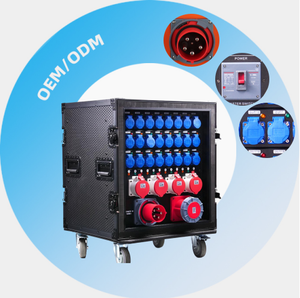
High-grade aluminum alloy construction providing extreme weather resilience, 50/60Hz multi-frequency support, and safety certification for harsh environments.
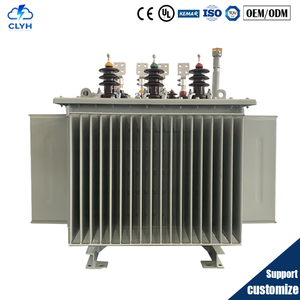
Three-phase oil-immersed transformer designed for rural substations and heavy industrial sites. Engineered with high-purity copper windings for low losses.
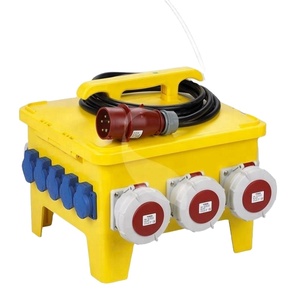
Robust power distribution enclosure optimized for site utility management, sub-circuit isolation, and balanced load delivery across industrial facilities.
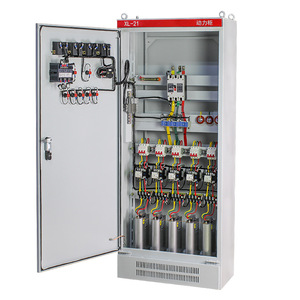
Intelligent emergency power transfer cabinet enabling zero-delay source switching for standby generator backup and secondary electrical networks.
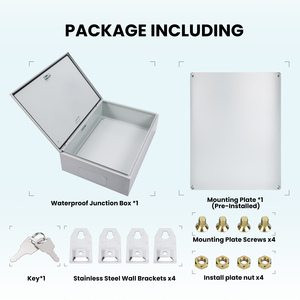
Factory-prewired 3-phase maintenance distribution panel designed for rapid field integration, turnkey testing, and modular circuit isolation.
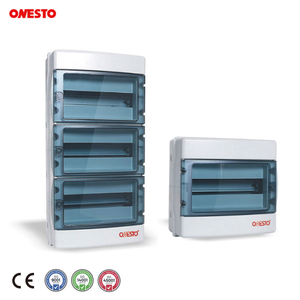
Versatile thermoplastic breaker boxes available from 4-way to 52-way configurations. UV-stabilized and impact-resistant for commercial and outdoor use.
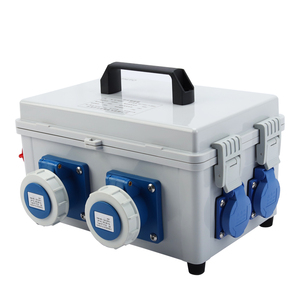
Heavy-duty ABS socket box with key-lock access control, dual 32A/16A Ceeform sockets, and complete ingress protection for temporary site power.
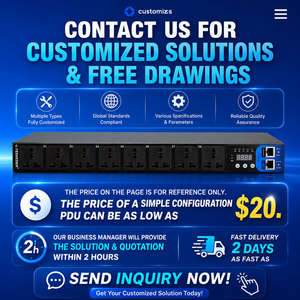
Advanced intelligent server rack power distribution unit with RS485 communication, individual socket telemetry, and centralized remote switching capabilities.
A comprehensive analysis for EPC contractors, engineering consultants, and global procurement directors navigating the transition toward smart, resilient, and standardized power distribution infrastructures.
Historically, electrical engineering teams purchased power components—such as switchgear, switchboards, rectifiers, transformers, and telemetry modules—from disparate vendors, assuming the integration risk in-house. Modern global procurement strategies have shifted dramatically toward end-to-end OEM/ODM custom power cabinet solutions. By entrusting single-source manufacturers with the full thermal modeling, busbar calculation, electrical protection coordination, and factory acceptance testing (FAT), enterprise buyers effectively transfer operational failure risk to certified specialists.
Integrated manufacturing reduces installation schedules by up to 40% on project sites, eliminates component mismatch errors, and guarantees compliance with IEC 61439-1/2 standards for low-voltage switchgear and controlgear assemblies.
Global supply chain disruptions have highlighted the vulnerabilities of relying on unverified single-region suppliers for critical electrical infrastructure. Modern procurement managers now prioritize OEM/ODM manufacturing partners that maintain multi-regional technical engineering hubs. Operating strategic service facilities across Australia, New Zealand, Singapore, and Dubai enables seamless local site reviews, rapid spare parts deployment, and compliance verification under regional grid regulations.
The matrix below outlines the operational shift between traditional localized cabinet assembly and strategic white-label OEM/ODM manufacturing partnerships.
| Evaluation Metric | Legacy Component Sourcing | Modern OEM/ODM Power Cabinet Engineering |
|---|---|---|
| Engineering Risk | High internal engineering liability for system integration | Transferred to manufacturer with certified FAT validation |
| SCADA & Telemetry Integration | Manual mapping of discrete controllers and RTUs | Pre-configured Modbus TCP, DNP3, and SNMP v3 gateways |
| Thermal & Climate Proofing | Generic off-the-shelf enclosures; prone to hot spots | CFD thermal simulation, active HVAC, IP65/IP67 rated enclosures |
| Compliance & Certification | Component-level certifications only | Full assembly accreditation (IEC 61439, UL 891, CE, ISO 9001) |
| Lifecycle Spares Availability | Fragmented vendor lifecycles and early component obsolescence | 15–25 year guaranteed platform support and drop-in replacements |
Industrial power cabinets are transforming from static junction boxes into active, intelligent nodes of the smart grid matrix.
Modern power distribution cabinets integrate microprocessors supporting DNP3 outstation, Modbus RTU/TCP, and SNMP protocols. Real-time telemetry tracks phase voltage, harmonic distortion, busbar temperatures, and breaker contact wear to enable predictive maintenance before catastrophic outages occur.
Industrial installations in coastal, desert, or tropical mining areas require specialized enclosure protection. OEM trends focus on marine-grade C5-M anti-corrosion coatings, dual-wall insulated aluminum construction, integrated thermostatic peltier cooling, and IP66/IP67 sub-assembly sealing.
Critical process systems increasingly combine AC power distribution with integrated DC UPS systems and lithium battery storage within a single enclosure footprint. This eliminates separate battery rooms, guarantees seamless zero-millisecond power changeover, and optimizes floor space.
Internal arc containment and passive arc diversion channels protect operating personnel from severe faults. OEM cabinets incorporate busbar insulation barriers, automated shutter mechanisms, and optical arc sensing relays for ultra-fast fault clearance under 10 milliseconds.
To eliminate single points of failure, industrial DC power systems utilize hot-swappable rectifier shelves and parallel-redundant circuit breakers. Maintenance teams can replace active power modules without interrupting downstream switchgear operation.
Leveraging wide-bandgap semiconductors (GaN/SiC) within modular switch-mode power supplies enables custom power cabinets to deliver up to 300% greater power density per rack unit, reducing cabinet weight and freight footprint.
With over 38 years of experience in power engineering, we provide comprehensive design, manufacturing, and global dispatch capabilities tailored precisely to your application requirements.
We do not simply sell standard boxes; we engineer custom operational solutions. Over 50% of our delivered cabinets are built to custom client specifications. Our dedicated power systems engineering team leads every project through a rigorous five-stage delivery process:
1. System Requirement Analysis: Evaluation of site ambient profile, harmonic loads, hold-up times, load step dynamics, and IP enclosure ingress requirements.
2. Electrical Re-Rating & Thermal Simulation: Custom sizing of copper busbars, short-circuit withstand capabilities, passive/active cooling airflow, and battery temperature compensation curves.
3. Enclosure Fabrication & Hardening: Machining using marine-grade aluminum alloy, 316 stainless steel, or high-impact polycarbonates with conformal-coated PCB assemblies.
4. Protocol & Telemetry Integration: Full mapping of SCADA telemetry points (DNP3 outstation test bench validation, Modbus TCP register verification, dry contact alarm wiring).
5. Factory Acceptance Testing (FAT): Client or third-party witnessed testing including dielectric insulation tests, full load thermal runs, dynamic step response, and emergency changeover simulations.
Clear, definitive answers to common inquiries regarding compliance, custom design limits, delivery cycles, and SCADA integration.
An integrated DC UPS cabinet combines an AC/DC switch-mode rectifier, a microprocessor-controlled multi-stage battery charger, and an instantaneous static transfer circuit within a single monitored enclosure. In the event of an AC utility failure, the DC load experiences zero transfer interruption. Conversely, a standalone battery charger is designed specifically to manage battery health (float, boost, temperature-compensated charging) and typically feeds a separate distribution board. High-reliability power stations and substations often specify dedicated charger/battery/distribution boards, whereas remote OEM applications prefer integrated DC UPS enclosures.
Yes. More than half of our total output is engineered to custom client specifications. We handle electrical re-rating, custom voltage outputs (ranging from 12VDC up to 10kV high-voltage distribution), specialized relay protection schemes, custom physical dimensions, seismic-hardened frames, and marine C5 coating finishes. Every custom cabinet is delivered with a complete as-built schematic drawing set and test certificate.
Our intelligent power cabinet controllers support native DNP3 (serial and TCP outstation configurations), Modbus RTU/TCP, SNMP v1/v2c/v3, and configurable volt-free dry alarm contacts. Protocol mapping is pre-tested on factory test benches against outstation simulators prior to dispatch to ensure seamless integration into existing client SCADA or EMS systems.
Our manufacturing and assembly processes comply with ISO 9001:2015 Quality Management Systems. Products are engineered to meet international safety and performance standards including IEC 61439-1/2 (low-voltage switchgear and controlgear), IEC 60950/62368, UL 891, CE, and IP54 to IP67 ingress protection standards depending on specified enclosure materials.
Thermal management is executed using computational fluid dynamics (CFD) modeling during the design phase. Depending on the installation environment (e.g., desert ambient up to 55°C), we employ sunshades, double-wall insulated enclosures, internal forced-air ducting, peltier thermo-electric coolers, or industrial cabinet air conditioners. Components are derated to operate safely within their thermal envelope without sacrificing reliability.
Standard catalog variants ship within 1 to 2 weeks. Custom OEM/ODM designs typically take 3 to 4 weeks for initial mechanical/electrical engineering approval and 6 to 8 weeks for production, testing, and FAT completion. Fast-track production options are available under our Helios Priority engineering program for critical infrastructure emergency replacements.
Yes. We routinely host client engineering teams or third-party inspection agencies (such as Bureau Veritas, SGS, or TÜV) at our regional manufacturing hubs in Australia, New Zealand, Singapore, and Dubai. We provide full live load test benches, environmental chamber testing, dynamic isolation testing, and high-potential dielectric test procedures.
We design industrial power systems intended for long 15 to 25 year operational lifecycles. We maintain documented inventory for legacy rectifiers, controllers, and switchgear components. When a sub-component reaches end-of-life status, we provide formal obsolescence notices along with engineered drop-in replacement kits to ensure uninterrupted asset operation.
Need a tailored power distribution cabinet, ATS control panel, or SCADA-integrated DC plant? Submit your load profiles, input/output requirements, and ambient specs to our engineering team today.