
Factory-direct OEM/ODM marine generators, low-frequency pure sine wave inverters, and outboard engines built for demanding saltwater environments.
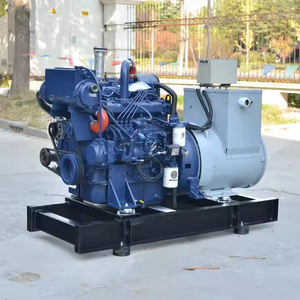
Powered by Weichai marine diesel engine with ISO9001 CE certification. Features automatic start-stop, digital auto-transfer monitoring, and dual-circuit heat exchanger cooling.
Send an Inquiry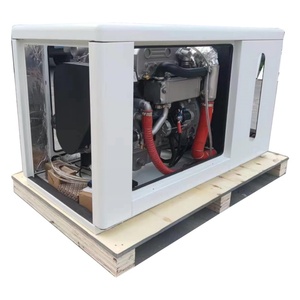
Compact, auto-start remote portable generator engineered for shipboard installation. Supports combined sea-water and air-cooling configurations for high reliability in small craft.
Send an Inquiry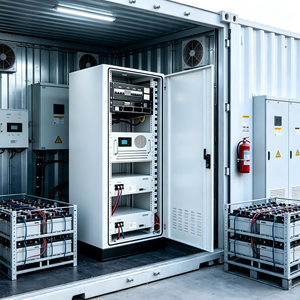
Heavy-duty isolation transformer off-grid inverter tailored for luxury yachts, commercial boats, and solar power integration. Robust surge capacity for inductive marine loads.
Send an Inquiry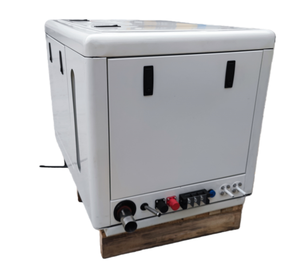
Integrated sea-salt water-cooled diesel generator unit with remote digital controls. Designed for low noise, minimal vibration, and continuous operational autonomy at sea.
Send an Inquiry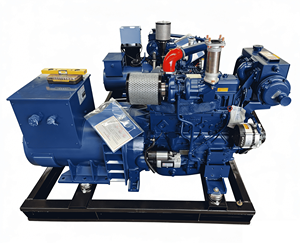
Engineered for high humidity, salt spray, and extreme tilt angles. Delivers strong transient response, tight voltage regulation, and certified compliance with international maritime standards.
Send an Inquiry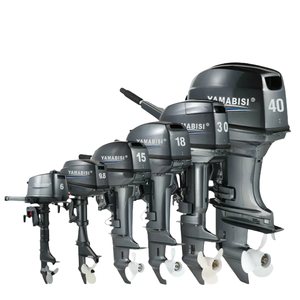
Two-stroke gasoline outboard engine with electric start and long shaft configuration. Engineered for high-thrust commercial workboats, patrol craft, and utility vessels.
Send an Inquiry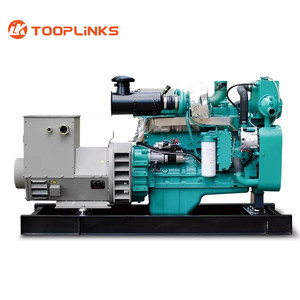
Commercial-grade power generation plant for cargo vessels, tugboats, and offshore platforms. High torque output, low fuel consumption curve, and remote SCADA monitoring ready.
Send an Inquiry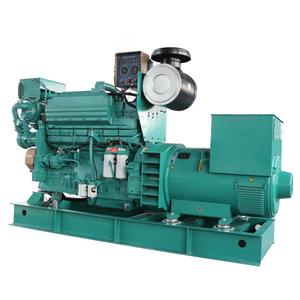
Heavy-duty marine power supply unit delivering stable AC/DC grid supply for large-scale maritime infrastructure, hybrid propulsion integration, and deep-sea auxiliary grids.
Send an InquiryIn the maritime industry, off-the-shelf power equipment frequently fails to meet specific vessel constraints, ambient temperature derating, or classification society mandates. As an experienced OEM/ODM marine power factory, we bridge the gap between technical datasheets and real-world sea conditions.
Our manufacturing workflow is certified under ISO 9001:2015 Quality Management Systems, ensuring end-to-end component traceability, precision machining, anti-corrosion surface treatment, and thorough bench testing prior to dispatch.
An executive analysis for naval architects, shipyard procurement directors, and commercial vessel operators navigating energy transitions.
Global shipyards are rapidly transitioning from traditional AC distribution to centralized DC grid systems. Integrating variable-speed diesel gensets with lithium battery banks (LiFePO4) allows generators to run at optimal fuel efficiency points, reducing operational emissions by up to 28% and drastically cutting maintenance intervals.
Environmental regulations in Emission Control Areas (ECAs) demand mandatory Selective Catalytic Reduction (SCR) systems and closed-crankcase ventilation. OEM suppliers must engineer compact genset footprints that accommodate exhaust gas treatment without compromising maintenance access or hull displacement limits.
Modern marine power procurement prioritizes gensets equipped with edge-computing telemetry. Real-time logging of oil pressure, coolant temperature delta, alternator winding heat, and fuel consumption rates enables predictive maintenance alerts via satellite links, eliminating catastrophic offshore breakdowns.
Selecting the optimal power system topology based on vessel operational profile, duty cycle, and electrical isolation criteria.
| System Architecture | Primary Application | Key Operational Advantages | OEM Customization Factors |
|---|---|---|---|
| Open / Silent Frame Diesel Gensets (5kW – 30kW) | Yachts, Sailboats, Small Workboats, Standby Power | Compact footprint, auto-start capability, integrated sea-water heat exchanger. | Soundproof acoustic canopy design, custom exhaust mixing elbow angle, remote control panel wire harness length. |
| Heavy-Duty Commercial Gensets (120kW – 440kW) | Tugboats, Cargo Ships, Offshore Supply Vessels (OSV) | High continuous load rating, dual-circuit cooling, heavy flywheel for load stability. | Class approval (ABS, DNV, BV, CCS), parallel operation control modules, motorized circuit breakers. |
| Low-Frequency Inverters w/ Isolation Transformers | Luxury Motor Yachts, Live-aboard Craft, Solar Marine Grids | Galvanic isolation prevents hull corrosion, ultra-clean pure sine wave output, high surge capability. | Custom DC input range (24V/48V/96V), conformal coating thickness, integrated battery charging profiles. |
| Two-Stroke Heavy-Duty Outboard Motors | Inflatable RIBs, Emergency Lifeboats, Coastal Fishing Boats | High power-to-weight ratio, simple mechanical reliability, rapid repairability in remote areas. | Shaft length (Short/Long/Ultra-Long), electric/manual dual start, heavy-duty commercial gear case. |

Marine power engineering is undergoing a fundamental revolution focused on fuel versatility, thermal efficiency, and electromagnetic compatibility (EMC).
Key technical innovations adopted across our manufacturing facilities include:
Answers to critical questions asked by marine engineers, procurement agents, and shipyard technical directors.
Continuous-duty marine generators are rated to operate at 70%–80% constant load for thousands of hours annually, requiring heavy-duty block castings, larger oil sumps, and dual-stage fuel-water separators. Standby gensets are optimized for short-duration emergency backup, offering higher power density but requiring strict adherence to maximum run-time limits. Additionally, motor starting currents (kVA surge) for air conditioning compressors and desalinator pumps must be factored into continuous sizing to avoid transient voltage dips exceeding 15%.
Galvanic corrosion occurs when stray DC or AC leakage currents pass through a vessel's metallic hull or underwater running gear (propellers, shafts, skin fittings) into the water. A low-frequency inverter equipped with a heavy-duty toroidal isolation transformer creates a completely isolated electrical ground on the secondary side. This prevents direct electrical continuity between shore power/DC battery banks and underwater metals, eliminating electrolysis-induced hull pitting.
We provide three primary custom cooling configurations: 1) CuNi Tube Heat Exchanger Cooling with flexible neoprene raw-water impellers for standard inboard mounting; 2) Keel Cooling / Grid Cooling interfaces for workboats operating in shallow, muddy, or debris-laden waters where sea strainers clog; and 3) Radiator/Air Dual Cooling for deck-mounted gensets or auxiliary emergency power containers.
Yes. Our commercial-grade generators (from 30kW up to 440kW) can be configured with digital auto-synchronizing controllers (DeepSea, ComAp, or SmartGen) and electronic governors. This enables automatic load sharing, dynamic start-stop based on power demand, and seamless N+1 redundancy across multiple generator sets on the vessel's primary power bus.
Every OEM/ODM shipment includes Factory Acceptance Test (FAT) reports, dimensional layout drawings, electrical schematic diagrams, and ISO 9001:2015 quality certificates. Upon request at contract signing, major classification society certificates (such as ABS, DNV, BV, or CCS) can be arranged for engines, alternators, and pressure vessels.
Combining decades of industrial power conversion expertise with agile factory customization for global marine projects.
Work directly with our application engineering team to customize engine mounts, control logic, exhaust silencers, and voltage outputs. Over 50% of our production output is tailored to specific client technical specifications.
All marine gensets undergo 100% full-load bench testing, step-load transient verification, thermal imaging inspection, and sea-water cooling simulation prior to packing in export-grade wooden cases.
Supported by dedicated regional engineering hubs in Australia, New Zealand, Singapore, and Dubai, providing fast spare parts dispatch, technical troubleshooting, and long-term asset maintenance planning.
Need specific generator sizing, electrical schematics, or custom enclosure dimensions? Connect directly with our marine application engineering team.
Send an Inquiry