Custom OEM/ODM CE Certified Shangyi Safety Aluminum Alloy Power Distribution Box
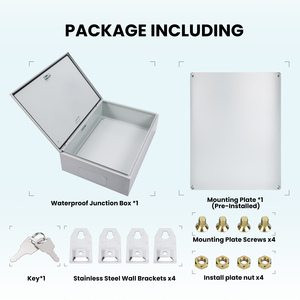
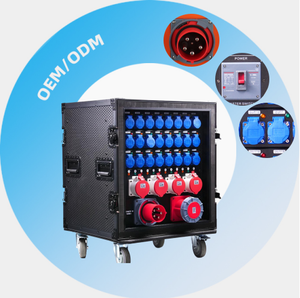
Ruggedized aluminum alloy power distribution system designed for harsh industrial environments, featuring high dielectric isolation and dust-tight IP67 sealing.
Custom engineered OEM/ODM AC equipment designed to meet rigorous IEC, CE, and IEEE safety standards for high-reliability utility, commercial, and industrial facilities.
Ruggedized aluminum alloy power distribution system designed for harsh industrial environments, featuring high dielectric isolation and dust-tight IP67 sealing.
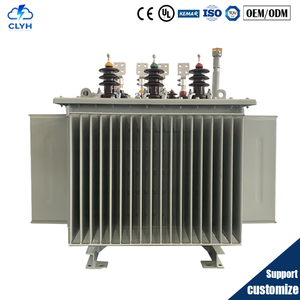
High-efficiency 100kVA step-down transformer built with 100% pure copper windings and mineral oil immersion for optimal cooling in rural and substation power grids.
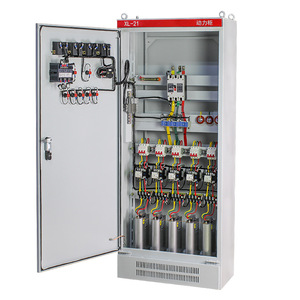
Industrial-grade three-phase distribution panel built with reinforced cold-rolled steel, offering superior short-circuit withstand capabilities and modular circuit protection.
Seamless dual-power ATS control box designed to instantly switch critical electrical loads to auxiliary generator power during mains utility failure.
Complete turnkey distribution assembly configured with high-breaking capacity breakers, internal busbars, metering accessories, and safety lockout handles.
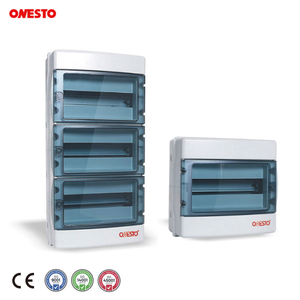
High-impact ABS/Polycarbonate modular circuit breaker enclosures available in 4, 6, 9, 13, 26, 39, and 52-way configurations for clean surface mounting.
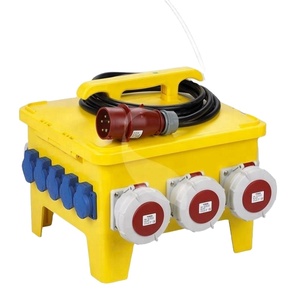
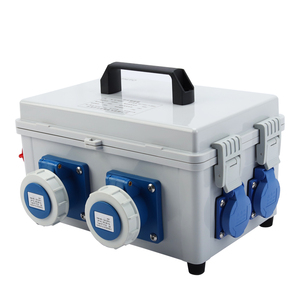
Portable outdoor power distribution unit featuring 4 lockable Ceeform socket outlets with dedicated RCD protection for construction and event sites.
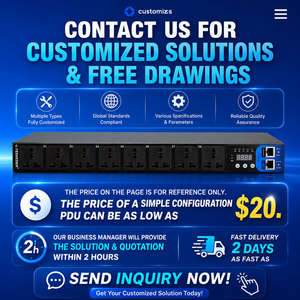
Intelligent data center power distribution unit providing real-time billing-grade current metering, RS485/SNMP daisy-chaining, and remote outlet switching.
38+ Years of Engineering Heritage (Est. 1987) | ISO 9001:2015 Quality Management Certified
As a specialized global manufacturer and exporter of critical AC and DC power equipment, our organization bridges the gap between high-level engineering specifications and physical manufacturing implementation. Custom power distribution demands more than assembly; it requires rigorous thermodynamic modeling, dielectric field analysis, and protocol-level integration verification prior to plant deployment.
Every AC power system—from 110V portable distribution sockets to 10kV step-down substation transformers—is fabricated under structured quality control protocols. Component sourcing undergoes full lot traceability, thermal stress imaging, and strict dielectric voltage withstand testing.
Over 50% of shipped units feature bespoke electrical parameters. Our electrical design team re-rates thermal dissipation curves, busbar fault interrupting capacities, harmonic filters, and voltage tolerances to match actual ambient site conditions across Australia, New Zealand, Asia, and the Middle East.
With direct technical sales hubs located in Rydalmere (Sydney), Auckland, Singapore, and Downtown Dubai, enterprise clients receive immediate access to system integration engineers, local compliance documentation, spare parts inventory, and lifecycle field commissioning services.
Consulting engineers and procurement officers must carefully evaluate the functional boundary between standard commercial AC enclosures and custom engineered industrial power equipment:
| Evaluation Parameter | Standard Commercial Distribution Box | OEM/ODM Engineered Industrial System |
|---|---|---|
| Enclosure Ingress & Hardening | IP41 – IP54 indoor light steel / ABS | IP65 – IP67 marine-grade alloy, flame-retardant ABS, IK10 shock resistant |
| Short-Circuit Withstand (Icw) | 4.5kA – 6kA typical residential limits | 10kA – 50kA industrial busbar rating with MCCB current limiting |
| SCADA / Network Protocol | Unmonitored or basic analog meters | Native Modbus RTU/TCP, DNP3 Outstation, RS485 Daisy-Chain, SNMP Traps |
| Thermal Operability Window | -10°C to +40°C with standard derating | -40°C to +75°C with active thermal modeling & temperature-compensated design |
| Customization Scope | Fixed knockouts and pre-set DIN rails | Tailored busbar geometry, dual-feed ATS interlocks, custom key-lock access |
Strategic sourcing insights for EPC contractors, power utility buyers, and industrial plant managers navigating market transitions over the next decade.
Procurement specifications are shifting rapidly from static passive distribution boards to telemetry-enabled smart power nodes. Modern utility and data center RFQs now strictly demand real-time current, voltage harmonic distortion (THD), neutral current leakage, and thermal sensor feedback integrated directly into central SCADA systems via Modbus TCP or DNP3 protocols.
Global decarbonization policies and tighter IEC/IEEE efficiency tiers are redefining transformer procurement. Buyers are phasing out standard silicon steel laminations in favor of amorphous metal cores and high-grade electrolytic copper windings. This transition drastically cuts no-load iron losses by up to 70%, offering substantial operational expense reductions over 25-year lifecycle windows.
To reduce field installation downtime, industrial buyers are bypassing on-site hardwired switchgear in favor of factory-tested, plug-and-play modular AC distribution units. The demand for IP67 Ceeform socket boxes and pre-wired ATS switchboards with quick-disconnect IP-rated couplers allows rapid deployment in temporary, mining, and remote infrastructure projects.
Procurement teams are prioritizing OEM suppliers who guarantee extended spare parts availability and drop-in physical replacement paths. Enterprise contracts now routinely incorporate lifecycle support agreements, ensuring that internal breaker components, electronic ATS controllers, and metering modules can be upgraded without requiring structural enclosure modifications.
How technical advancements in solid-state switching, material science, and dynamic power quality control are reshaping industrial distribution infrastructure.
Traditional mechanical Automatic Transfer Switches (ATS) exhibit transfer times ranging from 30 to 100 milliseconds. Emerging solid-state hybrid transfer technologies utilize Silicon-Controlled Rectifiers (SCRs) working in tandem with vacuum contactors to achieve sub-4-millisecond transfer times, eliminating phase-disruption resets in sensitive automation systems.
Non-linear loads generated by variable frequency drives (VFDs), renewable inverters, and server power supplies introduce severe voltage harmonics into AC distribution lines. Modern smart distribution boxes are increasingly incorporating integrated active harmonic filters (AHF) to maintain Total Harmonic Distortion (THD) below 5% at the point of common coupling.
Busbar connection failure due to thermal expansion and vibration loosening remains a primary cause of catastrophic electrical fire. Next-generation smart PDUs and 3-phase distribution cabinets embed non-contact optical infrared micro-sensors directly above high-current junction blocks, transmitting automated alerts prior to thermal runaway events.
Engineering and procurement clarifications regarding custom OEM/ODM specifications, international compliance, and site implementation.
Our OEM/ODM manufacturing processes implement modular dielectric separation and creepage distance insulation according to IEC 61439-1/2 and IEEE C37 standards. For lower voltage distribution (110V – 400V), circuit isolation is managed via rated molded-case circuit breakers (MCCB) and residual current devices (RCD). For high-voltage multi-tap distribution up to 10kV, units incorporate vacuum interrupters, gas-insulated or oil-immersed busbar compartments, and safety-interlocked grounding switches to guarantee operator safety across global grid variations.
When issuing an RFQ for a 10kV to 400V step-down distribution transformer, engineers must define:
1) Nominal kVA Capacity: (e.g., 100kVA, 500kVA, 1250kVA).
2) Winding Material: Electrolytic copper vs. aluminum windings (copper delivers superior thermal cycling and lower ohmic losses).
3) Insulation & Cooling: ONAN (Oil Natural Air Natural) mineral oil vs. dry-type cast resin.
4) Vector Group & Impedance Voltage: (e.g., Dyn11 with standard 4% to 6% impedance).
5) Tap Changer Requirement: Off-load tap changer (OCTC) vs. On-load tap changer (OLTC) for dynamic line regulation.
An industrial ATS control cabinet utilizes a solid-state microprocessor logic controller configured to continuously sense 3-phase voltage, frequency balance, and phase rotation on primary utility lines. If a phase drop or voltage sag occurs beyond programmed thresholds, the controller signals a motorized, mechanically interlocked changeover switch. Mechanical interlocking makes simultaneous closure physically impossible, completely preventing hazardous power backfeeding into the utility grid.
For mission-critical enterprise data centers and edge computer rooms, Smart PDUs should specify Class 1 (±1% billing-grade accuracy) real-time power metering covering voltage, current, power factor, and kilowatt-hours (kWh). Network control cards must support dual Ethernet ports for daisy-chaining, supporting SNMP v3, Modbus TCP, and RS485 Serial interfacing with central Data Center Infrastructure Management (DCIM) platforms.
Standard lead time for engineered-to-order AC distribution cabinets and substation transformers ranges from 4 to 8 weeks depending on component specifications. Prior to dispatch, every system undergoes comprehensive Factory Acceptance Testing (FAT) witnessed in-person or via remote digital streaming. FAT documentation includes insulation resistance testing (Megger), primary current injection, high-potential (Hi-Pot) voltage withstand, thermal imaging, and functional SCADA alarm mapping verification.
Provide our application engineering team with your site load profile, enclosure IP requirement, voltage parameters, and compliance target. We deliver complete single-line diagrams (SLD) and commercial proposals within 24–48 hours.