
Full-spectrum OEM/ODM DC rectifiers, step-down transformers, switchgear control units, and smart PDU modules designed for continuous industrial operation.
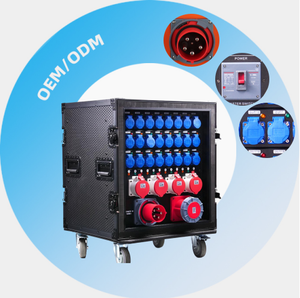
Extreme-environment aluminum enclosure engineered for high-voltage DC rectification inputs (110V-10kV). Features IP67 protection and severe environmental sealing.
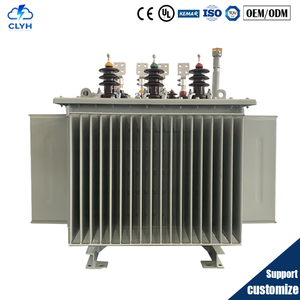
Oil-immersed copper winding transformer optimized for substation rectification plants, rural microgrids, and industrial step-down AC/DC feeding systems.
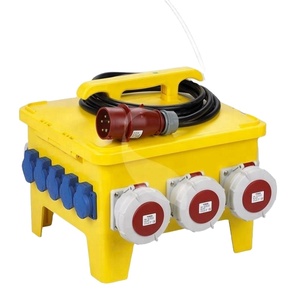
Ruggedized 3-phase AC input distribution system for heavy industrial rectifiers, incorporating thermal circuit breakers and integrated busbar monitoring.
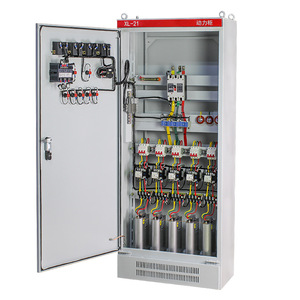
Seamless dual-power ATS controller box designed to maintain constant mains supply to critical DC UPS rectifiers and industrial back-up plants.

Modular service and maintenance power enclosure equipped with standard industrial outlets, isolation switches, and fast-acting surge protection.
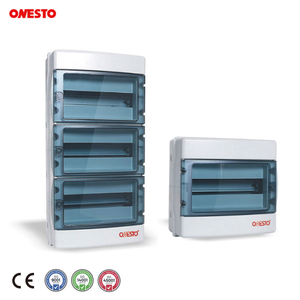
UV-stabilized polycarbonate terminal and breaker enclosure series designed for decentralized sub-distribution in outdoor DC power installations.
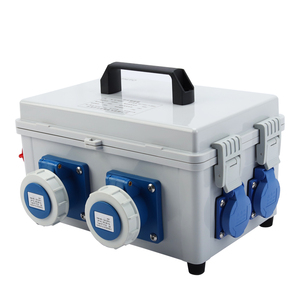
Compact, high-impact ABS socket distribution box featuring key-lock safety mechanisms, 32A/16A current handling, and weatherproof Ceeform couplers.
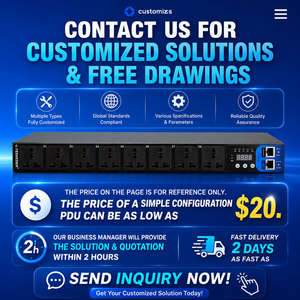
Intelligent power distribution unit featuring individual outlet switching, slave metering, RS485 SCADA telemetry, and horizontal/vertical rack integration.
As a global pioneer in industrial DC power systems, custom rectifiers, and modular energy back-up solutions, we combine high-frequency switch-mode innovation with rugged manufacturing expertise. Over 50% of our shipped rectifiers and power conversion systems are completely custom-engineered to stringent buyer specifications.
Our OEM rectifiers power critical substations, telecommunication networks, defense platforms, rail signaling, and heavy processing plants where unexpected downtime carries massive operational costs.
"The shift from legacy thyristor/SCR phase-controlled rectifiers to high-frequency Switch-Mode Power Supply (SMPS) topologies utilizing Wide Bandgap (SiC/GaN) semiconductors has permanently elevated system efficiency targets above 96.5% while drastically reducing total footprint."
Modern industrial operations require continuous, ripple-free DC power to drive sensitive control electronics, switchgear trip coils, telecommunication arrays, and battery back-up banks. Historically, legacy Silicon Controlled Rectifiers (SCR) operated at low mains frequencies (50/60Hz), requiring bulky isolation transformers, generating severe Total Harmonic Distortion (THDi > 30%), and exhibiting low power factors under light loading.
Utilizing high-frequency pulse-width modulation (PWM) operating between 40kHz and 100kHz allows dramatic reduction in magnetic component volume, delivering high power density in compact 1U/2U rack shelves.
Integrated active PFC stages ensure input Power Factor (&cos;φ) > 0.99 with THDi < 5%, complying with international energy guidelines (IEEE 519 and IEC 61000-3-2) without needing external harmonic filters.
Multi-stage LC output filtration reduces voltage ripple below 0.5% RMS, protecting stationary battery chemistries (VRLA, NiCd, LiFePO4) against thermal buildup caused by AC ripple currents.
Strategic insights for procurement directors, principal electrical engineers, and system integrators specifying industrial DC rectifiers for upcoming capital projects.
Procurement specifications are shifting rapidly away from monolithic single-cabinet rectifiers toward modular N+1 hot-swappable shelf architectures. If a individual rectifier module experiences an internal component failure, the system automatically redistributes the load among active parallel modules without interrupting output voltage. Field replacement takes seconds without powering down critical site loads.
As industrial facilities transition from legacy flooded lead-acid and VRLA batteries to high-energy Lithium Iron Phosphate (LiFePO4) or Nickel-Cadmium (NiCd) storage banks, OEM DC rectifiers must feature programmable, multi-stage digital charging profiles (Float, Boost, Equalize, and Temperature-Compensated Charging) with software-configurable voltage limits.
Modern DC plants no longer function as simple standalone power blocks. Industrial buyers now demand secure SCADA integration featuring SNMP v3 encrypted network cards, native DNP3 outstation firmware for electrical utilities, and real-time edge analytics tracking system health, individual cell voltages, and thermal trends.
A direct engineering comparison comparing legacy phase-controlled architectures against modern switch-mode and modular DC power platforms.
| Evaluation Parameter | Thyristor / SCR Rectifiers | Monolithic Switch-Mode (SMPS) | Modular OEM N+1 Systems |
|---|---|---|---|
| Conversion Efficiency | 80% – 88% | 92% – 94% | 96.5% – 98.0% |
| Power Factor (&cos;φ) | 0.65 – 0.82 (Load dependent) | 0.95 – 0.98 | > 0.99 (Active PFC) |
| System Redundancy | 1+1 Full Cabinet Duplication | 1+1 Dual Rectifier Units | N+1 Modular Hot-Swap |
| MTTR (Mean Time to Repair) | 4 to 12 Hours (Component swap) | 1 to 3 Hours | < 5 Minutes (Hot Plug) |
| Output Voltage Ripple | < 2% RMS (Bulky choke required) | < 1% RMS | < 0.2% RMS (Ultra-Clean) |
| SCADA Comms Protocols | Hardwired Dry Contacts / Basic RS485 | Modbus RTU / Basic Ethernet | DNP3, Modbus TCP, SNMP v3 |
We bridge the gap between rigorous engineering standards and site-specific operating environments.
110V, 125V, and 220V DC battery charger systems engineered for switchgear tripping, protective relay supply, and micro-hydro telemetry.
Get a Quote48V DC modular power systems delivering clean power to transmission towers, fiber nodes, and emergency radio repeater networks.
Get a QuoteEnclosure-hardened DC-DC converters and rectifiers certified for trackside signaling, barrier controls, and rolling stock auxiliary power.
Get a QuoteShock-mounted, high-IP stainless or aluminum distribution systems designed to survive extreme vibration, dust, and corrosive ambient air.
Get a QuoteDirect answers from our senior application engineers on custom DC rectifier selection, factory acceptance, and system design.
A DC UPS incorporates a rectifier stage, battery charging circuit, and an instantaneous, zero-transfer DC switchover circuit within a single integrated cabinet. When AC utility power fails, the connected DC load experiences zero voltage drop. Conversely, a standalone industrial battery charger focuses specifically on managing multi-stage charging profiles for battery banks feeding downstream DC distribution switchboards. Substations generally specify charger + battery bank + distribution board, while remote telemetry cabinets prefer integrated DC UPS assemblies.
Yes. Over 50% of our production volume consists of custom OEM/ODM solutions. We handle custom voltage re-rating (e.g., 12V, 24V, 48V, 110V, 125V, 220V, or custom DC outputs up to high-voltage arrays), tailored current limits, specialized communications mapping (DNP3, Modbus, SNMP), seismic/shock mounting, custom IP-rated cabinets (IP54, IP65, IP67), and conformal coating for high-humidity or saline environments.
For dust-tight and waterproof enclosures (IP65/IP67), conventional forced air cooling using external intake fans is impossible. We engineer low-loss high-efficiency switch-mode stages coupled to heavy anodized aluminum cold-plate heat exchangers, heat-pipe thermal pathways, or external passive cooling fins. This allows full rated power delivery across extended operating ranges (-40°C to +55°C ambient) without compromising cabinet seal integrity.
Our smart monitoring systems support native DNP3 (serial RS232/RS485 and Ethernet TCP/IP outstations), Modbus RTU, Modbus TCP, SNMP v1/v2c/v3 traps, HTTP/HTTPS web interfaces, and configurable volt-free dry relay contacts for legacy RTU systems. Protocol mapping is bench-verified on dedicated test sets prior to Factory Acceptance Testing (FAT).
Under our ISO 9001:2015 quality framework, every manufactured unit undergoes rigorous multi-step testing: high-potential (Hi-Pot) dielectric insulation testing, full thermal burn-in under maximum continuous load, transient surge testing, ripple and dynamic load step analysis, and SCADA alarm verification. Client or consultant-witnessed FAT (Factory Acceptance Testing) is routinely conducted either in-person or via real-time digital video link.
N+1 redundancy eliminates single points of failure. Instead of over-specifying a massive single rectifier cabinet to account for future load growth, asset owners can install a modular shelf and populate it only with the required rectifier modules today. As site power demand expands, additional hot-swappable modules can be plugged in without interrupting site operations, keeping initial capital expenditure low while lowering maintenance MTTR to under 5 minutes.
Because our systems are deployed in long-lifecycle utility and industrial infrastructure, we guarantee spare parts availability, drop-in replacement module compatibility, and engineering support for a minimum of 15 to 20 years. Advance end-of-life (EOL) notifications and seamless upgrade pathways are provided to asset managers participating in our Priority Support Programme.
Send our senior application engineers your project load profile, required input/output voltages, target autonomy, battery chemistry, and enclosure requirements. We will provide a complete system architecture layout and competitive factory quote.