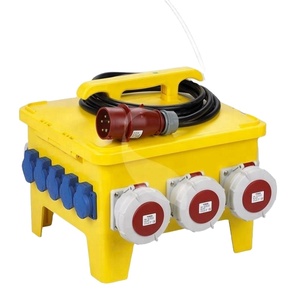
Engineered for critical infrastructure, power utilities, telecommunications, and heavy industrial automation. Standard and OEM/ODM customized configurations built to IEC, CE, and ISO 9001:2015 standards.
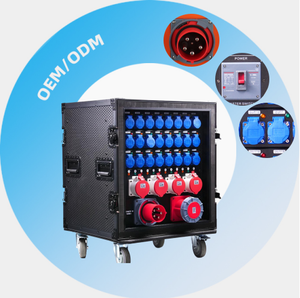
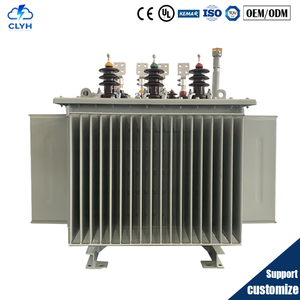
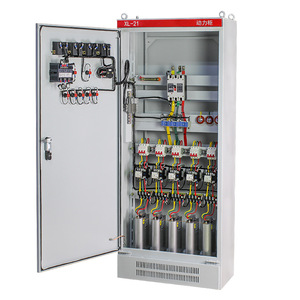
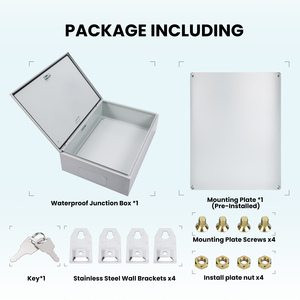
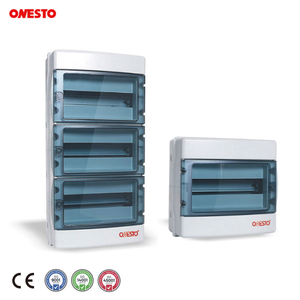
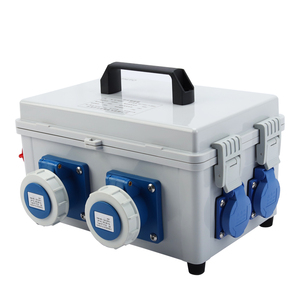
Helios Power Solutions Group engineers, manufactures, and integrates custom industrial battery rectifiers, DC UPS systems, and switchgear distribution plants across global operations.
Understanding the topology, thermal parameters, and ripple dynamics required for continuous-duty DC power backup in mission-critical utility environments.
Industrial battery rectifiers (battery chargers/DC power supplies) serve as the primary lifeline for critical power infrastructure. Unlike off-the-shelf commercial power supplies, industrial battery rectifiers must simultaneously power connected continuous DC loads (such as protective relaying, SCADA outstations, inverter drives, and circuit breaker trip coils) while supplying a precisely regulated charge profile to stationary lead-acid (VRLA, flooded wet cell), Nickel-Cadmium (NiCd), or Lithium Iron Phosphate (LiFePO4) battery banks.
Selecting a premier Custom OEM Battery Rectifiers Manufacturer ensures that system parameters—ranging from input phase tolerances and low-frequency ripple suppression to dynamic thermal management—are engineered specifically around the unique fault currents and operating ambients of your site.
Industrial buyers must choose between traditional SCR Thyristor Phase-Controlled rectifiers and Modern High-Frequency Switchmode Rectifiers (SMPS) based on system duty cycles.
Efficiency >96%, footprint reduced by 60%, N+1 hot-swappable redundancy, low input THD (<5%), ultra-low DC ripple (<0.5% RMS). Ideal for telecom, data centers, and modern digital substations.
Extreme electrical robustness against extreme lightning surges, 25-30 year design life, heavy-duty isolation transformers. Preferred for heavy steel mills, oil & gas refineries, and legacy 110V/220V power generation stations.
Use this reference table compiled by Helios engineering team to match project requirements with optimal power conversion parameters.
| Electrical Parameter | Modular Switchmode (HFR) | SCR Thyristor Rectifier | Custom OEM Customization Options |
|---|---|---|---|
| Nominal DC Output Voltages | 12VDC, 24VDC, 48VDC, 110VDC | 24VDC, 48VDC, 110VDC, 220VDC | Custom voltage taps (e.g., 60V, 125V, 250V, 400V DC) |
| Energy Efficiency Rating | 94.5% – 97.2% (PFC > 0.99) | 85% – 90% (PFC ~ 0.75-0.85) | Active Power Factor Correction (APFC) modules |
| DC Voltage Ripple | < 0.2% RMS (Battery friendly) | < 2% RMS standard (<0.5% with LC filter) | Ultra-low ripple filtering down to < 2mV for telecom voice bands |
| Redundancy & Scalability | N+1, N+2 Hot-Swappable Shelves | Parallel Redundant (Dual Cabinets) | Integrated load distribution breakers & battery disconnects |
| Cooling Method | Forced Air (Speed Controlled Fans) | Natural Convection or Forced Air | Conformal coating, heat-pipe liquid cooling, IP65 sealed heatsinks |
| SCADA Protocols | Modbus TCP, SNMP v3, Web GUI | Modbus RTU, Relay Dry Contacts | DNP3 Outstation, IEC 61850 MMS/GOOSE, RS485/RS232 mapping |
As global power grids transition toward renewable integration, microgrids, and decentralized energy storage, procurement managers must align with next-generation manufacturing technology.
The integration of Silicon Carbide (SiC) and Gallium Nitride (GaN) power switches into OEM rectifiers allows switching frequencies to exceed 100 kHz. This reduces transformer coil sizes, cuts thermal dissipation losses by 40%, and enables ultra-compact 1U rack-mount rectifiers capable of delivering high power densities without sacrificing reliability.
Legacy chargers built strictly for VRLA lead-acid are fast becoming obsolete. Future-proof procurement dictates rectifiers equipped with dynamic software profile loading. OEM manufacturers are implementing advanced BMS (Battery Management System) CAN-bus handshake protocols to support safe high-rate charging of Lithium Iron Phosphate (LFP) and emerging solid-state battery banks.
Modern battery rectifiers are shifting from passive power devices to edge-computing nodes. By continuously measuring internal DC impedance, electrolytic capacitor ESR (Equivalent Series Resistance), thermal stress indices, and AC ripple noise, integrated AI firmware alerts asset managers to impending battery or capacitor degradation weeks before a catastrophic fault occurs.
Over 50% of the DC power systems shipped by Helios Power Solutions Group are engineered to precise client specifications. When standard off-the-shelf datasheets fail to accommodate real-world site constraints—such as extreme tropical heat, high altitude derating, high seismic zones, or non-standard SCADA interfaces—our engineering team closes the gap.
Every custom battery rectifier chassis, circuit breaker cabinet, and distribution transformer leaves our facilities with complete end-to-end documentation, test reports, schematic sets, and guaranteed long-term spare parts availability.
Get a QuoteClear technical answers to help electrical designers, procurement teams, and plant managers make informed sourcing decisions.
An industrial DC UPS combines a precision rectifier, a multi-stage battery charger, and a seamless, zero-break static changeover circuit within a unified enclosure. When AC mains power fails, the connected DC loads continue drawing uninterrupted power from the battery bank without millisecond transfer delays. In contrast, a standalone industrial battery charger is primarily optimized for maintaining battery health (float/boost modes) and typically feeds a separate DC distribution board. Substation switchgear and emergency trip circuits usually specify an integrated DC UPS or a charger + battery + distribution configuration.
Custom OEM manufacturers engineering industrial rectifiers analyze the site profile—such as input AC swings (+/-20%), ambient operating temperatures (-20°C to +55°C), and humidity levels. Custom designs utilize oversized heat sinks, derated semiconductor junction temperatures, tropicalized conformal coating on printed circuit boards, magnetic isolation transformers, and custom-ventilated cabinets with IP54/IP65 ratings to maintain rated power delivery without thermal shutdown.
High AC ripple currents overlaying the DC float voltage cause micro-cycling within lead-acid and NiCd battery plates. This micro-cycling leads to internal battery heating, accelerated grid corrosion, and premature capacity loss (reducing battery service life by up to 50%). A high-quality industrial battery rectifier engineered by Helios limits DC output ripple to less than 0.5% RMS (and < 2mV psophometric for telecom), preserving battery autonomy and protecting sensitive protection relays from logic errors.
Modern OEM battery rectifiers support multi-protocol communications. Systems can be configured with hardware outstation cards supporting DNP3 (Serial RS232/RS485 and TCP/IP), Modbus RTU, Modbus TCP, SNMP v1/v2c/v3, and IEC 61850 MMS messaging. Additionally, hardwired volt-free (dry) relay contacts are provided for critical alarms such as AC Mains Fail, Rectifier Failure, High/Low DC Voltage, Earth Fault, and Battery Disconnected.
Industrial assets like substations and power plants operate on 15- to 30-year design cycles. Helios Power Solutions operates the Helios Priority Programme, ensuring documented component traceability, long-term spares holding, and scheduled battery capacity verification. If a legacy component reaches end-of-life, our engineering team provides backward-compatible drop-in replacement modules or engineered retrofit kits without requiring modifications to site civil cabling.
Send us your load profile, battery chemistries, and communication parameters. Our power conversion specialists will return a complete system architecture and detailed quotation.