
Explore OEM/ODM scalable DC conversion platforms engineered for high reliability, dynamic load allocation, and extreme continuous industrial operation.
The global power electronics landscape is undergoing a structural transition. Legacy monolithic direct current (DC) power supplies—historically constrained by high Mean Time to Repair (MTTR), single points of failure, and rigid output capacity—are being rapidly superseded by hot-swappable Modular DC Architecture. As premier wholesale manufacturers and exporters in China, our engineering teams engineer industrial-grade DC power conversion platforms designed to mitigate operational risk while dramatically lowering Total Cost of Ownership (TCO).
Modern critical infrastructure—spanning electrical power utilities, telecommunications, heavy industrial electrolysis, military deployable platforms, and commercial Ultra-Fast Electric Vehicle (EV) charging networks—demands uninterrupted continuity. Modular DC systems accomplish this via N+1 and N+2 active redundancy. By dividing total load capacity across multiple independent rectifier modules operating in parallel, system failure risk is effectively eliminated. Should an individual power module experience a thermal or electrical fault, the remaining modules dynamically absorb the load increment within microseconds without disturbing output voltage stability.
Utilizing wide-bandgap SiC MOSFETs to push switching frequencies past 100 kHz, achieving up to 96.5% efficiency ratings while halving magnetic component mass.
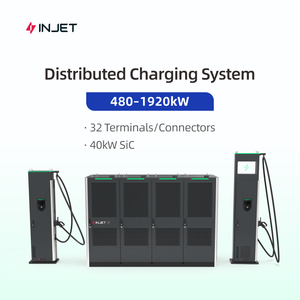
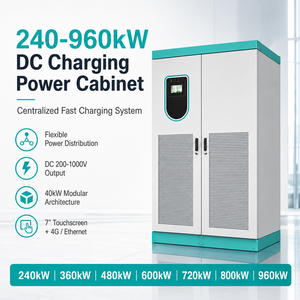
Real-time algorithmic routing of DC power modules to individual charging terminals or process loads based on instantaneous demand profiles.
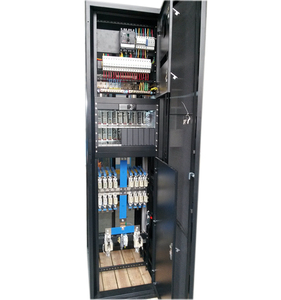
Hot-swappable shelf construction enables non-technical personnel to replace faulty modules live without de-energizing the main DC bus or bringing down operations.
Procurement directors and systems integrators sourcing modular DC equipment from China must align their sourcing criteria with emerging technical standards. The market is moving beyond basic voltage compliance toward complex grid-interactive intelligence, advanced thermal management, and ultra-high voltage envelopes.
Commercial EV architectures, utility battery energy storage system (BESS) interfaces, and heavy industrial plant buses are transitioning from legacy 400V/500V systems to 1000V DC continuously rated outputs. Sourcing modular stacks capable of wide output adjustment ranges (200V–1000V DC) ensures long-term operational relevance.
As single-cabinet outputs surpass 480kW and approach megawatt scale (up to 1920kW), forced-air cooling reaches acoustical and volumetric limits. Procurement mandates are shifting toward liquid-cooled modular stacks (utilizing ethylene glycol or dielectric fluids), reducing noise profiles below 55 dB while protecting internal electronics from corrosive ambient gases and particulates.
Modern industrial buyers require native multi-protocol controller interfaces. Overseas exporters must provide modules supporting DNP3 (serial and TCP outstation), Modbus RTU/TCP, SNMP v3, and OCPP 2.0.1 for seamless telemetry integration into centralized SCADA platforms and energy management systems (EMS).
This practical selection matrix assists utility engineers, project consultants, and technical procurement specialists in specifying optimal modular DC hardware based on application envelope and operational constraints:
| System Architecture | Voltage & Power Range | Cooling Topology | Key SCADA/Comms Protocols | Best Suited Operational Use-Case |
|---|---|---|---|---|
| SiC Supercharging Stack | 200V – 1000V DC | 480kW to 1920kW | Liquid Cooling / Forced Air | OCPP 2.0.1, Modbus TCP, CAN Bus | Ultra-fast EV charging hubs, heavy commercial fleet depots, bus rapid transit. |
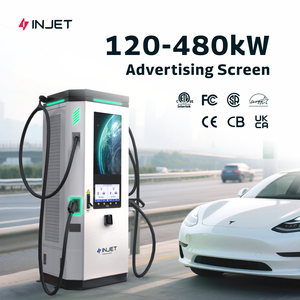
| Split Dynamic Power Stack | 200V – 1000V DC | 240kW to 960kW | High-Velocity Air Ducted | Modbus RTU, Ethernet/IP, OCPP 1.6J | Public fast charging stations with dynamic multi-dispenser load distribution. |
| Industrial 48V DC Telecom Power | 42V – 58V DC | 3kW to 60kW | Convection / Variable Speed Fan | SNMP v3, Modbus RTU, Dry Contacts | Telecom base stations, land mobile radio sites, emergency communication towers. |
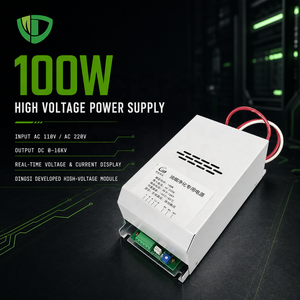
| Heavy Industrial Purification Power | 0V – 120V DC | 10kW to 200kW | Forced Air / Rugged Enclosure | Analog 4-20mA, Modbus TCP | Industrial water purification, electroplating, chemical electrolysis, gas generation. |
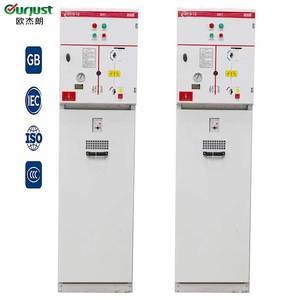
| Utility DC Switchgear Board | 24V, 110V, 220V DC | Custom Ah | Passive Convection (IP40/IP67) | DNP3 Outstation, IEC 61850 | Electrical substations, power plant switchgear tripping/closing energy backup systems. |
Selecting a supply chain partner for critical DC power infrastructure requires rigorous evaluation of engineering credentials, quality management frameworks, and long-term lifecycle support capabilities. Leveraging a manufacturing heritage dating back to 1987, our enterprise operates under a strict ISO 9001:2015 certified Quality Management System governing every phase of project execution—from thermal simulation and schematic design to component sourcing, burn-in testing, and Factory Acceptance Testing (FAT).
Over 50% of shipped systems are engineered to custom customer specifications. We perform exact electrical re-rating for high-altitude site conditions, extreme ambient operating temperatures (-40°C to +65°C), and non-standard industrial input voltages.
Backed by regional engineering hubs and service centers across Australia, New Zealand, Singapore, and Dubai, our buyers receive direct access to qualified power conversion engineers, spares allocation, and rapid response field technical support.
Enclosures are built to withstand severe field environments, featuring optional epoxy resin insulation, IP67 ingress protection, conformal PCB coatings, and high-attenuation EMI/EMP filtering compliance.
Expert insights addressing key commercial, technical, and regulatory procurement queries regarding wholesale modular DC imports from China.
A fixed DC rectifier system uses a single large transformer and rectifier circuit; if any component inside fails, the entire power supply drops offline. A modular DC charging stack consists of multiple self-contained power modules operating in parallel inside a rack enclosure. Modular designs feature hot-swappable replacement (allowing modules to be replaced while energized), sub-15 minute MTTR, dynamic matrix power distribution across outputs, and scalable capacity expansion simply by populating empty module slots as load demand grows.
In traditional static power distribution chargers, a 360kW stack divided between two dispensers locks each plug to a fixed 180kW maximum, even if one vehicle can only accept 50kW. Full Matrix Dynamic Power Allocation uses an intelligent controller to route individual power modules (e.g., 30kW or 40kW modules) dynamically in real time to whichever vehicle demands it. If Vehicle A requests 300kW and Vehicle B requests 60kW, the matrix dynamically assigns 10 modules to Vehicle A and 2 modules to Vehicle B, maximizing energy throughput and dramatically increasing site monetization efficiency.
Our modular DC power systems and charging stacks strictly adhere to international quality standard ISO 9001:2015. Exported products carry full CE certification, IEC 61851-1/23/24 compliance for EV charging safety, CE-EMC Class A/B compliance, and support OCPP 2.0.1 communication standards. Specific industrial enclosures feature IP40, IP54, up to IP67 ingress protection ratings, alongside aluminum alloy construction and epoxy resin insulating switchgear components.
Yes. Our internal engineering team specializes in non-standard communications mapping and protocol adaptation. We deliver controllers pre-configured for DNP3 (serial and TCP outstation), Modbus RTU/TCP, SNMP traps for telecom monitoring, and dry contact alarm relays. Each custom-engineered unit undergoes bench testing against protocol test sets prior to dispatch, and complete point-mapping documentation is provided with as-built drawings.
Standard power modules begin thermal derating once ambient temperatures exceed +50°C. However, our engineered systems offer continuous full-power output up to +55°C ambient by utilizing wide-bandgap Silicon Carbide (SiC) semiconductors and optimized internal ducting. For extreme high-ambient environments (such as Middle Eastern desert sites or unconditioned industrial plants), we engineer custom thermal derating profiles or supply closed-loop liquid cooling systems.
Standard catalogue modular units typically feature production lead times of 2 to 4 weeks, while fully customized or engineered-to-order high-power cabinets require 6 to 8 weeks including Factory Acceptance Testing (FAT). We offer comprehensive export support including seaworthy/airworthy export packaging, customs compliance documentation, sea/air freight booking, and lifetime spare parts availability guarantees to protect asset investments throughout 15- to 25-year design lifecycles.
Consult with our senior application engineers to review load profiles, dynamic matrix requirements, environmental specifications, and wholesale pricing packages.