
As a global authority in power conversion and critical infrastructure protection with 38+ years of field engineering expertise, we manufacture and supply industrial-grade Battery Monitoring Systems (BMS), Distribution Transformers, Smart PDUs, and Power Distribution Enclosures designed to eliminate power downtime across utility substations, data centers, telecom hubs, and industrial automation networks.
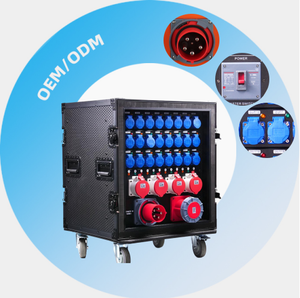
Heavy-duty aluminum alloy construction with IP67 weather-proofing. Designed for high-voltage isolation, outdoor deployment, and harsh industrial environments.
Get a Quote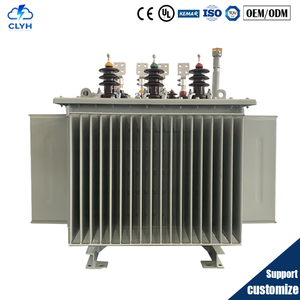
High-efficiency IEC CE certified transformer for rural substations and grid step-down distribution. Optimized copper winding reduces thermal loss.
Get a Quote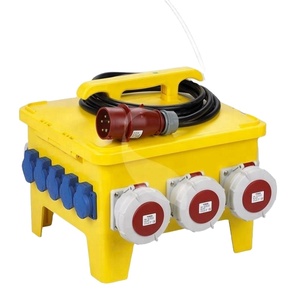
Modular 3-phase power distribution enclosure configured for switchgear tripping protection, breaker management, and station power control.
Get a Quote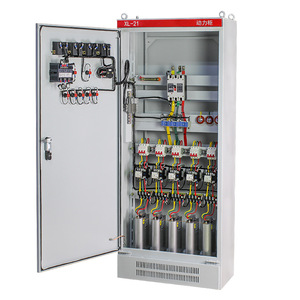
Seamless dual-power switching cabinet with IP54 rating. Protects mission-critical loads by automatically shifting source during grid anomalies.
Get a Quote
Fully compliant industrial maintenance distribution board equipped with internal monitoring accessories, quick-connect terminals, and surge protection.
Get a Quote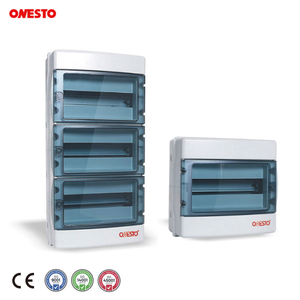
High-impact polycarbonate enclosure series for modular DIN-rail monitoring hardware, battery protection switches, and branch metering modules.
Get a Quote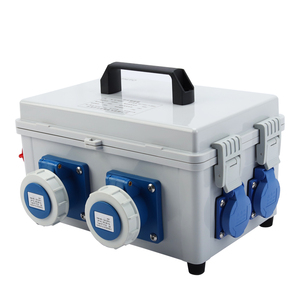
Rugged lockable outdoor power receptacle box with Ceeform sockets, integrated safety interlocks, and local voltage/current digital monitoring panels.
Get a Quote
Director-level smart PDU featuring cell/string sensor input, RS485/Modbus comms, and outlet-level power monitoring for server rooms & battery racks.
Get a QuoteModern critical infrastructure—spanning high-voltage power substations, hyperscale data centers, rail signaling networks, and off-shore oil & gas installations—depends entirely on secondary energy storage (VRLA, AGM, Gel, NiCd, and LiFePO4 battery banks) to ensure continuous operation during grid power loss. However, battery failures remain the single largest cause of unexpected system downtime.
System-level float voltage monitoring fails to detect cell degradation. Our China wholesale battery monitoring modules measure cell-level internal impedance ($R_i$) using AC intermodulation algorithms, alerting engineers to sulfation or drying out months before catastrophic open-circuit failure occurs.
Engineered for high-voltage substations and automated control centers, our BMM systems feature native support for Modbus RTU, Modbus TCP, DNP3 Outstation (Serial & TCP), and SNMP v3. Configurable dry contacts easily trigger local alarm annunciators or switchgear relays.
By measuring cell surface temperature ($\Delta T$) concurrently with string float current, our systems detect thermal runaway conditions in sealed VRLA and lithium banks, automatically issuing shutdown or current-limiting commands before thermal overload occurs.
A technical evaluation guide developed by our senior application engineers to help procurement directors and electrical consultants choose the right system specifications.
| Architecture Type | Measurement Methodology | Ideal Applications | Key Sourcing Advantages |
|---|---|---|---|
| Cell-Level BMS / BMM | Cell Voltage, $R_i$ Impedance, Temperature ($\Delta T$), String Current | Utility Substations, Telecom DC Plant, Hyperscale Data Centers | Pinpoint localized degradation; prevents replacing entire healthy battery banks prematurely. |
| Integrated DC UPS System | Combined Rectifier, Dynamic Charger & Automatic DC Transfer switch | Remote Cabinets, RTUs, Security & Access Control, LMR Sites | Zero changeover break time; unified single-enclosure OEM sourcing reduces cabinet footprint. |
| Modular N+1 DC Power Plant | Hot-swappable Rectifier Shelves + Master Controller Interface | Central Telecom Exchanges, Substation Control Rooms | Scalable power growth, redundancy against component fault, centralized SNMP/DNP3 mapping. |
| Smart Metered PDUs | Branch Circuit Monitoring, RS485 Modbus Slave Metering | Server Racks, Data Center Distribution Cabinets | Granular power consumption visibility, temperature monitoring, remote outlet cycle controls. |

Direct sourcing from specialized China wholesale battery monitoring manufacturers offers immense cost advantages. However, mission-critical installations demand rigorous compliance, verified electrical insulation, and battle-tested quality management.
We combine the cost efficiency of high-capacity China manufacturing with robust international engineering standards backed by ISO 9001:2015 certification.
As the global energy transition accelerates, battery chemistry diversification and smart grid automation are drastically altering procurement standards for industrial battery monitoring and power distribution cabinets.
While Lead-Acid (VRLA/AGM) remains dominant in utility switchgear due to legacy safety standards, data centers and microgrids are rapidly adopting LiFePO4 (Lithium Iron Phosphate) and Sodium-Ion batteries. Procurement managers must specify wholesale battery monitoring sensors capable of dynamically adjusting algorithm parameters (such as SoC/SoH curves and over-charge voltage cutoffs) to handle multi-chemistry fleets seamlessly.
Static threshold alarm systems are being replaced by predictive AI monitoring. Modern BMS hardware incorporates IoT edge processing that tracks internal resistance decay over thousands of charge-discharge cycles. Sourcing managers are prioritizing suppliers that offer IoT-enabled edge gateways capable of pushing real-time analytics to centralized cloud management tools.
With critical power infrastructure increasingly targeted by cyber threats, utility engineers now mandate enhanced security compliance. Battery monitoring data concentrators must support encrypted communication protocols (such as HTTPS, SNMP v3, and TLS-encrypted Modbus TCP/DNP3) aligned with IEC 62443 cyber-security frameworks.
Procurement teams are shifting away from off-the-shelf single-function meters toward integrated custom assemblies. Wholesale buyers now request pre-wired distribution enclosures containing ATS controllers, step-down transformers, and battery monitoring modules pre-assembled inside single IP65 or IP67 housings to drastically cut field installation labor costs.
Over 50% of critical power outages are caused by specification mismatches—such as operating temperatures exceeding standard derating curves, harsh electromagnetic interference (EMI) in high-voltage switchgear rooms, or unmapped SCADA alarm registers.
Our custom engineering team resolves these bottlenecks during the design phase. We re-rate components, add conformal coating for high-humidity/tropical deployment, design shock-mounted enclosures for mobile/rail platforms, and provide complete as-built documentation sets for seamless commissioning.
Clear, definitive answers to common inquiries encountered when specifying, ordering, and integrating wholesale battery monitoring systems and power distribution hardware.
String voltage monitoring only measures the total cumulative voltage across an entire battery bank connected in series. Because individual cell voltages can vary while the overall sum remains normal, a single failing cell (sulfated or high-resistance cell) will go unnoticed until the battery bank is called upon during a power outage.
Cell-level battery monitoring systems (BMS) place individual voltage, temperature, and internal resistance sensors on every cell in the string. This guarantees immediate detection of weak, drying, or over-heated cells, enabling targeted replacement before the entire string fails.
Our advanced battery monitoring modules utilize an AC intermodulation pulse or controlled momentary DC load injection method. By momentarily applying a small, high-frequency test current across the cell terminals and measuring the minute voltage response ($\Delta V / \Delta I$), the internal impedance ($R_i$) is calculated with high precision without disrupting the online float charge or downstream critical loads.
Yes. OEM/ODM customization is a primary core strength of our manufacturing facilities. We provide custom branding, tailored enclosure dimensions, custom IP ratings (IP54 to IP67), specific terminal block layouts, pre-wired circuit breakers, and custom SCADA communication point mapping (Modbus/DNP3) to align precisely with your tender specifications.
Our battery monitoring controllers and smart distribution units natively support RS485 Modbus RTU, Modbus TCP/IP, DNP3 outstation protocol (Serial and Ethernet), SNMP (v1, v2c, v3 for DCIM integration), as well as configurable dry contact alarm outputs for connection to traditional Remote Terminal Units (RTUs).
Standard product configurations carry low MOQs to support initial sample validation. Bulk wholesale lead times typically range from 2 to 4 weeks depending on the degree of enclosure customization, special voltage re-rating requirements, and batch factory acceptance testing (FAT) schedules.
Battery chemical reaction rates double with every 10°C rise in ambient temperature. Our battery chargers and monitoring modules feature automatic temperature compensation. When sensors detect elevated cell temperatures, the system automatically reduces the charger float voltage to prevent overcharging and thermal runaway, extending battery service life by up to 30%.
Whether you need bulk pricing for standard IP67 distribution boxes, high-density smart rack PDUs, or an engineered cell-level battery monitoring system for substation switchgear, our technical engineering team is ready to assist.
Get a Quote