ISO 9001:2015 Certified  |  38+ years of power engineering for critical infrastructure
Global Power Testing & Infrastructure Whitepaper 2025

China Top Load Banks Manufacturers & Custom Power Testing Solutions

An engineering analysis of industrial dummy load technology, switchgear protection, medium-to-high voltage transformer distribution, and high-gain power validation architectures for critical infrastructure.

ISO 9001:2015 Certified IEC & CE Compliance 38+ Years Engineering Legacy DNP3 & SCADA Integrated
High-Performance Equipment Portfolio

Featured Industrial Load Banks & Power Distribution Equipment

Engineered for severe duty cycles, field testing, and power system commissioning. Explore our core lineup of power distribution units, step-down transformers, and automated electrical cabinets.
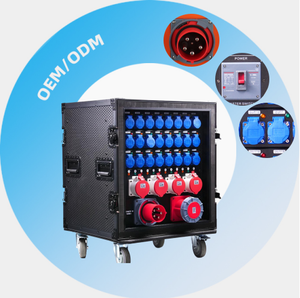
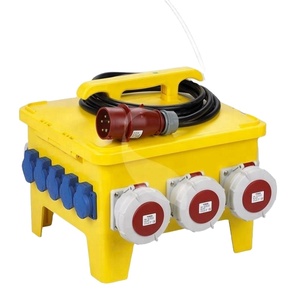
Custom OEM/ODM CE Certified Shangyi Safety Power Distribution
High-durability aluminum alloy enclosure built for harsh industrial environments. Offers IP67 ingress protection, multi-voltage capability (110V to 10kV), and 50/60Hz operational flexibility for temporary load testing setups.
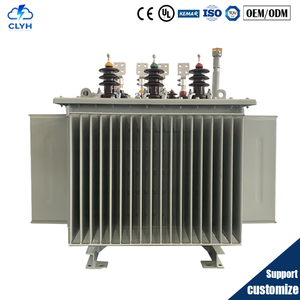
10kV 400V Step Down Distribution Transformer
IEC and CE compliant oil-immersed three-phase distribution transformer. Designed with 100% electrolytic copper windings for high efficiency step-down voltage transformation in rural substations and microgrid load testing.
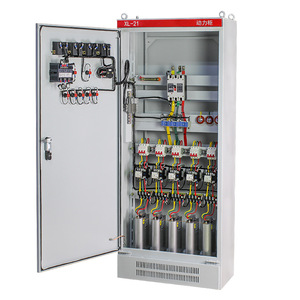
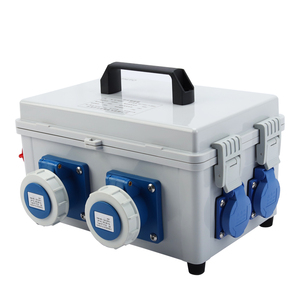
Electrical 3 Phase Power Distribution Box
Heavy-duty 3-phase power distribution enclosure engineered for site commissioning, high-amperage load bank connection, and thermal overload protection during continuous generator stress testing.
Automatic Transfer Switch ATS Control Electric Box
IP54 rated automatic transfer switch control box supporting seamless mains-to-generator changeover. Ideal for automated power redirection during simulated load dump tests and critical facility backup verification.
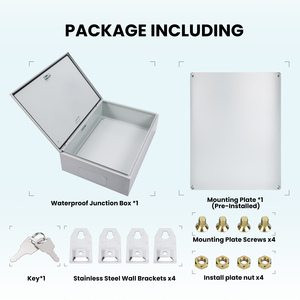
Maintenance Electrical Distribution Box
Industry-compliant complete maintenance power unit. Pre-wired with heavy-duty circuit protection, quick-disconnect terminal lugs, and breaker sets tailored for site maintenance and dummy load testing setups.
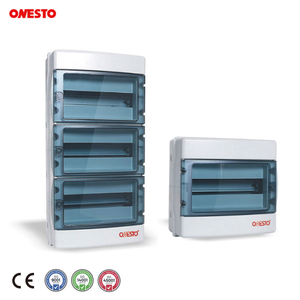
IP65 Plastic Modular Distribution Box
High-impact polycarbonate IP65 breaker boxes available in 4, 6, 9, 13, 26, 39, and 52-way configurations. Built for weather-proof outdoor power branching, remote monitoring taps, and auxiliary control circuitry.
Single Phase Ceeform Power Distribution Box
Rugged ABS outdoor socket distribution center featuring IP67 industrial Ceeform outlets, key-lock security, and internal RCD/MCB protection. Designed for mobile load testing rigs and temporary power setups.
Rack Mount Smart PDU Vertical Horizontal
High-density vertical/horizontal server rack PDU equipped with RS485 Modbus telemetry, individual outlet switching, and telemetry logging for precise load bank monitoring and data hall capacity validation.
Engineering Authority & Manufacturing Excellence

Why Leading Global Energy Operators Partner with Helios & China Manufacturing Centers

Combining over 38 years of power conversion heritage, rigorous ISO 9001:2015 quality control, and advanced OEM/ODM customization capabilities to protect critical infrastructure against electrical failure.

38+
Years Power Engineering
5,000+
Global Projects Delivered
1,000+
Industrial Enterprises
4
Global Regional Hubs

ISO 9001:2015 & Rigorous FAT Testing

Every custom load bank, transformer unit, and distribution box undergoes stringent Factory Acceptance Testing (FAT). We verify thermal derating curves, harmonic distortion suppression, and insulation resistance prior to international dispatch.

Tailored OEM / ODM Customization

More than 50% of shipped systems feature non-standard specifications. From non-standard voltage ranges (110V up to 10kV-35kV) to severe environment hardening (IP67 enclosures, conformal coating, shock-mount frame designs), our engineers adapt to your exact site requirements.

Global SCADA & Protocol Integration

Native support for DNP3 (serial and TCP outstation), Modbus RTU/TCP, and SNMP traps. Remote controllers provide real-time data telemetry into client SCADA platforms, ensuring seamless test execution and automated reporting.

Strategic Procurement Insights

Future Procurement Trends in Industrial Load Banks & Power Testing (2025–2030)

As power grids integrate higher penetration levels of intermittent renewable energy and hyperscale data centers scale past multi-megawatt limits, the demand for sophisticated load testing apparatus has transformed from simple resistive dummy loads to intelligent, grid-interactive testing platforms.

1. Shift Toward High-Voltage (10kV–35kV) Direct Testing

Traditional commissioning required intermediate step-down transformers to bring medium voltage down to 400V for load testing. Next-generation procurement specs increasingly mandate direct medium-voltage (10kV/11kV/33kV) connection load banks. This eliminates transformer losses, reduces cabling complexity on site, and accurately simulates utility-scale fault conditions during factory and site acceptance testing.

2. Digital Twin & Automated Micro-Step Testing

Manual load step switching is being rapidly phased out. Enterprise buyers now require smart load banks equipped with micro-processor controllers that execute pre-programmed test profiles (such as transient step loads, block loading, and thermal saturation curves) while broadcasting real-time data over Modbus TCP or DNP3 to a cloud-based Digital Twin model.

3. Renewable Energy & Battery Energy Storage (BESS) Discharge Testing

With massive expansion in utility battery energy storage systems (BESS), industrial load banks are now specialized for bidirectional DC discharge verification, cell balancing validation, and thermal run-away prevention testing. Modern procurement contracts stipulate combined Resistive-Inductive-Capacitive (RLC) loads capable of simulating leading and lagging power factors (0.8 PF to 1.0 PF).

4. Heat Energy Recovery & Carbon Neutral Sourcing

Top tier Chinese manufacturers are leading the development of thermal-energy-recapturing dummy loads. Instead of venting hundreds of megawatt-hours of heat energy into the atmosphere during 24-hour full-load burn-in tests, heat exchanger modules capture thermal energy for industrial process water or space heating, drastically lowering the net carbon footprint of commissioning activities.

Technological Innovations

Key Technological Trends in China's Load Bank & Distribution Manufacturing Sector

China’s power equipment ecosystem has transitioned from low-cost assembly to world-class engineering innovation. Below is an architectural overview of technological breakthroughs embedded into modern power testing hardware.

Advanced Alloy Heating Element Chemistry

Modern resistive load banks leverage stainless steel sheath elements with chromium-nickel-iron (Cr20Ni80) alloy ribbons sealed inside Magnesium Oxide (MgO) powder. This construction eliminates resistance value drift at elevated temperatures (up to 700°C), guarantees continuous resistance stability within ±2%, and prevents corrosion caused by marine salt spray or humid tropical environments.

Intelligent Forced-Air & Liquid Cooling Solutions

To maintain high power density in compact mobile enclosures (such as 20ft ISO containerized 3MW units), engineering advancements incorporate variable-frequency blower fans with aerodynamically optimized air ducting. Intelligent thermal feedback circuits dynamically adjust fan speed based on element temperatures, minimizing parasitic auxiliary power consumption and noise levels.

Severe Weather Hardening & Enclosure IP Ratings

With outdoor job sites requiring all-weather resilience, structural enclosures are fabricated with heavy-gauge hot-dip galvanized steel or marine-grade aluminum alloys. Sealed electrical control bays carry IP65 to IP67 ingress ratings, protecting delicate PLC modules, contactors, and telemetry sensors from dust ingress and driving rain during field load tests.

Information Gain & Selection Guide

Engineering Comparison Matrix: Selecting the Right Power Testing Architecture

A definitive technical guide prepared by our application engineers to assist procurement managers, consulting engineers, and plant operators in selecting optimal load testing and power distribution hardware.

Architecture Type Primary Target Application Voltage & Capacity Range Core Protection & Features Key Selection Traps to Avoid
Resistive Dummy Load Banks Generator commissioning, prime mover engine burn-in, data center server rack simulation 110V – 10kV AC / DC
10kW to 5MW+
Thermal cutout, airflow detection, over-voltage trip, emergency stop relay Ignoring resistance coefficient thermal drift; under-sizing blower fan auxiliary power supply.
Resistive-Inductive (RLC) Load Banks Substation switchgear testing, marine generator 0.8 PF power factor validation, microgrid testing 400V – 35kV AC
100kVA to 10MVA
Adjustable power factor (0.8 to 1.0), inductive copper reactors, step-loading switches Overlooking phase angle unbalance; neglecting magnetic saturation limits of iron-core inductors.
Oil-Immersed Step-Down Transformers Rural substation distribution, matching high-voltage grid supply with low-voltage load banks 10kV / 400V Three Phase
50kVA to 2500kVA
IEC/CE certified copper windings, Buchholz relay, oil level & temperature indicator Purchasing aluminum winding units for high-surge cyclic load testing without thermal derating margin.
Automatic Transfer Switch (ATS) Cabinets Emergency utility-to-generator switchover, automated failover verification 220V / 380V AC
16A to 1600A
IP54 enclosure, mechanical interlocking, programmable delay timer, SCADA status dry contacts Failing to verify transfer switch breaking capacity under full short-circuit inductive load.
Rack-Mount Smart PDUs Data center server rack distribution, remote branch metering, load bank telemetry monitoring 110V – 415V AC
16A to 63A Single/3-Phase
Director-level RS485 Modbus TCP, individual outlet switching, per-phase kWh metering Selecting un-metered PDUs for load testing where phase current unbalance cannot be detected remotely.
Technical Procurement FAQ

Frequently Asked Questions by B2B Buyers & Electrical Engineers

Clear, authoritative answers to common inquiries regarding certification, custom OEM capabilities, protocol integration, and field deployment.

Q1: What is the primary difference between a purely resistive load bank and a resistive-inductive (RLC) load bank?
A: A purely resistive load bank tests an engine or prime mover at unity power factor (1.0 PF), converting 100% of electrical energy into thermal heat. This validates the kW mechanical output of an engine. In contrast, a resistive-inductive load bank incorporates iron-core reactors to simulate lagging power factors (typically 0.8 PF). This subjects the alternator, voltage regulator (AVR), magnetic circuits, and switchgear to real-world reactive power (kVAR) demands, accurately reproducing real site conditions in data centers and utility substations.
Q2: Can custom voltage and frequency requirements (e.g., 10kV 60Hz or 400V 50Hz) be accommodated on short lead times?
A: Yes. Over 50% of our manufactured units are custom engineered to order. China’s extensive industrial manufacturing supply chain enables fast design turnaround for custom transformer taps, dual-frequency (50/60Hz) dual-voltage switching matrices, and custom aluminum alloy IP67 enclosures. Engineering drawings and wiring schematics are typically finalized within 5 to 7 working days.
Q3: How do intelligent controllers integrate with plant SCADA systems over DNP3 or Modbus?
A: Our digital controllers are equipped with RS485 and Ethernet communication ports. They natively support Modbus RTU, Modbus TCP, and DNP3 outstation protocols. Pre-mapped register address tables allow SCADA operators to remotely initiate load steps, monitor phase-by-phase voltage, current, power factor, frequency, and real-time element temperature, as well as capture alarm event logs without supplementary signal transducers.
Q4: What safety mechanisms protect the load bank during forced-air cooling failure?
A: Safety is engineered at multiple redundant levels. Every load bank features differential air-pressure switches and thermal sensor interlocks directly tied to the main load contactor control circuit. If airflow drops below the safe CFM threshold or if internal temperatures exceed preset limits, the control system instantly sheds all electrical load steps within milliseconds while maintaining fan operation to clear residual heat.
Q5: Why are copper windings preferred over aluminum in step-down distribution transformers?
A: High-grade electrolytic copper windings provide significantly lower electrical resistivity, superior mechanical strength under electromagnetic short-circuit stress, and better thermal expansion characteristics compared to aluminum. For heavy load-testing duties where sudden step-load applications induce high thermal and mechanical shock, copper windings ensure longer asset lifecycle and reduced transformer losses.
Q6: How does ISO 9001:2015 certification impact quality assurance for international shipments?
A: ISO 9001:2015 certification mandates strict component traceability, standardized assembly procedures, and documented Factory Acceptance Testing (FAT). Every unit shipped is accompanied by detailed test certificates, insulation resistance measurements, dielectric withstand verification, and full electrical load performance reports witnessed and signed by quality control engineers.

Request Custom Technical Specifications & Industrial Equipment Catalog

Planning a power commissioning project or looking for certified OEM load bank manufacturing partner in China? Contact our engineering team for detailed CAD drawings, electrical schematics, and custom quotes.