
Designed for critical infrastructure, telecommunications, microgrids, and electric vehicle charging applications requiring maximum efficiency and N+X operational redundancy.
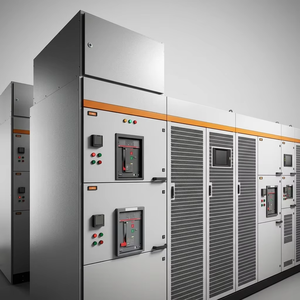
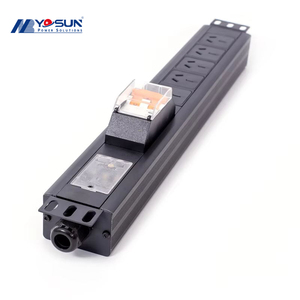
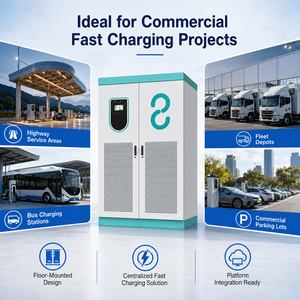
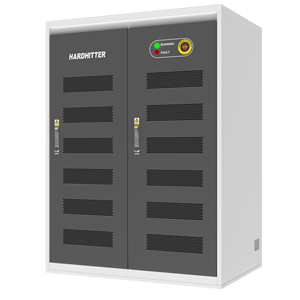
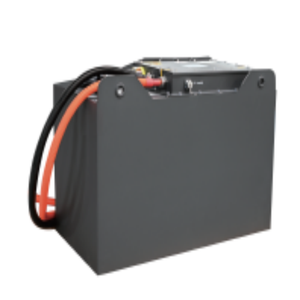
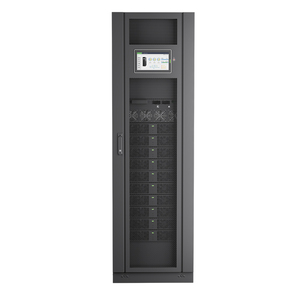
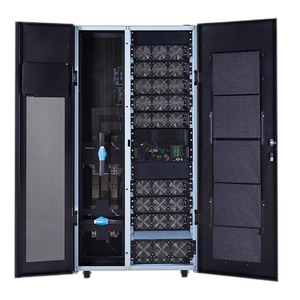
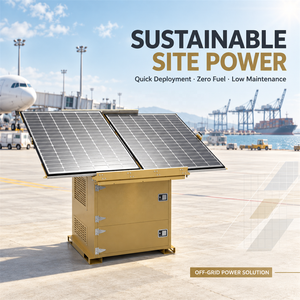
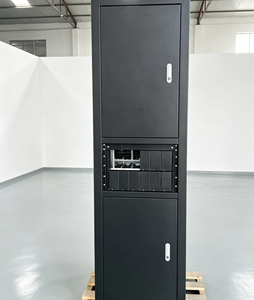
Our modular power conversion systems undergo rigorous testing to ensure faultless continuous operation across high-demand industrial environments.
Analyzing the shift from legacy monolithic transformer-based systems to high-frequency, hot-swappable N+X modular rectifiers and UPS platforms.
In modern mission-critical power engineering, operational continuity is non-negotiable. Legacy power systems relied heavily on monolithic single-block transformers, where a single point of failure (SPOF) inside a power converter could cause catastrophic operational downtime for an entire data center, electrical substation, or industrial process line. The emergence of high-efficiency modular power supply architecture engineered by leading Chinese exporters has reshaped global procurement standards.
Engineers evaluating power solutions for critical infrastructure must weigh capital expenditures (CapEx) against long-term operational expenditures (OpEx), total cost of ownership (TCO), efficiency curves, and thermal management demands. Below is a comprehensive engineering comparison:
| Evaluation Parameter | Legacy Monolithic Transformer UPS | Modern N+X Modular Power Supply |
|---|---|---|
| Redundancy Strategy | 1+1 Parallel System (Requires 100% redundant standalone unit) | N+X Module Level (Modular 30kW/50kW hot-swappable increments) |
| Peak Efficiency Range | 88% – 92% (Significant losses under partial load <40%) | 96.5% – 98% (Flat efficiency curve down to 15% load) |
| Mean Time to Repair (MTTR) | 12 to 36 hours (Requires specialized on-site field engineer) | < 15 minutes (Hot-swappable plug-and-play module exchange) |
| Power Density & Footprint | Heavy transformer core; large physical room footprint | High power density (>30W/in³); compact 19-inch rack format |
| Input Power Factor & THDi | Power Factor ~0.85; THDi >10% to 15% (Requires external filter) | Active PFC >0.99; THDi <3% at full load (Grid friendly) |
| Scalability & Investment | Rigid initial capacity sizing; high initial CapEx | Pay-as-you-grow modular expansion; optimized initial CapEx |
Modern modular systems feature advanced Digital Signal Processors (DSP) combined with Wide Bandgap (WBG) semiconductors such as Silicon Carbide (SiC) MOSFETs. This combination enables switching frequencies exceeding 100kHz, drastically reducing passive component volume while maintaining stable thermal regulation under full continuous loads.
Key technological shifts driving global procurement decisions for OEM/ODM buyers, EPC contractors, and system integrators sourcing from China.
Next-generation rectifiers are adopting SiC power devices to achieve conversion efficiencies over 98%. SiC reduces thermal dissipation by 40%, enabling higher power density in 1U/2U rack units.
Global buyers demand seamless smart grid integration. Modern Chinese modular suppliers natively integrate DNP3 Outstation, Modbus TCP, IEC 61850, and SNMP v3 protocol maps within standard system controllers.
EV fast-charging infrastructure is transitioning from fixed-power outputs to dynamic matrix power allocation (240kW to 960kW), distributing modular 30kW/40kW rectifiers dynamically to vehicles based on battery SOC.
Data centers and industrial energy storage systems are replacing AC distribution with 400V/800V HVDC microgrids, significantly eliminating AC-DC-AC double-conversion losses and improving overall plant TCO.
Modular UPS systems are moving away from lead-acid toward Lithium Iron Phosphate (LiFePO4). Integrated smart controllers automatically adjust charging profiles (CC/CV/Float) based on active BMS communication.
ISO 14001 and RoHS compliant modular production guarantees low carbon manufacturing footprints, full material traceability, and recyclable modular aluminum alloy casing components.
Industrial power supplies are often deployed in environments with wide ambient temperature swings, high relative humidity, corrosive salt-spray, or severe shock and vibration. Sourcing high-grade modular power equipment requires strict adherence to environmental and electrical safety certifications.
Combining 38+ years of Australian & Asian engineering pedigree with China's high-capacity manufacturing supply chain.
Every modular power assembly undergoes 100% burn-in testing, full-load thermal imaging, and high-voltage dielectric isolation testing before factory acceptance dispatch.
Our engineering teams re-rate standard commercial rectifiers to precise client specs: custom DC voltage output ranges, specialized hold-up times, and customized ripple voltage limits.
We supply pre-configured DNP3 and Modbus point lists tailored to your EMS or SCADA host software, backed by factory bench validation test reports.
Local application engineering, spare parts holding, and field commissioning support coordinated across our service hubs in Sydney, Auckland, Singapore, and Dubai.
Long-lifecycle infrastructure commitment with guaranteed drop-in replacement modules and active component lifecycle obsolescence notifications.
Capability to build fully integrated, pre-tested prefabricated DC electrical houses (E-Houses) up to 2500kW for rapid utility site deployment.
Ensure your chosen Chinese power supplier meets rigorous international standards by validating these critical engineering checkpoints.
Verify that power MOSFETs, IGBTs, microcontrollers, and electrolytic capacitors are sourced from tier-1 global semiconductor vendors (e.g., Infineon, STMicroelectronics, Texas Instruments, Nichicon) with full material test certificates.
Inspect the thermal design. High-quality modular rectifiers utilize dual ball-bearing speed-controlled fans in an N+1 cooling arrangement, preventing thermal shutdown if a single cooling fan fails during peak load conditions.
Demand documented FAT reports including 100% full-step load surge response, harmonic current distortion spectrum analysis, seismic vibration verification, and high-ambient burn-in logs under rated power factor.
Ensure standard compliance with IEC/EN 62040-3 (UPS Performance), IEC 61851-23 (EV DC Conductive Charging), UL 1778, and CE LVD/EMC directives with isolation ratings exceeding 3000VAC between primary AC and secondary DC buses.
N+X redundancy means the power system contains 'N' modules to meet the total connected load requirement plus 'X' extra backup modules. For example, if a substation load requires 90kW and the system uses 30kW modules, N=3. With N+1 redundancy, 4 modules (120kW total capacity) are installed. If any single module fails, the remaining 3 modules instantaneously absorb the load without interrupting power to the connected equipment.
A modular DC UPS integrates rectifiers, static transfer switches, battery charging circuits, and distribution breakers into a single unified rack enclosure, delivering zero-transfer-time uninterrupted DC power to sensitive loads. An industrial battery charger is dedicated specifically to managing multi-stage charging profiles (float, boost, equalizing) for large external lead-acid, NiCd, or lithium battery banks, typically feeding a separate external DC distribution switchboard.
Yes. Our modular power controllers natively support common industrial telemetry protocols including DNP3 (Serial & TCP/IP), Modbus RTU, Modbus TCP, and SNMP v1/v2c/v3. Custom volt-free dry contacts can also be assigned for hardware alarm integration into legacy Remote Terminal Units (RTUs).
Standard catalog modular rectifiers and rack PDUs are typically stocked for immediate dispatch or built within 2 to 3 weeks. Custom engineered-to-order systems—such as 240kW-960kW EV charging cabinets or turnkey 2500kW prefabricated DC rooms—typically require 4 to 8 weeks depending on FAT witnessing requirements and specific component customizations.
Modules utilize high-efficiency aluminum heat-pipe sinks paired with micro-processor-controlled variable speed fans. Airflow pathways are isolated from sensitive control electronics (independent air duct design) to avoid dust accumulation on PCB components, ensuring efficient heat extraction even at ambient temperatures reaching +65°C.
Yes. Through our international engineering offices and certified partner networks in Australia, New Zealand, Singapore, and the UAE, we offer on-site commissioning supervision, battery capacity testing, preventive maintenance contracts, and 24/7 technical hotline assistance.
Need a customized power conversion module, a specialized SCADA protocol map, or a complete project quotation? Speak directly with our senior power engineering team.