
Engineered for high-duty continuous operation across power utilities, mining, defense, telecommunications, and industrial automation. Built in compliance with IEC, CE, and global safety standards.
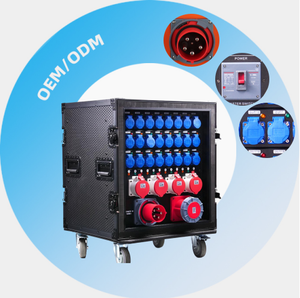
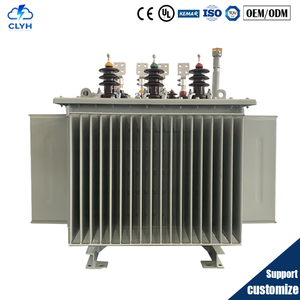
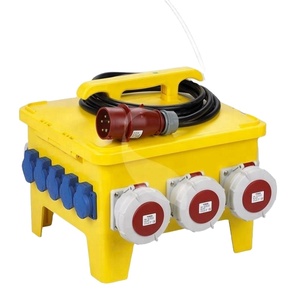
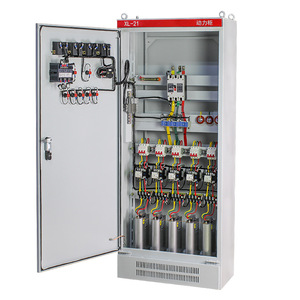


Delivering certified industrial DC systems, custom power panels, and utility backup solutions worldwide.
When procuring critical electrical infrastructure—specifically Direct Current (DC) Power Distribution Cabinets, sub-distribution panels, smart rack PDUs, and industrial battery charging distribution systems—selecting the right Chinese OEM/ODM manufacturing facility requires rigorous evaluation far beyond superficial price comparisons. Direct Current applications in electrical substations, telecommunications base stations, data centers, and renewable energy sites present unique engineering challenges including high DC fault current interruption, arc flash mitigation, thermal dissipation under sustained loading, and protocol-level SCADA integration.
Leading Chinese manufacturing hubs across Zhejiang (Yueqing/Wenzhou), Guangdong (Shenzhen/Foshan), and Jiangsu (Nanjing/Suzhou) have evolved from low-cost assembly workshops into state-of-the-art power electronics centers. However, the operational disparity between standard commercial assembly plants and premier Tier-1 industrial DC power distribution factories is significant. This technical guide outlines the core criteria that procurement directors, EPC consultants, and utility engineers must verify during OEM supplier qualification audits.
Unlike Alternating Current (AC) circuits where natural zero-crossing points occur twice per cycle to assist in extinguishing electrical arcs, Direct Current (DC) maintains a continuous voltage vector. Interrupting high-capacity DC short-circuit faults demands specialized DC-rated circuit breakers (MCCBs/MCBs) fitted with magnetic arc chutes, permanent magnet arc quenching, and correctly rated busbar isolation gaps. Top-tier factories engineer their DC distribution boards to withstand prospective short-circuit currents ($I_{cw}$) upwards of 25kA to 50kA at nominal system voltages of 110VDC, 220VDC, or 1500VDC.
A comparative engineering benchmark for identifying high-reliability manufacturing specifications.
| Specification Parameter | Standard Commercial Grade | Tier-1 Industrial / Utility Grade | Engineering Impact / Risk Assessment |
|---|---|---|---|
| Internal Segregation | Form 1 or Form 2a (Unsegregated) | Form 3b or Form 4b (Complete isolation) | Prevents propagation of arc faults between functional units and busbar compartments; essential for technician safety during maintenance. |
| DC Breaker Rating | Derated AC breakers or low-cost DC MCBs | Dedicated polarized/non-polarized high-break DC MCCBs | Standard AC breakers fail to interrupt continuous DC arc, leading to catastrophic panel fire during high-energy fault conditions. |
| Busbar Material | Commercial brass or recycled copper alloy | T2 pure copper (>99.90%) silver/tin-plated | Lower conductivity alloys cause excessive thermal rise ($>65^\circ\text{C}$ over ambient), voltage droop, and accelerated joint oxidation. |
| Thermal Derating Margin | Nominal rating at $25^\circ\text{C}$ (No safety factor) | Full continuous rating at $50^\circ\text{C}$ ambient | Utility switchgear rooms and containerized BESS often reach high ambient temperatures; inadequate margin causes false trip events. |
| Telemetry & Monitoring | Basic dry contact alarms only | Smart controller with DNP3, Modbus & SNMP | Enables predictive maintenance, insulation monitoring, earth fault detection, and real-time current logging per feed. |
| Enclosure Protection | IP20 – IP30 (Indoor basic) | IP54 to IP67 (NEMA 4X / Heavy Industrial) | Protects internal switchgear from ingress of dust, conductive particulates, moisture, and corrosive atmospheric pollutants. |
Driven by utility-scale Battery Energy Storage Systems (BESS) and commercial microgrids, modern Chinese factories are shifting production from traditional 48V/110V/220V systems to 1500VDC distribution platforms. Higher DC voltages significantly decrease copper cross-sectional requirements and cut system line losses by up to 40%.
Standard passive distribution boxes are being rapidly replaced by intelligent Director-Level Smart PDUs featuring RS485, Modbus, and Ethernet connectivity. Real-time individual circuit branch monitoring allows data center and telecom operators to execute predictive load balancing and detect thermal hot-spots before equipment degradation occurs.
Next-generation distribution panels manufactured in top Chinese facilities are incorporating semiconductor-based Solid-State Circuit Breakers. SSCBs execute fault clearance in microseconds—over 100 times faster than electromechanical breakers—virtually eliminating damaging arc flash energy in critical environments.
To ensure operational reliability and avoid costly field failures, international procurement teams must execute a structured audit checklist when validating Chinese power distribution manufacturers:
More than 50% of high-reliability industrial DC installations require non-standard engineering: custom mechanical dimensions to fit existing substation footprints, specialized marine-grade enclosure coatings (C4/C5-I atmosphere protection), custom alarm mapping tables for DNP3 outstations, or dual-redundant A+B battery feeder inputs. Partnering with a supplier that maintains dedicated in-house design engineering teams is essential to prevent costly on-site integration delays.
Direct Current (DC) panels are specifically engineered to handle continuous voltage without zero-crossing points. This requires dedicated DC-rated switchgear, arc-quenching magnetic chutes, specialized insulation clearances, and polarized protection devices. Using standard AC switchgear in DC distribution circuits can result in sustained electrical arcing, severe contact melting, and complete failure to interrupt short-circuit faults.
Busbar sizing must account for nominal continuous load current, maximum ambient enclosure temperature, permissible temperature rise (typically limited to $45^\circ\text{C}$ or $65^\circ\text{C}$ above ambient per IEC 61439), and short-time withstand current ($I_{cw}$). Top-tier factories generally design copper busbars assuming a conservative current density of $1.5\text{ A/mm}^2$ to $2.0\text{ A/mm}^2$ for natural convection cooling, utilizing high-purity tinned copper (T2 grade) to eliminate hot-spot generation at joint interfaces.
Yes. Leading Tier-1 manufacturers integrate programmable logic controllers (PLCs) or advanced smart monitoring modules capable of natively supporting DNP3 (Serial RS485 or Ethernet TCP/IP outstation), Modbus RTU, Modbus TCP, and SNMPv3. During Factory Acceptance Testing (FAT), point lists and alarm mapping are bench-tested against protocol analyzers to ensure seamless plug-and-play integration with client SCADA master stations.
For indoor cleanroom or data hall environments, IP20 to IP31 is sufficient. For industrial process plants, substations, and outdoor installations, a minimum of IP54 (dust protected and splash resistant) or IP65/IP67 (dust-tight and water jet/immersion resistant) is required. Additionally, outdoor enclosures exposed to aggressive atmospheric conditions should specify 304/316 stainless steel or aluminum alloy construction with polyurethane powder coating (C4/C5 anti-corrosion rating).
Standard custom engineered DC distribution panels typically carry a manufacturing lead time of 4 to 8 weeks depending on component procurement schedules. Every shipment should include a comprehensive documentation dossier containing as-built schematic diagrams, bill of materials (BOM), busbar torque check records, insulation dielectric test reports (FAT certificates), and user operation manuals.
Connect directly with our senior application engineers. We provide complete electrical schematics, thermal calculations, enclosure customization, and commercial quotes tailored to your infrastructure requirements.