
Explore our CE-certified hardware inventory engineered for rugged substations, critical telecommunications, industrial automation, and high-voltage power distribution networks.
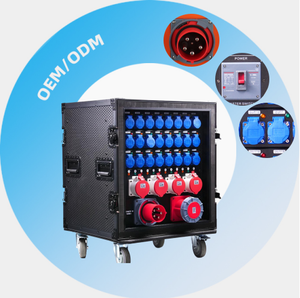
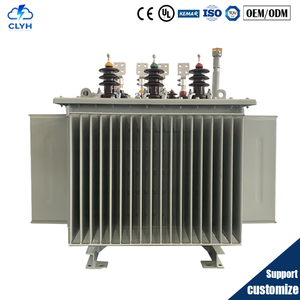
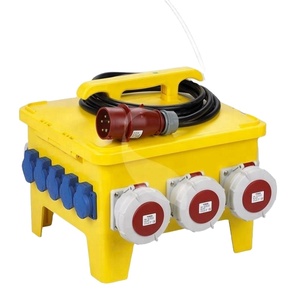
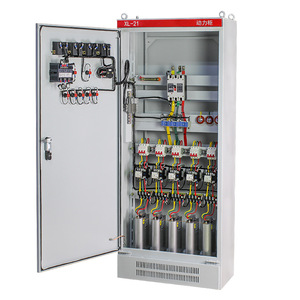
In high-availability power environments—such as electric utility substations, telecommunications switching hubs, rail signaling networks, and green hydrogen electrolysis plants—the rectifying system is the single point of operational resilience.
A CE-certified industrial rectifier does not merely convert Alternating Current (AC) into continuous Direct Current (DC). It serves as an active power quality buffer, controlling high-frequency electromagnetic noise, maintaining battery float parameters, and surviving severe utility grid surges. Electrical engineers and procurement officers evaluating OEM/ODM manufacturing partners must look beyond baseline voltage ratings to inspect topological efficiency, thermal topology, harmonic distortion, and compliance with European Low Voltage (LVD 2014/35/EU) and Electromagnetic Compatibility (EMC 2014/30/EU) Directives.
Safety requirements for power electronic converter systems and equipment inside electrical distribution rooms.
Immunity and emissions standards for heavy industrial environments, eliminating interference with delicate PLC and SCADA circuits.
Specification guidelines defining insulation coordination, impulse withstand voltage, and overload duration limits.
Choosing between Switch-Mode Rectifiers (SMR), Thyristor (SCR) Controlled Systems, and Silicon Carbide (SiC) High-Frequency Converters depends on your application's load profile and site conditions.
| Topology | Efficiency Rating | Power Factor (PF) | Typical Applications | MTBF & Resilience Profile |
|---|---|---|---|---|
| Switch-Mode Rectifiers (SMR) | 94.5% – 96.5% | > 0.99 (PFC Active) | Telecom DC plants, Data Centers, 48V UPS, Remote Cabinets | High density, hot-swappable N+1 modules; MTBF > 350,000 Hours. |
| Thyristor (SCR) Rectifiers | 88.0% – 92.5% | 0.75 – 0.88 | Substation 110V/220V Tripping Batteries, Heavy Mining, Galvanic Plating | Extreme ruggedness; zero delicate semiconductor switching; 25+ year life. |
| Next-Gen Wide Bandgap (SiC/GaN) | > 98.2% | > 0.995 | EV Ultra-Fast Chargers, Microgrids, Green Hydrogen Production | Ultra-compact footprint; high thermal headroom up to 75°C without loss. |
| Hybrid Modular DC Plants | 95.0% – 97.0% | > 0.98 | Critical Infrastructure, Smart Substation & Rail Signal Integration | Dual AC input feed; integrated smart controller with remote battery monitoring. |
The global industrial power supply market is undergoing a structural transition driven by decarbonization, microgrid decentralization, and smart grid automation. Industrial buyers must align their supply chains with key upcoming trends.
Over the next decade, traditional silicon-based MOSFETs and IGBTs will be rapidly replaced by Silicon Carbide (SiC) and Gallium Nitride (GaN) components. These materials offer higher breakdown electric fields, faster switching speeds, and reduced thermal dissipation, enabling high-power rectifiers with footprints reduced by up to 40% while achieving efficiency ratings exceeding 98%.
Inquire NowProcurement specifications increasingly mandate smart digital interfaces. Modern rectifiers no longer output simple analog fault contacts; they stream continuous telemetry—such as internal capacitor ESR, junction temperature, and ripple spectrum analysis—directly to cloud platforms and SCADA systems. This enables predictive maintenance prior to hardware breakdown.
Inquire NowWith industrial energy storage shifting from flooded Lead-Acid and VRLA batteries to Lithium Iron Phosphate (LiFePO4), Sodium-ion, and Nickel-Cadmium (NiCd) chemistries, rectifiers must feature programmable, multi-stage digital charging profiles. Flexible charging parameters prevent thermal runaway and optimize battery lifecycle ROI.
Inquire NowOur R&D team continuously refines topological efficiency, noise immunity, and environmental resilience to meet demanding industrial standards.
Advanced bridgeless totem-pole PFC circuits eliminate input current distortion, maintaining a power factor greater than 0.99 from 20% to 100% load.
LLC resonant converters minimize switching losses across the primary power stage, lowering stress on power transistors and extending operational lifespan.
Military-grade acrylic and silicone conformal coatings safeguard circuit boards against corrosive moisture, salt mist, sulfur oxides, and conductive dust.
Have a non-standard DC voltage requirement (e.g., 110VDC, 125VDC, 220VDC, or high-ampere custom distribution cabinets)? Consult directly with our senior power engineers.
Inquire NowBacked by over 38 years of power engineering heritage, our group provides end-to-end design, manufacturing, and global technical support.
Every rectifying module and distribution panel undergoes full component traceability, burn-in testing under peak thermal loads, and rigorous Factory Acceptance Testing (FAT) prior to dispatch.
Inquire NowWith regional engineering teams located across Australia (Sydney), New Zealand (Auckland), Singapore, and Dubai (UAE), we offer local technical assistance, site commissioning, and quick spares fulfillment.
Inquire NowWe design industrial hardware intended for 15-to-25-year lifecycles. Spares, replacement modules, and backward-compatible upgrades are maintained long after commercial product drop dates.
Inquire NowIn-depth answers addressing design parameters, compliance standards, and integration queries.
CE certification for industrial power rectifiers requires compliance with two main European directives: the Low Voltage Directive (LVD 2014/35/EU) and the Electromagnetic Compatibility Directive (EMC 2014/30/EU).
Under LVD: Systems are tested against EN 62477-1 or EN 60950-1/EN 62368-1 for insulation resistance, dielectric withstand voltage (Hi-Pot test), protective earthing continuity, clear thermal margins, and creepage/clearance distances.
Under EMC: Compliance involves EN 61000-6-4 (emissions) to limit conducted and radiated electromagnetic noise, alongside EN 61000-6-2 (immunity) to ensure stable operation during electrostatic discharges (ESD), electrical fast transients (EFT/burst), voltage dips, and high-energy surge impulses up to 4kV.
A DC UPS system integrates a high-frequency switch-mode rectifier stage, intelligent battery charging control, and a zero-break automatic DC changeover transfer switch within a single chassis or shelf. When AC grid power drops, the connected load experiences zero transfer latency.
An industrial battery charger (frequently thyristor-based SCR or heavy-duty switch-mode) focuses primarily on converting AC power into controlled DC power to maintain large stationary battery banks (VRLA, NiCd, or LiFePO4) in float, boost, or equalize modes. It usually connects to an external DC distribution switchboard in high-voltage substations, power plants, and process industries.
Over 50% of our manufactured power systems are built to custom client specifications. Our engineering team designs custom transformer taps, adjusts digital feedback loops, and implements custom software parameters for specialized output voltages (such as 24V, 48V, 110V, 125V, 220V, or 400V DC).
For communication, our centralized system controllers feature natively integrated communication stacks. We provide point-mapping documentation for DNP3 (serial and TCP outstation), Modbus RTU/TCP, and SNMP traps, allowing seamless telemetry integration with client SCADA network management stations.
Industrial battery life decreases when charged at elevated temperatures without float voltage adjustment. Our smart rectifiers utilize remote temperature sensors attached directly to battery negative posts.
The controller dynamically adjusts the float voltage baseline (typically -3mV/°C/cell for Lead-Acid or programmable parameters for NiCd and Lithium systems), preventing battery overcharging and thermal runaway in warm environments, while ensuring full recharge capacity during cold weather.
Standard catalog rectifiers and modular rack assemblies typically ship within 2 to 4 weeks. Custom-engineered power distribution cabinets and heavy transformer-rectifier systems carry a standard lead time of 6 to 10 weeks depending on structural housing specifications.
Clients and third-party inspection agencies (such as SGS, TÜV, or Bureau Veritas) can request witnessed Factory Acceptance Testing (FAT) virtually or at our manufacturing facilities prior to shipment.
Share your electrical requirements—voltage, load profile, battery chemistry, enclosure IP rating, and communications—with our technical sales engineers.